
Reading time: 5 minutes
Immediate response
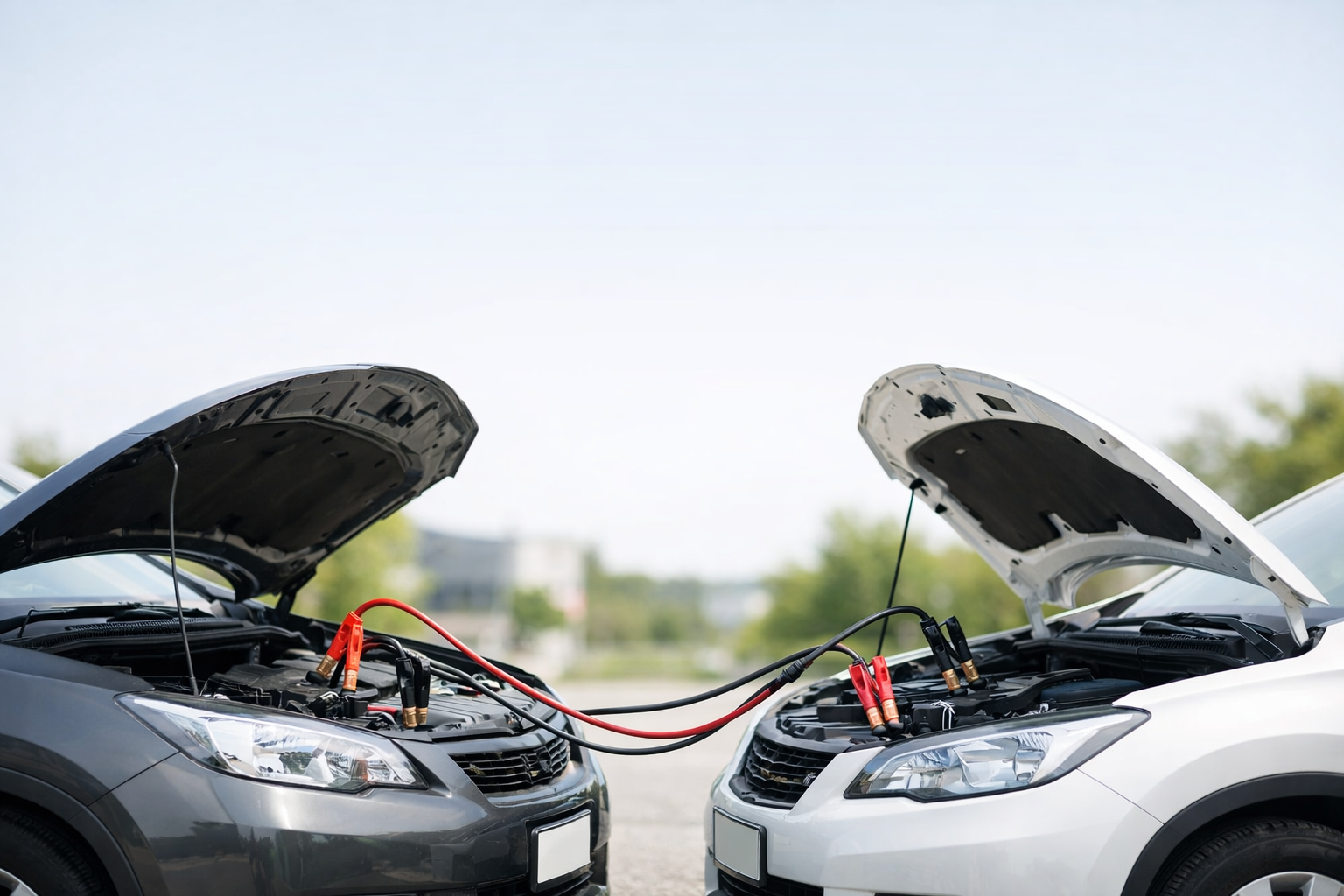
For how to start a car with a dead battery You can use cables connected to another vehicle or a portable booster, always following the procedure provided by the car manufacturer.
On some cars with manual transmission it may also be possible to push start, but This is not a procedure suitable for all vehicles and should only be used if permitted by the manufacturer.
Before intervening, however, check that the symptoms are actually compatible with a flat battery.
What you will learn:
- How to recognize a battery that is probably flat.
- How to jump start your car.
- How to use a portable booster.
- When to avoid push starting.
- What to do after the car starts again.
- Because the battery can discharge again.
- What mistakes to avoid.
Index
How to tell if the battery is really low
Before connecting any cables or boosters, observe what happens when you try to start the car.
A weak or dead battery can cause:
- starter motor turning slowly;
- repeated clicks;
- frame or lights that dim a lot during the attempt;
- electrical systems that function erratically;
- no response to starting if the battery is very low.
Whether the dashboard, radio or headlights work It does not necessarily mean that the battery is in good condition.: starting requires much more current.
Likewise, seemingly normal headlights alone do not allow you to bypass the battery.

If the starter motor turns normally but the engine does not start, the problem may not be with the battery.
To learn more about this situation, read Car won't start: causes and what to check immediately.
Method 1 – Jump-start your car
Jumper cables allow you to use a second battery or another vehicle as a backup to jump-start your flat car.
Before proceeding, check your car manual.
On modern cars, the emergency starting points may be different from the physical battery terminals, especially when the battery is located in a difficult-to-access location.
Before connecting the cables
Make sure that:
- the vehicles do not touch each other;
- the cables are intact;
- the voltage of the systems is compatible;
- you know the connection points provided by the manufacturer;
- there is no obvious damage, leakage or deformation of the battery.
If the battery appears damaged, deformed or leaks, do not attempt to jump start.
How to connect the cables
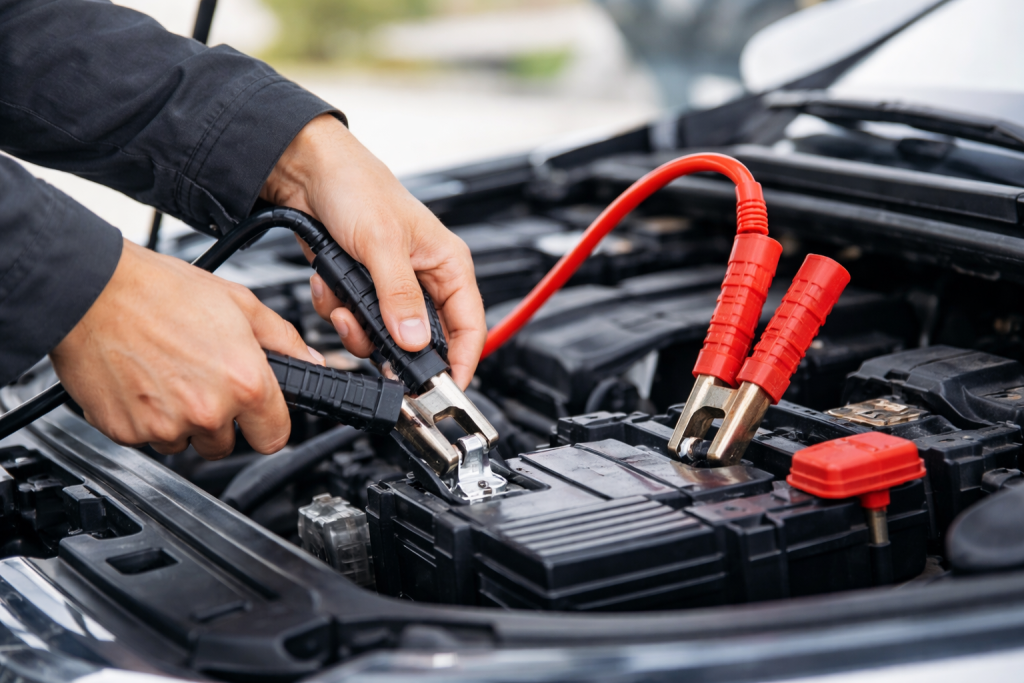
On many vehicles with a 12V system, a common procedure involves:
- connect the red cable to the positive point of the car with the flat battery;
- connect the other red end to the positive terminal of the backup battery;
- connect the black cable to the negative of the backup battery;
- connect the other black end to the expected ground point on the unloaded car, away from the battery when indicated by the manufacturer.
The procedure in the car manual always takes precedence.
Some vehicles actually have specific points for emergency starting.
How to try to start the car
Once you have made the connections correctly, follow the sequence recommended by the vehicle manufacturer.
Avoid long and repeated starting attempts.
If the car does not start after a few correct attempts, don't go on forever: The cause may not simply be a dead battery.
How to disconnect the cables
Once the engine has started, disconnect the cables following the manufacturer's procedure, usually avoiding allowing the clamps to touch each other or come into contact with unintended parts.
Car jumper cables
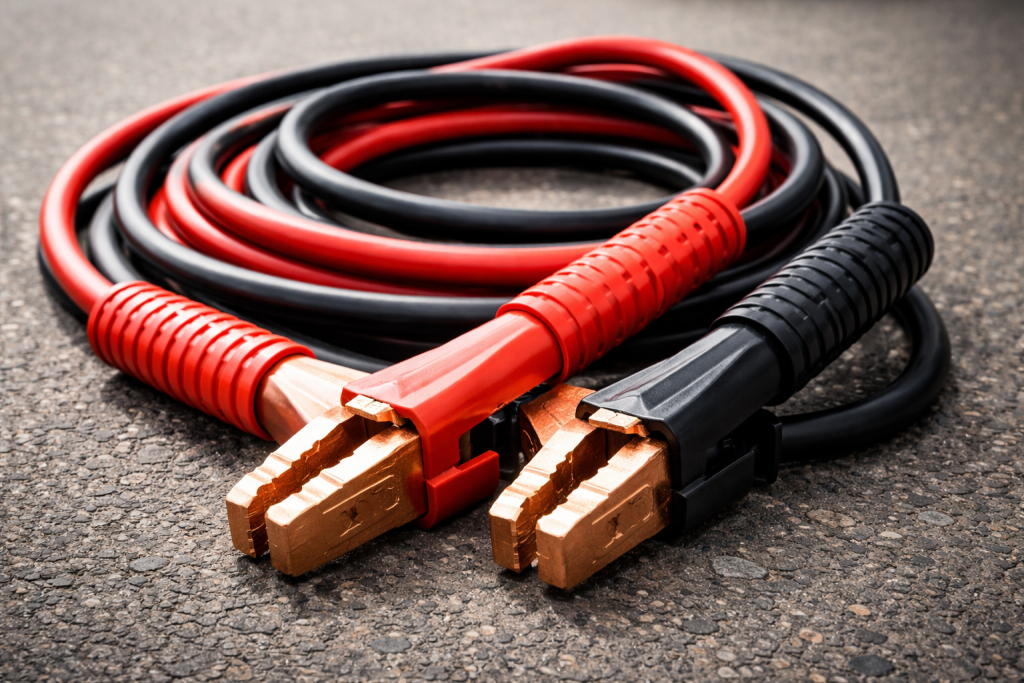
If you use cables, it is helpful to choose a product suitable for the type of vehicle and store it so that the clamps and insulation are not damaged.
HELPFUL TIP
Car starter cables
Jump leads can be useful for a dead battery, provided they are used correctly and in accordance with the instructions for the vehicles involved.
See on Amazon →
Mistakes to avoid with cables
- Invert positive and negative.
- Touch the clamps together when connecting.
- Use visibly damaged cables.
- Improvising connection points without knowing those provided by the vehicle.
- Keep trying if the car doesn't start.
- Use a battery that is obviously damaged.
Method 2 – Jump-start your car with a portable booster
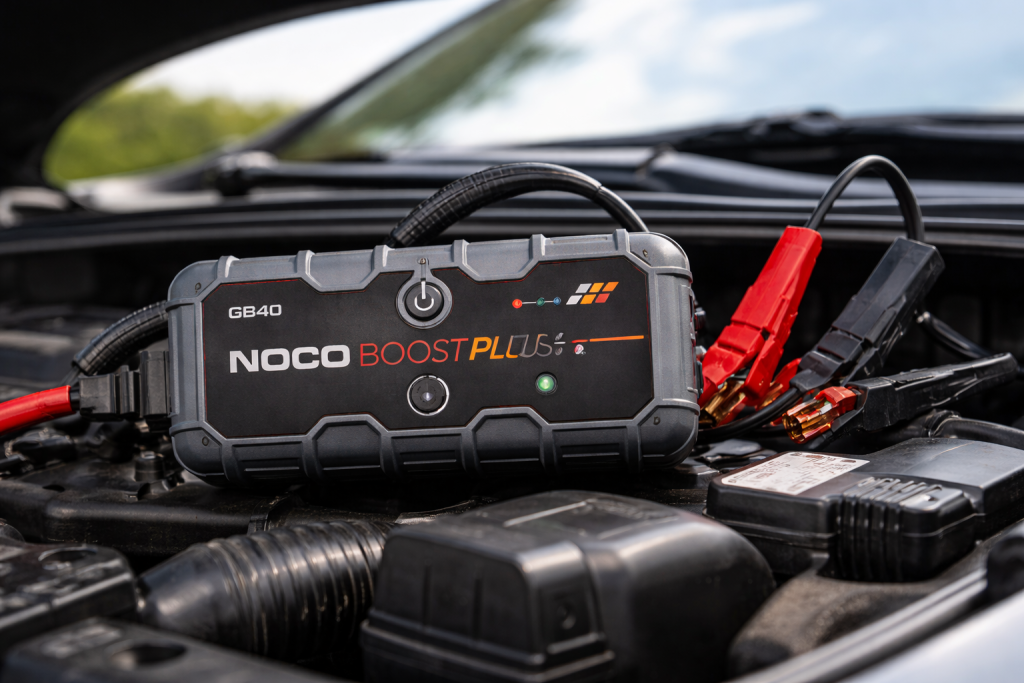
A booster is a portable device designed to temporarily provide the necessary starting current.
The main advantage is simple: you don't need a second car.
It can therefore be particularly useful when you are alone or do not have another vehicle available.
How to use a booster
Again, you must follow the instructions on the booster and the vehicle.
In general:
- turn off unnecessary electrical utilities;
- identify the points foreseen for the start-up;
- connect the booster respecting polarity and instructions;
- activate the device if prompted;
- try to start the engine;
- After starting, disconnect it according to the procedure indicated.
Not all boosters work the same way: some have specific modes for very low batteries.
Portable car starter booster
A booster can be a practical solution for those who want to have an emergency starting system independent of a second vehicle.
Before purchasing, check compatibility with the motor, expected voltage and characteristics declared by the manufacturer.
HELPFUL TIP
NOCO Boost Plus GB40 Emergency car starter
A portable booster can be useful when the failure to start is due to a flat battery and allows you to attempt starting without using a second car.
See on Amazon →
Method 3 – Push-starting the car: when possible
Push starting is a traditional method used on some cars with manual transmissions, but it should not be considered a universal procedure.
On some vehicles, it may not be recommended or even provided by the manufacturer. Furthermore, if the battery is too low to properly power the electronics, engine management, or fuel system, pushing the car may not be enough.

When to avoid it
Don't try it:
- on cars with automatic transmission;
- if the manufacturer prohibits or advises against it;
- in the presence of traffic;
- on slopes or in places where you cannot safely control the vehicle;
- if you don't know why the car won't start.
Cables or boosters: which method should you choose?
Both can fix a failed start caused by a dead battery.
I cables require a compatible media source and proper connection procedure.
The booster It allows you to intervene without a second car, but it must be loaded, suitable for the vehicle and used according to the instructions.
In both cases, if the battery dies again shortly afterward, the problem is not solved simply because the car has started again.
What to do after the car has started again
Don't assume that a few minutes with the engine running will fully recharge a very low battery.
The amount of energy recovered depends on:
- battery status;
- discharge level;
- charging system;
- terms of use;
- vehicle electrical consumption.
A short stay at a minimum does not guarantee a full charge.
If the battery has been deeply discharged, it may be necessary to check it and recharge it with a suitable charger.
Why did the battery die?
Jump-starting the car solves the emergency, but not necessarily the cause.
A battery can discharge for several reasons:
- lights or accessories left on;
- vehicle stationary for a long time;
- short and frequent journeys;
- deteriorated battery;
- abnormal power consumption;
- charging system problem.
If it happens only once after forgetting a light on, the cause may be obvious.
If the battery discharges repeatedly, however, we need to understand why.
Car sitting idle for a long time: is it enough to start it every now and then?
Not necessarily.
Starting the car for a few minutes can consume energy without allowing the system to fully recover the energy used for starting.
For a vehicle that is used infrequently, it may be more helpful to follow the manufacturer's recommendations and, where appropriate, use a compatible battery maintainer.
For further information:
Dead battery or alternator?
If the car restarts with cables or a booster but the battery starts to discharge again, one of the things to check is the charging system.
The alternator should help power the vehicle and charge the battery while it is running.
A battery that keeps discharging could be due to the alternator, but also to the battery itself or to abnormal current absorption.
If you want to distinguish between the two problems, read
👉 Battery or alternator? How to tell which is bad.
👉Alternator not charging the battery: causes and checks to do
Traditional battery, EFB or AGM: does it make a difference?
Yes, especially when it comes to replacement and recharging.
The battery specifications must be compatible with the vehicle's specifications. Vehicles equipped with Start & Stop systems may use EFB or AGM technologies depending on the system design.
So don't choose a battery based solely on its size or declared capacity.
To learn more, read AGM or EFB battery? Differences and which to choose.
How to tell if your battery is still good
Age and symptoms can give clues, but It's not enough to say "it's more than 4-5 years old, so it needs to be replaced"“.
A more useful check considers:
- start-up behavior;
- voltage and state of charge;
- battery capacity to support the load;
- any problems with the charging system;
- results of a specific battery test.
If starting becomes increasingly difficult or you have to use boosters or cables frequently, it is a good idea to check your battery and charging system.
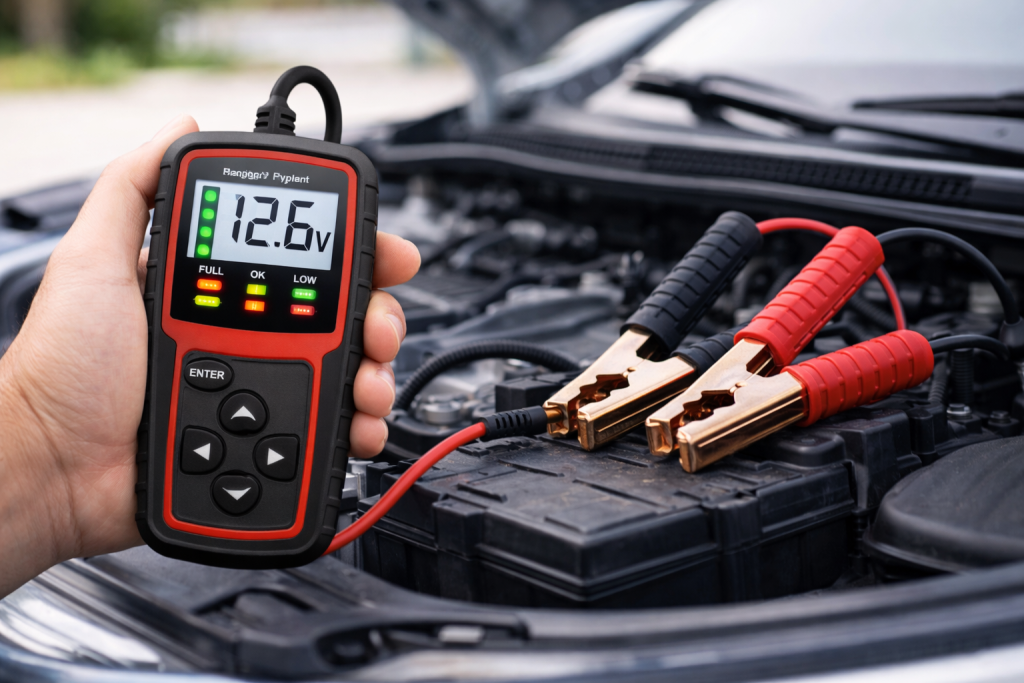
Car battery tester
A tester can be useful for obtaining additional information about the battery's health. More comprehensive models can perform tests other than simply reading the voltage.
Be careful with modern cars
In modern cars, emergency starting must be carried out with particular care.
Some cars have specific connection points and procedures. The physical location of the battery may also differ from the locations used for the cables or booster.
For this reason, before improvising, always check the vehicle manual.
After starting with a very low battery, some low voltage warnings may also appear temporarily. If the warning lights persist or the vehicle exhibits anomalies, it's a good idea to have it checked.
When not to attempt to jump-start yourself
It is best not to proceed with cables, boosters or other improvised methods if:
- the battery is deformed, damaged or leaking;
- you smell something strange or burning;
- you cannot correctly identify the connection points;
- the cables or booster are damaged;
- the car is in a dangerous position;
- you suspect a fault other than a simple flat battery.
In a dangerous situation, the priority is to secure people and the vehicle and call for assistance.
Useful kit for a battery emergency
A kit can simply be useful to have some basic tools available:
- jumper cables;
- load booster;
- gloves;
- torch;
- safety devices provided for the vehicle;
- power bank for the phone.
HELPFUL TIP

Car emergency kit
An organized kit helps you keep together some useful tools to have in your trunk.
See on Amazon →
Mistakes to avoid
- Assuming the battery is the problem without looking at the symptoms.
- Reverse polarity when jump starting.
- Connecting cables or boosters to any points not intended for the vehicle.
- Continue with repeated attempts if the engine does not start.
- I think that 20–30 minutes at minimum will always recharge the battery.
- Using push start without checking that it is permitted.
- Ignore a battery that keeps draining.
- Replace the battery without checking the charging system when the problem recurs.
In summary
For how to start a car with a dead battery, the most practical methods are jumper cables or portable boosters.
Before intervening, however, make sure that the symptoms are compatible with a flat battery and check the procedure provided by the manufacturer.
If the car starts but the battery dies again, don't simply continue using cables or boosters: check the battery, charging system and any abnormal current draw.
Push starting should only be considered on vehicles for which it is intended and in safe conditions.

FAQ about flat car battery
Can I start a modern car with cables?
In many cases, yes, but you must use the connection points and procedure specified by the manufacturer. On modern cars, it's unwise to assume the connection must be made directly to the battery's physical terminals.
Is it better to use cables or a booster?
Both can be effective. The cables require a compatible power source; the booster allows for intervention without a second car. In both cases, they must be used correctly.
After starting, should I leave the engine running for 20–30 minutes?
There's no universal time limit that guarantees battery charging. A deeply discharged battery may require proper charging and a check of its condition.
Can I push start the car?
Only if the vehicle type and manufacturer allow it and if you can do it safely. This procedure is not suitable for all cars with manual transmissions.
Why does the battery drain again after starting again?
It could be damaged, not have charged properly, there is abnormal power consumption or a problem with the charging system.
How do I know if it's the battery or the alternator?
A discharged battery can prevent starting. An alternator that isn't charging properly can cause the battery to discharge during use. To distinguish between the two, check the battery and the voltage/charging system.
Does a dead battery need to be replaced?
Not necessarily. An occasional discharge could be caused, for example, by an accessory left turned on. However, if the battery doesn't hold a charge or the problem recurs, it's a good idea to test it and the charging system.
Conclusion
Knowledge How to start a car with a dead battery It can quickly resolve an emergency, but the procedure must be performed correctly.
Jump leads and boosters are the main solutions, while push starting should only be used when specifically designed for that vehicle.
Above all, if the battery starts to discharge again after starting, don't consider the problem solved: you need to understand whether the cause is the battery, the charging system, or an abnormal absorption.


 Italian
  English