

Reading time: 5 minutes
Immediate response
The alternator voltage regulator Check the voltage produced by the car's charging system. If it fails, the battery may be undercharged or receiving excessive voltage.
The most common symptoms are Battery warning light on, low battery, dimming headlights, electrical anomalies and abnormal charging voltage. The problem is that similar symptoms can also depend on the alternator, the battery, or the connections: before replacing a component, it is therefore advisable to identify the cause.
What you will learn:
- What is the alternator voltage regulator used for?.
- What symptoms can it cause when it breaks down?.
- What is the difference between too low and too high voltage?.
- How to do a first check with the multimeter.
- How to distinguish a regulator problem from an alternator failure.
- When it may be sufficient to replace just the regulator.
Index
A car's charging system must not simply produce as much energy as possible. It must provide a voltage appropriate to the operating conditions, the battery, and the electrical consumers.
This is where the voltage regulator, a relatively small but essential component for the correct functioning of the charging system.
What is the alternator voltage regulator?
The voltage regulator is the component that check the alternator output, preventing the voltage from being too low or excessive compared to the conditions expected by the system.
When the engine runs, the alternator produces electrical energy to power consumers and help recharge the battery.
The regulator intervenes in the alternator's production so that the system works correctly.
On many alternators the regulator is mounted directly on the alternator and can be integrated with the brush holder assembly.
How does the voltage regulator work?
The regulator acts on the rotor excitation current, consequently modifying the alternator production.
Simply put: when the system needs more electricity production, the regulation changes; when demand decreases, it is adjusted again.
On modern cars, operation can be more complex. Charging management may involve a control unit, sensors, and electronic strategies that deliberately adjust the voltage.
Because of this A voltage that varies while driving does not automatically mean that the regulator is faulty..
What are the symptoms of a faulty voltage regulator?
Symptoms can be very similar to those of a faulty alternator.
Among the most common:
- battery light on;
- battery that drains frequently;
- starting difficulties;
- headlights that become dimmer or change intensity;
- unusually bright lights;
- anomalies in electrical devices;
- charging voltage too low or too high.
Behavior varies depending on the type of fault. The regulator may prevent sufficient charging or fail to properly control the voltage produced.
If the relevant warning light appears on the dashboard, in the guide Battery light on: what it means and what to do find the main causes and checks to be carried out.
What happens if the voltage is too low?
If the system fails to provide sufficient charge, the battery may gradually lose power.
At first, the car may appear to be operating normally. Later, the following may appear:
- more difficult start;
- less bright headlights;
- electrical anomalies;
- battery light on;
- battery that discharges again after being recharged.
It's easy to immediately think of a battery that needs replacing.
However, if a battery in good condition continues to discharge, it is also necessary to check alternator, regulator, wiring and service belt.
What happens if the voltage is too high?
The regulator can also have the opposite problem: failing to limit the voltage properly.
In this case the following may appear:
- unusually bright headlights or lights;
- light bulbs that fail frequently;
- anomalies in electrical devices;
- battery stress and deterioration;
- persistently abnormal voltage values.
A surge should not be ignored because it can stress both the battery and the vehicle's electronic components.
How to check the voltage regulator?
A digital multimeter allows you to carry out an initial check by measuring the voltage at the battery terminals.
You can observe the system's behavior with the engine off and on and check what happens when some electrical consumers are activated.
The multimeter, however, shows the behavior of the charging system: does not automatically identify the component responsible for an outlier.
This is especially important on modern cars with smart charging, where the voltage can vary based on the battery status, the electrical load and the control unit strategies.
Therefore, a single reading isn't enough to conclude that the regulator is faulty. If the fault persists or appears along with the battery warning light, a more thorough check is needed.
For an initial check of the battery and charging system, a digital multimeter can be helpful. This measurement helps identify abnormal values, but it's no substitute for a complete diagnosis.
HELPFUL TIP
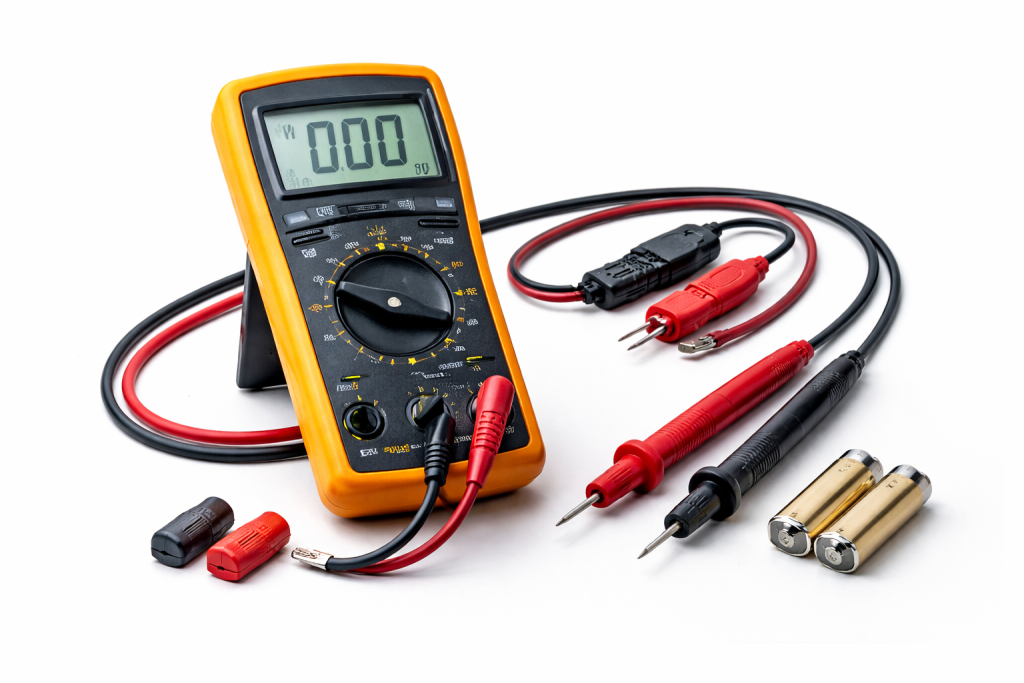
Digital multimeter for cars
Useful for measuring battery voltage and performing simple checks on the charging system.
See on Amazon →
Faulty regulator or faulty alternator?
This distinction is important because A charging problem does not automatically mean that the entire alternator needs to be replaced..
The alternator contains several components that can wear out or fail: regulator, brushes, bearings, diodes, windings and other parts.
A mechanical noise from the alternator, for example, may point the focus to the bearings, pulley, or belt rather than the regulator.
An abnormal charging voltage may instead require checking the regulator, without excluding the battery, wiring or electronic management.
If the problem concerns the entire component, in the guide Broken alternator: what happens and how much you can drive Find out what can happen when your alternator stops charging properly.
Can only the voltage regulator be replaced?
In some alternators, yes.
If the regulator is available separately and the rest of the alternator is in good condition, it may be possible to replace just the regulator or the regulator-brush holder assembly.
However, this does not mean that it is always the most convenient choice.
On an alternator with many miles on it, bearings, brushes, or other components may also be worn. In these cases, it may be more sensible to consider a complete overhaul or replacement of the alternator.
The decision therefore depends on the type of alternator, the fault identified, the general condition and the cost of the repair.
If the doubt arises from the age or mileage of the car, read also How long does a car alternator last? Average lifespan and signs of wear..
In summary
The alternator voltage regulator helps keep the charging system production under control.
When it breaks down, a insufficient charging or, in some cases, a excessive tension.
A low battery warning light, frequent discharges, dimming headlights, and abnormal voltage readings are all signs to check, but they alone do not indicate that the regulator is faulty.
Before replacing the entire alternator, it is therefore a good idea to identify which part of the system is causing the problem.

FAQ - Frequently Asked Questions
Where is the alternator voltage regulator located?
On many vehicles, it is mounted directly on the alternator. On several models, it is integrated with the brush holder, but the configuration depends on the type of alternator and the vehicle.
Can a faulty regulator drain the battery?
Yes, if the fault prevents proper charging. In this case, the battery continues to supply power but does not adequately recover the consumed energy and can gradually discharge.
Can a faulty regulator overcharge the battery?
Yes. Some faults can cause excessive voltage. This is a condition that should be checked quickly because it can damage the battery and stress the vehicle's electronics.
Can the regulator be checked with a multimeter?
The multimeter allows you to identify abnormal behavior in the charging system. However, by itself, it doesn't always allow you to definitively determine whether the regulator is the culprit.
Do I have to replace the entire alternator if the regulator breaks?
Not necessarily. On some alternators, the regulator can be replaced separately. However, it's a good idea to check the condition of the alternator's other components first.
Conclusion
A faulty voltage regulator can look like a battery problem or a complete alternator failure.
The difference is important because It is not always necessary to replace the entire alternator.
When charging problems arise, it's a good idea to start with the symptoms and measurements and check the entire system before deciding which component to replace.


 Italian
  English