

Reading time: 4 minutes
Immediate response
If the alternator does not charge the battery, the latter progressively loses power even while the engine is running. The most common signs are an illuminated battery light, weak or unstable lights, a battery that is discharging again, and electrical anomalies.
An initial check can be done with a multimeter, but the problem could also depend on the voltage regulator, belt or connections. Do not replace the battery or alternator immediately without checking the charging system.
What you will learn:
- How to tell if the alternator is charging the battery.
- What signs indicate a charging problem.
- How to do a first check with the multimeter.
- Because the problem isn't always the alternator.
- What to do if your battery keeps running low.
Index
Alternator not charging the battery: how to tell if it's working
The first clue is often a battery that It discharges again even after being recharged or replaced.
While driving, the following may also appear:
- battery light on;
- headlights becoming dimmer;
- unstable interior lighting;
- electronic anomalies;
- difficulty in the subsequent start-up.
These symptoms indicate a possible problem in the charging system, but they do not by themselves prove that the alternator is faulty.
If the warning light stays on while driving, you will find the specific checks in the guide Battery light on: what it means and what to do immediately.
Why does the battery discharge if the alternator does not charge?
When the engine is running, the alternator helps power the electrical systems and keep the battery charged.
If charging fails, the car begins to use the energy available in the battery. When this becomes insufficient, electrical anomalies may appear and, in the worst cases, the vehicle may stall while driving.
Therefore, there is no safe distance that can be traveled with a charging system that is not functioning properly.
Alternator not charging: the most common causes
It's not always necessary to replace the entire alternator. The problem may be caused by:
- faulty alternator;
- faulty voltage regulator;
- loose, damaged or slipping service belt;
- faulty electrical connections or terminals;
- damaged wiring;
- deteriorated battery.
The diagnosis is used precisely to avoid changing a still good battery or an alternator that is not actually the cause.
How to check if the alternator is charging the battery
A first check can be carried out by measuring the voltage at the battery terminals with a multimeter.
First, check the voltage with the engine off. Then repeat the measurement after starting.
On many conventional cars, when the charging system is working properly, the voltage measured at the battery terminals tends to increase after starting. On cars with intelligent charging systems, however, the values may vary during operation.
If the voltage does not increase, is very low, excessively high, or unstable, the charging system deserves a more thorough check.
The measurement with the multimeter is an initial check, not a definitive diagnosis of the alternator.
To carry out this check, a simple digital multimeter can be useful, with which to check the battery voltage before and after starting.
HELPFUL TIP
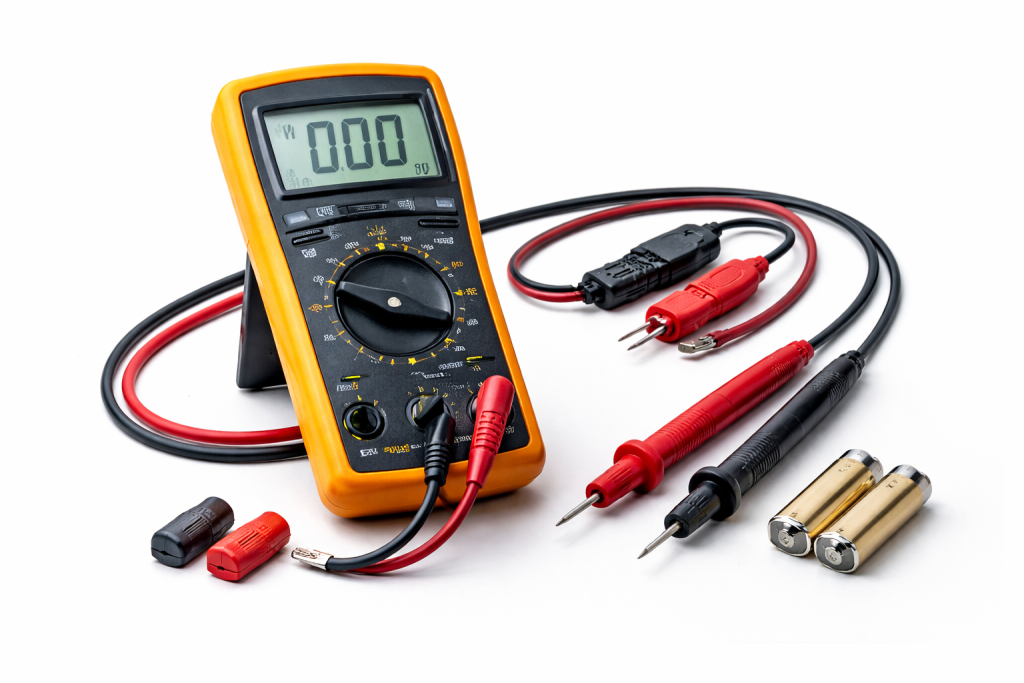
Digital multimeter for cars
Useful for checking battery voltage and carrying out simple checks on the electrical system.
See on Amazon →
New battery dies: could it be the alternator?
Yes, it is possible.
If you have fitted a new battery and after a short time it goes flat again, does not automatically mean that the new battery is defective.
The charging system should also be checked. If the alternator fails to restore the energy used by the car, even a new battery can gradually discharge.
If your battery keeps draining and you want to recognize other signs of the problem, read also Faulty Alternator: 7 Symptoms You Shouldn't Ignore and What to Do.
To understand if the battery may have simply reached the end of its life, read How long does a car battery last? Actual lifespan and signs.
Alternator not charging but battery light is off
It can happen.
The warning light on the dashboard is an important signal, but its absence does not guarantee that the charging system will function perfectly.
If the battery continues to discharge, the lights are unstable, or the measured voltage appears abnormal, it is still a good idea to check the battery, alternator, regulator, belt, and connections.
What to do if the alternator does not charge
If you suspect a charging problem:
- limits unnecessary electrical users;
- avoid long journeys;
- check for any warning lights or electrical anomalies;
- check battery and charging system;
- Do not replace components without identifying the cause.
If the lights become very dim while driving, more anomalies appear or the car shows signs of power loss, stopping safely is the prudent choice.
Mistakes to avoid
- Change the battery immediately without checking the charge.
- Thinking that a new battery rules out an alternator problem.
- Continue driving for a long time with obvious electrical anomalies.
- Consider a single multimeter reading as the definitive diagnosis.
In summary
If the alternator does not charge the battery, the latter progressively loses energy and the car can eventually stall.
A battery that repeatedly discharges, the battery warning light, unstable lights, and electrical anomalies are signs that need to be checked. A multimeter is useful for an initial check, but before replacing components, you need to identify the real cause.

FAQ - Frequently Asked Questions
How do you know if the alternator isn't charging the battery?
A battery that repeatedly discharges, a battery light that stays on, unstable lights, and electrical anomalies may indicate a charging problem. A multimeter check may provide an initial clue, but it alone won't identify the faulty component.
If the alternator doesn't charge, how long will the battery last?
There's no exact time. It depends on the remaining charge, the battery, the vehicle, and any electrical devices in use.
Can the car stall if the alternator isn't charging?
Yes. If charging fails, the vehicle gradually uses battery energy and can shut down when the battery becomes insufficient.
Can a new battery be drained by the alternator?
Yes. If the charging system isn't working properly, even a new battery can gradually lose its charge.
Can the alternator not charge without the warning light coming on?
It's possible. If there are other symptoms or the battery continues to drain, it's still a good idea to check the charging system.


 Italian
  English