
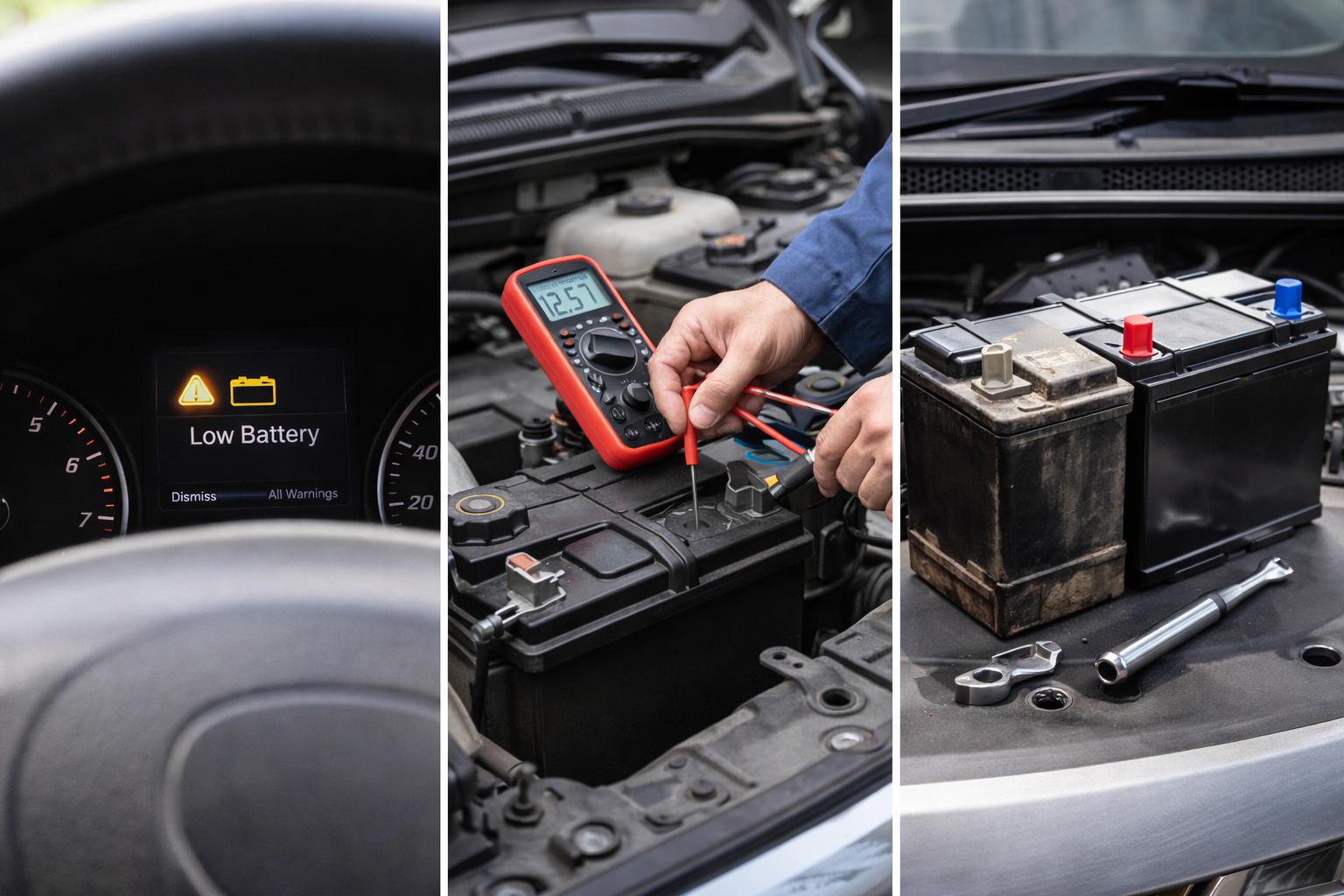
Reading time: 5 minutes
Immediate response
How long does a car battery last? On average about 3-5 years old, but the actual lifespan depends greatly on usage. Frequent short trips, extreme temperatures, long periods of inactivity, and problems with the charging system can reduce its life.
A battery can also last longer if the car is used regularly and the charging system is working properly. It's therefore a good idea to check its condition after a few years, especially if starting becomes slower.
What you will learn:
- How long does a car battery last on average?.
- How long can it last on diesel and petrol cars.
- What happens if the car is left standing for a long time.
- What factors reduce battery life?.
- How to tell if your battery needs replacing.
- How to make it last longer.
Index
La car battery life It doesn't just depend on its age. Two identical batteries can last very different times if one car travels long distances every day and the other is used only for a few minutes or often sits idle.
For this reason the classics 3-5 years old They're a useful reference, not a specific deadline. Let's see which conditions really make a difference.
How long does an average car battery last
The average life of a car battery is generally around 3-5 years old. Under favorable conditions it can last even longer, while particularly heavy use can shorten its life.
The factors that have the greatest impact are:
- frequent short journeys;
- long periods of inactivity;
- very high or low temperatures;
- charging system status;
- battery features and quality.
Age, therefore, is only one of the elements to consider.
How long does a diesel car battery last?
A diesel car battery generally needs to provide a high starting current, because the engine requires more energy during the start-up phase.
Under normal conditions one Diesel car battery can last about 3-5 years, but the battery life may be reduced by frequent short journeys, very low temperatures or a charging system that does not function properly.
Cold weather can also make an already weakened battery more noticeable, as starting the engine becomes more difficult.
How long does a petrol car battery last?
Under normal conditions one A petrol car battery can last about 3-5 years.
Regular and sufficiently long journeys help maintain the charge, while occasional use, frequent starts and long periods of inactivity can reduce its life.
It is therefore not advisable to establish the replacement only on the basis of the type of engine: what counts above all is how the car is used.
How long does a car battery last if it's left standing?
A battery doesn't stop working completely when we turn off the car. Alarm systems, control units, central locking, and connectivity systems may continue to draw a small amount of energy.
If the car is left standing for several weeks, the battery can then gradually lose power.
However, there's no precise number of days or weeks that applies to all vehicles. It depends on the initial state of the battery, the temperature, the electrical consumption, and the type of vehicle.
If the vehicle is rarely used or remains unused for a long time, a battery maintainer can be a useful solution.
What does car battery life depend on?
Two batteries installed at the same time can have very different lifespans. Usage conditions often have more of an impact than the age indicated on the calendar.
Climate
Heat accelerates the internal aging of the battery, while cold temporarily reduces available performance and makes starting more difficult.
For this reason, an already weakened battery can show its first problems on a particularly cold morning.
Short routes
Every start requires a lot of energy. If the car is used almost exclusively for very short trips, the charging system may not be able to fully recover the energy used.
Repeated over time, this type of use can contribute to keeping the battery in an insufficient state of charge.
Regular use of the car
Regular use with sufficiently long journeys is generally more favourable than continuous journeys lasting a few minutes.
This does not mean, however, that driving a lot of highways automatically guarantees a six-year battery life: The duration depends on the overall conditions of use and the state of the electrical system.
Car technology
Modern cars use numerous control units and electronic systems. Some can remain active even when the vehicle is parked.
For this reason, a correctly sized battery compatible with the technology provided by the manufacturer is particularly important, especially on cars equipped with Start&Stop.
Occasional use
If you use a second car or leave your vehicle sitting for weeks, the battery can gradually lose charge.
In these cases, it is preferable to periodically check its condition and, when necessary, use a charger or maintainer suitable for the battery technology.
How to know if your car battery needs replacing
A battery rarely indicates precisely how many days of life it has left. However, there are some signs that deserve attention.
Slower start
This is one of the most common symptoms. The starter motor turns slower than usual, or the engine takes longer to start.
If the problem recurs, it's a good idea to check the battery and charging system.
Dashboard warning lights
La Battery light on while driving does not automatically mean a bad battery. It may indicate a problem with the charging system, such as the alternator or the electrical connections.
In the guide Battery light on: what it means and what to do immediately Let's explain how to distinguish these cases.
Lights and electronics
A very weak battery may be accompanied by other symptoms:
- lights that seem less intense;
- reset the clock or infotainment;
- irregular start;
- electrical anomalies.
Taken individually, these signs do not prove that the battery needs to be replaced, but they do justify a check.
How to Check Your Car Battery with a Multimeter
A multimeter allows you to make a first voltage check, especially after the car has been off for a while.
A well-charged traditional lead-acid battery can show a value close to 12.6 V, while significantly lower values may indicate a reduced state of charge.
But be careful: Voltage alone does not tell you whether a battery is still in good condition.. Temperature, battery technology, recent charge, and other factors can affect the reading.
If you experience starting problems or frequent discharges, it's best to perform a battery specific test and also check the charging system.
For an initial check of the battery and charging system, a digital multimeter can be helpful. This measurement helps identify abnormal values, but it's no substitute for a complete diagnosis.
HELPFUL TIP
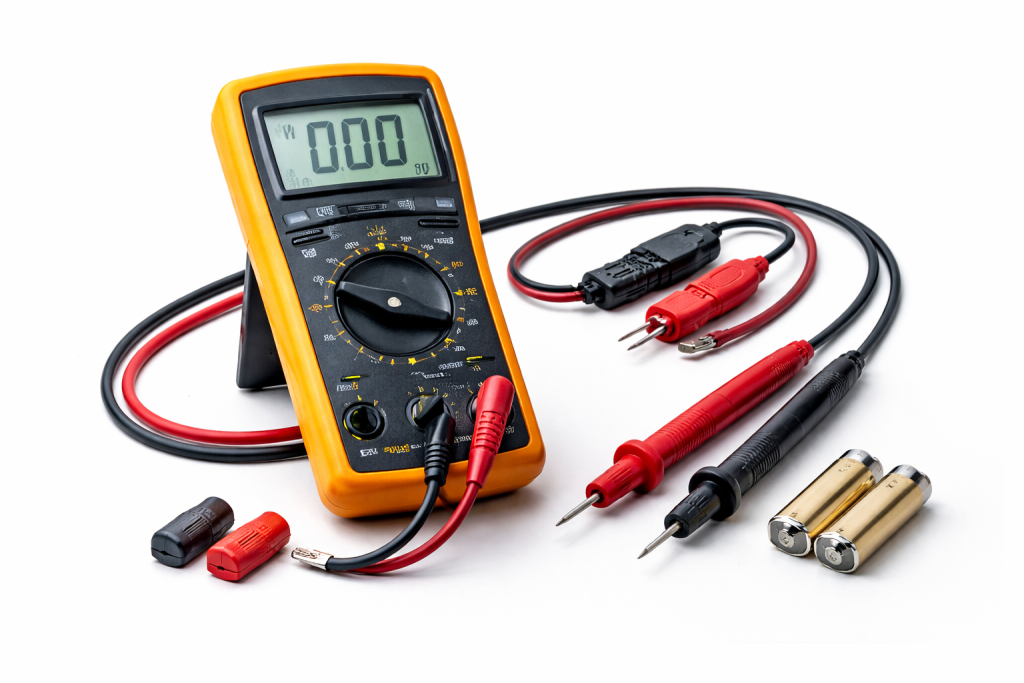
Digital multimeter for cars
Useful for checking battery voltage and carrying out simple checks on the electrical system.
See on Amazon →
How to make your car battery last longer
There is no trick that doubles battery life, but some habits can avoid unnecessary discharges and unfavorable conditions.
Avoid only very short journeys
If possible, alternate short trips with longer ones. Regular use is generally more beneficial than frequent starts followed by a few minutes of riding.
Do not leave devices turned on
Headlights, interior lights, and other devices can quickly drain an already weak battery when the engine is off.
Check it before winter
If the battery is already a few years old or the starting performance has become less reliable, a check before the cold months can identify a weakened battery before it causes problems.
Use a charge maintainer
If your car is sitting for weeks or is rarely used, a battery maintainer can help prevent the battery from gradually losing charge.
HELPFUL TIP
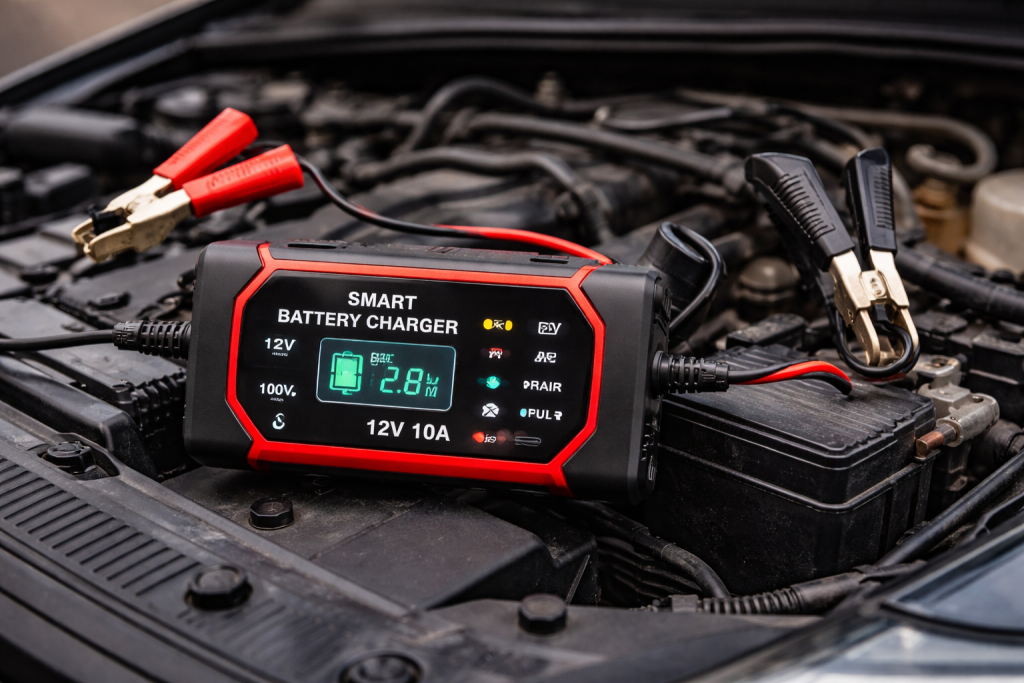
12V Smart Battery Charger
Useful for maintaining and recharging the battery when the car is stationary for a long time.
See on Amazon →
Errors that can reduce battery life
Some habits can lead to frequent discharges or keep the battery in unfavorable conditions:
- use the car almost exclusively for very short journeys;
- leaving the vehicle stationary for long periods;
- forgetting lights or devices on;
- ignore increasingly difficult start-ups;
- installing a battery that is not suitable for the car's specifications;
- ignore any charging system problems.
It is therefore better to focus on correct use and maintenance rather than looking for a precise duration that is valid for all batteries.
When to change the car battery
A battery with 4-5 years of life does not need to be replaced automatically if it still works properly.
However, age is a good reason to start checking it more carefully, especially if the following appear:
- slower start;
- frequent discharges;
- difficulties after a few days of downtime;
- electrical anomalies.
If these symptoms repeat, a test can determine whether the problem is actually with the battery, the charging system, or abnormal current draw.
If the car doesn't start
A dead battery is one possible cause when the engine won't start, but it's not the only one.
If you want to identify the problem starting from the symptoms, read Car won't start: causes and what to check immediately.
If you have already verified that the battery is flat, you can find the procedure in the guide How to start a car with a dead battery.
How much does it cost to change a car battery?
The price varies greatly depending on the capacity, battery technology and vehicle type.
A traditional battery for a small car can cost significantly less than an AGM or EFB battery for a Start&Stop vehicle. The cost of installation or any configuration required for the vehicle may also be added to the cost of the battery.
In summary
- Indicative average duration: about 3-5 years.
- Frequent short trips: can reduce the duration.
- Regular use: can promote a longer life.
- Car stopped for a long time: the battery may gradually lose charge.
- After a few years: It is advisable to check it periodically, especially if symptoms appear.
- Battery Age: It alone is not enough to decide when to replace it.

FAQ – Frequently Asked Questions about Car Batteries
How long does a diesel car battery last?
Under normal conditions it can last approximately 3-5 years old, but frequent short trips, extreme temperatures and charging problems can reduce their lifespan.
How long does a Start&Stop car battery last?
There's no specific battery life that works for everyone. It depends on the battery technology, the vehicle, the number of starts, and the type of use. For Start&Stop vehicles, it's important to use a battery with the technology specified by the manufacturer.
How to tell if the battery needs to be changed?
Increasingly slow starting, frequent discharges, and electrical anomalies may indicate a weakened battery. Checking the battery's condition can help you better understand if it's time to replace it.
How long does a car battery last without using the car?
There's no precise number of weeks. It depends on the battery's condition, the temperature, and the electrical draw present even when the vehicle is turned off.
Can you recharge a flat car battery?
Yes, in many cases, a simply discharged battery can be recharged. However, if it quickly loses charge again, it's a good idea to check both the battery and the charging system.


 Italian
  English