

Reading time: 7 minutes
Immediate response
If car consumes too much, First, verify the increase is real by comparing several tanks. Common causes include traffic and short journeys, incorrect tire pressure, driving style, unnecessary loads, and neglected maintenance.
If, however, consumption suddenly increases together with engine light, loss of power, jerking, smoke or strong smell of fuel, it is advisable to look for a possible technical anomaly.
What you will learn:
- How to understand if your car is really using more fuel.
- The 12 most common causes to check.
- What checks can you do yourself?.
- When an OBD2 diagnosis may be useful.
- When is the best time to have your car checked?.
- How to reduce consumption without replacing components at random.
Index
Car that consumes too much: first check the actual consumption
Filling up more often doesn't necessarily mean your car has started to consume more fuel.
They may have changed:
- path;
- traffic;
- outside temperature;
- number of short trips;
- average speed;
- car loading;
- use of air conditioning.
To understand if there really is a difference, it is best to measure actual consumption.
How to calculate fuel consumption using the full-full method
- Fill up.
- Reset the trip odometer.
- Use the car normally.
- At the next fill-up, note down the kilometers traveled and the liters filled.
- Divide the kilometers by the liters.
Example:
600 km ÷ 40 liters = 15 km/l
Repeat the check for multiple fill-ups, preferably on similar routes. A single fill-up can be affected by traffic, temperature, route, and fueling method.
Cars That Consume Too Much Fuel: The 12 Most Common Causes
Before thinking about a major fault, check the simplest causes.
1. Urban traffic and constant restarts
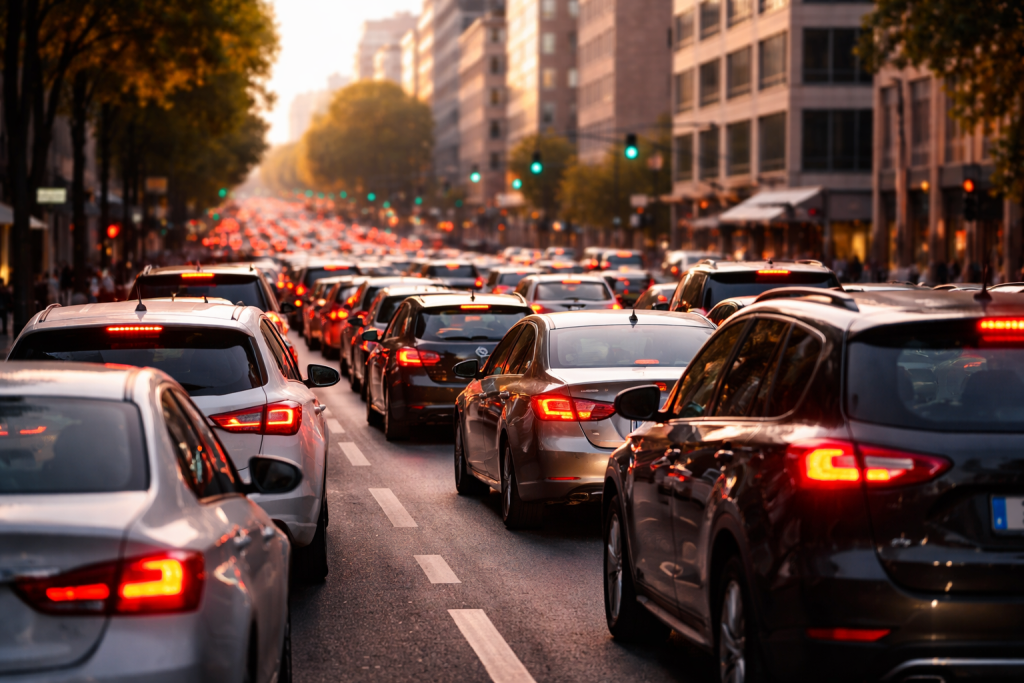
In the city, the engine often works in conditions that are not favorable to fuel consumption: acceleration, braking, traffic lights, traffic jams and long periods at low speed.
For this reason, comparing urban consumption with that obtained on extra-urban roads can be misleading.
If the increase coincides with a route change or increased traffic, there may not be a fault.
2. Short journeys and cold engine
In the first few minutes after starting, the engine has not yet reached normal operating conditions.
If you use your car almost exclusively for a few kilometers at a time, your average fuel consumption can be significantly higher than if you travel longer, more regularly.
The phenomenon becomes even more evident in cold periods.
Read also: — Cars consume too much fuel when cold: causes, symptoms, and solutions
3. Incorrect tire pressure

Tires with lower than recommended pressure increase rolling resistance.
Check your blood pressure on cold tires and uses the values indicated by the car manufacturer, normally reported in the manual or on the vehicle label.
Do not inflate your tires using a generic value.
To check the pressure at home, a dedicated pressure gauge can be useful.
HELPFUL TIP

Tire pressure gauge
See on Amazon →
If you prefer to be able to adjust the pressure without having to search for a distributor, a portable compressor can be handy for periodic checks.
HELPFUL TIP
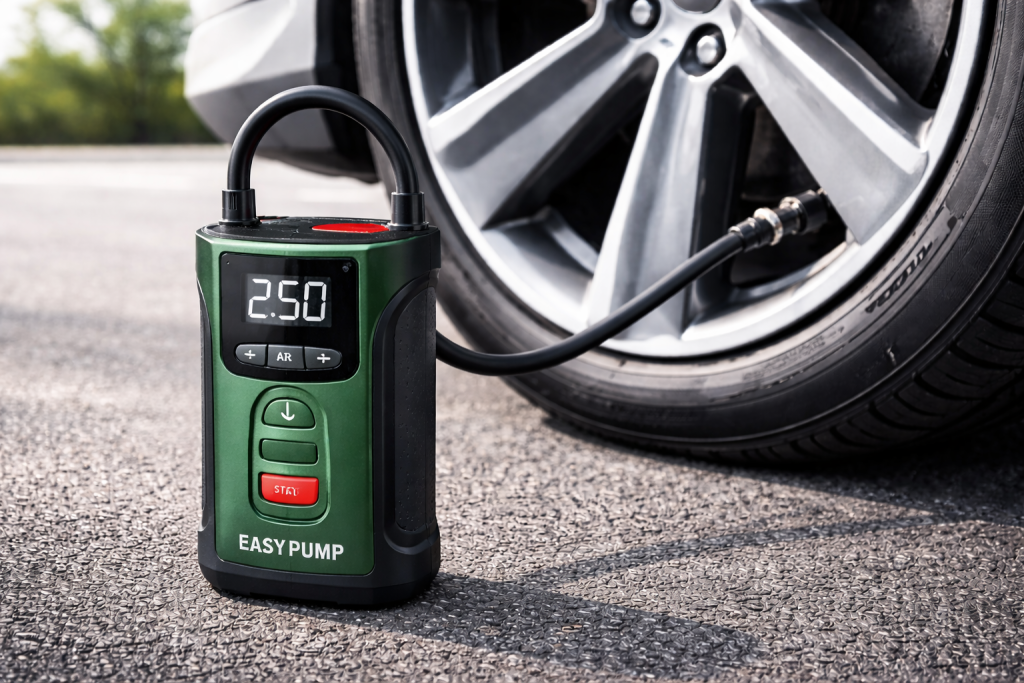
Portable tire compressor
See on Amazon →
4. Erratic driving or frequent acceleration
Accelerating hard and then braking shortly afterward requires more energy than driving smoothly.
When traffic permits:
- accelerates progressively;
- anticipate slowdowns and braking;
- maintain a steady speed;
- avoid unnecessary acceleration.
With a manual gearbox you avoid both maintaining very high revs unnecessarily and making the engine work under strain at too low a rev.
5. Weight and aerodynamic resistance

Heavy objects left unnecessarily in the trunk increase the load you have to carry.
Roof racks, roof boxes and other external accessories can increase aerodynamic drag, especially at higher speeds.
There's no need to obsessively empty your car: simply throw away anything you carry unnecessarily and remove exterior accessories when not in use.
6. Air filter very dirty
The filter protects the engine from impurities present in the intake air.
If it's time for a replacement, use a filter suitable for your vehicle and follow your maintenance schedule.
A dirty filter should not automatically be considered the cause of every increase in fuel consumption: in modern cars, electronic management can compensate for many variations, but a heavily clogged filter can still affect operation and performance.
7. MAF sensor or other sensors
The MAF sensor, when present, measures the amount of air drawn in by the engine.
An incorrect signal can affect the management of the mixture and can be associated with symptoms such as:
- irregular functioning;
- less prompt response;
- engine warning light;
- abnormal consumption.
Do not disconnect the sensor as an impromptu test.
If you suspect a problem, it is most useful to check any error codes and parameters available via diagnostics.
A specific product can be used to clean the sensor only when the procedure is appropriate for that component. Do not use generic cleaners and do not consider cleaning an automatic confirmation of the diagnosis.
HELPFUL TIP
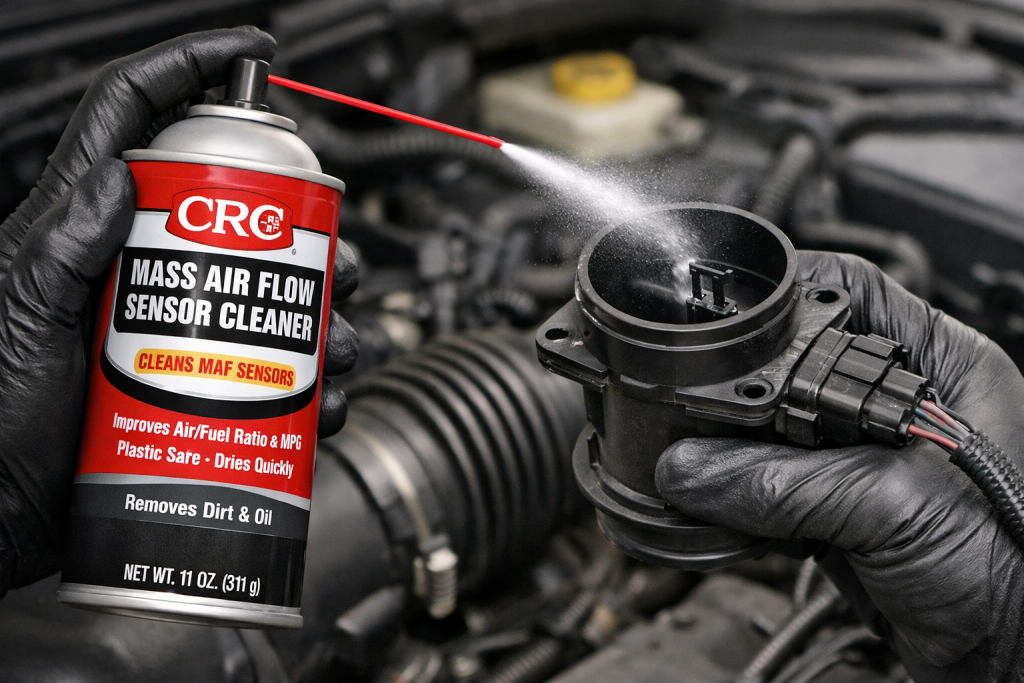
Air Sensor Cleaner – CRC Mass Air Flow Sensor Cleaner
See on Amazon →
8. Lambda probe
The lambda probe measures the oxygen in the exhaust gases and provides the control unit with information used to manage combustion.
Its malfunction may be associated with:
- engine warning light;
- increased consumption;
- irregular functioning;
- abnormal values detectable during diagnosis.
Don't replace it just because your car is using more fuel: the same symptom can have many other causes.
Read also: Faulty lambda sensor: symptoms, consumption, and solutions
9. Dirty or malfunctioning injectors
The injectors must meter the fuel correctly.
A problem may manifest itself with:
- irregular idle;
- starting difficulties;
- jerks;
- loss of power;
- abnormal consumption.
Read also: Dirty injectors: how they affect fuel consumption
An additive can be used as a maintenance product when it is compatible with the engine and fuel system, but It does not allow you to diagnose a faulty injector.
HELPFUL TIP
Injector additive
A best-selling fuel additive used to clean injectors, reduce fuel consumption and improve engine efficiency.
See on Amazon →
10. Spark plugs and ignition on petrol engines
Worn spark plugs, coils, or other ignition problems can cause misfires.
Symptoms may include:
- more difficult start;
- irregular idle;
- jerks;
- loss of power;
- engine light.
If the engine runs smoothly and the only symptom is slightly higher fuel consumption, don't automatically conclude that the spark plugs need replacing.
Check the manufacturer's recommended intervals and any other symptoms.
11. Incorrect engine oil or neglected maintenance
The oil must have a viscosity and specifications compatible with the engine.
An incorrect oil, an incorrect level or very neglected maintenance can affect the functioning of the engine, but Oil is not usually the first explanation to look for when consumption suddenly increases.
Check:
- level;
- interval since last change;
- expected viscosity;
- specifications required by the manufacturer.
12. A technical problem that changes the engine's operation
If the increase in fuel consumption is sudden and the way you use your car hasn't changed, there may be a problem that requires diagnosis.
Pay particular attention if you also experience:
- engine warning light;
- loss of power;
- jerks;
- irregular idle;
- abnormal smoke;
- strong smell of fuel;
- starting difficulties.
In this case the high consumption is a symptom, not the problem to be fixed directly.
Cars consume too much fuel when cold: when is it normal?
Higher consumption in the first few minutes is normal.
The engine must reach operating temperature and, especially during winter and on very short journeys, average fuel consumption can appear significantly worse.
The situation deserves further attention if:
- consumption remains high even when the engine is hot;
- the increase is recent;
- the engine runs poorly;
- spies appear;
- the car lost power.
For this reason it is better to compare consumption on fuller and similar conditions, instead of judging a few kilometers after a cold start.
Car that consumes too much fuel in the city but not on the highway
If consumption increases especially in the city, before looking for a fault consider:
- traffic;
- stop-and-go;
- short journeys;
- frequent restarts;
- air conditioning;
- very low average speed.
However, if you notice a significant increase even on a well-known extra-urban or motorway route, with conditions similar to your usual ones, it makes more sense to investigate the car's conditions further.
Car that consumes too much fuel on the highway
At highway speeds, aerodynamic drag becomes particularly important.
They can affect:
- speed;
- wind;
- roof box or luggage rack;
- load;
- tire pressure;
- air conditioning;
- traffic conditions.
To determine if there really is an anomaly, compare similar trips instead of relying on a single segment.
How to tell if the problem is your car or how you use it
Do this check in order.
1. Measure real consumption
Use the full-full method for at least two or three fill-ups.
2. Compare similar routes
Don't compare a week of highway driving to a week of three-kilometer city commutes.
3. Check the tires
Check the cold pressure using the value specified for the car.
4. Check maintenance
Check the air filter, oil, spark plugs when required and other operations indicated in the maintenance schedule.
5. Look for other symptoms
Engine light, jerking, loss of power, smoke or the smell of fuel completely change the picture.
6. Only at this point do you move on to the diagnosis
Avoid changing sensors, injectors or other components simply because consumption has increased.
OBD2 Scanner: When You Really Need It
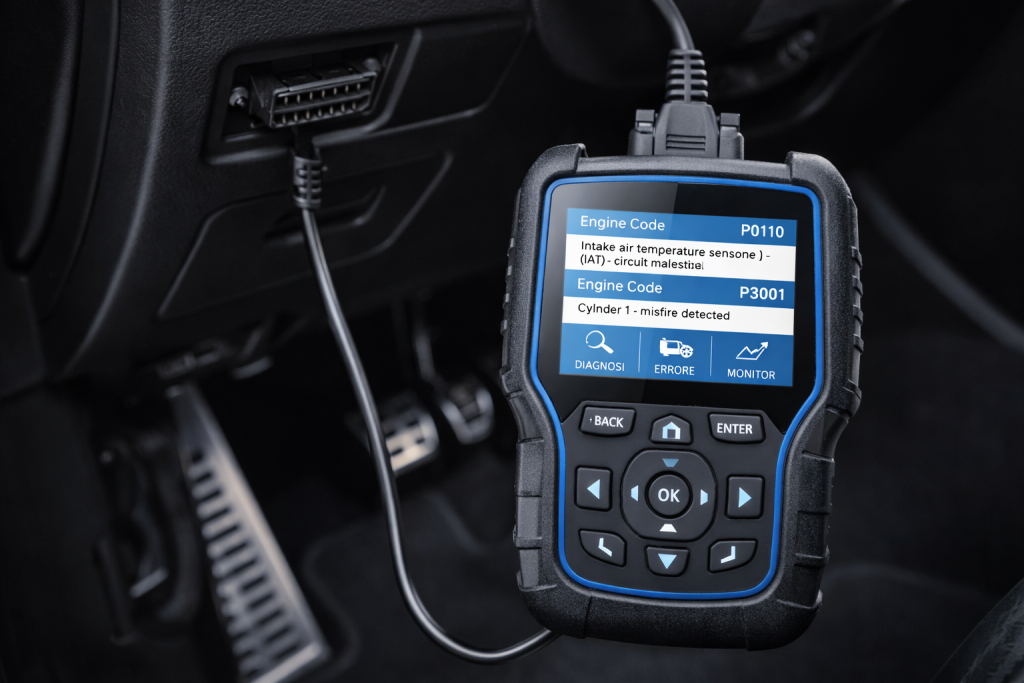
An OBD2 scanner can be especially useful when increased fuel consumption is accompanied by a check engine light or erratic behavior.
It can allow you to read error codes relating, for example, to:
- engine management;
- ignition;
- mixture;
- some sensors;
- emissions system.
It can't automatically tell you, 'This is the cause of consumption.'.
An error code is a starting point for checks and should be interpreted in conjunction with the symptoms and available data.
HELPFUL TIP
OBD2 diagnostic scanner
See on Amazon →
How to reduce consumption without complicating your life
Once you've ruled out a technical issue, focus on the things you can actually control.
Maintain correct tire pressure
Use the value specified by the manufacturer and check it periodically, especially before a trip or when the outside temperature changes significantly.
Drive more smoothly
Anticipating traffic and reducing unnecessary acceleration and braking helps you use less energy.
Reduce unnecessary external accessories
Remove roof boxes and racks when not needed.
Avoid unnecessary loads
Don't turn your trunk into permanent storage.
Group very short trips together when possible
Multiple consecutive shifts can be more efficient than numerous starts from a completely cold engine.
Comply with the scheduled maintenance
Do not change components before they are necessary, but do not postpone oil, filters, spark plugs or other maintenance operations required by the manufacturer.
Read also: How to save fuel: effective tricks
When high consumption requires control
A gradual increase may simply be due to a change in car usage.
A sudden increase, however, deserves greater attention, especially when it appears together with other symptoms.
Have your car checked if you notice:
- engine warning light;
- strong smell of petrol or diesel;
- fuel leak;
- persistent abnormal smoke;
- jerks;
- very irregular idle;
- noticeable loss of power;
- starting difficulties.
If you smell a strong fuel odor or notice a leak, don't just try to reduce fuel consumption: Stop safely and have the cause checked.
In summary
If you have a’car that consumes too much, proceed in this order:
- measures actual consumption over multiple full tanks;
- compare similar routes and conditions;
- check tire pressure;
- evaluates traffic, short trips and driving style;
- check maintenance;
- look for any other symptoms;
- use OBD2 diagnostics when there are elements that make it useful.
Do not replace your MAF, oxygen sensor, injectors or other components just because fuel consumption has increased.
First you have to understand if the increase is real and what has changed.
Read also:
- Dirty injectors: how they affect fuel consumption (a complete and practical guide)
- Car consumes too much fuel when cold: causes, symptoms and solutions to reduce fuel consumption immediately
- How to Save Fuel: 10 Tricks That Can Reduce Consumption
- Mistakes that destroy the engine: what mechanics see every day
- How to make your car engine last up to 500,000 km (Ultimate guide)
- Faulty lambda sensor: symptoms, consumption, and solutions

Frequently asked questions about cars that consume too much fuel
Why does my car suddenly use more fuel?
If the route, traffic, or driving style haven't changed, first check tire pressure and maintenance. If the engine warning light, loss of power, jerking, smoke, or fuel odor also appear, a diagnosis may be necessary.
How do I know if my car is really consuming too much fuel?
Calculate fuel consumption using the full-to-full method and compare multiple fill-ups under similar conditions. The value displayed by the trip computer is useful for tracking performance, but calculating the actual fuel consumption allows for independent monitoring.
Do flat tires cause you to consume more fuel?
Lower-than-expected pressure increases rolling resistance and can impair efficiency. Check cold tire pressure using the values recommended by the car manufacturer.
Does a dirty air filter increase fuel consumption?
A severely clogged filter can affect operation and performance. However, in modern cars, increased fuel consumption shouldn't automatically be attributed to the filter: it should be evaluated in conjunction with other symptoms and scheduled maintenance.
Do dirty injectors increase fuel consumption?
Injector problems can be associated with abnormal fuel consumption, rough idling, jerking, or loss of power. However, increased fuel consumption alone does not mean the injectors are dirty.
Is it worth using an additive to reduce consumption?
A compatible additive can be used for the maintenance required by the product, but it is not a universal solution for high consumption and does not repair failed components.
Can an OBD2 scanner find the cause of high fuel consumption?
It can read error codes and some useful data when an anomaly is detected by the control unit. It does not automatically identify the cause and is not a substitute for proper diagnosis.
When should I worry?
If the increase is sudden and occurs along with an engine warning light, severe loss of power, smoke, rough running, a strong fuel odor, or a visible leak, it's a good idea to have your car checked.
Conclusion: What to do if your car consumes too much fuel
A’car that consumes too much it doesn't necessarily have a fault.
First measure your actual fuel consumption and check what has changed during use: traffic, short journeys, tire pressure, load, and driving style can significantly alter the result.
If the increase is sudden and other symptoms appear, avoid trial-and-error component replacements. A thorough diagnosis will help determine whether the problem is related to the power supply, ignition, sensors, or another system.


 Italian
  English