

Reading time: 6 minutes
Immediate response
A stuck car thermostat can cause two very different behaviors.
If it remains locked closed, the coolant cannot circulate properly to the radiator and the engine temperature can rise rapidly.
If it remains locked open, the engine may take a long time to reach normal operating temperature, with poor cabin heating and possible higher fuel consumption.
If the temperature exceeds normal, a temperature warning light appears or steam comes out of the engine compartment, stop safely and let the engine cool.
What you will learn:
- How to tell if your car's thermostat is stuck.
- The difference between a stuck open and closed thermostat.
- What symptoms to watch for.
- How to distinguish the problem from other cooling anomalies.
- When to stop and when to have your car checked.
Index

What is a car thermostat and what is it used for?
The thermostat is part of the engine cooling system and regulates the flow of coolant based on temperature.
When the engine is cold, it limits circulation to the radiator, helping the engine reach the correct operating temperature.
As the temperature rises, the thermostat gradually opens the passage to the radiator, allowing the circuit to dissipate the heat.
When this mechanism does not work properly, the thermostat may remain too open, too closed, or no longer regulate the flow correctly.

Thermostat stuck open or closed: what's the difference?
This is the most important distinction.
Thermostat stuck closed
If the thermostat does not open properly, coolant may not be able to reach the radiator as it should.
Signs may include:
- engine temperature rising;
- indicator that rises above usual behavior;
- temperature warning light;
- possible overheating;
- possible refrigerant leak if the circuit reaches abnormal conditions.
This is the situation that requires the most attention.
If the temperature continues to rise, don't keep driving hoping it will get off on its own.
If the warning appears on the dashboard, read Engine temperature warning light on: what it means and what to do.
Thermostat stuck open
If it remains open, however, coolant can circulate to the radiator even when the engine is still cold.
You may notice:
- engine that takes a long time to warm up;
- temperature that remains lower than usual;
- weak or slow interior heating;
- possible increase in consumption.
In this case the problem is different from overheating caused by a thermostat that does not open.

What are the symptoms of a stuck car thermostat?
Engine temperature too high
This is the most important sign that should not be ignored.
If the temperature rises beyond the vehicle's normal behavior, the problem may be with the thermostat, but also with other components of the cooling system.
A high indicator alone does not mean that the thermostat is faulty.
If the engine is heating up, read Car overheating: what to do immediately.
Engine not reaching normal temperature
If after a reasonable amount of time the engine continues to run colder than usual, a thermostat that remains open is one possible cause.
Behavior must be evaluated in relation to the vehicle and external conditions.
Weak cabin heating
A heater that takes a long time to produce hot air can be caused by an engine that doesn't reach operating temperature properly.
But this too does not by itself prove a thermostat fault.
Higher consumption
If the engine remains too cold, the engine management may not work under the normal expected thermal conditions.
This may contribute to increased consumption.
Radiator fan behaving abnormally
The fan may work differently when the system is handling an abnormal temperature.
But do not consider the fan always on as evidence of a faulty thermostat.
If it is the fan that runs continuously, read Radiator fan always on: causes, risks, and what to do.
Why can a car thermostat fail?
Over time, your thermostat may lose its ability to open and close properly.
Deposits, corrosion, or problems in the cooling circuit can also contribute to erratic operation.
On some vehicles, the thermostat assembly may include more complex components or control systems than the classic mechanical valve.
For this reason, before replacing it, it is a good idea to check that the symptoms actually depend on the thermostat.
How to Check if Your Thermostat Is Stuck
1. Observe the behavior of temperature
Don't just look at the value at a single moment.
It is more useful to observe how the temperature changes:
- Does the engine reach normal operating temperature?
- is it unusually cold?
- is the temperature still rising?
- Has your behavior changed from usual?
2. Check the passenger compartment heating
If the engine is struggling to warm up and at the same time the air in the passenger compartment remains too cold, this information can help with the diagnosis.
However, this alone is not enough to establish that the thermostat is faulty.
3. Check the coolant
Insufficient fluid can cause problems with the cooling system and confuse diagnosis.
Check it only when the engine is cold.
If the level continues to decrease, you need to look for the cause instead of simply continuing to top up.
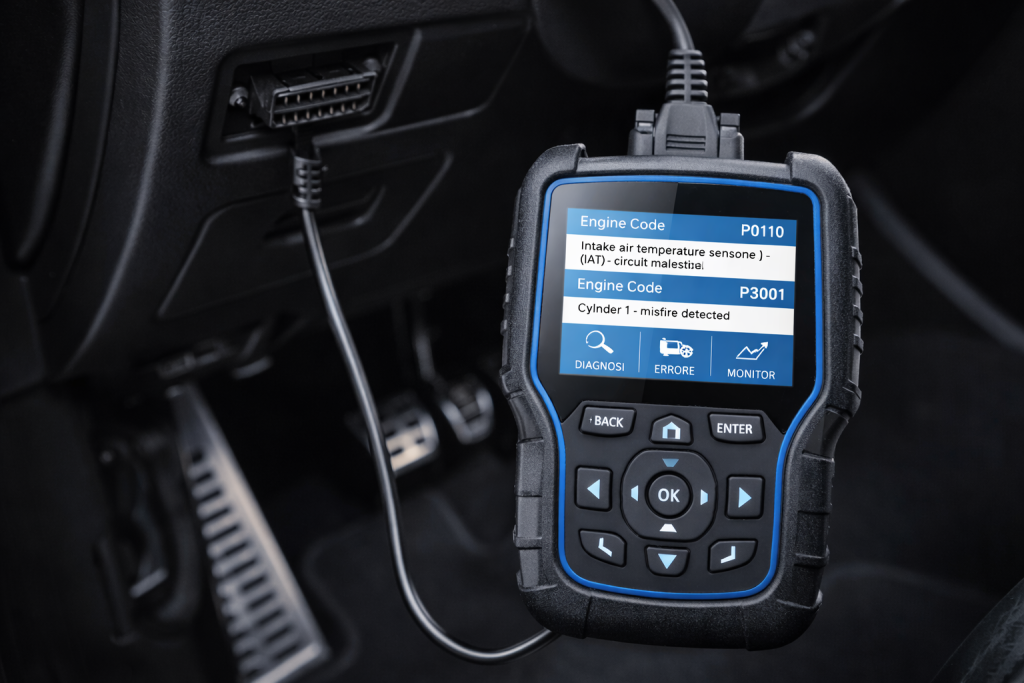
4. Perform an OBD diagnosis
A scanner can allow you to read any errors and, on vehicles that make the parameter available, observe the coolant temperature detected by the system.
The OBD data must however be interpreted together with the other symptoms.
5. Check the circuit temperature
The temperature of the circuit parts can provide further clues during a diagnosis.
An infrared thermometer allows you to measure surface temperatures, but it does not determine by itself whether the thermostat is faulty.
The comparison must be performed correctly and taking into account the specific operation of the circuit.
What to do if you suspect a stuck thermostat
If the temperature remains normal but you suspect the engine is running too cold:
- observe the temperature trend;
- check the cabin heating;
- check the coolant when the engine is cold;
- check for any diagnostic errors;
- Have your system checked if the behavior persists.
If instead the temperature is above normal, a temperature light appears or you notice steam:
- stop in a safe place;
- turn off the engine;
- let the system cool down;
- do not open the cooling circuit when it is hot.
Can I drive with a stuck thermostat?
It depends on the type of problem and above all on the engine temperature.
If the thermostat is stuck closed
If the temperature is rising above normal, stop safely.
Continuing to drive with an overheating engine can cause serious damage.
If the thermostat is stuck open
The engine may remain too cold and not reach operating temperature properly.
However, there is no universal number of kilometers or period that we can consider safe: the problem must be verified and resolved.
What damage can a faulty thermostat cause?
The biggest risk is a thermostat that prevents the circuit from cooling the engine properly.
Severe overheating can cause costly engine damage.
For this reason, it is not a good idea to wait until an abnormal temperature becomes an emergency.
A thermostat that keeps the engine too cold can prevent it from reaching normal operating temperatures, reduce heating efficiency, and contribute to higher fuel consumption.
Useful products for diagnosis
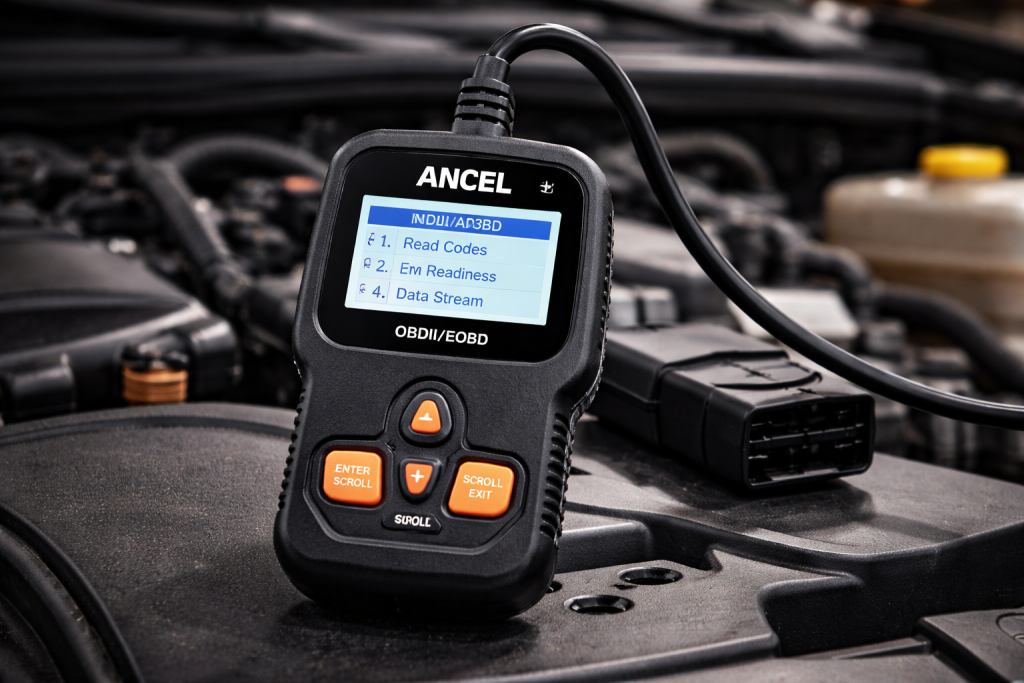
OBD2 Scanner
A diagnostic scanner can help read any fault codes and, on vehicles that make the relevant parameters available, check data such as coolant temperature.
HELPFUL TIP
OBD2 Scanner
See on Amazon →
Infrared thermometer
It can be used to compare surface temperatures of pipes and circuit parts during a test.
However, it does not replace a diagnosis and a single measurement does not allow us to establish that the thermostat is faulty.
HELPFUL TIP

Infrared thermometer
See on Amazon →
What NOT to do
Don't ignore a temperature that's too high
If the temperature exceeds the normal behavior of the vehicle, the cause must be identified.
Do not continue driving with obvious overheating
If a temperature warning light appears or the engine shows signs of overheating, stop safely.
Do not open the circuit when it is hot
The circuit may become pressurized and hot refrigerant may escape, causing burns.
Don't keep topping up without looking for the cause
If the coolant repeatedly drops, refilling will not solve the problem.
Don't replace your thermostat based on a symptom alone
High temperatures, weak heating or abnormal fans can also have other causes.
How much does it cost to replace a car thermostat?
The cost depends greatly on the vehicle.
On some engines, the thermostat is easily accessible; on others, it may be integrated into a housing or require more work to reach.
The cost of the component may include labor, refrigerant, and the operations required to properly restore the circuit.
For this reason, it is more useful to ask for a quote based on your model rather than using a universal figure.
When to go to the mechanic
Have your system checked if:
- the temperature becomes unstable;
- the engine tends to overheat;
- the engine no longer reaches normal temperature;
- the passenger compartment heating has become unusually weak;
- a warning light appears;
- the problem keeps coming back.
If, however, real overheating is already present, do not wait for a normal appointment and continue to use the car.
In summary
A stuck car thermostat It can behave mainly in two ways.
Locked closed: the engine can overheat because the coolant is not reaching the radiator properly.
Locked open: the engine may struggle to reach normal operating temperature.
Abnormal temperatures, cabin heating, and diagnostic data can provide clues, but no single symptom alone proves that the thermostat is faulty.
If the engine overheats, stop safely.

FAQ - Frequently Asked Questions
Can a stuck thermostat cause the engine to overheat?
Yes. If it doesn't allow coolant to reach the radiator properly, the temperature can rise to the point of overheating.
Can I drive with the thermostat stuck open?
A stuck open thermostat can keep your engine too cold.
However, there is no universal distance that we can consider safe: the problem must be diagnosed and repaired.
How do I know if the thermostat is stuck open?
One sign is an engine that takes much longer than usual to warm up, especially if the passenger compartment heating is weak at the same time.
However, a check is needed before attributing the problem to the thermostat.
How do I know if the thermostat is stuck closed?
A rapidly rising temperature may be consistent with a thermostat that is not opening, but there are other possible causes of overheating.
The diagnosis must therefore consider the entire cooling system.
How long does a car thermostat last?
There is no universal mileage that applies to all cars.
The duration depends on the component, the vehicle, and the condition of the cooling system. It's more effective to intervene when symptoms or anomalies are detected rather than considering a fixed mileage.
Can a faulty thermostat increase consumption?
It can contribute to higher fuel consumption if it keeps the engine too cold and prevents it from reaching normal operating temperature.
Can a faulty thermostat turn on the engine light?
On some vehicles, the electronic management can detect anomalies relating to the temperature or its trend and store errors.
How long does it take to replace a thermostat?
It depends on the location of the component and the engine configuration.
On some vehicles it is easily accessible, while on others replacement requires more disassembly.
Conclusion
The thermostat is a relatively simple component, but it plays an important role in managing engine temperature.
When closed, it can contribute to a rapid increase in temperature. When left open, it can prevent the engine from reaching operating temperature properly.
The most useful thing is not to replace it by trial and error, but to observe how the temperature behaves, check the cooling system and confirm the cause with a diagnosis.


 Italian
 English