
Reading time: 7 minutes
Immediate response
For make your car engine last longer As much as possible, the most important thing is regular maintenance: use the oil recommended by the manufacturer, check the levels, avoid strong acceleration when the engine is cold and intervene immediately when noises, leaks or warning lights appear.
Reach 300,000, 400,000 or even 500,000 km It is possible for some engines, but it cannot be guaranteed: it depends on the engine design, the use of the car, maintenance and history of the vehicle.
What you will learn:
- What habits really help your engine last longer?.
- Why oil and temperature are so important.
- What mistakes accelerate wear and tear.
- How to manage a high mileage engine.
- When to intervene before a serious breakdown occurs.
Index
How to make your car engine last longer
There is no trick that can turn any engine into a 500,000 km engine.
The difference comes mainly from the sum of many small attentions: properly maintained, engine operated in the right conditions, and problems addressed before they cause further damage.
Let's see the ones that really matter.
1. Oil and filter: the basis of engine life
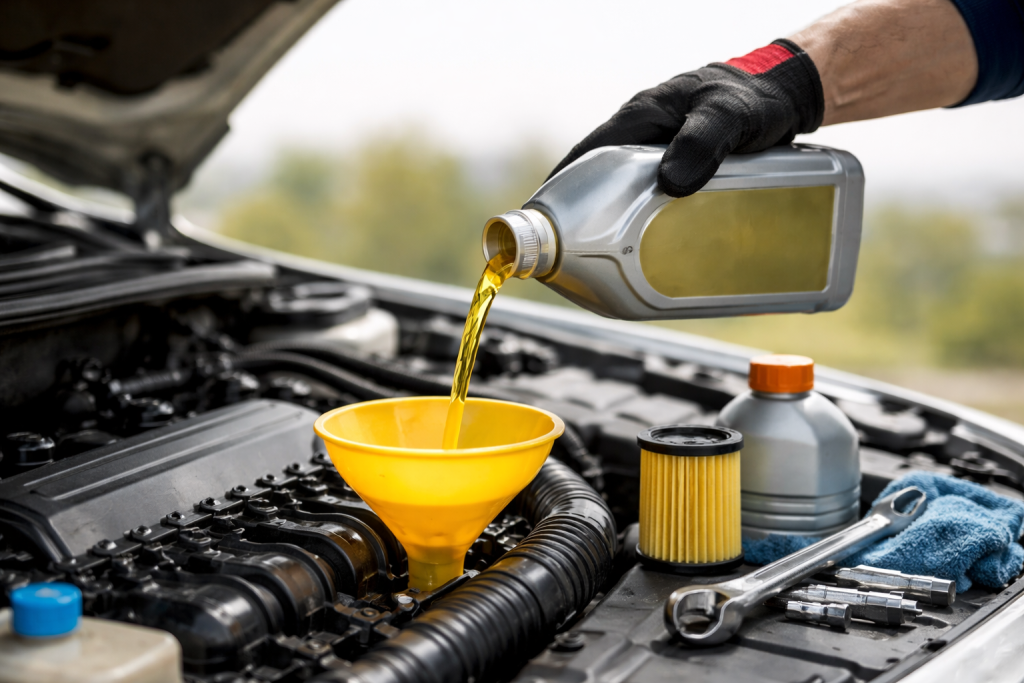
Oil lubricates internal parts, reduces friction, and helps control temperature and deposits.
When it is old, contaminated or insufficient, protection decreases and wear increases.
The safest rule is simple:
- use viscosity and specifications indicated by the manufacturer;
- respect the expected intervals;
- check the level periodically;
- Also replace the oil filter when required.
However, it is not correct to establish a universal interval such as “every 10,000 km”: engine, oil and maintenance schedule can be very different.
A check-up not to be postponed
If the oil level drops frequently, don't just add more.
Abnormal wear or a leak warrants a checkup, especially on an engine with high mileage.
2. Don't accelerate hard when the engine is cold.
Immediately after start-up, the oil and mechanical components have not yet reached normal operating conditions.
There is no need to leave the car idling for many minutes. It is generally better to start off normally and drive carefully until the engine warms up, avoiding intense acceleration and high revs.
It's a small habit, but repeated over thousands of starts it can make a difference.
3. Be careful with very short journeys
Continuously driving a few kilometers can be more demanding on the engine than longer trips.
The engine may not fully reach operating temperature and, depending on the type of engine, condensation and oil contamination may increase.
The problem is particularly important for some modern diesel engines, where exclusively urban use can also make correct management of the particulate filter more difficult.
If the car is used mainly for short journeys, maintenance and checks become even more important.
4. Check the cooling system
Serious overheating can cause very expensive damage.
That's why it's not just the oil that needs to be checked. The following are also important:
- coolant level and condition;
- any losses;
- sleeves;
- radiator;
- thermostat;
- water pump;
- cooling fan.
If the temperature suddenly rises above normal, continuing to drive can turn a relatively simple problem into cylinder head or gasket damage.
If you experience overheating, loss of power, unusual noises, or other difficult-to-interpret symptoms, please also consult our guide. Car Engine Problems: The Ultimate Guide to Understanding What's Happening to Your Car.
5. Drive without unnecessarily stressing the engine
Driving well doesn't necessarily mean driving slowly.
Continuous violent acceleration, frequently running the engine at high revs and high loads increase thermal and mechanical stress.
But the opposite extreme can also be wrong.
Avoid under-pairing
Asking for a lot of acceleration in too high a gear and with the engine running at very low revs can cause vibrations and high loads.
The solution is to use the engine in its normal operating range, downshifting when necessary.
A guide fluid and progressive It remains one of the simplest habits to reduce stress on the mechanics.
6. Distribution and critical components
Maintenance isn't just about oil and filters.
Timing belt or chain, tensioners and other components must be checked as required for that specific engine.
In the case of a timing belt, exceeding the expected replacement interval can be particularly risky: on many engines, a break can cause serious internal damage.
The same principle applies to components such as:
- water pump;
- auxiliary belts;
- belt tensioner;
- thermostat;
- deteriorated pipes.
An important rule applies here: follow the manufacturer's maintenance schedule, not a generic range found online.
7. Filters, fuel and intake
An engine also needs air and fuel in the right conditions.
Air filter
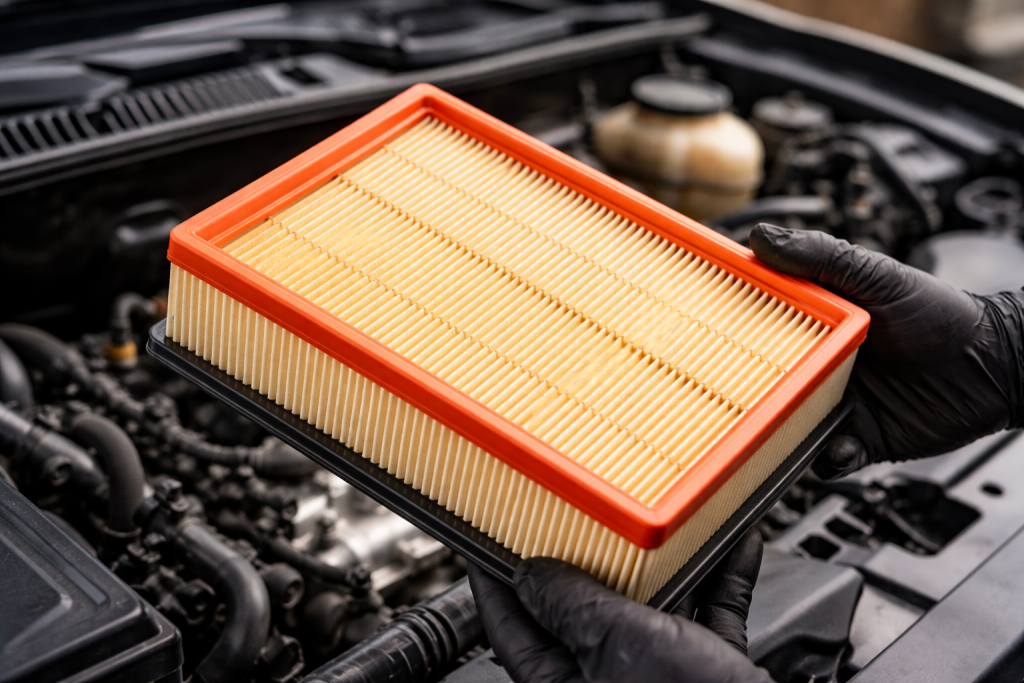
A very dirty filter can limit proper airflow and worsen engine performance.
Fuel filter
When required by the vehicle, it must be replaced at the intervals indicated.
Injectors and intake
Deposits and malfunctions can cause irregular combustion, loss of performance or increased fuel consumption.
However, additives are not a universal solution: they should only be used when appropriate and compatible with the vehicle.
If you want to occasionally clean your fuel system, first check that the product is compatible with your diesel or petrol engine and always follow the manufacturer's instructions.
HELPFUL TIP

Diesel/fuel injector cleaning additive
See on Amazon →
8. Turbo: be careful, especially after intense use
On a turbo engine it is important to use the correct oil and respect its maintenance.
After particularly strenuous use — for example, a long climb, towing, or driving with a heavy load — it may be helpful to avoid immediately turning the engine off.
However, there is no need to automatically apply the old “60 seconds at idle” rule in every situation: in modern cars a lot depends on the engine and the cooling system.
After normal city driving, there is generally no need to wait unnecessarily.
9. Warning lights, noises and leaks: don't wait for the breakdown
A new noise doesn't necessarily mean the engine is about to break down. But ignoring it isn't a good strategy.
Have your car checked when you notice:
- unusual metallic noises;
- new vibrations;
- noticeable loss of power;
- abnormal smoke;
- sudden oil consumption;
- fluid leaks;
- abnormal temperature;
- lights that stay on.
Early diagnosis can prevent a small problem from causing a much more expensive one.
Many serious injuries start from seemingly harmless behaviors: we have collected the most common ones in the guide Mistakes that destroy the engine: what mechanics see every day.
10. How to manage a high-mileage engine
An engine that has exceeded 200,000 or 300,000 km should not necessarily be considered “finished”.
It matters much more how is it working.
Positive signs are:
- smooth start;
- stable temperature;
- absence of significant losses;
- oil consumption under control;
- absence of abnormal smoke;
- regular operation;
- no suspicious mechanical noises.
As the mileage increases, it's a good idea to pay more attention to any changes in the car's usual behavior.
11. What to check periodically
A good routine includes checking the engine oil, coolant, filters, timing belt, battery, tires, warning lights, and leaks.
An electronic diagnosis can also be useful when symptoms or anomalies appear, but it does not replace mechanical maintenance.
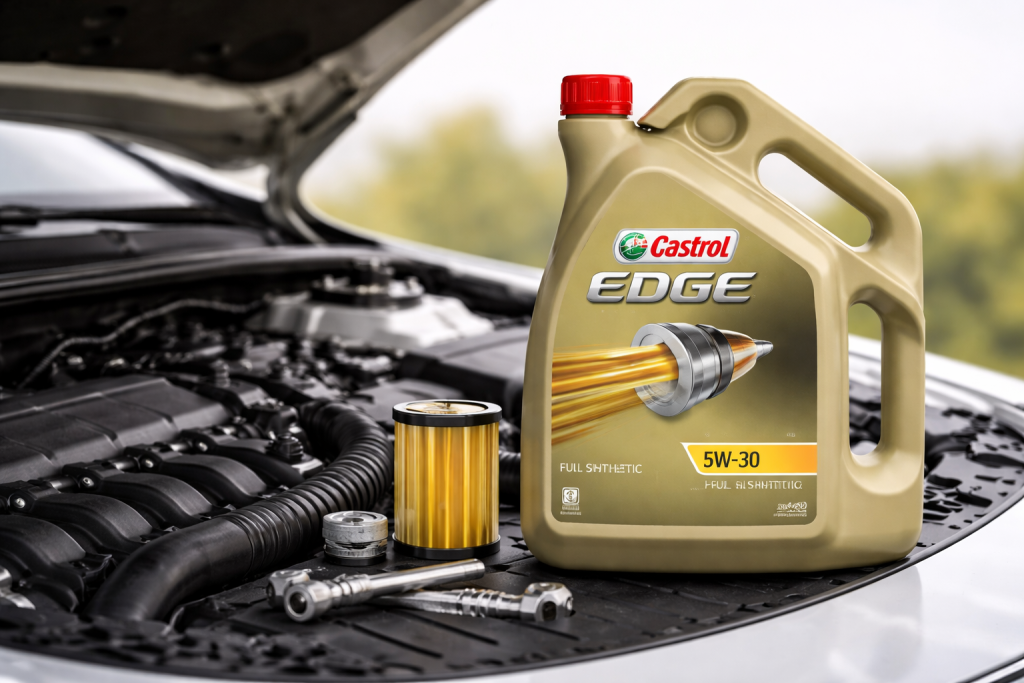
If you buy oil yourself, don't choose based only on the brand or price: check first viscosity and specifications required by your car manufacturer.
HELPFUL TIP
Synthetic engine oil
See on Amazon →
What if the car is left standing for a long time?
Inactivity can also create problems.
If the car is used rarely, the battery can discharge and long periods of inactivity can lead to other problems.
Simply running the engine for a few minutes while stationary isn't necessarily the best solution. Whenever possible, it's best to actually use the car for a suitable route.
For a car that is left unattended for long periods, a battery-compatible maintainer may be more useful than repeated short engine starts.
HELPFUL TIP
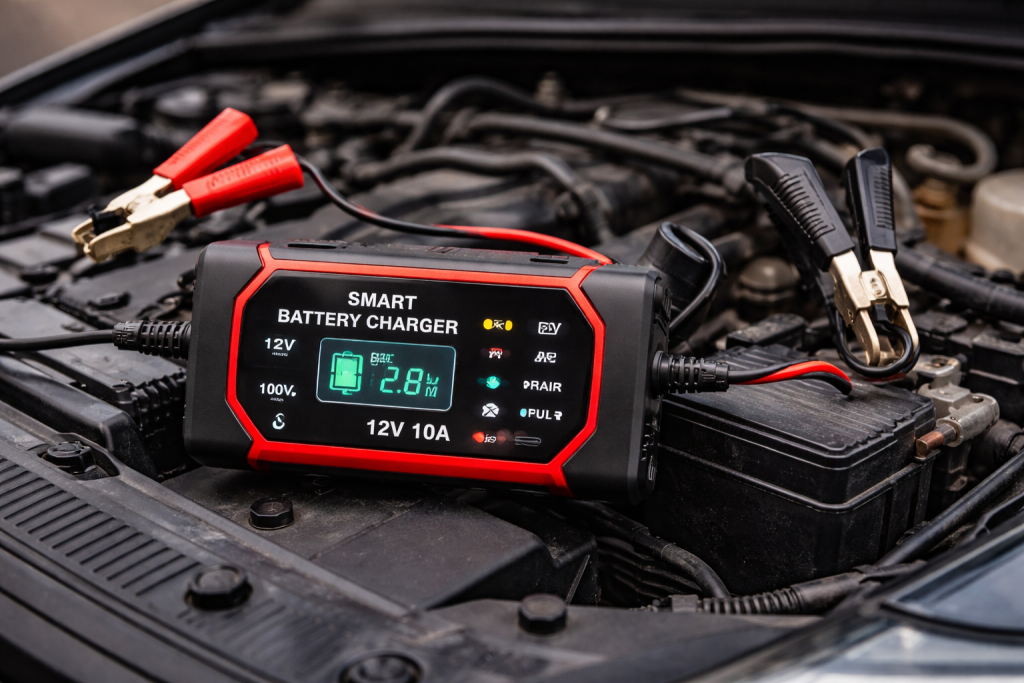
Intelligent car battery charger
See on Amazon →
Can you really reach 500,000 km?
Yes, some cars reach and exceed 500,000 km, but it would be wrong to present this mileage as a guaranteed result by following a certain maintenance.
Two engines treated the same way can have different lifespans.
Model, design, conditions of use, previous maintenance and individual components can influence the result.
The realistic goal should therefore not be to chase a precise number, but avoid wear and tear and failures that can be prevented.
In summary
To make your car engine last longer:
- use oil that meets specifications;
- respect the scheduled maintenance;
- don't stress the engine when it's cold;
- check coolant and temperature;
- avoid ignoring leaks, noises and warning lights;
- takes care of distribution, filters and critical components;
- drives smoothly;
- intervene early when something changes.
There is no miracle product that takes an engine to 500,000 km. The best protection remains correct and constant maintenance.

FAQ - Frequently Asked Questions
How long does a modern engine last?
There's no one-size-fits-all mileage. Many engines can travel several hundred thousand miles if properly maintained, while breakdowns, heavy use, or insufficient maintenance can significantly reduce their lifespan.
Does diesel or gasoline last longer?
There's no hard and fast rule. Engine design, maintenance, and usage are often more important than fuel alone.
Does cold acceleration ruin the engine?
Accelerating hard immediately after starting increases the stress unnecessarily when the engine and lubricant are not yet at normal operating conditions. It's best to drive sparingly for the first few minutes.
Does changing the oil frequently make the engine last longer?
Good oil is essential, but changing it arbitrarily much earlier than necessary won't guarantee a longer lifespan. It's important to use the right oil and follow the intervals appropriate for your vehicle and operating conditions.
Conclusion
Getting to 500,000 km doesn't depend on a single trick.
The life of the engine is built kilometer after kilometer: correct oil, temperatures under control, punctual maintenance, sensible driving and attention to the first symptoms.
We can't know how many miles a given engine will run. However, we can avoid many of the mistakes that unnecessarily shorten its life.


 Italian
  English