
Reading time: 7 minutes
Immediate response
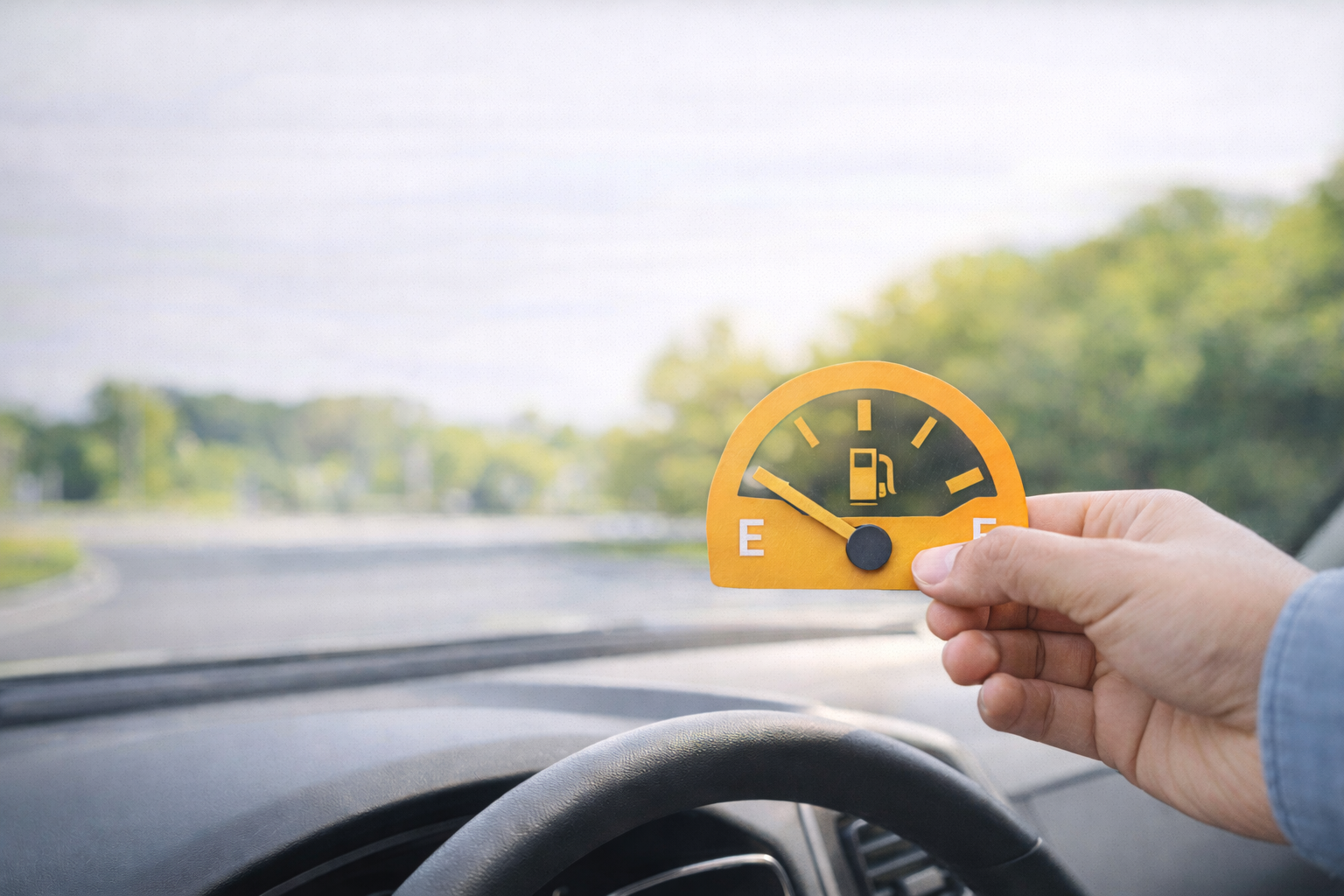
The dirty injectors They can contribute to increased fuel consumption when deposits or residues affect proper fuel delivery. However, increased fuel consumption doesn't automatically mean dirty injectors: tire pressure, short trips, sensors, ignition, and other issues can produce similar symptoms.
If in addition to the high consumption you notice rough idling, jerking, difficult starting, loss of power, abnormal smoke or engine light, it is worthwhile to delve deeper into the power supply system instead of using products or replacing components by trial and error.
What you will learn:
- How injectors work.
- Because they can affect consumption.
- What symptoms may indicate a problem.
- How to check if consumption has actually increased.
- What can an OBD2 diagnosis show?.
- When is a cleaning enough and when is a professional checkup necessary?.
Index
How injectors work
The injectors meter the fuel needed for the engine to function.
Their management depends on the type of fuel system and the vehicle's control unit. Fuel must be delivered at the correct time and in the correct quantity to achieve proper combustion.
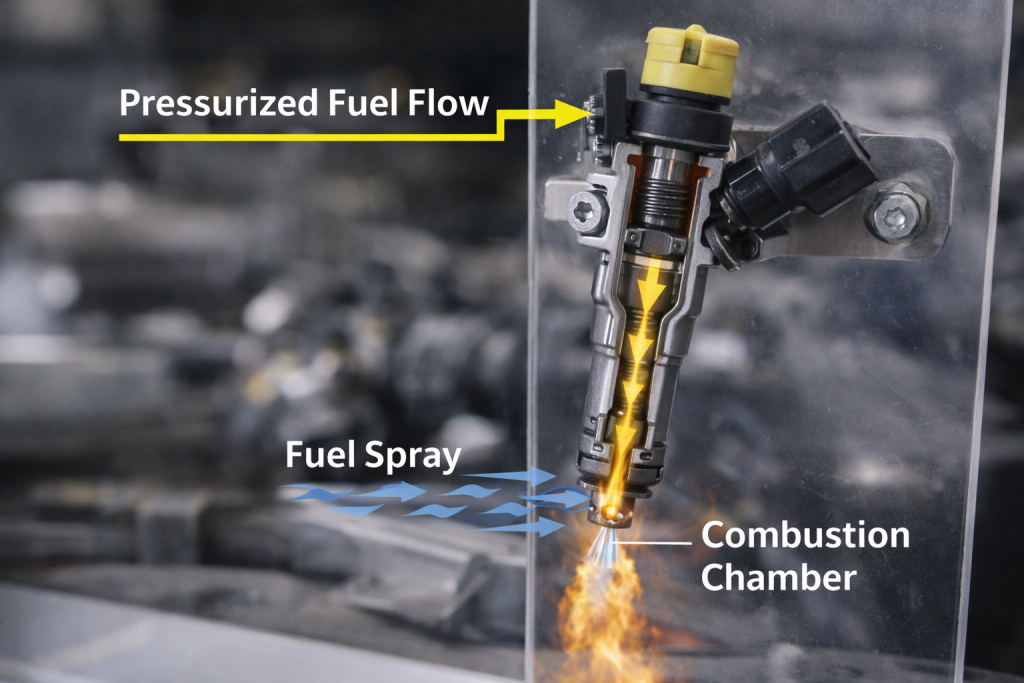
In a simplified way:
- the control unit controls the injector;
- the injector opens;
- the expected amount of fuel is delivered;
- combustion occurs.
When injector operation changes, combustion, performance and emissions may also change.
What it really means to have dirty injectors
It doesn't necessarily mean you see dirt on the injector.
Deposits and residues can form in the fuel system which, under certain conditions, can interfere with fuel delivery.
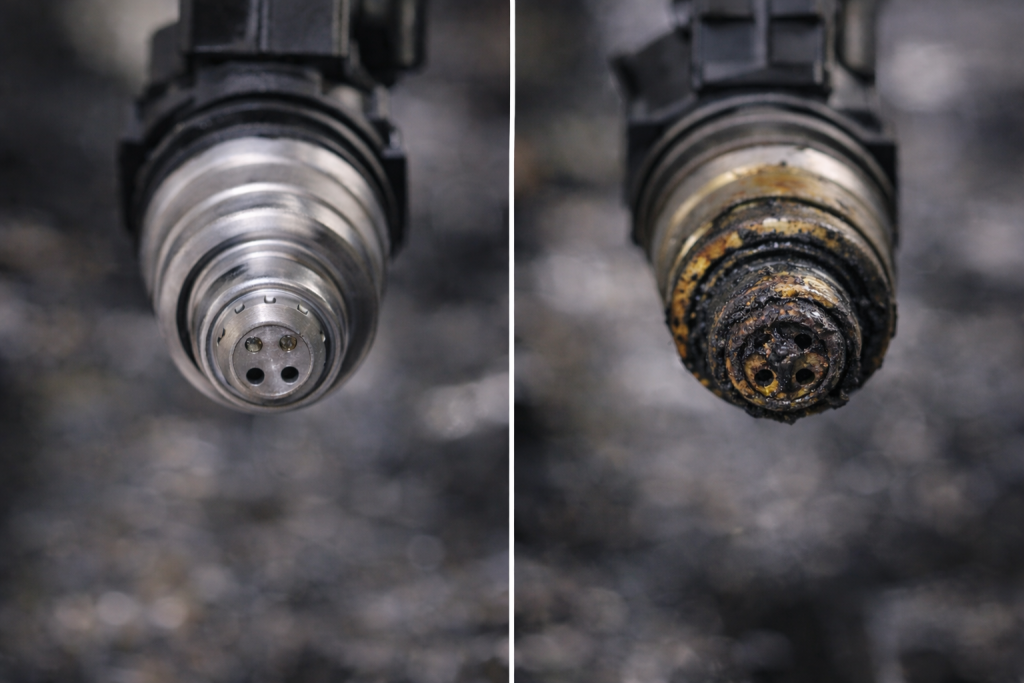
The problem may concern, for example:
- nozzles;
- spray quality;
- flow rate;
- injector response.
But an injector can also have a problem electrical or mechanical. This is why “dirty” and “broken” are not the same thing.
Petrol and diesel injectors: what's the difference?
Not all cars use the same system.
Indirect injection petrol
Fuel is injected into the intake manifold before entering the combustion chamber.
Direct injection petrol
The fuel is injected directly into the combustion chamber, with pressures and strategies that depend on the system used.
Common rail diesel
The system uses high pressures and very precise control of injection quantity and timing.
In all these cases correct fuel delivery is important, but symptoms, diagnosis and interventions can be different.
Dirty injectors and fuel consumption: what's the connection?
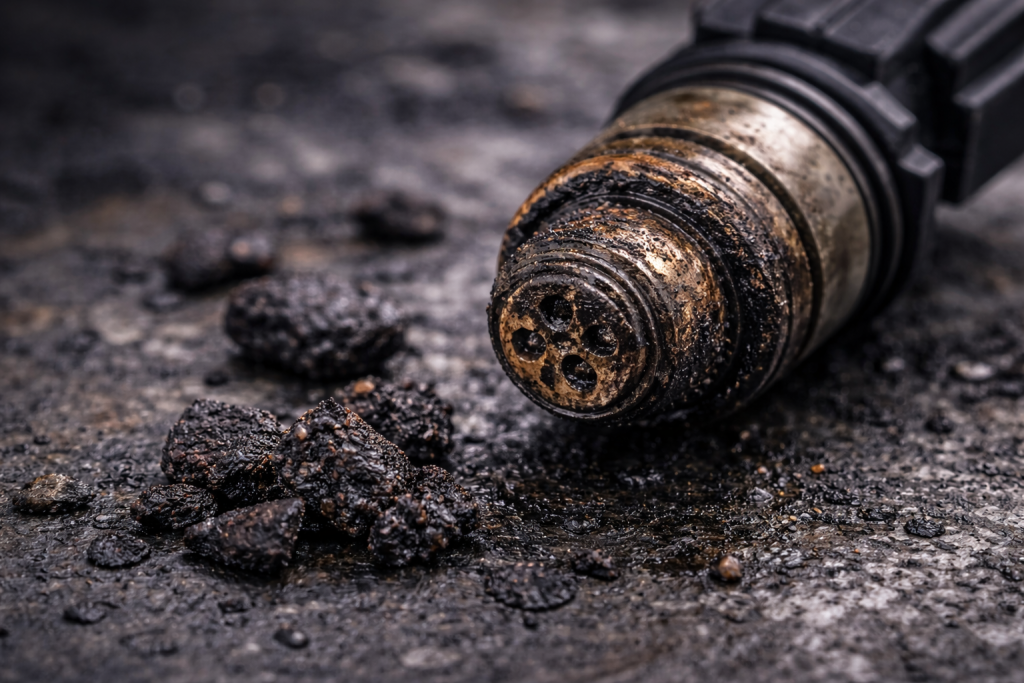
If an injector does not deliver fuel as expected, combustion may become less consistent or less efficient.
Depending on the problem and the engine management system, the following may change:
- mixture corrections;
- regularity of operation;
- performance;
- emissions;
- fuel consumption.
This explains why injectors can be a possible cause of abnormal consumption.
However, there is no universal percentage of excess fuel attributable to dirty injectors. The effect depends on the engine, the type of injection, the severity of the problem, and the conditions of use.
Symptoms of dirty injectors
The symptoms are not the same on all cars and, above all, they are not exclusive to injectors.
Possible signs include:
- increase in consumption;
- irregular idle;
- less smooth acceleration;
- jerks;
- starting difficulties;
- loss of power;
- abnormal smoke;
- smell of fuel;
- engine warning light in the presence of certain anomalies.
A single symptom is not enough to establish that the injectors are dirty.
Increased consumption without other symptoms
If your car is running well but you've simply noticed fewer miles on a tank, don't start from the injectors right away.
First check if they have changed:
- path;
- traffic;
- outside temperature;
- number of short trips;
- tire pressure;
- car loading;
- driving style.
Read also: Cars that consume too much fuel: 12 causes and what to check.
How to check if your car really consumes more fuel
Before looking for a fault, measure the consumption.
The full-full method is simple:
- fill up;
- reset the trip odometer;
- uses the car normally;
- the next time you fill up, write down the litres and kilometres;
- calculate consumption;
- Repeat the check on multiple supplies.
For example:
600 km ÷ 40 liters = 15 km/l
A single tankful isn't enough to draw any conclusions. Traffic, temperature, route, and usage patterns can significantly alter the results.
How to understand if the problem could be in the injectors
The suspicion becomes more interesting when the increase in fuel consumption appears together with other changes in engine behavior.
Irregular idle
If the engine no longer idles smoothly, the fuel system is one area to check.
But there may also be other causes.
Jerking or erratic acceleration
Improper fuel delivery can affect engine response.
However, ignition, intake or sensor problems can also cause similar symptoms.
Difficult startup
An injector problem can affect starting, but the battery, ignition, fuel pressure, and other components should also be considered before attributing the cause.
Smoke or abnormal odor
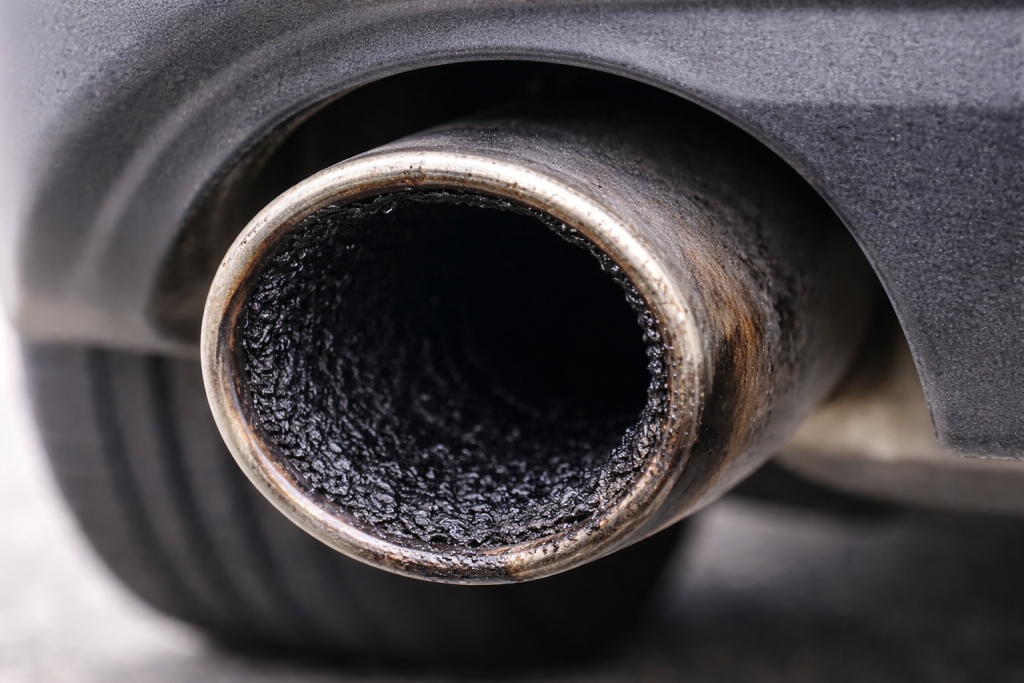
Persistent smoke or a strong fuel odor warrants an inspection.
If you smell a strong fuel odor or notice a visible leak, stop safely and have your car checked.
OBD2 Diagnostics: What It Can Really Tell You
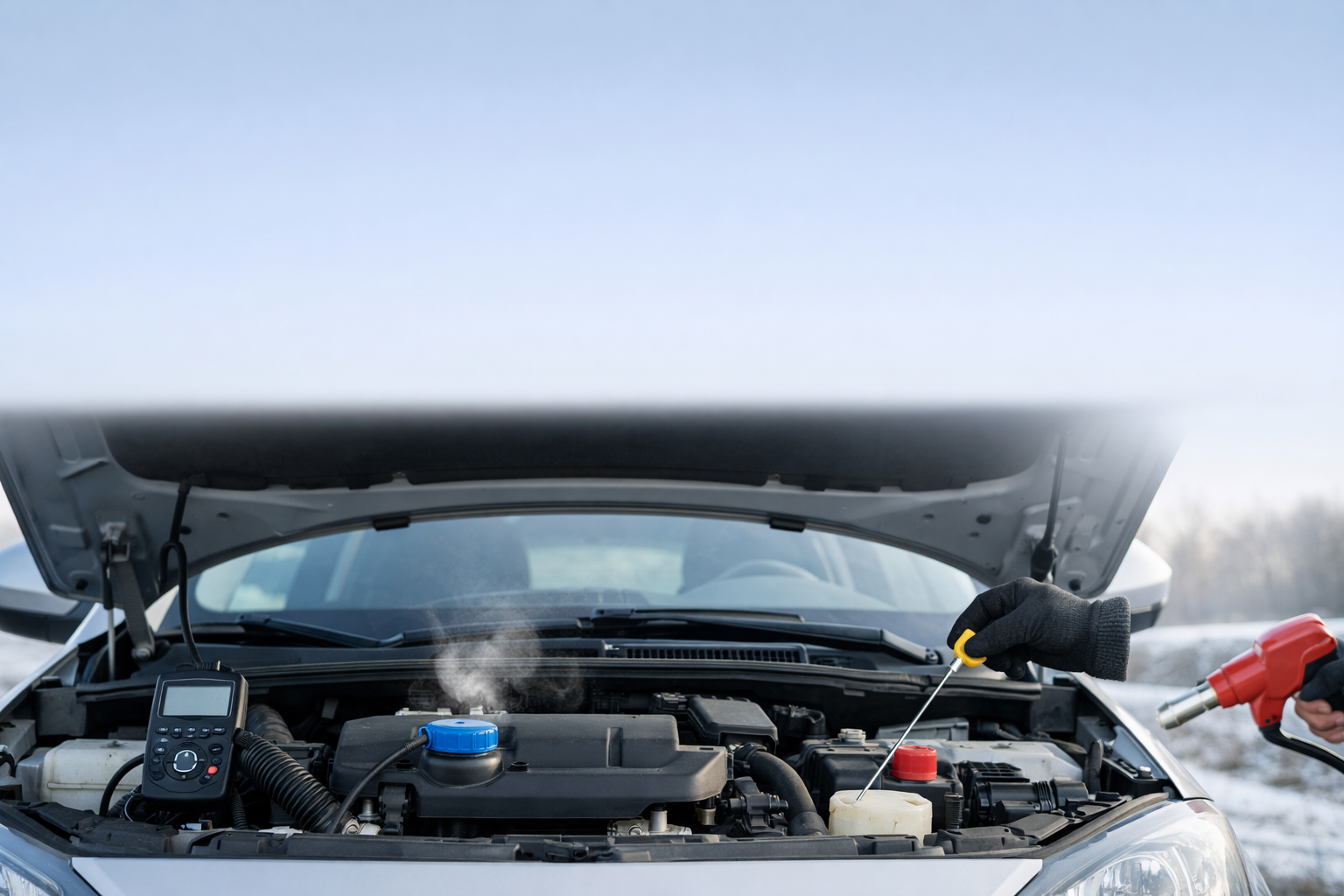
Electronic diagnostics can be useful, especially if high fuel consumption is accompanied by an engine warning light or operating problems.
You can find:
- error codes;
- fuel corrections;
- data from some sensors;
- operating parameters available on the vehicle.
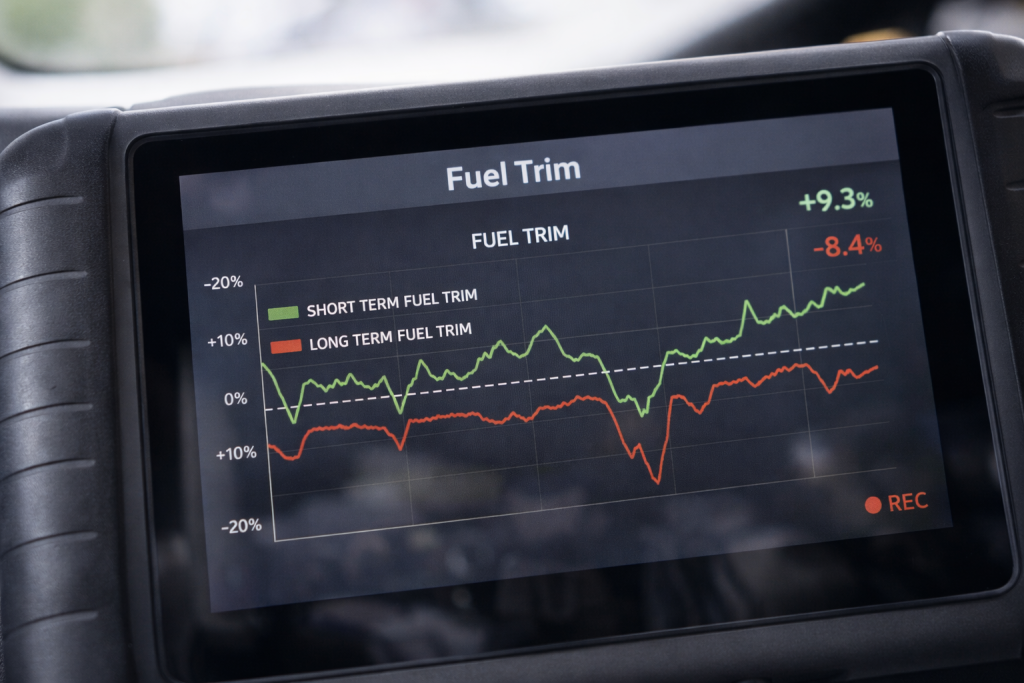
STFT and LTFT
On many petrol cars, the available data may include Short Term Fuel Trim (STFT) e Long Term Fuel Trim (LTFT).
In a simplified way:
- positive corrections indicate that the ECU is adding fuel compared to the baseline strategy;
- negative corrections indicate that it is reducing it.
These values They don't diagnose a dirty injector on their own.
An abnormal correction can also be linked to unwanted air intake, fuel pressure, sensors, ignition problems or other conditions.
It is therefore necessary to interpret the data together with symptoms, error codes and specific engine characteristics.
HELPFUL TIP
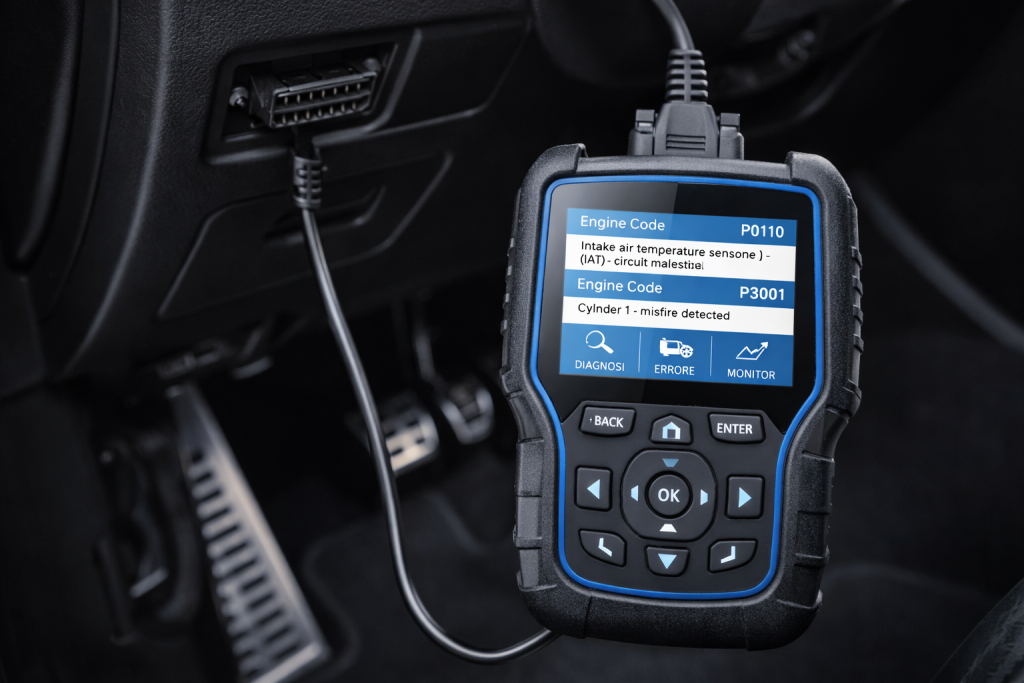
OBD2 diagnostic scanner
See on Amazon →
When fuel consumption does NOT depend on the injectors
Before working on the injection system, consider other possible causes.
Among these:
- incorrect tire pressure;
- mainly urban use;
- very short journeys;
- air filter to be replaced;
- ignition problems;
- sensors or engine management;
- incorrect operating temperature;
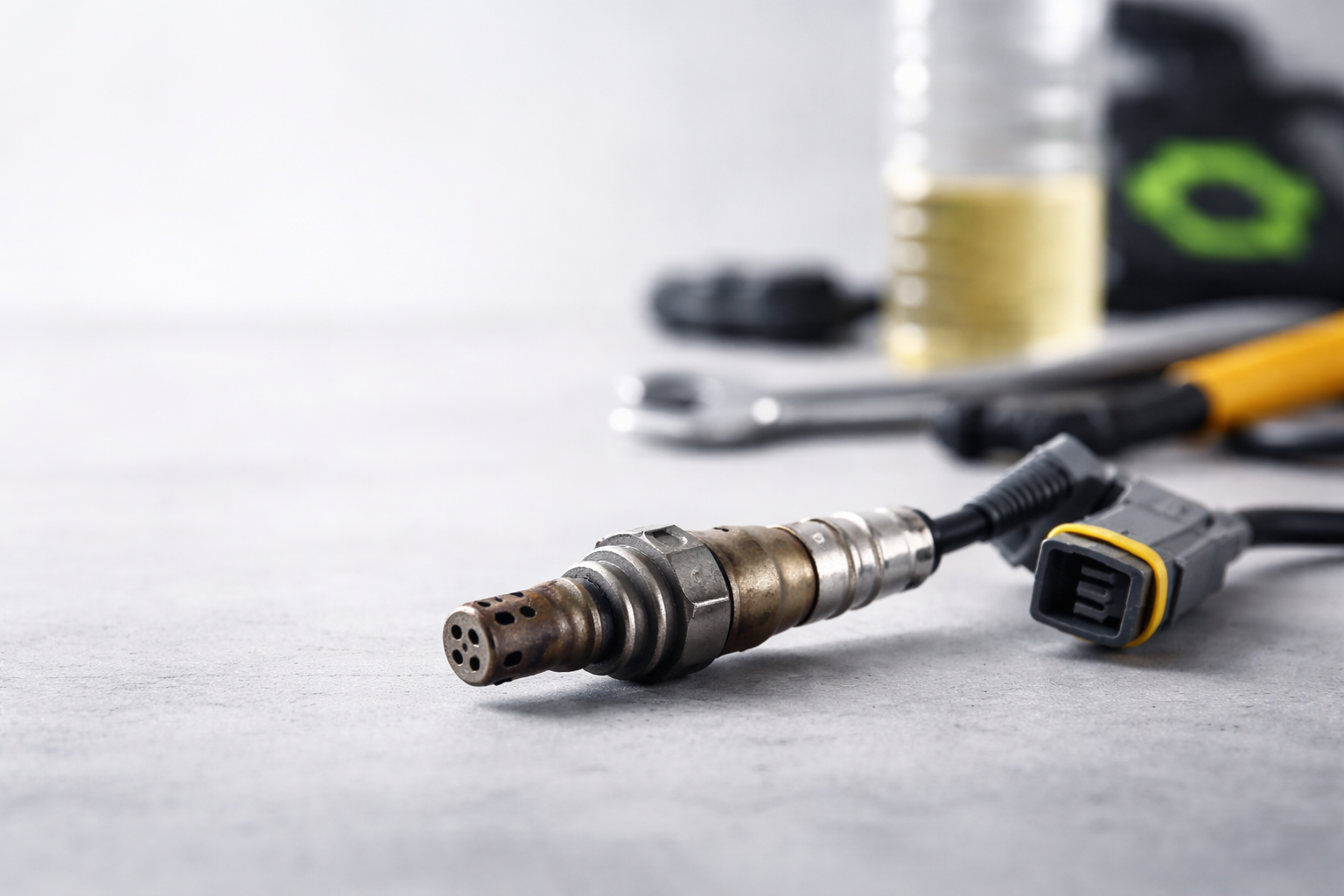
- lambda probe;
- driving style.
Read also: Faulty lambda sensor: symptoms, consumption, and solutions
If the increase occurs mainly during the first few kilometers:
Read also: Cars consume too much fuel when cold: causes, symptoms, and solutions
Fuel injector additives: when they make sense
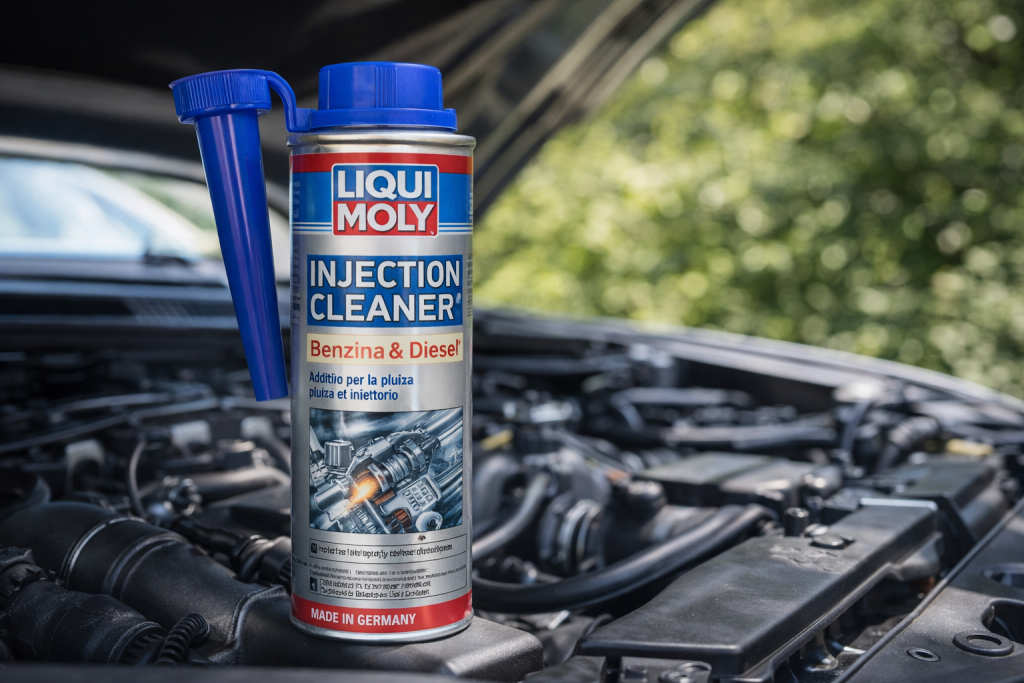
An additive compatible with the engine and fuel can be used following the manufacturer's instructions.
However, it must be considered for what it is.
This is not a diagnostic test and will not repair a mechanically or electrically faulty injector.
If the engine is running normally and you want to use a fuel system maintenance product, check:
- petrol/diesel compatibility;
- how to use;
- quantity indicated;
- any manufacturer limitations.
HELPFUL TIP
Fuel system cleaner
See on Amazon →
When professional cleaning is needed
If there are obvious symptoms and the diagnosis actually points to the injectors, a more thorough check may be necessary.
Depending on the system and the problem, a professional may check:
- electrical operation;
- system pressure;
- flow rate;
- estate;
- quality of delivery;
- any differences between the injectors.
When required, cleaning can be performed using specific procedures and, in some cases, with the injectors removed.
However, a problematic injector cannot always be recovered with cleaning.
Cleaning or replacement?
It depends on the cause.
Cleaning
It may make sense when the problem is actually related to deposits and the injector is still functional.
Replacement or repair
It may become necessary when there is a fault that cleaning cannot fix.
For this reason it is best to avoid the sequence:
consumes too much → additive → cleaning → replacement
without first checking that the problem actually comes from the injectors.
How much does it cost to clean injectors?
There is no one-size-fits-all price for all cars.
The cost depends on:
- petrol or diesel;
- type of injection;
- number of injectors;
- need for disassembly;
- cleaning method;
- any tests;
- accessibility of components.
Before authorizing a more significant intervention, ask what will be inspected and what the estimate includes.
How to prevent injector problems
There's no need for rigid rules like using an additive every certain number of kilometers or premium fuel every three tanks.
It's more useful:
- comply with the maintenance required by the manufacturer;
- use fuel that meets vehicle specifications;
- don't ignore operating problems;
- control a persistent increase in consumption;
- intervene when real symptoms appear.
If you use an additive, follow the frequency and dosage recommended by the product manufacturer and check that it is suitable for your engine.
Does driving on the highway clean the injectors?
There is no universal rpm or travel time that will guarantee clean injectors.
A longer route may simply allow the engine to work longer under normal operating conditions than continuous very short routes.
This does not mean that intentionally keeping the engine at a certain RPM will repair or clean a problem injector.
How long do injectors last?
There is no universal mileage after which injectors necessarily need to be replaced.
The duration depends on:
- system design;
- engine type;
- terms of use;
- maintenance;
- fuel quality and contamination;
- any faults in the power supply system.
A properly functioning injector does not need to be replaced just because the car has reached a certain mileage.
Technical sources
Bosch Mobility — Gasoline Direct Injection
SAE International — Measurement and Control of Fuel Injector Deposits in Direct Injection Gasoline Vehicles
SAE International — Study of Effects of Deposit Formation on GDi Injector and Engine Performance
Read also:
In summary
The dirty injectors They can contribute to increased consumption, but high consumption alone does not allow for their diagnosis.
Before intervening:
- check that consumption has actually increased;
- compare multiple full and similar conditions;
- look for any other symptoms;
- check for other common causes;
- use electronic diagnostics when it can provide useful information;
- Avoid replacing components by trial and error.
Additives may be used when compatible and as directed, but are not a substitute for diagnosing a mechanical or electrical problem.

Frequently Asked Questions
Do dirty injectors really increase fuel consumption?
They can. If deposits or anomalies affect the correct fuel delivery, combustion and engine management can be affected. However, there is no one-size-fits-all increase percentage for all cars.
How do I know if the injectors are dirty?
High fuel consumption, rough idling, jerking, difficult starting, and loss of power may be consistent with an injector problem, but they can also have other causes. This is why it's important to diagnose the problem before taking action.
Do dirty injectors always turn on the engine light?
No. The presence of the warning light depends on the type and severity of the anomaly and what the control unit is able to detect.
How often should the injectors be cleaned?
There's no universal interval that applies to all cars. Follow your vehicle's maintenance schedule and the specific instructions for any products you use.
Can an additive clean injectors?
A compatible product can be used to maintain the fuel system according to the manufacturer's instructions. However, it cannot repair a damaged injector or replace a diagnostic tool.
Can I tell from the STFT and LTFT if the injectors are dirty?
No. Fuel adjustments can help with diagnosis, but abnormal values can be caused by numerous factors. They must be interpreted in conjunction with other engine data.
If the car consumes more fuel, should I clean the injectors immediately?
No. First check your actual fuel consumption and consider tire pressure, route, temperature, maintenance, and other potential engine issues.
Conclusion
The dirty injectors They can affect fuel consumption, but they are not automatically the cause when a car starts to consume more fuel.
The most useful way to proceed is to start from the symptoms and data: measure the actual consumption, observe how the engine runs and use the diagnostics when necessary.
If the problem actually lies with the injectors, you can evaluate the appropriate intervention. If, however, the car's fuel consumption is higher for another reason, you can avoid spending money on additives, cleaning products, or replacement parts that don't solve the problem.
 Italian
  English