
What you will learn:
- How to create a vertical garden even in a small space
- which structures work best
- which plants to choose
- how to water correctly
- mistakes that cause plants to die
- how to really increase production
IMMEDIATE RESPONSE
A vertical garden on your balcony allows you to grow vegetables, herbs, and strawberries in a small space by using walls, shelves, and modular planters. With at least 4–5 hours of light and the right structures, you can create a small, productive urban garden even if you live in an apartment.
Would you like to grow basil, lettuce, or cherry tomatoes but think you don't have enough space?
It is one of the most common problems for those who live in the city.
Many balconies are small, narrow, or poorly organized, and people often give up on the idea of creating a vegetable garden because they think they need a garden.
The truth is that today a vertical garden on the balcony allows you to grow many plants even in a few square meters, exploiting the space in height rather than width.
More and more people are discovering the charm of’vertical garden on the balcony, a simple, sustainable, and surprisingly productive solution for transforming a few square meters into a small green space.

In recent years, urban gardening has become a real trend.
Even those who live in an apartment today can create a small urban vertical garden without any experience.
Not only for aesthetic reasons, but also for the desire to eat fresh products, grown naturally and without pesticides.
A vertical garden allows you to maximize space vertically rather than horizontally. This way, even a balcony of just a few meters can accommodate a variety of plants: herbs, lettuce, strawberries, cherry tomatoes, and much more.
And the best part is that you don't need to be a gardening expert. With a few tricks and the right tools, you can create a functional vertical garden, even from scratch.
What is a vertical garden on the balcony?
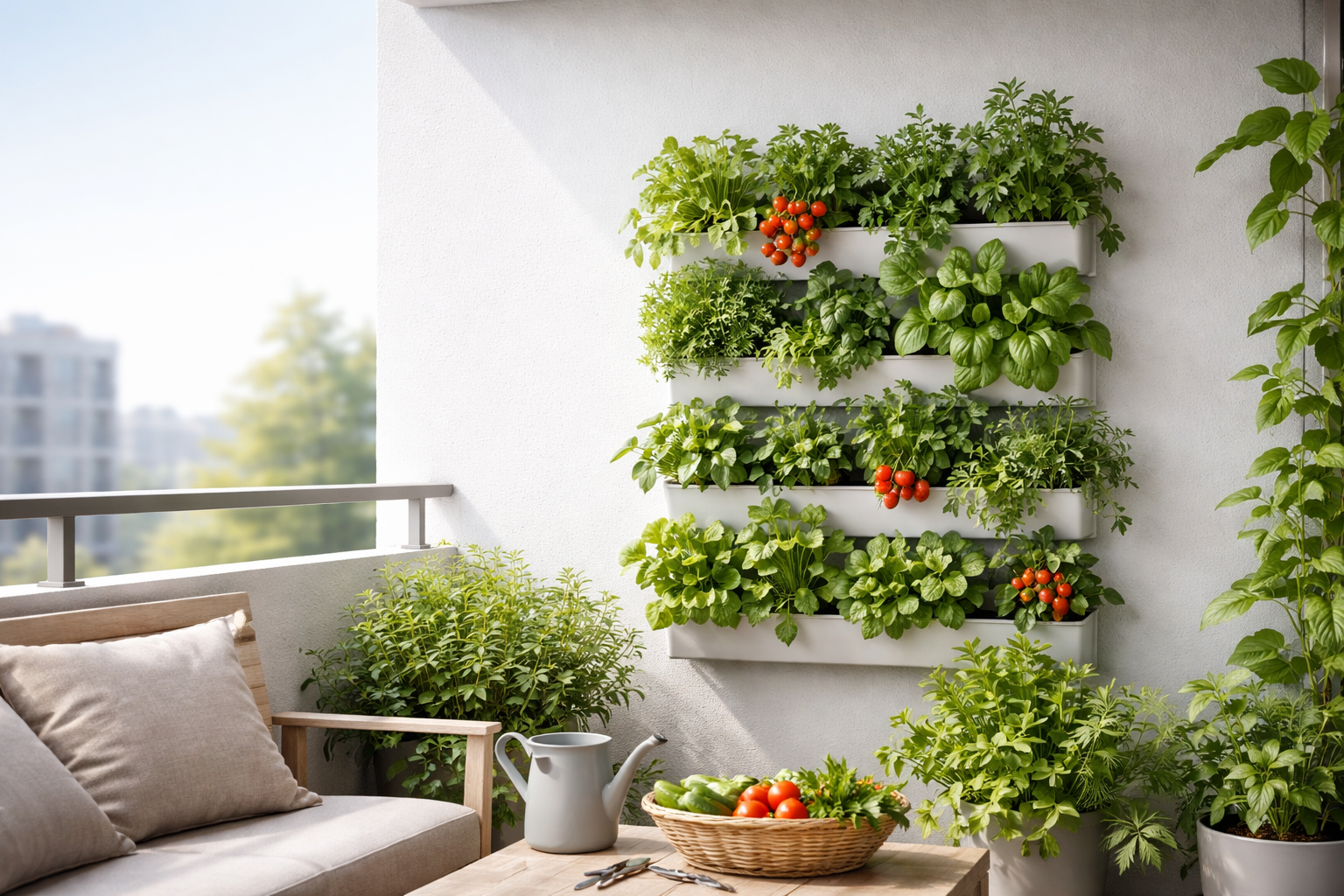
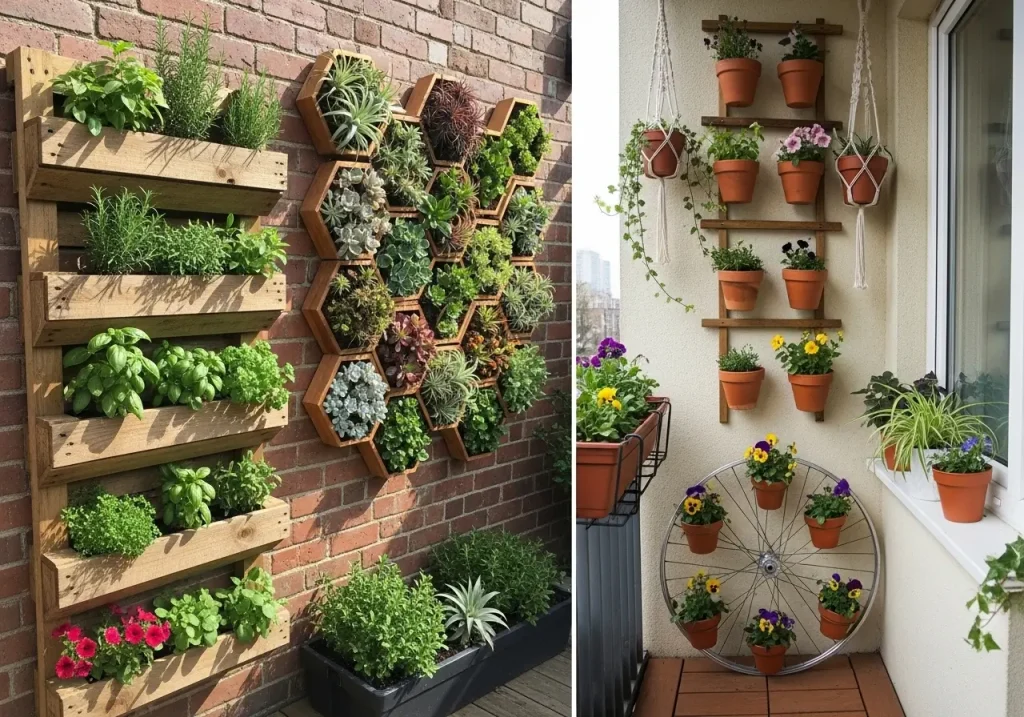
A vertical garden on the balcony is a growing system that uses the available overhead space to grow plants in small spaces, using structures such as pallets, shelves, wall units, or modular planters.
Many choose a DIY vertical garden using pallets, shelves, or modular planters to make the most of even very small balconies.
Advantages of a vertical garden on the balcony
Those who live in cities often think that farming is impossible. In reality, the opposite is true.
Many balconies are perfect for small urban gardens and offer several advantages.
The first is space. A traditional garden requires a horizontal surface, while a vertical one relies on walls and railings.
The second is convenience. The plants are easier to manage, water, and harvest.
Then there's the aesthetic aspect. A well-organized vertical garden transforms the balcony into a welcoming and relaxing green space.
Many people start with a simple basil plant and after a few months transform their balcony into a small productive space. Seeing something grow every day creates a satisfaction that's hard to explain.
What to do right before you start
Before purchasing vases or vertical structures, check these aspects:
- How many hours of sun does the balcony receive?
- presence of strong wind
- weight that the railing can support
- access to water
- available height space
Many mistakes arise precisely from starting without evaluating the exposure and stability of the structures.
How to create a vertical garden on your balcony, step by step
Creating a vertical garden is easier than it seems. Just follow a few basic steps.
Where to start if you are a beginner
Evaluate exposure and light. Most vegetables need at least 4–5 hours of direct light per day. If your balcony receives less sun, it's best to focus on hardy herbs and salads.
- southern exposure → ideal
- partial exposure → choose resistant plants
If the balcony is more shaded you can grow:
- lettuce
- arugula
- spinach
- parsley
Choose the right structure
You can use:
- wooden pallets
- shelves
- hanging vases
- vertical planters
The important thing is that they are stable and resistant.
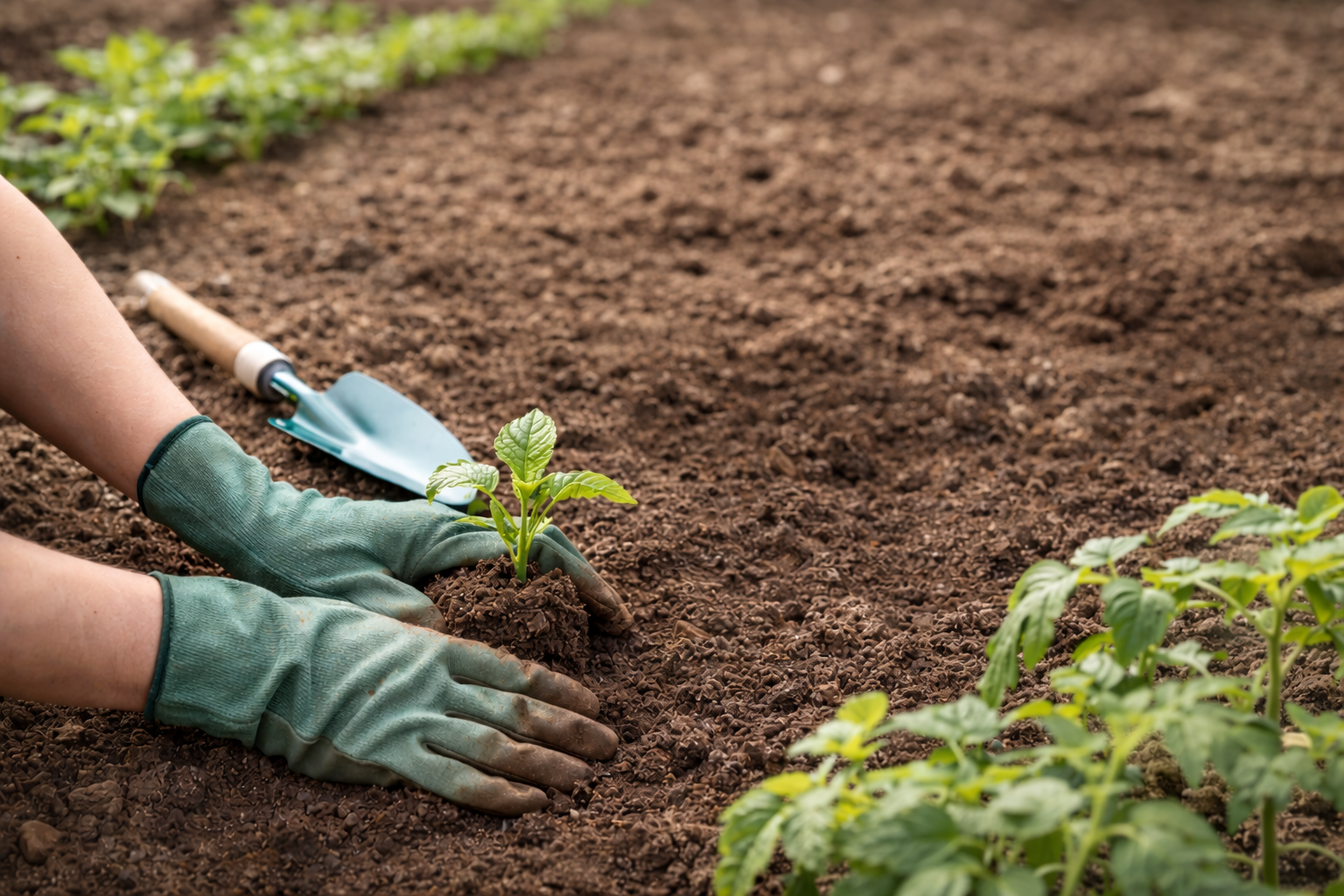
Use good potting soil
An organic, well-draining soil is essential for plant growth.
Start with a few plants
To start, choose simple varieties:
- basil
- mint
- lettuce
If you're just starting out, avoid overly complicated solutions. A simple modular structure allows you to quickly figure out which plants grow best on your balcony.
If you're unsure which varieties to choose, you can also read our complete guide to the easiest aromatic plants to grow on your balcony.
 Aromatic plants on the balcony: complete guide to growing them in pots (even if you are a beginner)
A modular kit can help you better organize your pots, plants, and available space, especially if you're starting from scratch.
Vertical garden kit
Ideal for creating a small, organised urban garden
easy to use
perfect for small balconies
suitable for beginners
Which balconies are suitable for a vertical garden?
Not all balconies are the same, but almost all can accommodate a vertical garden.
The two most important things to consider are:
- sunbathing
- available space
A south or southeast facing balcony is ideal.
If it is more shaded, you can choose plants such as:
- lettuce
- arugula
- chives
- parsley
Wind is also a factor to consider, especially on higher floors. In these cases, it's best to use solid structures and stable pots.
When a vertical garden can become difficult to manage
Not all balconies are perfect for a very large vertical garden.
You may experience difficulty if:
- the balcony receives less than 2–3 hours of light
- there is a constant strong wind
- you don't have easy access to water
- you use structures that are too heavy
- the balcony is very small and already full
In these cases it is better to start with few aromatics and light structures.
Best ways to create a vertical garden on your balcony

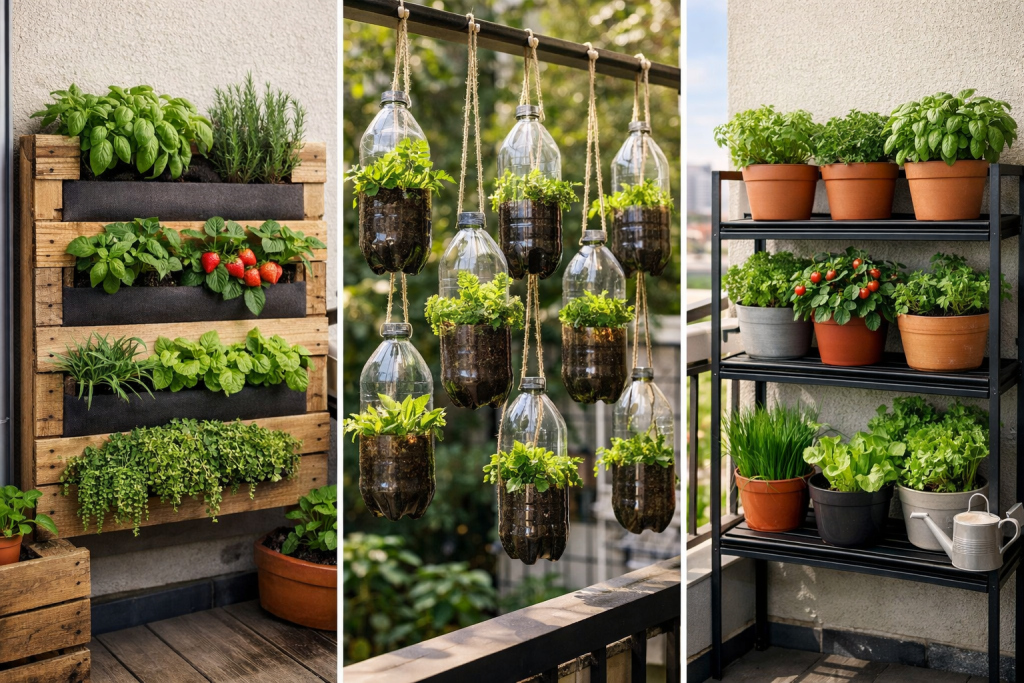
Vertical garden with pallets
One of the most popular and economical systems.
Procedure:
- fix a cloth on the back
- fill with soil
- insert the plants between the boards
Vertical garden with plastic bottles
An economical and sustainable solution.
Ideal for:
- aromatic herbs
- lettuce
- strawberries
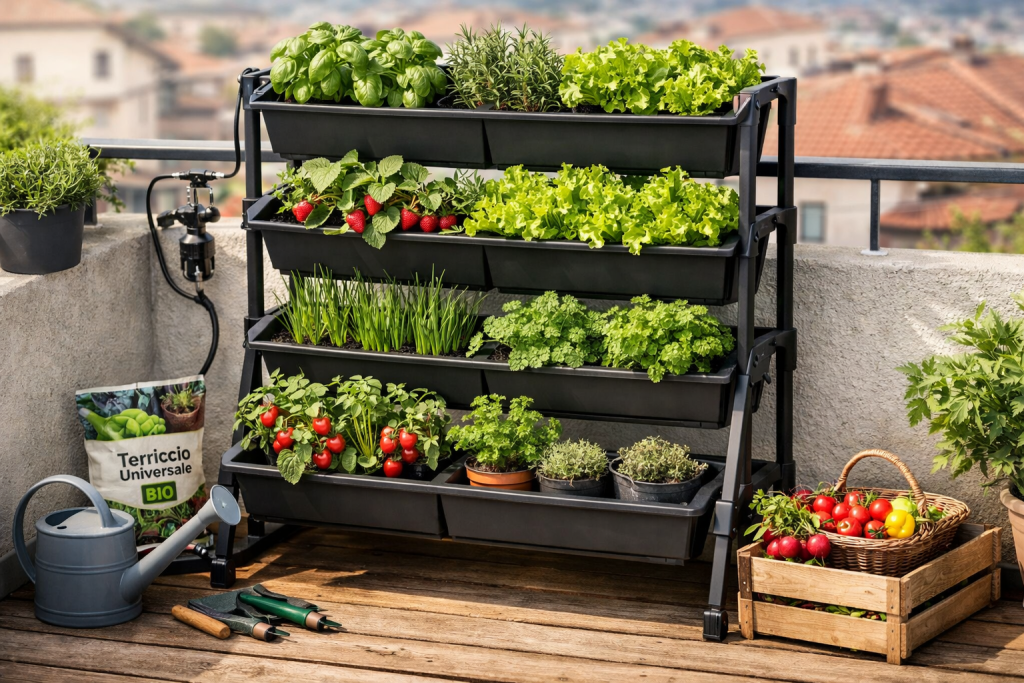
Vertical garden with shelves
The simplest and most tidy solution for organizing plants on multiple levels.
Do you prefer a ready-made solution?
Check out the best space-saving vertical planters:
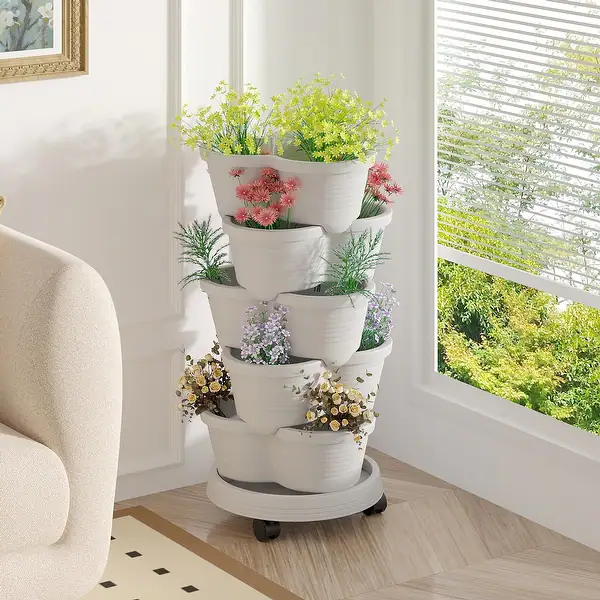
Vertical planter
Perfect for small balconies, with a stable structure and different cultivation levels.
How to make the most of your balcony space
Effective strategies
- multi-level cultivation
- use of railings
- compatible plants
- modular systems
Ideal layout
- tall → aromatic
- medium → salads
- low → large plants
What is the ideal height for a vertical garden?
Many vertical balcony structures are between 80 and 180 cm high.
For small balconies, it's best to develop the vegetable garden higher than it is wide, leaving the passageway free.
Want to make the most of every inch?
Discover the most effective modular structures:
The best plants for a vertical garden
Not all plants adapt equally, but some do very well.
Aromatic plants
- basil → grows quickly and is ideal for beginners
- rosemary → tolerates heat well and requires little water
- thyme → perfect for very sunny balconies
- sage → hardy and easy to maintain
- parsley → grows well even in not too strong light
- mint → very resistant, but better to keep it in a separate pot
Salads
- lettuce → grows well even in pots that are not too deep
- rocket → quick to grow and suitable for beginners
- valerian → ideal for small but frequent harvests
Strawberries
Perfect for vertical cultivation and very productive.
Cherry tomatoes
If the balcony is sunny:
- cherry tree → very productive even in pots
- datterino → resists the summer heat well
To get a bigger harvest even in a small space, you can read the complete guide dedicated to potted tomatoes.
Growing tomatoes in pots: complete guide to having a harvest on the balcony
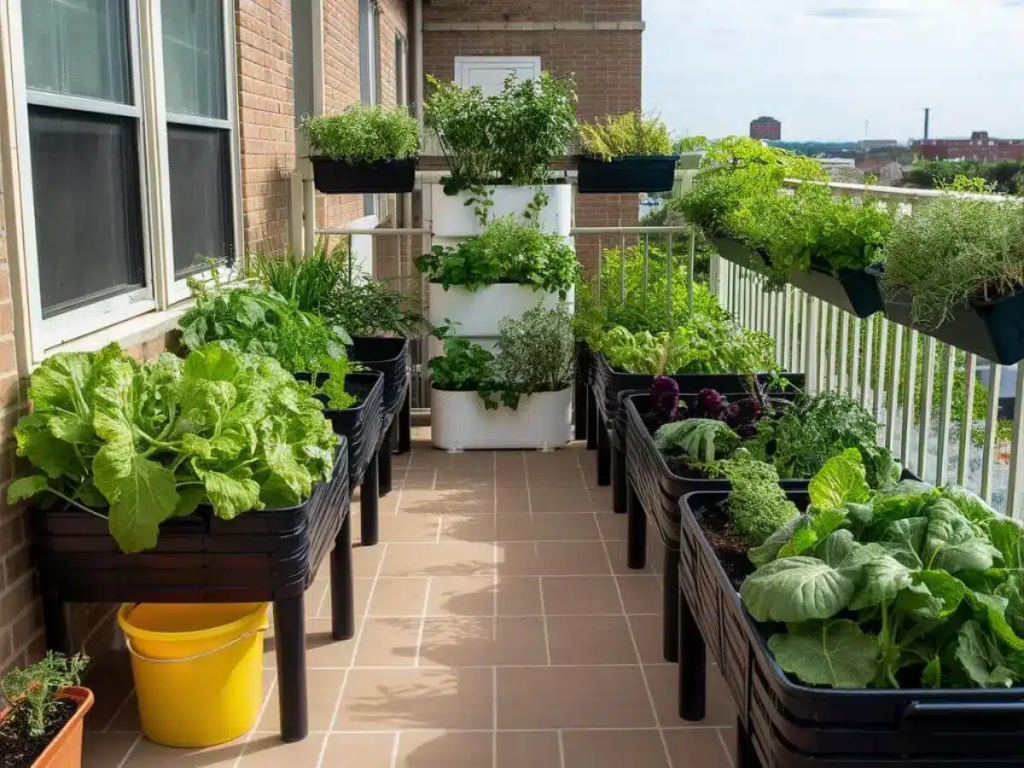
How to properly water a vertical garden
The most common mistake is getting the watering wrong.
Potted plants dry out faster than those grown in the ground. This is especially true for balcony gardens exposed to direct sunlight.
How much to water
- summer → every day
- winter → less frequently
Recommended method
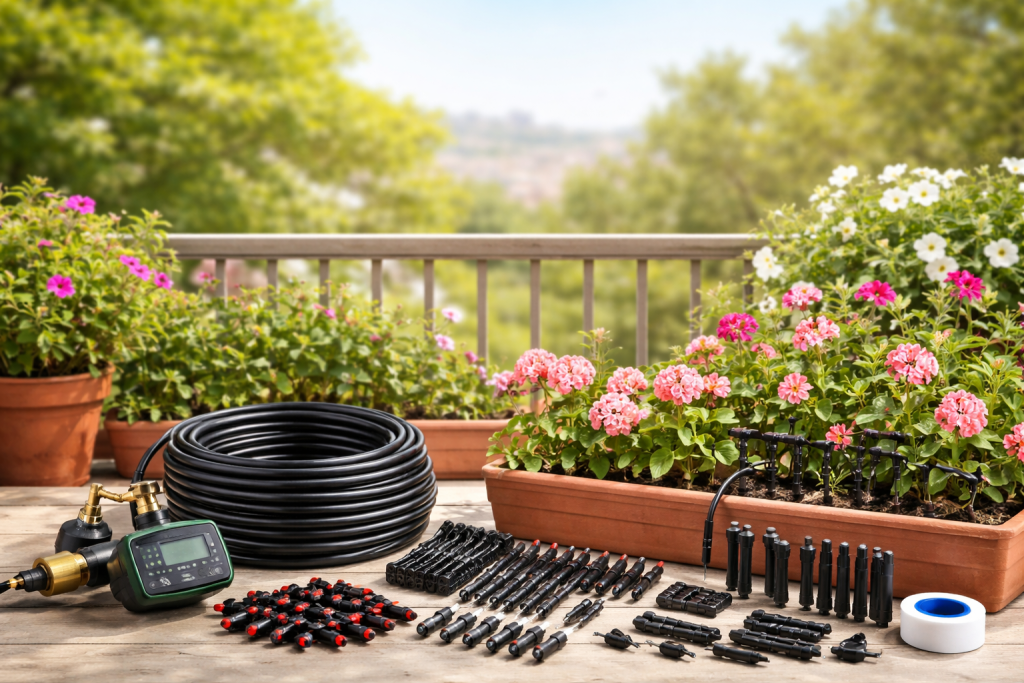
Drip irrigation is the best solution:
- distributes water slowly
- avoid waste
- keeps the soil moist
In summer, small pots exposed to the sun can dry out completely in less than 24 hours.

If you're often out of the house, a good automatic irrigation system can keep your plants from drying out in summer.
Balcony vegetable garden watering: complete guide to healthy plants even when you are not at home
Common mistakes that cause a vertical garden to fail
The most frequent errors are:
- using pots that are too small
- growing too many plants at once
- choose incompatible plants
- use cheap and compact soil
- forget about drainage
- watering too much or too little
Many plants die not from lack of care, but from too much water.
When temperatures rise, an automatic system can help keep plants healthy even when you're away.
Discover the most practical drip irrigation system:
Vertical garden maintenance
Good maintenance makes all the difference.
Fertilization
Every 10–15 days with natural fertilizer.
Collection
Cutting often stimulates growth.
Mistakes to avoid
- too many plants in the same pot
- poor quality soil
- irregular irrigation
Many problems arise from very common mistakes, especially in the first few months.
Balcony Garden Mistakes: The 15 Most Common Mistakes That Ruin Your Harvest (and How to Avoid Them)
How much can a vertical garden really produce?
Many people think that it produces little, but this is not the case.
A well-organized garden can offer:
- basil all summer long
- more salad crops
- strawberries
- cherry tomatoes
Many urban vertical gardens can produce basil, lettuce, and cherry tomatoes for months with minimal maintenance. Compact balcony varieties are often more productive than traditional garden plants.
Real example
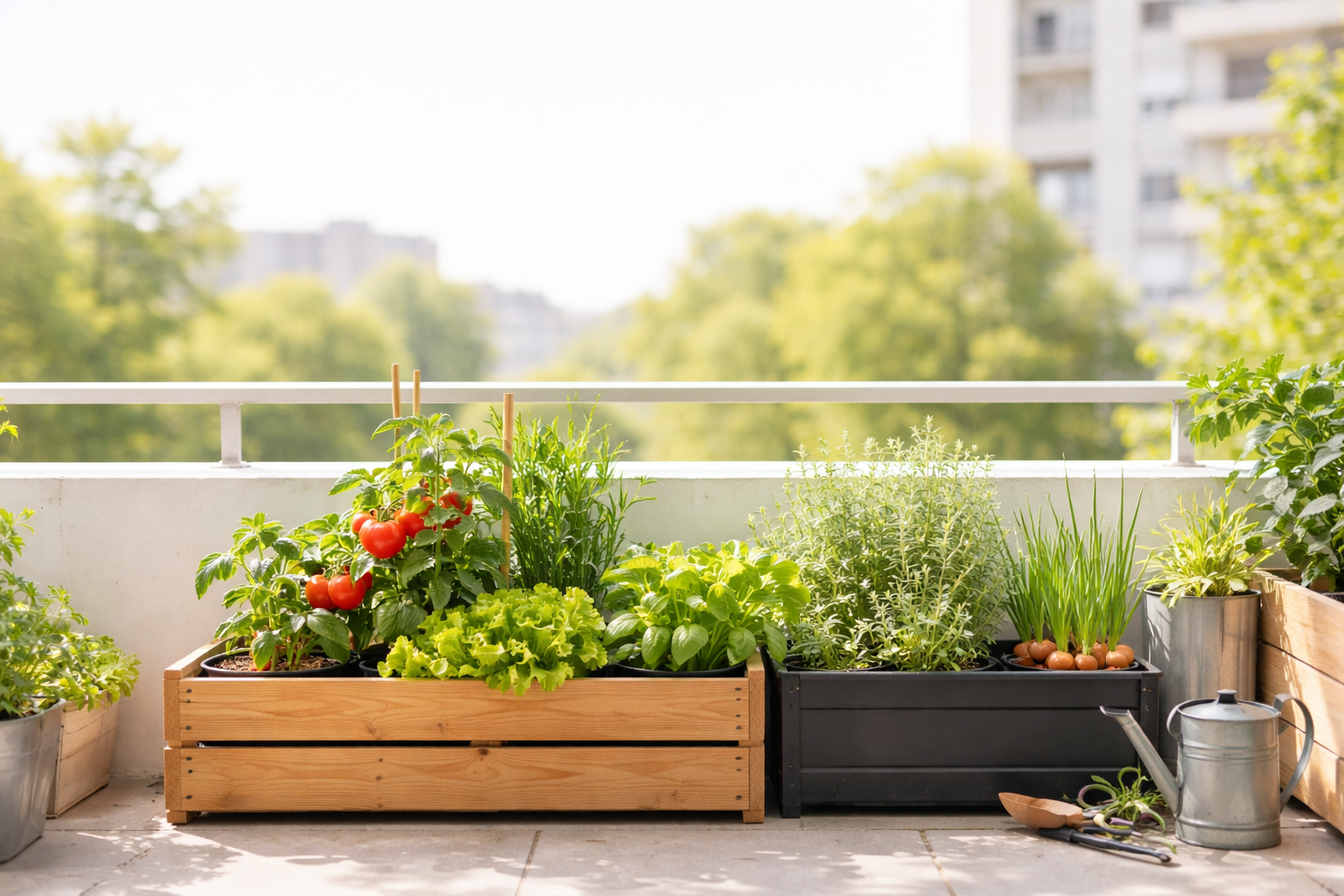
An urban balcony of about 3 meters can produce:
- basil
- thyme
- salad
- strawberries
- chilies
Proving that even a small urban balcony can become surprisingly productive.
How much can you save with a vertical garden?
Growing at home allows you to reduce costs, especially for:
- aromatic herbs
- salads
Over time, the initial investment can be recovered, especially if you frequently grow basil, salad greens, and herbs that are normally purchased every week.
How long does it take to see the first results?
Herbs can start growing after just a few weeks.
Salads and arugula often allow for first harvests within 30–40 days, while cherry tomatoes and strawberries take longer.
When a vertical garden becomes truly productive
Many people give up after a few weeks because they expect immediate results.
In reality, a vertical garden starts to become truly productive when:
- choose the right plants for the display
- maintain regular watering
- collect frequently
- replace seasonal plants
Over time, management becomes much simpler and faster.
Vertical gardening: is it really sustainable?
Yes, especially if you use:
- recycled materials
- organic soil
- controlled irrigation
It also reduces the environmental impact of food transportation.
Want to create your own vertical garden today?
Here are the most used solutions:
- vertical garden kit
- drip irrigation
- modular planters
Here are the most popular solutions to get started right away even with little space:
👉 Discover the most practical solutions to get started even in a small space
Vertical planter
Perfect for small balconies, with a stable structure and multiple growing levels.
Read also:
Why growing a vegetable garden reduces stress (Complete Guide)
Balcony vegetable garden: complete guide to get started even if you have little space
With the right plants and good organization, even a small urban vertical garden can become surprisingly productive.

FAQ - Frequently Asked Questions
How much sun does a vertical garden on the balcony need?
Most plants need at least 4–5 hours of direct light. Herbs and cherry tomatoes require more sun than lettuce and spinach.
Which plants are best for a vertical garden?
The easiest to grow are basil, lettuce, arugula, strawberries, parsley, and cherry tomatoes.
How much does it cost to create a vertical garden on the balcony?
A small vertical garden can cost from 30 to 150 euros depending on the structure, pots, and irrigation.
How often should you water a vertical garden?
In summer, often every day, especially for small pots exposed to the sun.
Does a vertical garden really produce?
Yes. Even a small balcony can produce herbs, salads, and small vegetables for several months a year.
Pallets or modular planters?
Pallets cost less, while modular planters are tidier, more stable, and easier to manage.
Will a vertical garden ruin your balcony?
No, if you use pots with proper drainage and protect the floor from excess water.
Do you need an automatic irrigation system?
No, but it can be very useful in the summer or if you spend a lot of time away from home.

Conclusion
Even a small balcony can be transformed into a productive green space.
You don't need experience or a lot of space: just start with a few plants, good exposure, and a simple structure.
Over time, your vertical garden will become not only a source of fresh herbs and vegetables, but also a relaxing space to enjoy every day.
Even a few pots can completely change the look of your balcony and your relationship with what you eat every day.
👉 Do you want to leave without wasting time?
Discover the best space-saving solutions for creating your own vertical garden on your balcony.

 Italian
  English