
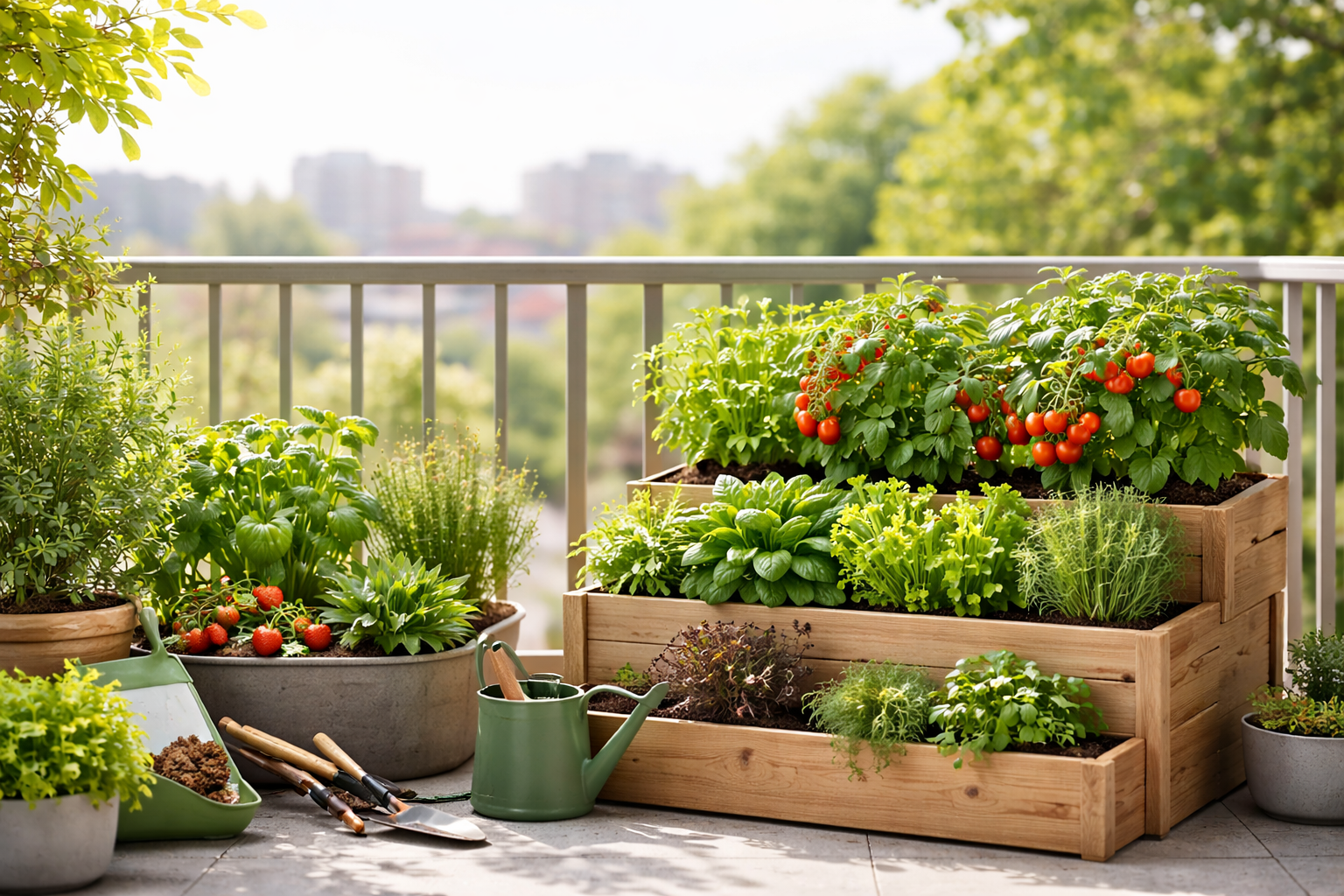
What you will learn
In this guide you will find out:
- How to understand if your balcony is suitable for a vegetable garden
- Which plants to choose if you're starting from scratch
- how to organize even a small space
- which pots and soil to use
- how much to water without damaging the plants
- the most common mistakes to avoid
- How to get results in just a few minutes a day
👉 Even if you have little space.
👉 Even if you have no experience.
👉 Even if you want to start with just one plant.
IMMEDIATE RESPONSE
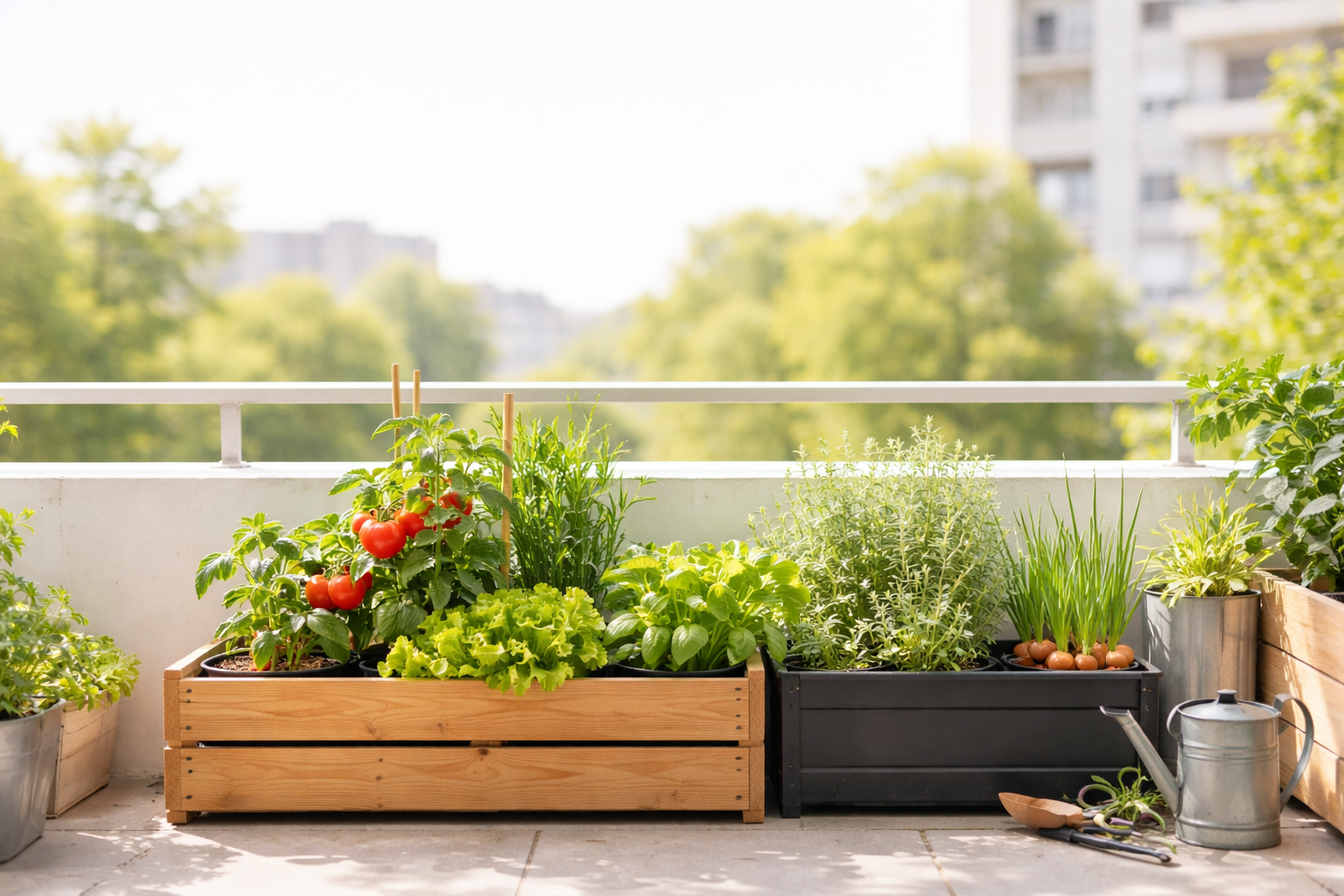
To create a balcony garden, you need at least 5–6 hours of light, well-drained pots, quality soil, and plants suited to the available space. Even a small balcony can produce basil, lettuce, cherry tomatoes, and chili peppers if properly organized.
How to Grow a Balcony Garden in 5 Steps
- Check how many hours of sun your balcony receives.
- Choose pots with drainage holes.
- Use a quality potting soil.
- Start with simple plants like basil, lettuce, and cherry tomatoes.
- Water regularly without overdoing it.
By following these steps, you can create a vegetable garden on your balcony even without experience.
Imagine stepping out onto your balcony in the summer and picking fresh basil, ripe cherry tomatoes, or home-grown lettuce.
Even a small space can be surprisingly productive if organized the right way.
Want to create a vegetable garden on your balcony but have limited space, little experience, or are afraid of making mistakes?
The good news is that you don't need a huge garden to grow tomatoes, basil, lettuce, or chili peppers right at home.
Many start with just a few pots and still manage to achieve impressive harvests even on small balconies.
The problem is that simple mistakes are often made:
too much water, too little light, the wrong pots or incompatible plants.
In this guide, you'll discover how to create a balcony garden step by step, even if you're starting from scratch.
A balcony garden allows you to grow vegetables, herbs, and small fruits even in small spaces.
With at least 5–6 hours of light a day, suitable pots and good soil, even beginners can achieve excellent results.
Balcony Gardening for Beginners: Where to Start
If you've never grown anything before, don't worry. A beginner's balcony garden can start with just one pot.
The easiest plants to start with are basil, lettuce, arugula, and cherry tomatoes. They grow well in pots, require little care, and allow you to quickly learn the basics of cultivation.
The best advice is to start with a few plants, observe how they react to sun and watering, and gradually increase the cultivated space.
What is a balcony garden really?
A common mistake is to think that it is a “smaller version” of the traditional garden.
It's actually something different.
The vegetable garden on the balcony is a system controlled, compact and adaptable, where every element counts:
- light
- space
- containers
- water
Unlike an open-ground garden, here you work in a more predictable environment.
This is a huge advantage for beginners.
👉 This is exactly why many beginners get more successful in a pot than in the garden.
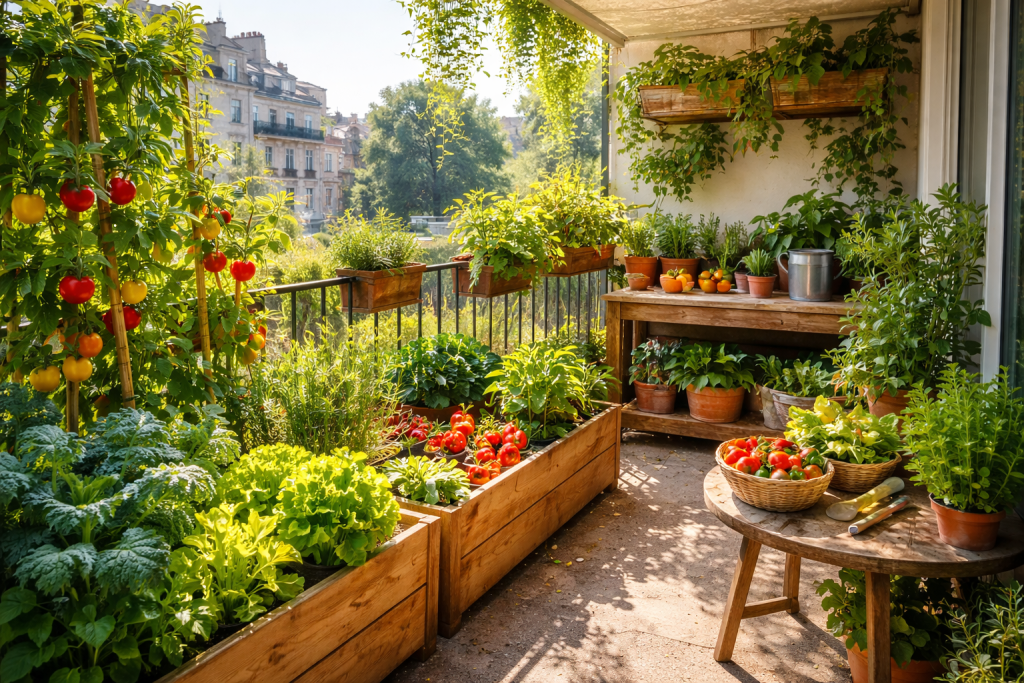
How to understand if the balcony is suitable for a vegetable garden
1. Light: the decisive factor
Most vegetables need at least:
👉 5–6 hours of direct sunlight per day
South / southeast → ideal
East → good
❌ North → limited
Real example
An east-facing balcony in Mestre can produce:
- abundant basil
- continuous salads
- cherry tomatoes (with moderate yield)
2. Wind: the underestimated factor
The wind can:
- dry out the soil quickly
- damage the plants
- block growth
👉 Solution:
- use barriers (grills, tall plants)
- place the pots near the wall
3. Space: You don't need as much as you think
Also 2–3 square meters are enough.
Many productive gardens are born in tiny spaces, thanks to:
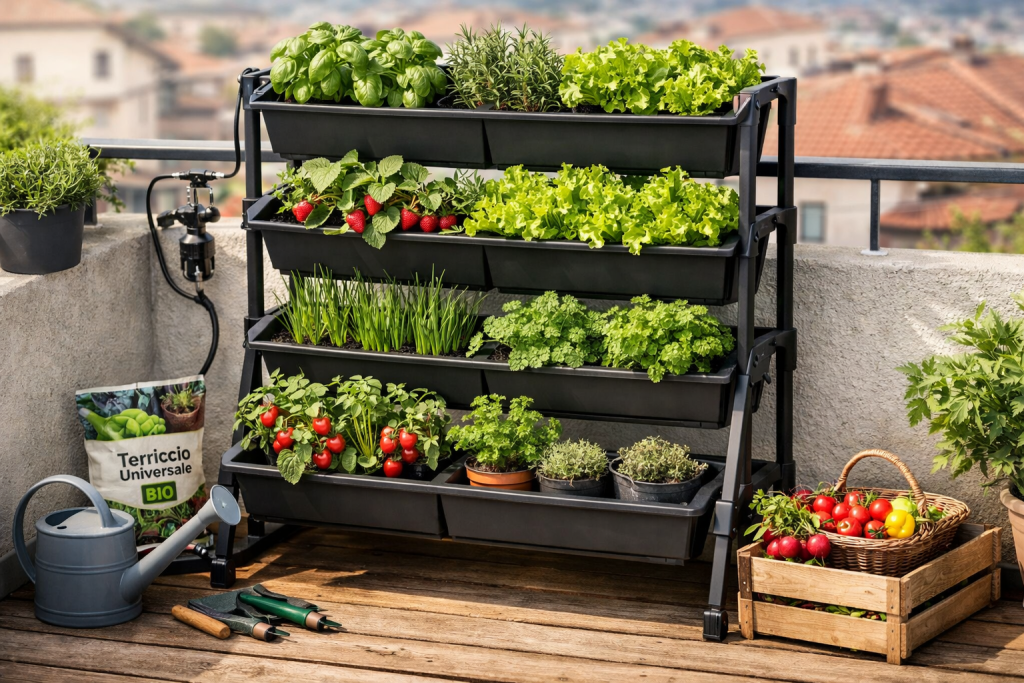
- vertical vases
- shelves
- fitted walls
👉 It's not the space that limits the garden. It's how you organize it.
4. Weight of the balcony (often ignored)
A large pot filled with soil can weigh 20–30 kg.
👉 Rule of thumb:
- distribute the weight
- avoid concentrations in a single point
How to Organize a Balcony Garden in a Small Space
Here we go from "some vases" to smart garden.
Basic strategies:
Use height
- shelves
- shelves
- vertical supports
Divide by zones
- full sun → tomatoes
- half-shade → salad
- shadow → aromatic
Don't crowd
Typical mistake: too many plants together → less production
Which pots to choose for the balcony garden?
❌ Mistake number 1: choosing pots that are too small.
👉 Roots determine all growth.
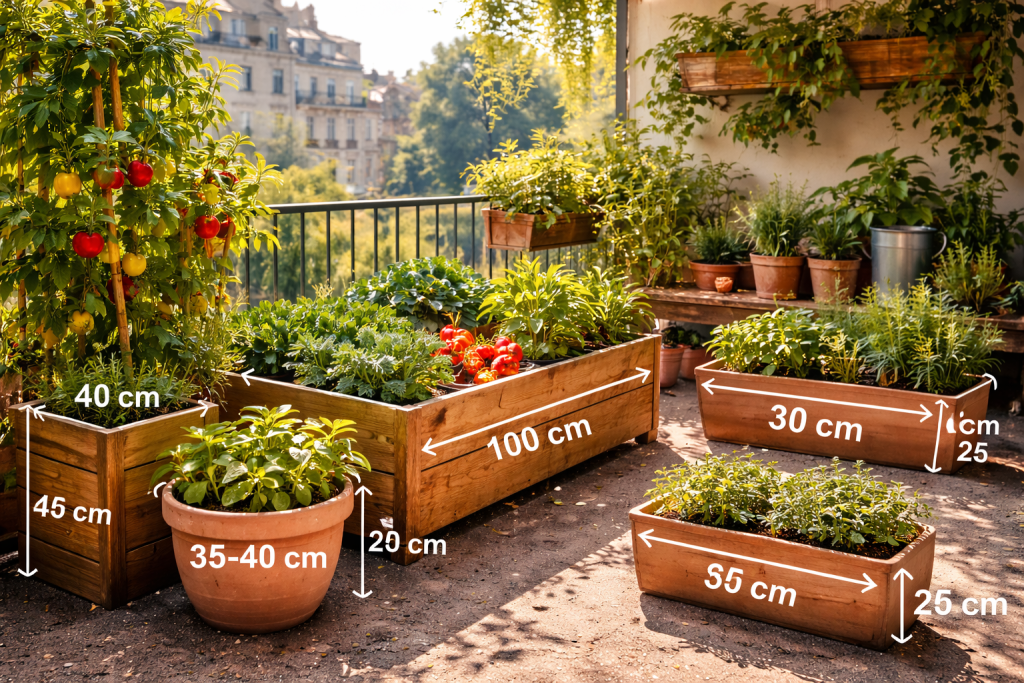
Minimum recommended dimensions:
tomatoes → 30 cm
courgettes → 40 cm
aromatic → 15–20 cm
Materials: what really changes
Plastic
- light
- economic
- retains moisture
Terracotta
- more natural
- breathable
- it dries first
👉 Real Choice: Many start with plastic for convenience.
Drainage (essential)
Without drainage → rotten roots
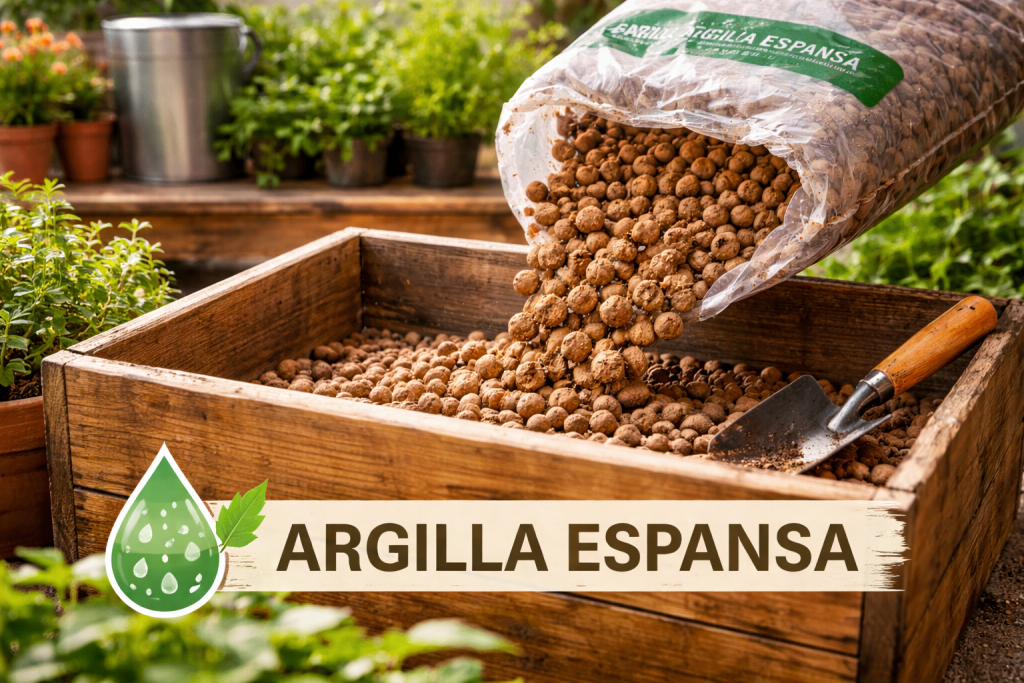
👉 Always:
- holes under the vase
- expanded clay layer
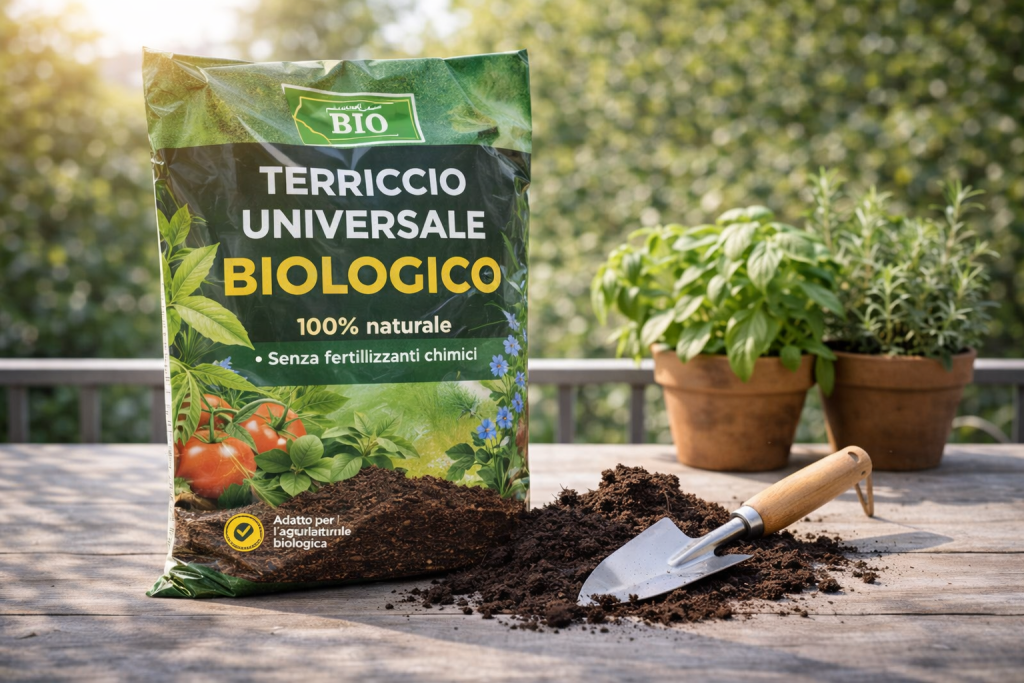
What type of soil should I use for a balcony garden?
Garden soil is NOT good.
👉 Simple rule: use good soil and add nutrients.
Recommended mix:
universal soil
compost
earthworm humus
This improves:
drainage
nutrients
growth
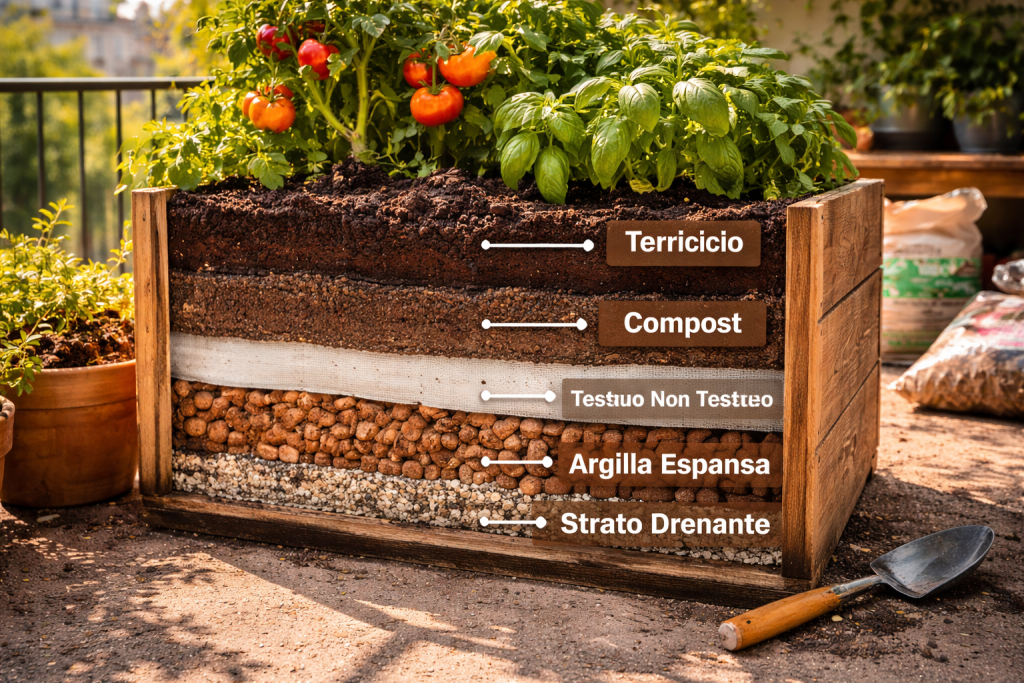
To get started right away without errors, these are the products most used by beginners:
- Complete balcony garden basic kit
- Quality universal soil
- Draining expanded clay
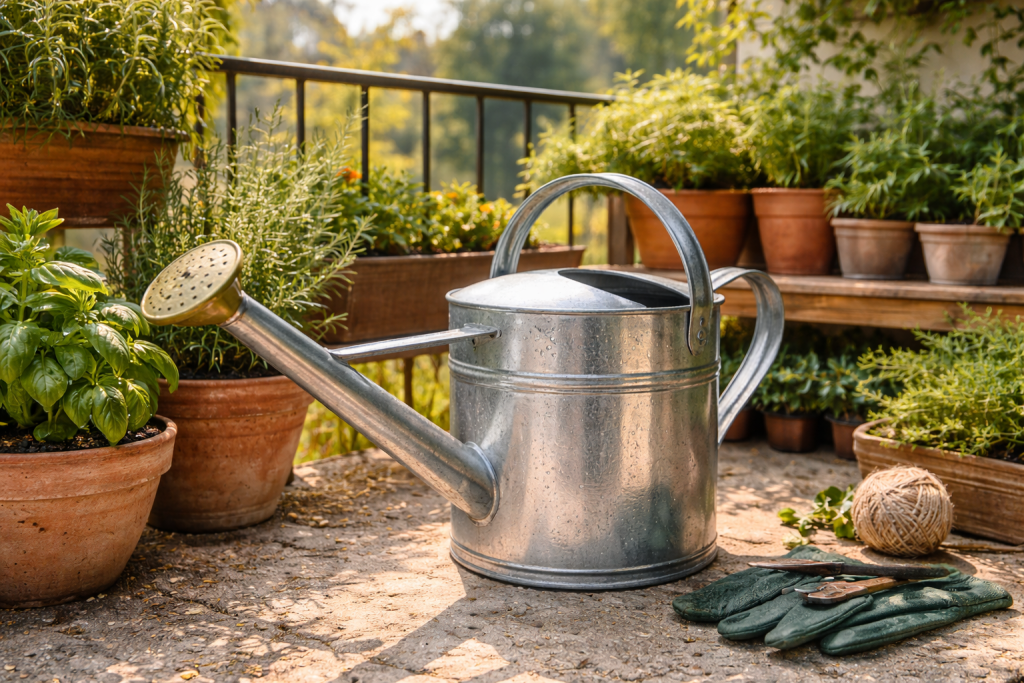
- Watering can with long spout
⚠️ FIRST MISTAKES THAT BLOCK EVERYTHING
If you avoid these, you're already ahead:
❌ Too much water
❌ Small vases
❌ Low light
❌ Too many plants
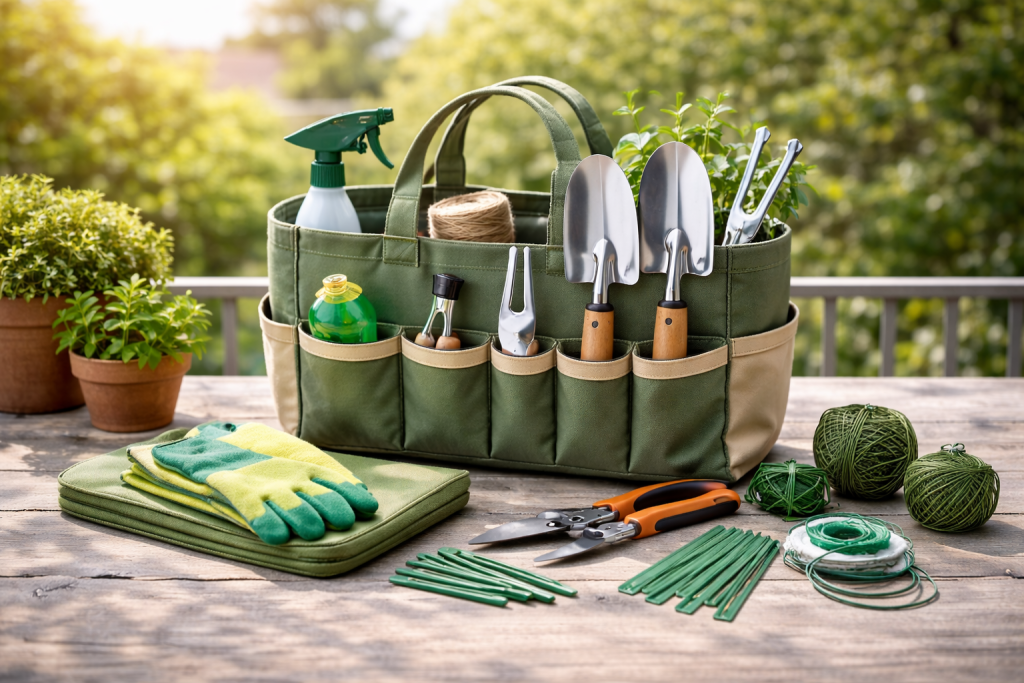
Creating a vegetable garden on your balcony is not complicated.
But you need to start with the right foundations.
Light, space, vases and soil: these are the four pillars that determine everything else.
The best plants for a balcony garden
If there's one thing that really makes a difference at the beginning, it's this:
👉 don't start with difficult plants
Many fail not because they are incapable, but because they choose crops that are too demanding.
The right strategy is simple:
start with plants tough, fast and rewarding.
The 5 Easiest Plants (Beginner-Tested)
Basil
- it grows quickly
- scented
- forgive small mistakes
👉 perfect to start with
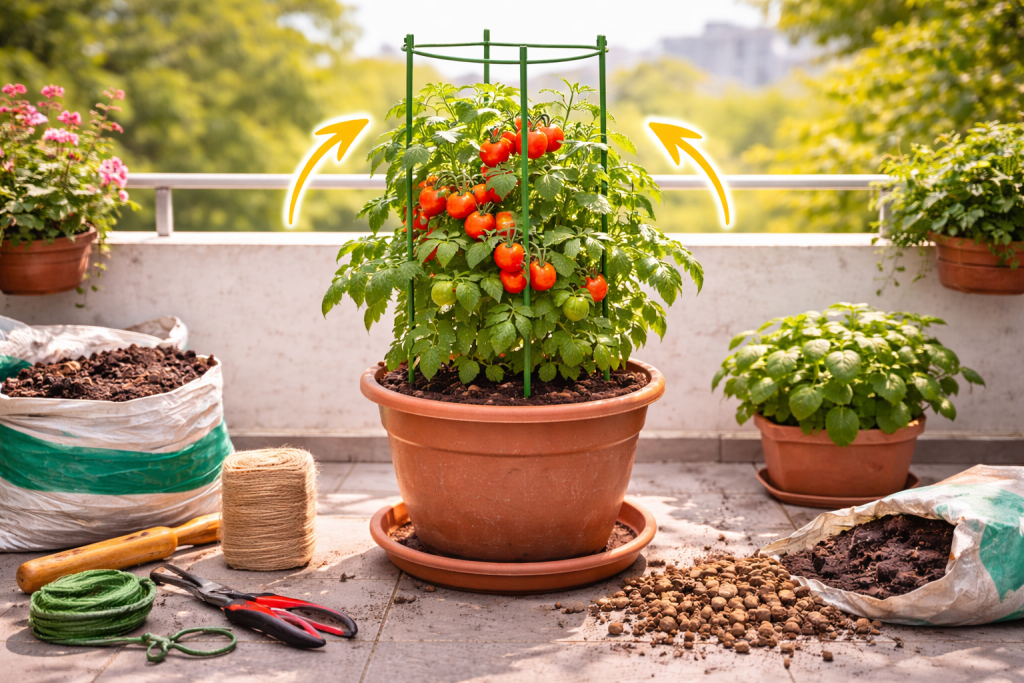
Cherry tomatoes
- high yield
- immediate satisfaction
- ideal in pots
Cutting salad
- grows back after cutting
- continuous harvest
- very easy
Chili
- resistant
- productive
- takes up little space
Arugula
- it grows in a few days
- excellent for small balconies
If you have very little space:
- basil
- arugula
- chili
If you have a lot of sun:
- tomatoes
- peppers
- eggplant
If the balcony is in partial shade:
- lettuce
- spinach
- aromatic
👉 If this is your first garden, start with just one easy plant. Basil is often the most satisfying choice for beginners.
What to grow on the balcony
| Plant | Difficulty | Sun |
|---|---|---|
| Basil | Easy | 5-6 hours |
| Lettuce | Easy | 4-5 hours |
| Arugula | Easy | 4-5 hours |
| Cherry tomatoes | Average | 6-8 hours |
| Chili | Easy | 6-8 hours |
| Strawberries | Average | 5-6 hours |
DIVISION BY TYPE
Aromatic herbs
- basil
- parsley
- mint
- rosemary
👉 ideal for small and shaded balconies
Productive vegetables
- tomatoes
- peppers
- eggplant
👉 they require more sun
Leafy vegetables
- lettuce
- spinach
- arugula
👉 perfect for continuous harvesting
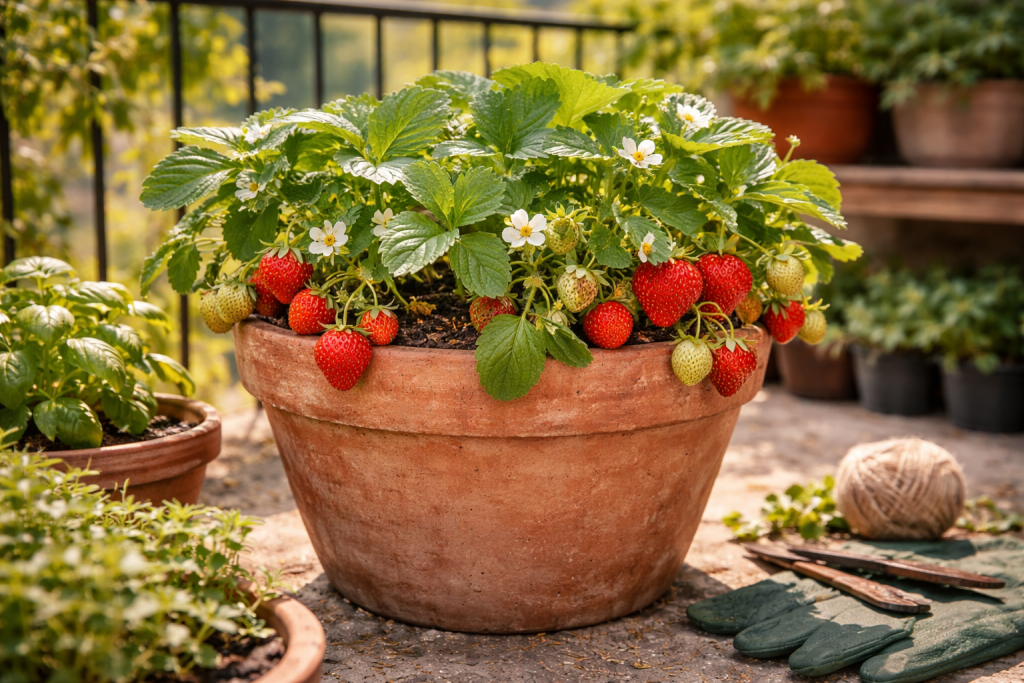
Small fruits
- strawberries
- blueberries (more challenging)
SMART COMBINATIONS (FEW DO IT)
Here we enter a more advanced logic.
👉 Not all plants should be placed together randomly.
Good combinations
- tomato + basil → classic and functional
- lettuce + arugula → similar growth
- chili pepper + aromatic herbs
❌ Combinations to avoid
- large + small plants in the same pot
- too many plants together → competition
Basic principle
👉 each plant must have:
- space
- light
- nutrients
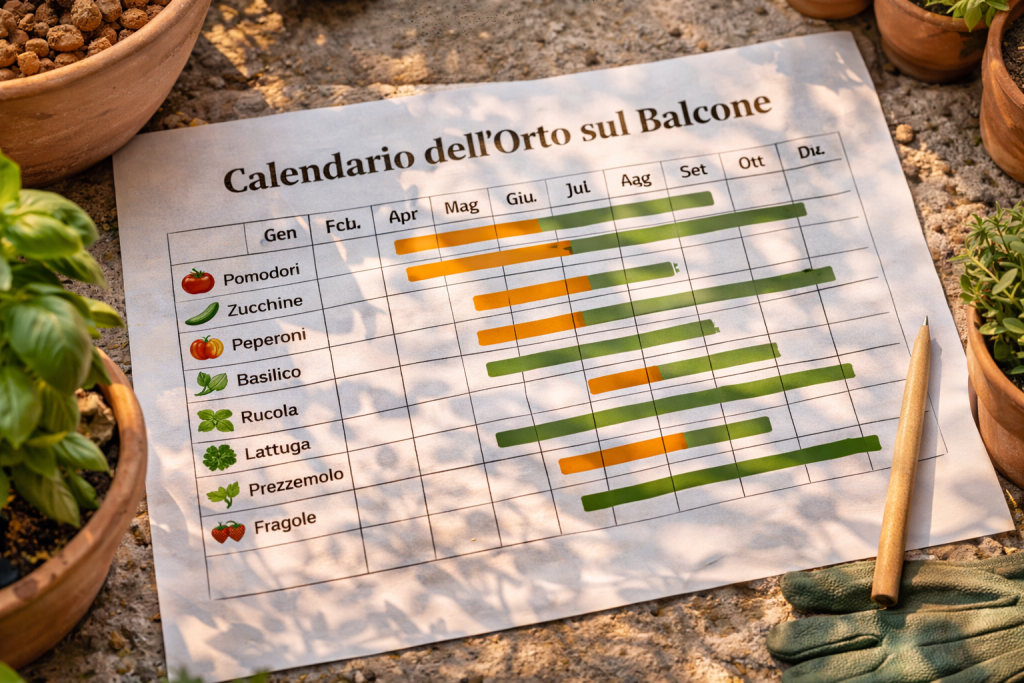
GROWING CALENDAR
Spring (March – May)
👉 best time to start
It is planted:
- tomatoes
- zuchinis
- basil
- peppers
Summer (June – August)
👉 production phase
We collect:
- tomatoes
- peppers
- salad
Please note:
- frequent watering
- intense sun
Autumn (September – November)
👉 new sowing
- spinach
- arugula
- lettuce
Winter (December – February)
👉 reduced production
You can grow:
- resistant aromatics
- protected salads
How much to water a balcony garden
One of the biggest mistakes is this:
👉 thinking that all plants need the same water
Basic rule
- summer → even every day
- Spring/Autumn → 2-3 times a week
Best moments
- early morning
- evening
👉 never during the hottest hours
Important signal
- dry earth → water
- soil still wet → wait
👉 Rule of thumb: It's better to water regularly than to overwater at once.
Authoritative source
According to the Royal Horticultural Society, irrigation must be adapted to the type of plant and the climate to avoid water stress.
HOW TO INCREASE PRODUCTION (PRACTICAL TRICK)
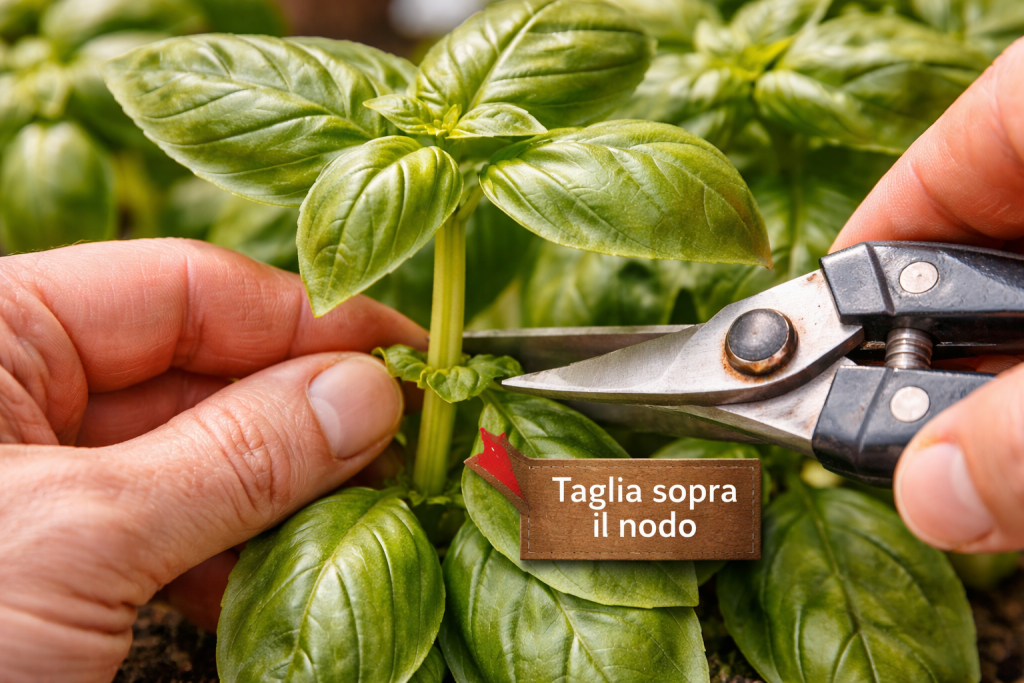
This is a step that few beginners know:
👉 harvesting stimulates growth
Example:
- basil → the more you cut it, the more it grows
- lettuce → grows back after cutting
Mistakes that ruin a balcony garden
- starting with too many plants
- ignore the calendar
- do not collect
- irregular water
- incorrect exposure
👉 If you want to avoid the most common beginners' mistakes, also read: Balcony Garden Mistakes: The 15 Most Common Mistakes That Ruin Your Harvest (and How to Avoid Them)
If you want to simplify your life:
- Easy Organic Seeds for Beginners
- Ready-made balcony garden kits
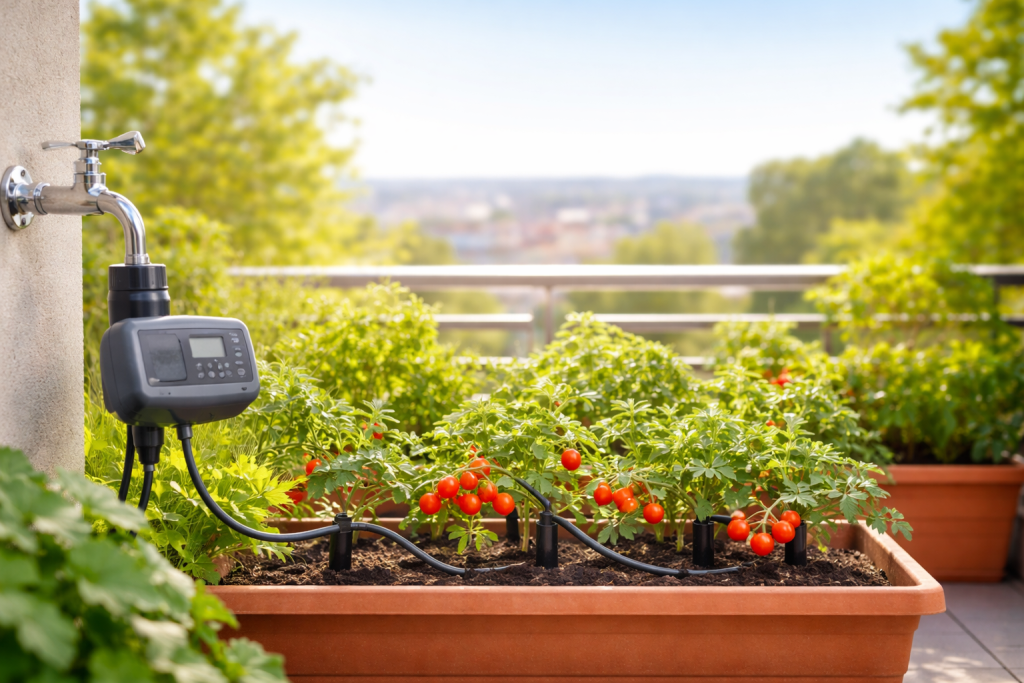
- Basic irrigation system
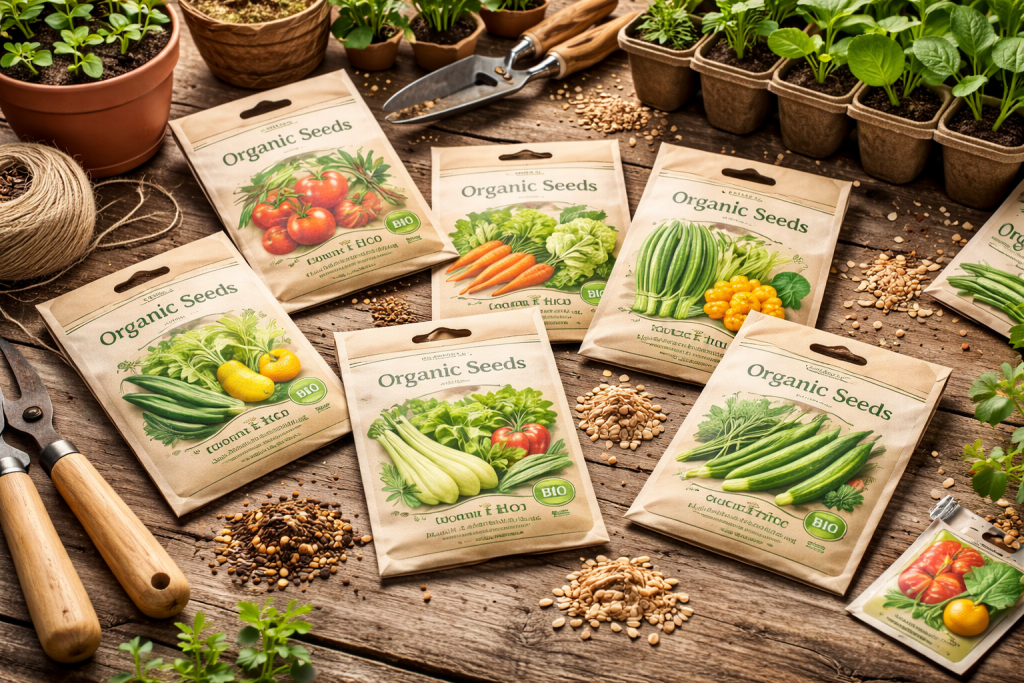

The right plants make all the difference.
If you choose well at the beginning, half the work is already done.
THE ROUTINE THAT REALLY MAKES THE DIFFERENCE
This is where many people really make a difference.
It's not the day you plant… but what you do after.
Many people start out well and then give up because they don't have a clear routine.
Actually, they are enough 5–10 minutes a day.
Basic daily routine
- check the soil (dry or wet)
- observe the leaves (color, spots)
- water if necessary
- remove dry leaves
👉 simple, yet very powerful
Real example
A person who works all day can:
- morning → quick check (1 minute)
- evening → watering + observation
👉 Real time: 5–10 minutes per day
FERTILIZATION (THE SECRET THAT UNLOCKS GROWTH)
Here many people make mistakes.
They think: “the plant grows by itself”.
Not in a pot.
👉 In the pot the nourishment runs out: it must be replenished
When to fertilize
- every 2–3 weeks
- especially in spring/summer
Types of fertilizer
Natural (recommended)
- compost
- earthworm humus
Liquids
- faster
- easy to use
Signs of deficiency
- yellow leaves
- slow growth
- low production
Authoritative source
According to the University of Bologna, in potted systems regular fertilization is essential to maintain plant productivity.
PESTS AND PROBLEMS (BALCONY REALITY)
Sooner or later they arrive.
It's normal.
The most common
- aphids (small green insects)
- white flies
- damaged leaves
Simple solutions
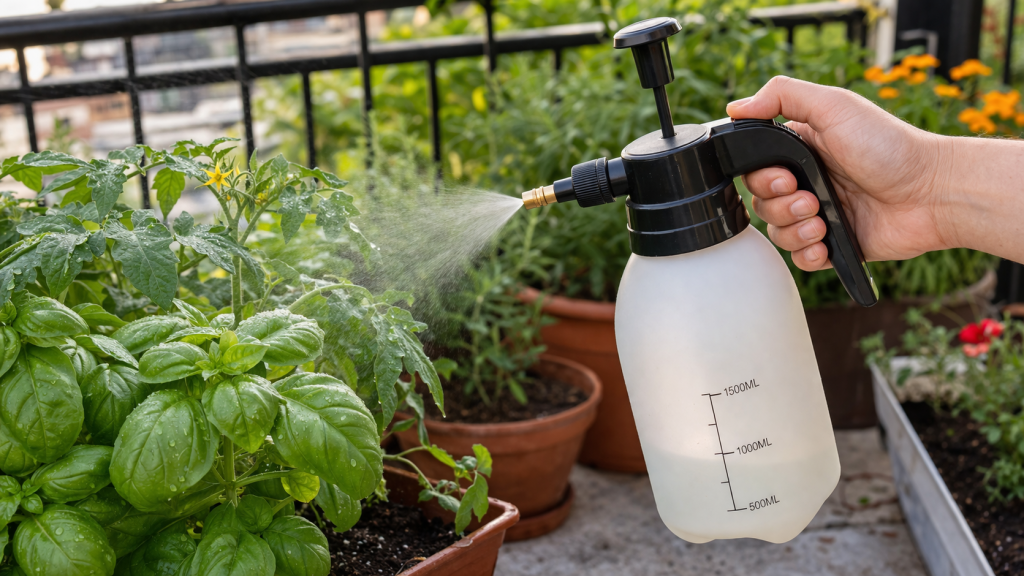
- water + Marseille soap
- natural spray
- manual removal
Important
👉 It's not a serious problem: it happens to everyone.
Important:
There is no need to use harsh chemicals at first.
When it's normal to worry
Some signs do not necessarily indicate a serious problem.
For example:
- slightly yellow leaves after repotting
- slow growth in the first few days
- small leaves damaged by the sun or the wind
👉 In most cases, plants will recover on their own with regular care.
HEAT AND COLD MANAGEMENT
Balcony = extreme environment.
Summer
Issues:
- excessive heat
- rapid evaporation
Solutions:
- water more often
- shadow in critical hours
Winter
Issues:
- cold
- slow growth
Solutions:
- protection (sheets, sheltered position)
- reduce water
REPOTTING: WHEN AND WHY
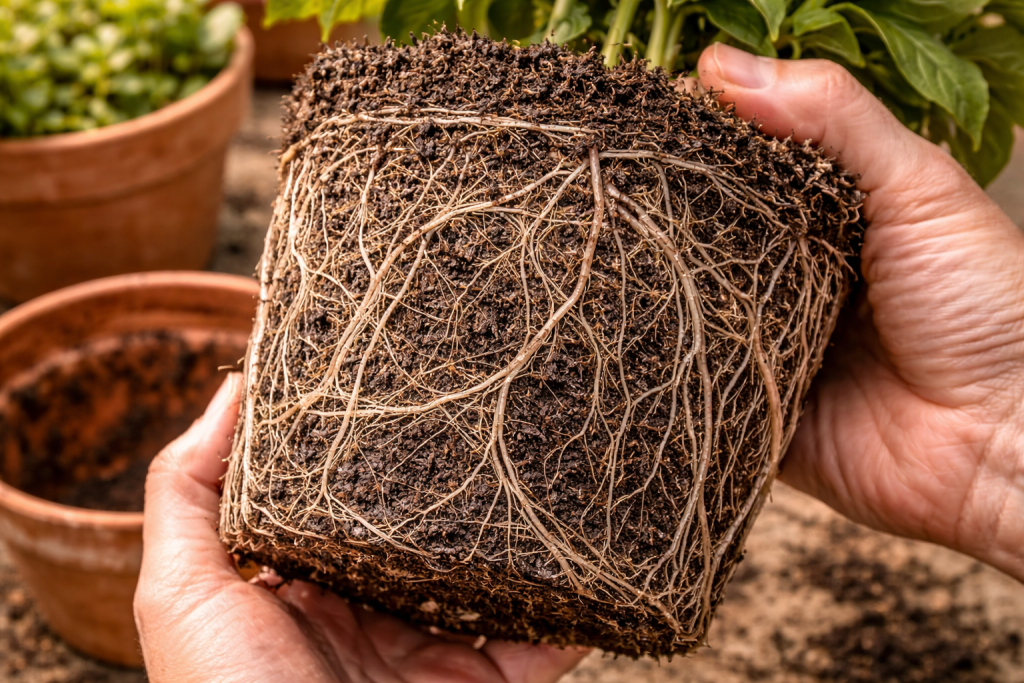
Typical signal:
👉 the plant stops growing
When to repot
- roots visible underneath
- stunted growth
- impoverished soil
Benefits
- more space
- more nutrients
- new growth
WHEN TO SWITCH TO AN IRRIGATION SYSTEM
When you start having more pots:
👉 watering by hand becomes challenging
Solutions
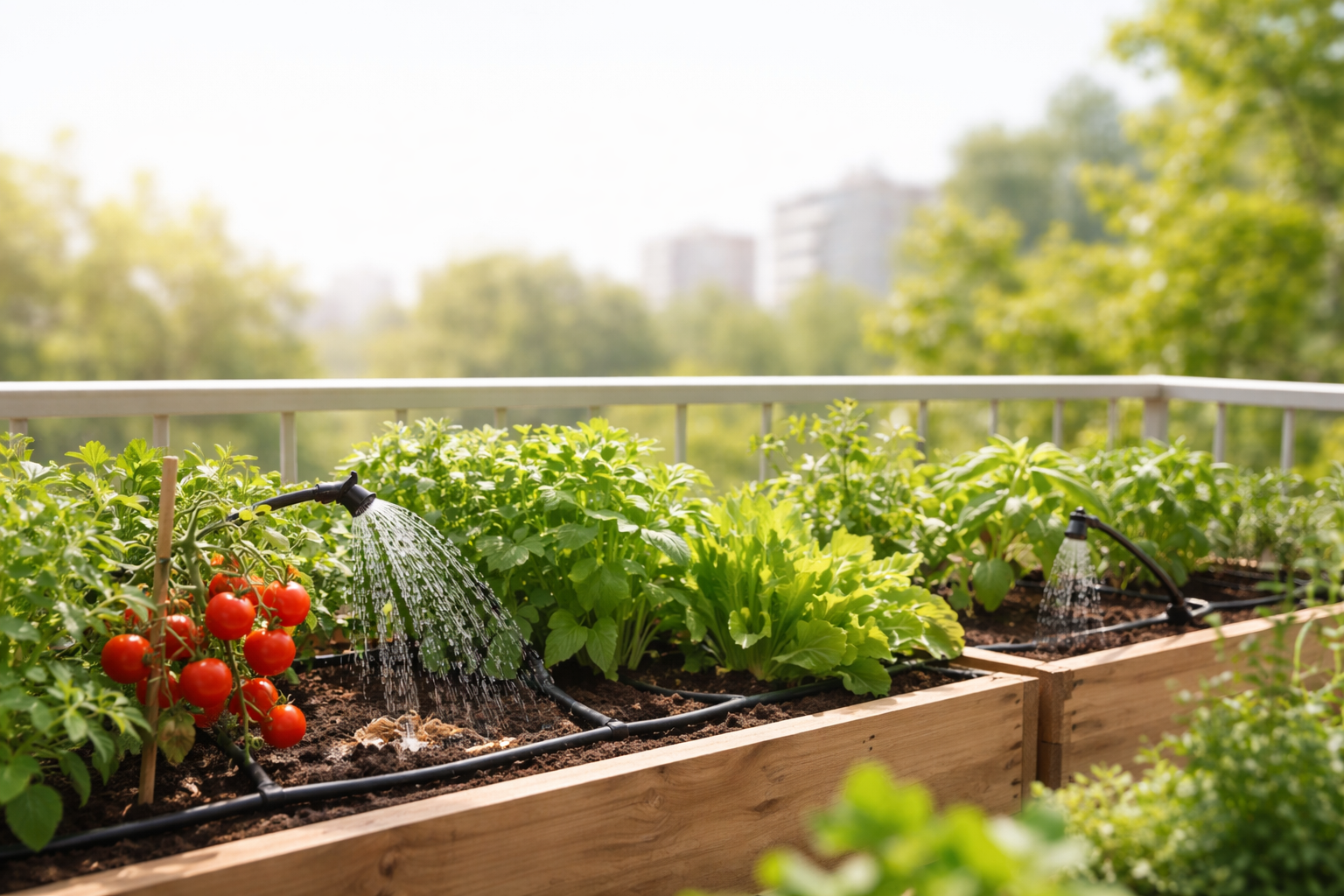
- perforated bottles (DIY)
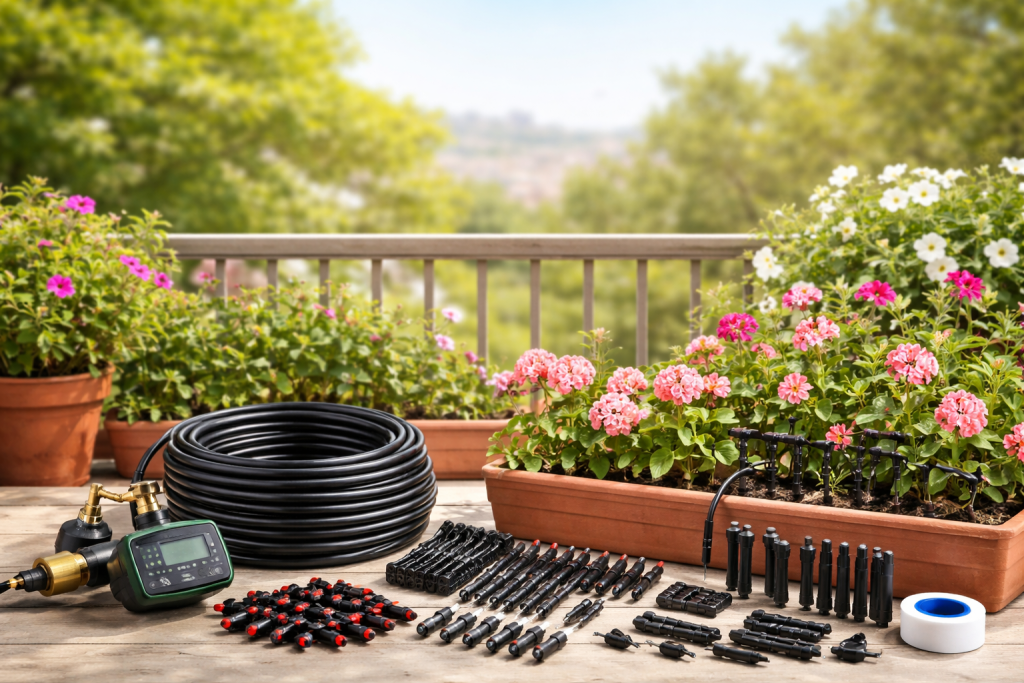
- basic drip irrigation
- automatic systems
👉 perfect if you travel or work a lot
What to do right away to get started without errors
If you want to start today without complicating your life, do this:
- Choose 2–3 easy plants (basil, lettuce, cherry tomatoes)
- Use large enough pots with drainage
- Check how many hours of sun your balcony gets
- Start with a few pots instead of filling everything up at once.
- Observe the plants every day to understand how they react
👉 Most mistakes arise from haste, not lack of experience.
⚠️ REAL MISTAKES OF BEGINNERS (ADVANCED LEVEL)
This is where the difference between failure and success lies:
- change the position of the plants continuously
- fertilizing too much (opposite effect)
- ignore the leaves' signals
- wanting immediate results
When a balcony garden really starts to work
Most people see the first tangible results after 3–6 weeks.
It may seem slow at first:
small leaves, irregular growth or low production.
It's normal.
Plants need to adapt to:
- exposure
- temperature
- irrigation
- available space
Those who continue to observe and correct small mistakes improve rapidly season after season.
How long does it take to see the first results?
- basil → 2–3 weeks
- arugula → 10–15 days
- lettuce → 3–5 weeks
- cherry tomatoes → 2–3 months
👉 These times may vary depending on light, temperature, pot, and soil quality.
THE MOST IMPORTANT PRINCIPLE
👉 observation > technique
Those who observe plants improve quickly.
Those who only follow “rules” often make mistakes.
To improve management:
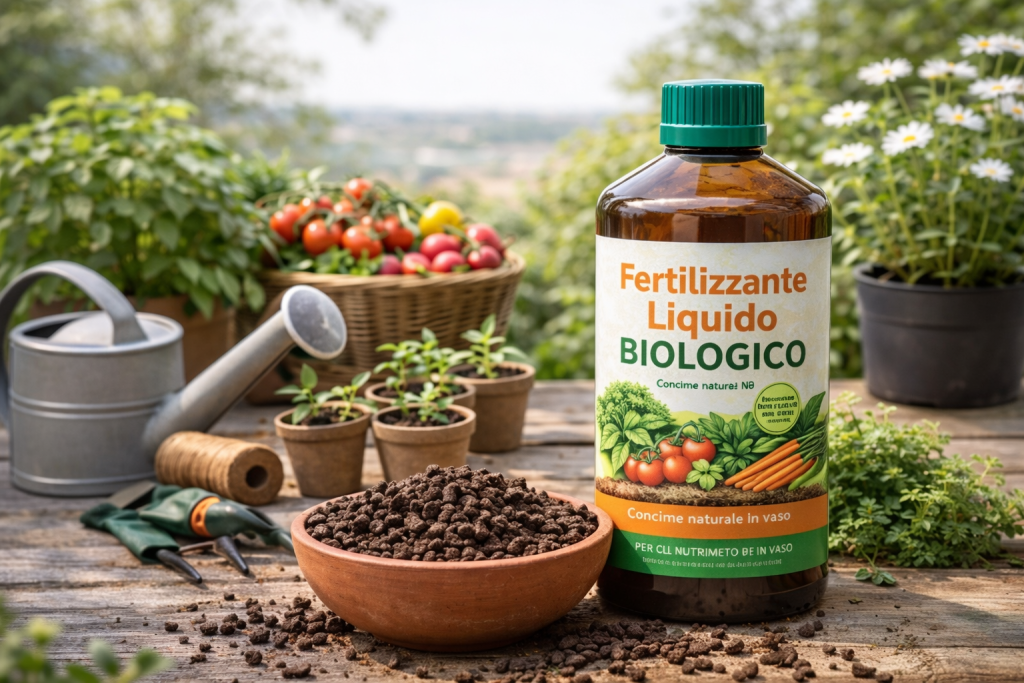
- Organic liquid fertilizer
- Spray bottle for treatments
- Drip irrigation kit
At this point your balcony is really starting to become a small productive vegetable garden.
HOW TO TRANSFORM YOUR BALCONY INTO A YEAR-ROUND PRODUCTIVE GARDEN
At this point you have the basics.
Now let's enter the next level:
The key principle: continuous cultivation
Many beginners make this mistake:
They prepare everything with enthusiasm, harvest the first vegetables… and then leave the balcony empty for months.
👉 result: "intermittent" garden“
Correct strategy
- while you harvest → sow new plants
- alternate cycles (fast + slow)
- plan 2–3 months ahead
Practical example
- April → tomatoes + salad
- May → new salad
- June → continuous harvest
👉 you never run out of production
PLANT ROTATION (FEW USE IT)
It is also useful in pots.
It is used for:
- avoid “tired” ground”
- improve production
- reduce problems
Simple example
- cycle 1 → tomato
- cycle 2 → salad
- cycle 3 → aromatic
MICRO-ECOSYSTEM: THE REAL LEAP IN QUALITY
When you start combining plants well, something interesting happens:
👉 the garden becomes more stable
- fewer parasites
- fewer problems
- more balance
Real example
A balcony with:
- basil
- tomato
- mint
👉 tends to have fewer infestations than monoculture
THE RIGHT MENTALITY (FUNDAMENTAL)
Everything is decided here.
❌ Wrong mentality
- “it has to be perfect right away”
- “if I'm wrong it's not for me”
Correct mindset
- observe
- to adapt
- improve over time
👉 every plant teaches something
To instantly transform your balcony:
- Complete urban garden kit
- Universal professional soil
- Automatic irrigation system
- Gardening tool set
Read also:
 Balcony Garden Mistakes: The 15 Most Common Mistakes That Ruin Your Harvest (and How to Avoid Them)
Why growing a vegetable garden reduces stress (Complete Guide)
A vertical garden on your balcony: how to grow vegetables even if you have very little space.
Growing tomatoes in pots: complete guide to having a harvest on the balcony
Aromatic plants on the balcony: complete guide to growing them in pots (even if you are a beginner)
Balcony vegetable garden watering: complete guide to healthy plants even when you are not at home
FAQ
What is the easiest plant to grow on a balcony?
Basil is one of the easiest plants to start. It grows quickly, takes up little space, and tolerates small mistakes.
How many hours of sunlight do you need to grow on a balcony?
Most vegetables need at least 5–6 hours of direct sunlight a day.
Can you grow a vegetable garden even on a small balcony?
Yes. With vertical pots, shelves, and compact plants, you can grow even in just a few square meters.
How much time does it take each day?
For a small vegetable garden, 5–10 minutes a day between checking, watering and harvesting is often enough.
Which plants produce the most in pots?
Cherry tomatoes, chili peppers, lettuce, and basil are among the most productive plants for balconies.
CONCLUSION
A balcony garden isn't born perfect.
It comes from small trials, a few mistakes, and a lot of observation.
The important thing is to start with a few plants, understand how they react and improve little by little.
👉 Even a small balcony can be transformed into a productive, relaxing, and surprisingly satisfying space.
And often it all starts with a simple pot on the windowsill.

 Italian
  English