
Reading time: 8 minutes
Guide updated to 2026
Yellow leaves, stunted tomatoes, and wilting basil? In many cases, the problem is one of these very common errors.
What you will learn:
In this guide you will find out:
- What mistakes cause potted plants on the balcony to die?
- Why tomatoes, basil and lettuce don't grow well
- How to avoid yellow leaves and rotten roots
- How many hours of sunshine do you really need?
- How to water without damaging plants
- Which pots and soils work best?
- How to grow a more productive balcony garden even in a small space
👉 Even if you're a beginner and live in the city.
Have you enthusiastically started an urban garden on your balcony... but after a few weeks the plants already seem to be suffering?
Yellow leaves, wilting basil, tomatoes that don't grow, or soil that's always dry are much more common problems than you think.
And in most cases the problem is not the climate.
👉 These are small growing mistakes that almost everyone makes at the beginning, especially when trying to grow tomatoes, basil, or lettuce in a pot for the first time.
I also did everything wrong in my first urban garden:
pots that are too small, too much water, and cheap soil.
Result?
Weak plants, slow growth and almost no harvest.
The good news is that by correcting just a few details, you can see huge improvements after just a few weeks.
The most common questions from those starting a balcony garden
What is the most common mistake?
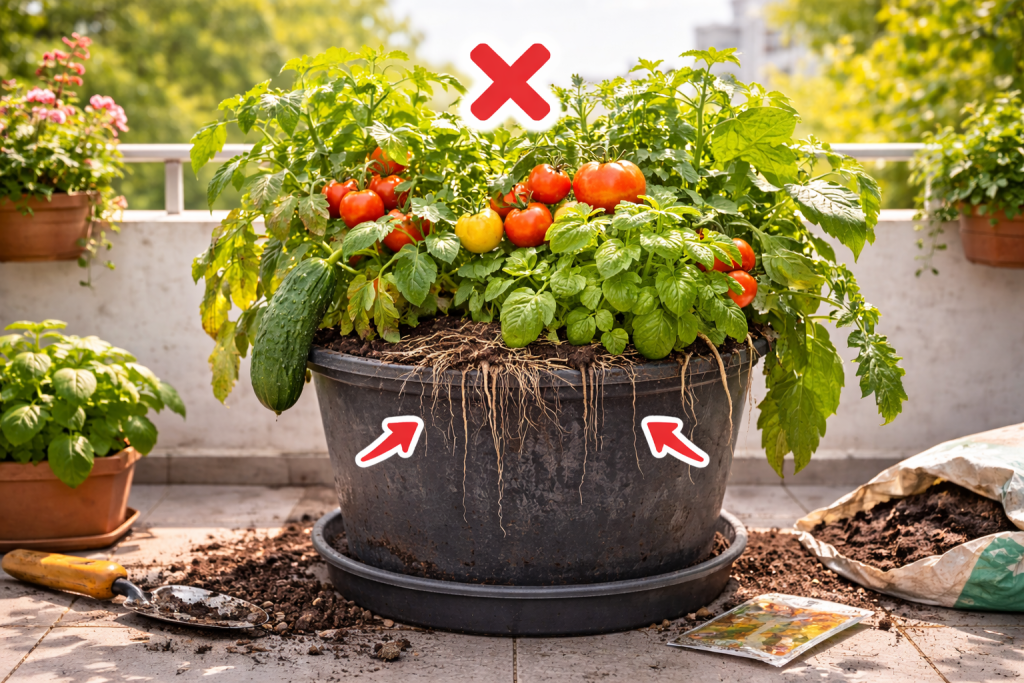
Using pots that are too small limits root development.
Why don't potted plants on the balcony grow?
Usually due to low light, too much water or unsuitable soil.
How many hours of sunshine are needed?
Most vegetable plants need at least 4-8 hours of direct sun.
These problems are even more common on city balconies, where space, light and wind can make cultivation more difficult than in a backyard vegetable garden.
In this article we will see the most common mistakes in the balcony garden and above all how to avoid them, with practical examples and simple solutions.
If you are starting now or want to improve your crop, this information can really make a difference.
Immediate response
The mistakes that most often ruin an urban balcony garden are:
- vases too small
- too much water
- little light
- wrong soil
- poor drainage
👉 Correcting even one of these problems can quickly improve the growth, production, and health of potted plants.
Error #1: Using pots that are too small
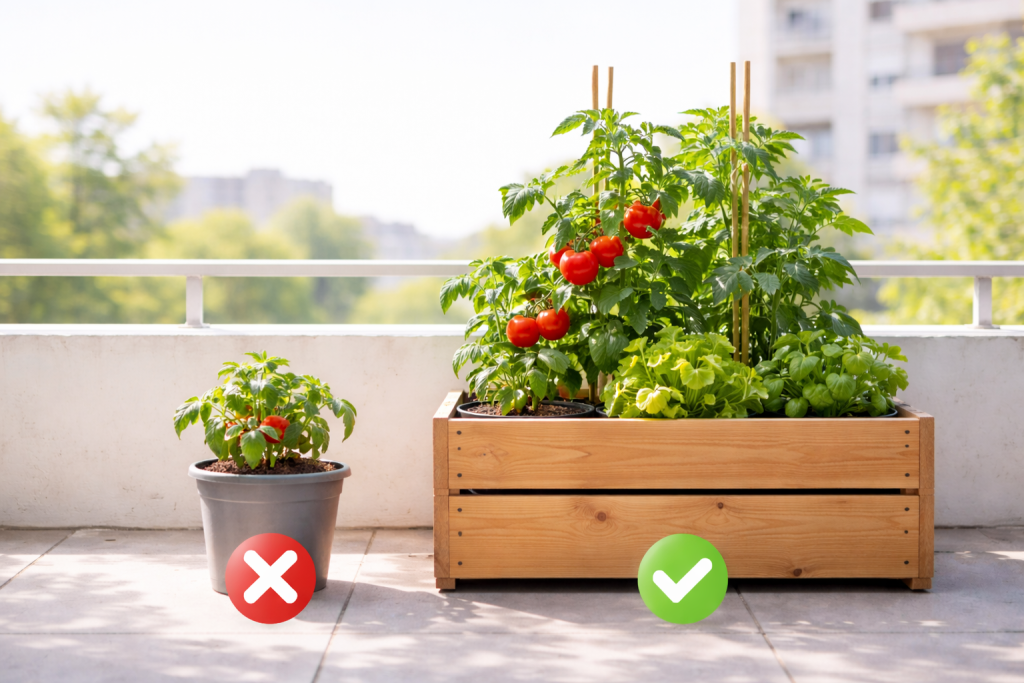
Using pots that are too small is one of the most common mistakes in the balcony vegetable garden.
👉 How big should a balcony vegetable garden pot be?
Many people start their balcony garden using:
10 cm pots
small decorative containers
old bowls
The problem is. roots have no space.
Vegetable garden plants need much more volume of soil than ornamental plants.
Real example
A cherry tomato grown in pots needs the following. at least 20-30 liters of soil.
If you grow it in a small pot:
will grow little
Will produce little fruit
will easily dry out
Signs that the pot is too small
- soil that dries quickly
- roots coming out from under the pot
- very slow growth
- small or yellow leaves
👉 If you notice these symptoms, the plant probably needs more space.
Recommended minimum size
| Plant | Minimum vessel |
|---|---|
| Basil | 18-20 cm |
| Tomato | 30 cm |
| Chili | 25 cm |
| Salad | 20 cm |
👉 If you want to understand which containers work best, also read the complete guide on the best pots for balcony gardens.
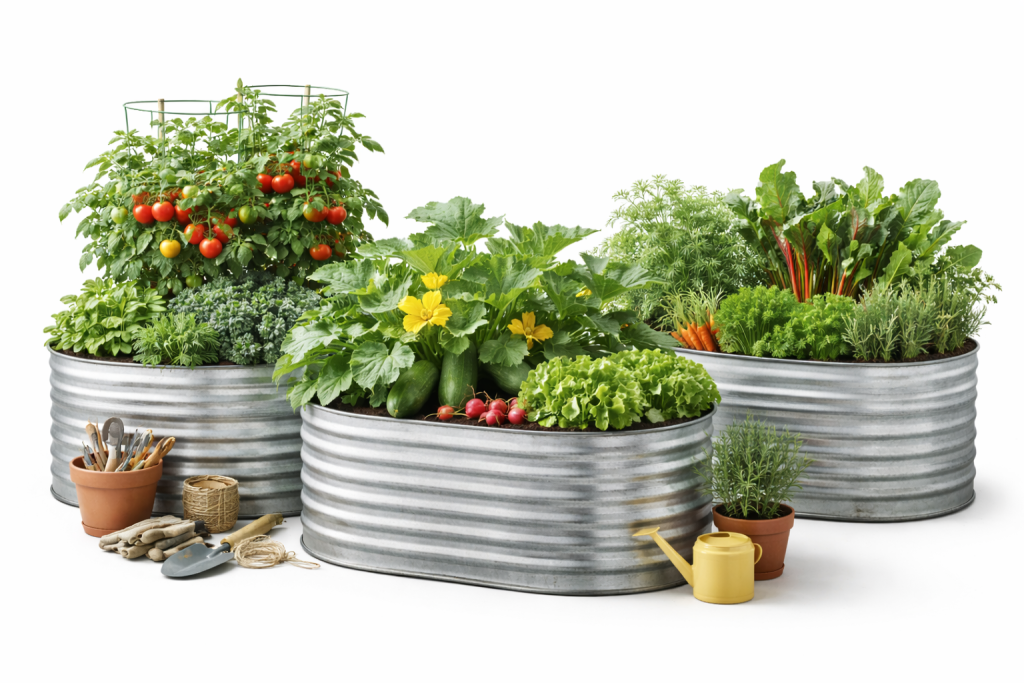
Large pots for balcony vegetable garden
Ideal for both beginners and experienced gardeners.
Error #2: Using the wrong soil
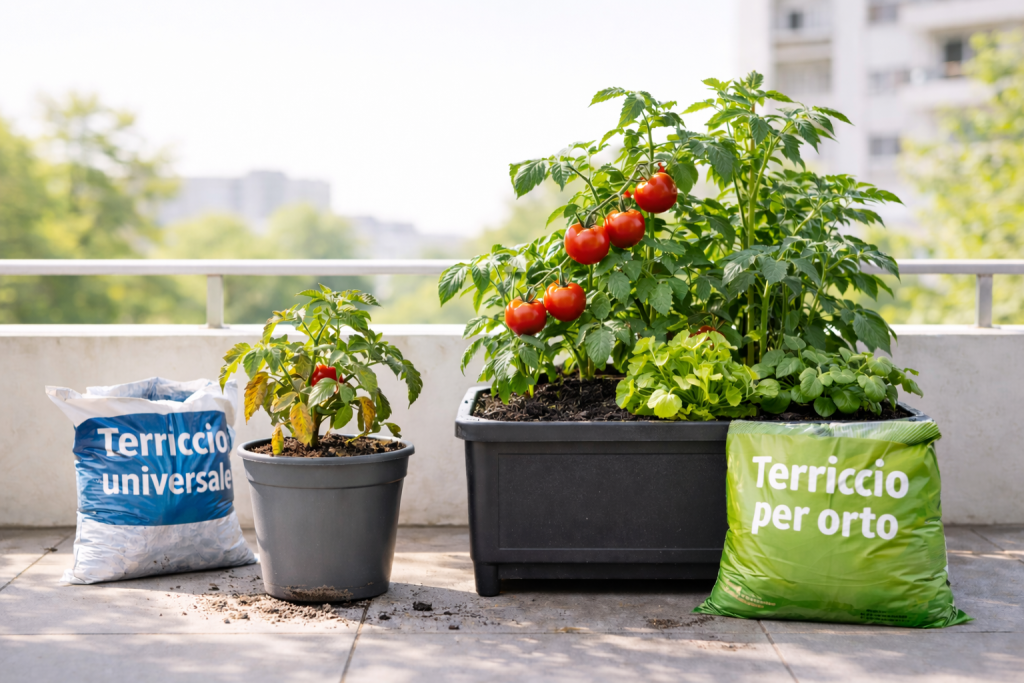
Not all potting soils are the same.
Many beginners buy the cheapest potting soil thinking it goes with everything.
In fact it often is:
too compact
low in nutrients
with little drainage
The result?
Roots struggling to develop and plants growing slowly.
What to use instead
For the balcony vegetable garden, it is best to use:
specific potting soil for vegetable garden
Or a mixture made like this:
60% universal potting soil
20% compost
20% perlite or pumice
This improves:
drainage
root aeration
plant nutrition
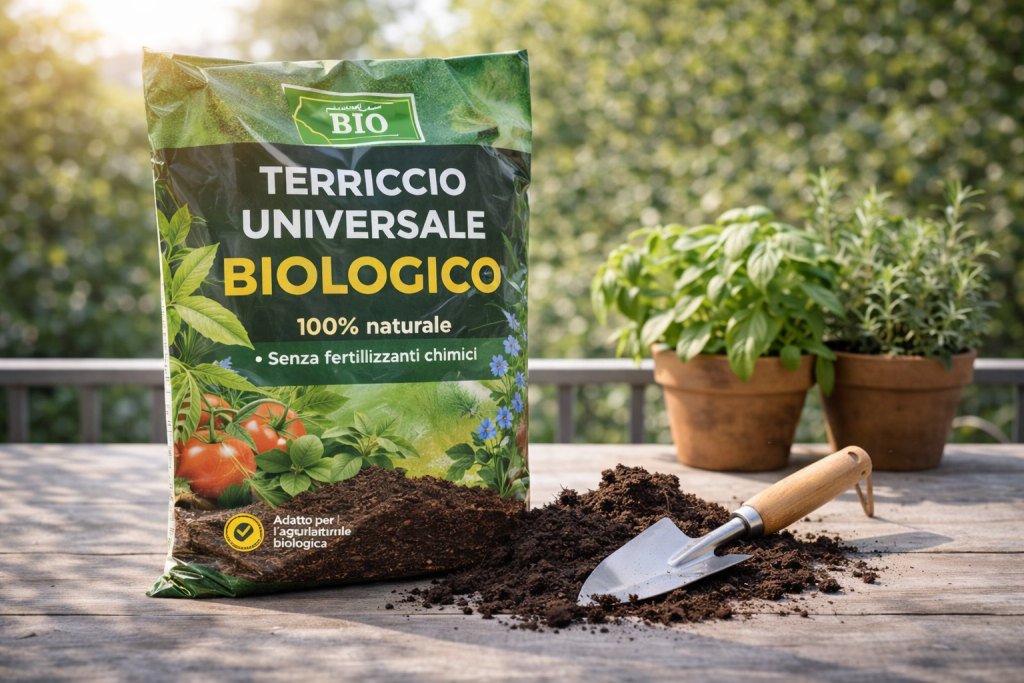
Organic soil for vegetable gardens
Ideal potting soil for urban vegetable garden
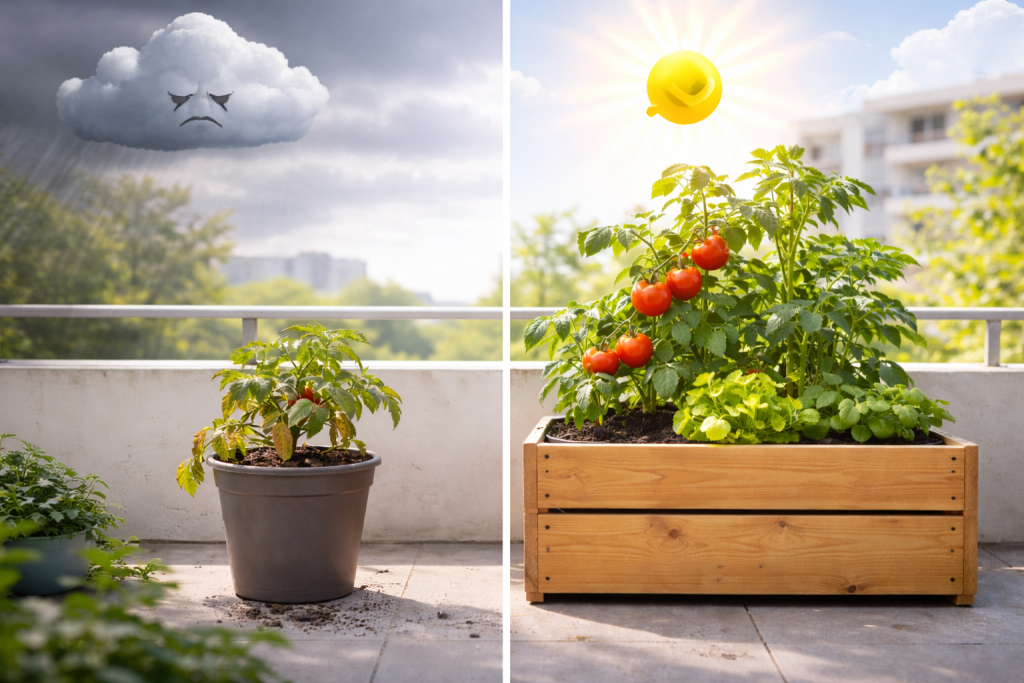
Error #3: Giving plants too little light
sunny balcony vs. shady balcony
Many people start a vegetable garden on the balcony without considering How many hours of sunshine do they really have.
Vegetable garden plants need a lot of light.
Indicative:
| Plant | Sun necessary |
|---|---|
| Tomato | 6-8 hours |
| Bell bell pepper | 6 hours |
| Basil | 5 hours |
| Salad | 4 hours |
👉 How many hours of sunshine do you need for a balcony vegetable garden?
Most vegetable garden plants need at least 4 to 8 hours of direct sun per day to grow well.
If the balcony faces north and receives little sun, some crops they will struggle a lot.
Solution
Choose plants suitable for the available light.
For poorly sunlit balconies they work best:
lettuce
arugula
spinach
parsley
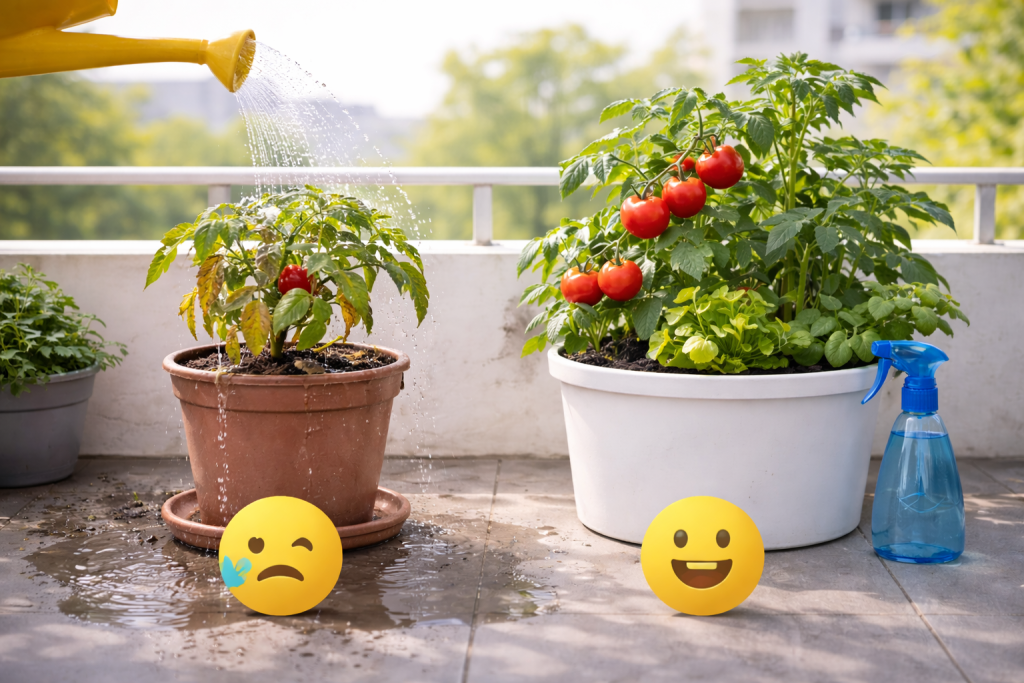
Error #4: Overwatering plants
When starting a balcony vegetable garden we tend to think:
more water = better
It is actually the opposite.
Too much water can cause:
root rot
molds
slow growth
This problem is very common, especially on city balconies, where pots tend to retain more moisture than an open-ground garden.
Clear signal
Yellow leaves and soil always wet.
Simple method for knowing when to water
Stick a finger into the ground.
If the first 2 cm are dry, you can water.
👉 How do you know when to water potted plants on your balcony?
Water potted plants on your balcony only when the top 2-3 cm of soil is dry. Insert your finger into the soil: if it's still moist, wait; if it's dry, it's time to water.
If your basil on the balcony has yellow leaves, in most cases the problem is too much water or stagnation in the pot.
👉 If you often have doubts about how much water to give your plants, the complete guide on watering your balcony garden may also be useful.
How to tell if you're overwatering
The most common signs are:
- yellow leaves
- mold on the soil
- bad smell in the vase
- slow growth
- ground always wet
👉 In most cases the problem is not too little water, but the opposite.
 Balcony vegetable garden watering: complete guide to healthy plants even when you are not at home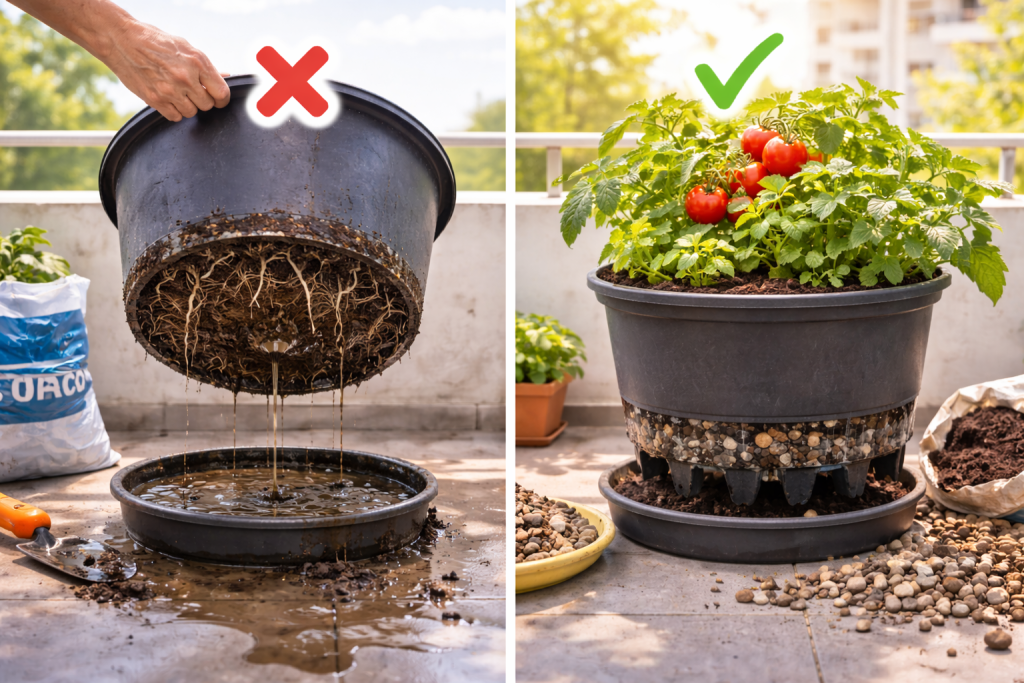
Error #5: Using pots without drainage
pot with expanded clay
A pot without drainage is one of the main causes of dead plants on the balcony.
Under the potting soil it is always useful to put:
expanded clay
This layer allows excess water to drain away, preventing stagnation.
Signs of poor drainage:
- always wet ground
- yellow leaves
- slow growth
Solution:
- use expanded clay
- choose pots with holes
👉 Common mistake: more water does not mean healthier plants.
What to do immediately if potted plants on the balcony are sick
If the leaves turn yellow or growth has stopped:
- check if the pot has drainage holes
- check how many hours of sun the balcony receives
- avoid watering every day automatically
- check if the roots have enough space
- use a more draining soil
👉 In most cases, these corrections are enough to save the plants without having to start from scratch.
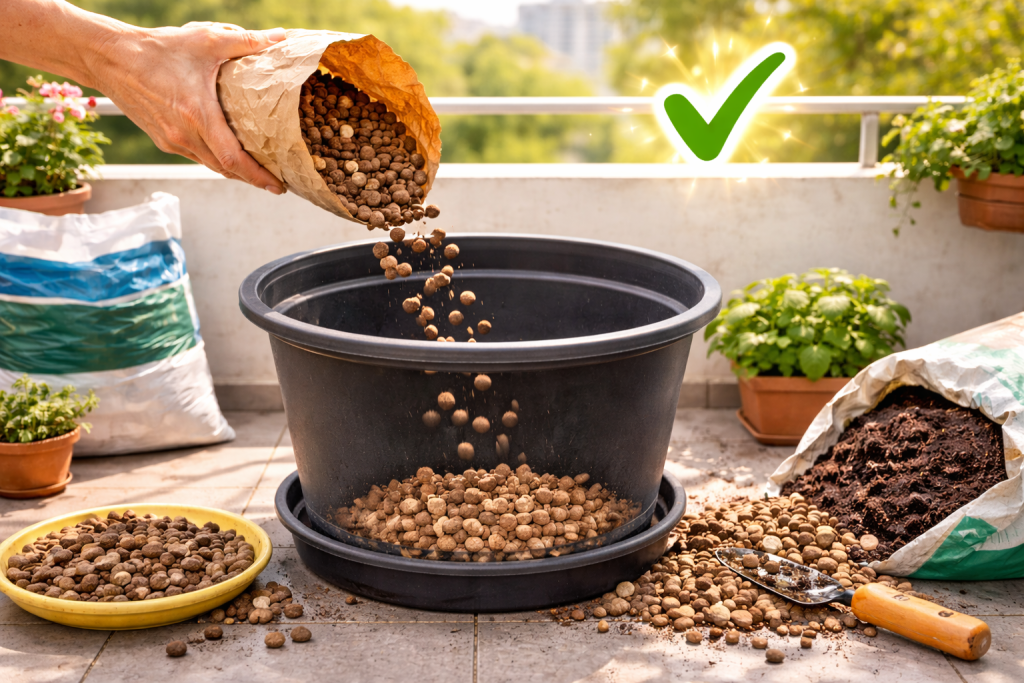
Expanded clay for drainage
Perfect for drainage, hydroponics, soil improvement
Error #6: Planting too many things in the same pot
It happens often to see pots with:
3 tomatoes
basil
salad
all at once.
The problem is that the plants compete for space and nutrients.
Better:
1 large plant per pot.
Error #7: Not fertilizing balcony garden plants
In potting soil, nutrients run out much faster than in the soil garden.
After about 4 weeks plants begin to need nutrients.
Simple solutions:
compost
liquid fertilizer
earthworm humus
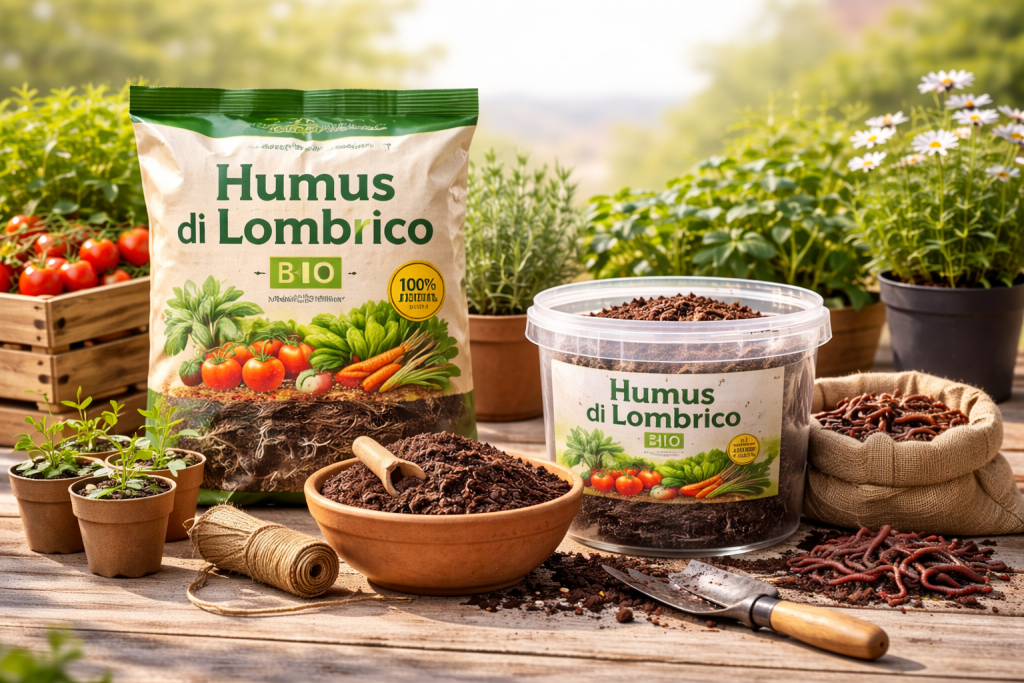
Earthworm Humus
Earthworm humus improves nutrient availability to plants by promoting vegetative development, ripening and fruit coloration
Error #8: Choosing varieties not suitable for potted cultivation on the balcony
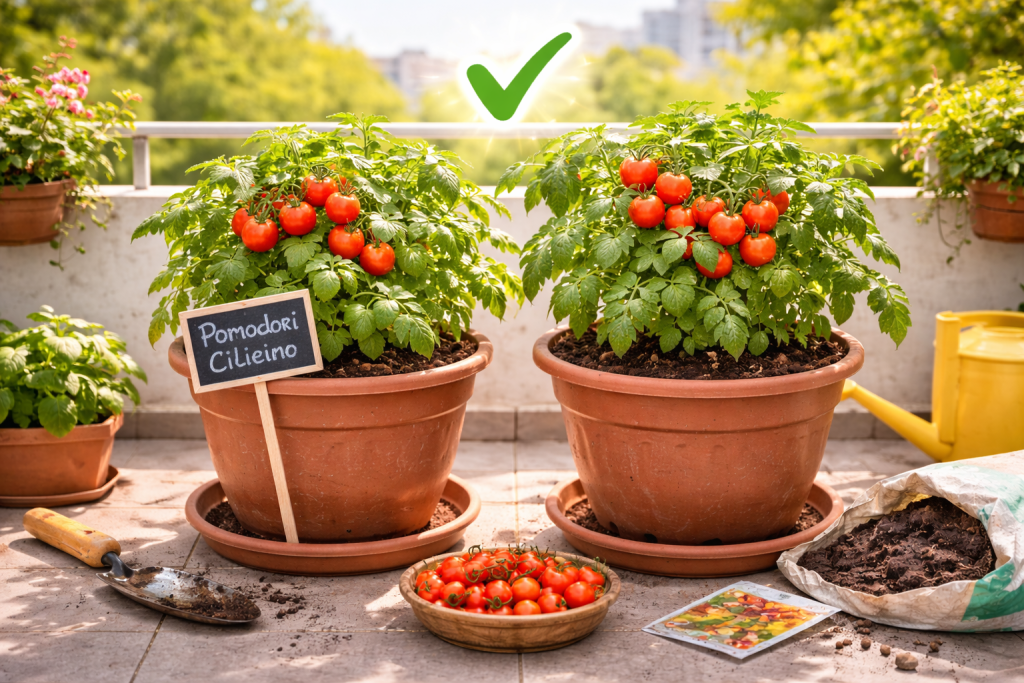
One of the most underestimated mistakes in the balcony vegetable garden is. choose plant varieties not suitable for growing in pots on the balcony.
Many people buy seeds without checking the characteristics of the plant.
But some varieties are designed for:
large gardens
cultivation in the ground
agricultural productions
On the balcony, however, it is best to choose compact or dwarf varieties.
Real example
In my first urban garden I had planted San Marzano tomatoes in pots.
Result:
tall plants
heavy branches
poor production
The following year I chose cherry and date tomatoes And the difference was huge.
From that moment on, I started using almost only compact varieties for growing in pots on the balcony, especially on balconies exposed to the wind or with little space.
Ideal varieties for the balcony
| Plant | Recommended variety |
|---|---|
| Tomato | cherry, date |
| Bell bell pepper | mini bell pepper |
| Zucchini | compact zucchini |
| Eggplant | dwarf eggplant |
| Tomato | balconies variety |
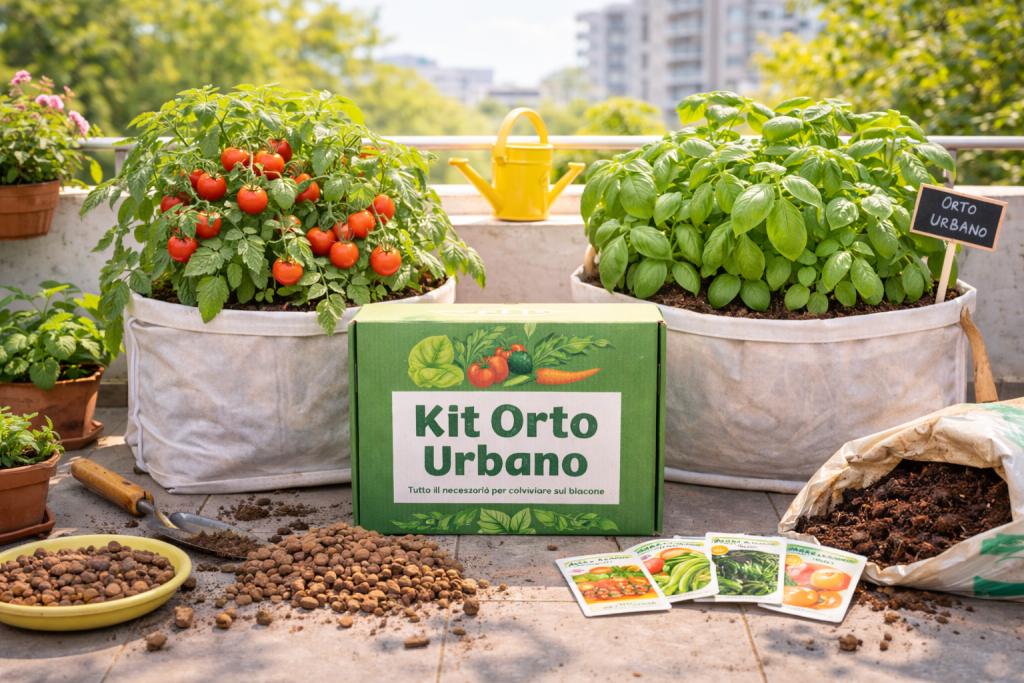
Urban garden kit
Everything you need to grow your own vegetables.
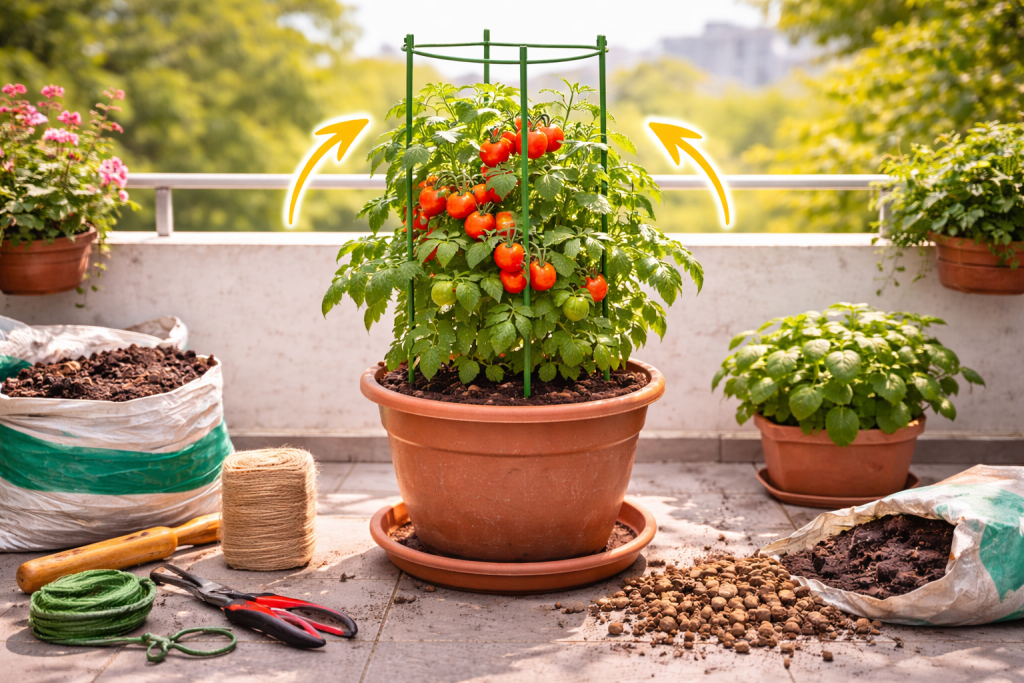
Error #9: Do not use plant supports.
Plants such as:
tomatoes
peppers
eggplant
They grow tall and produce heavy fruit.
Without support the branches can:
bend
snap
hit the ground
The solution is simple.
Use plant tutors.
They can be:
bamboo sticks
metal supports
tomato spirals
Brackets for tomatoes
Effectively support plants to grow straight and healthy
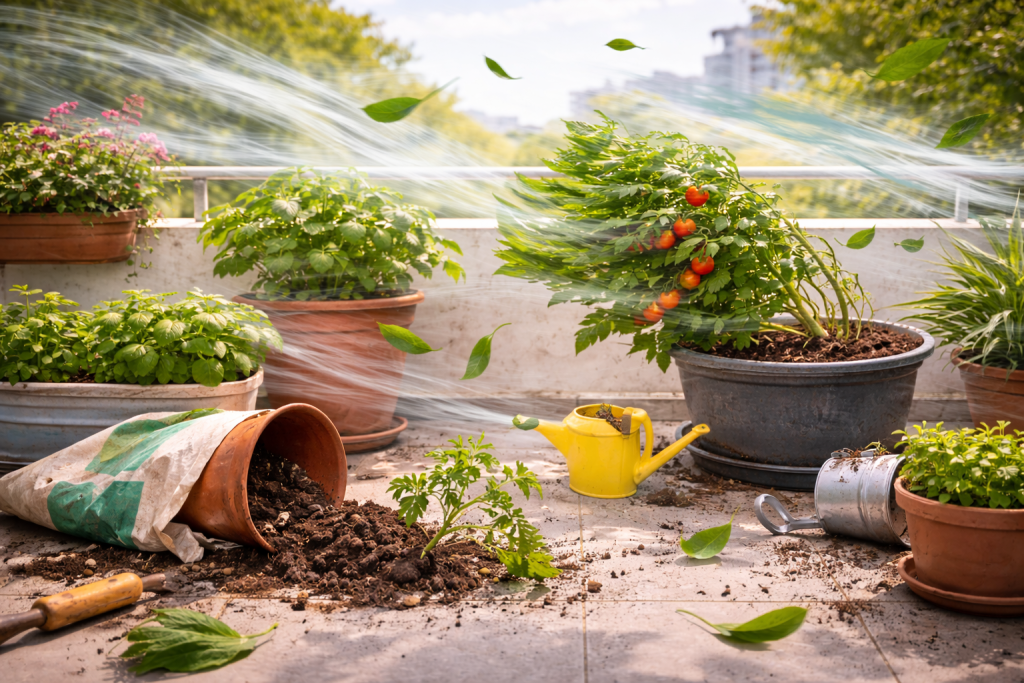
Error #10: Ignore the wind
Many balconies are very exposed to the wind.
This can cause:
breakage of branches
loss of flowers
plant stress
Especially at the higher levels.
Practical solutions
use heavier pots
install windbreak
Place plants near the wall
Error #11: Do not rotate the vases
Plants tend to grow toward the light.
If the sun always comes from the same side, the plant may become:
inclined
unbalanced
weak
The solution is simple.
Every week rotate the pots slightly.
Error #12: Not harvesting often enough
Many plants produce more when fruits are harvested.
If you leave:
ripe tomatoes
large zucchini
peppers too long
the plant slows down production.
Frequent collection stimulates new blooms.
Error #13: sowing at the wrong time
Each plant has its ideal time to be sown.
Example:
| Plant | Period |
|---|---|
| Tomato | March-April |
| Basil | April-May |
| Salad | almost all year round |
| Arugula | spring and autumn |
Sowing too early means:
cold
slow growth
weak seedlings
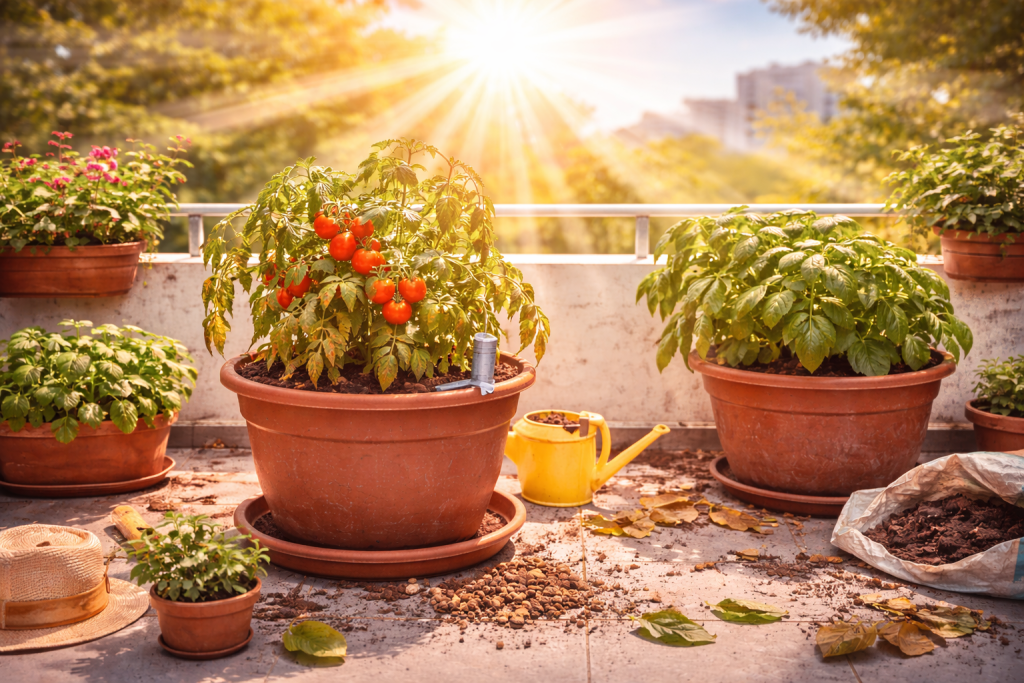
Error #14: Not protecting plants from summer heat
In summer, pots can reach very high temperatures.
The potting soil dries out quickly and the roots suffer.
Useful Tips
use saucers
mulching with straw
watering in the early morning
Error #15: Expect immediate results
This is perhaps the most human error of all.
Many people start a small urban garden on their balcony, thinking they'll have abundant harvests right away.
But growing on the balcony is a process.
Requires:
remark
experience
small mistakes
The first year is often a year of learning.
Even those with experience in traditional gardening often make mistakes when switching to potted plants on the balcony, because light, wind, and irrigation work very differently than in a soil-based garden.
From the second year everything becomes much easier.
Over time, you learn to quickly understand the signals from plants:
yellowing leaves, slowed growth, or soil that is too wet.
And it's precisely this hands-on experience that really makes the difference in an urban balcony garden.
What plants to grow easily on the balcony in the city
If you are just starting out, choose plants that are easy to grow in pots:
- basil
- cherry tomatoes
- lettuce
- arugula
- chillies
👉 These plants are ideal for small balconies or those with limited space.
Mistakes that make plants die faster
Some mistakes are much more damaging than others.
The worst are:
- continuous stagnation
- vases without holes
- strong sun without water
- soil too compact
👉 These problems can completely stunt growth in just a few days during the summer.
When mistakes can completely ruin plants
A few mistakes can ruin your entire harvest very quickly.
The most dangerous are:
- continuous stagnant water
- pots too small for tomatoes and courgettes
- excessive sun without irrigation
- soil always compact and without drainage
👉 If you notice a bad smell in the soil, mold, or black roots, intervene immediately because the plant may not recover.
What mistakes to absolutely avoid in a balcony garden
If you're just starting out, focus especially on these aspects:
- size of the vase
- sunbathing
- proper drainage
- balanced irrigation
- choosing the right varieties
👉 These are the factors that most influence the health of potted plants.

FAQ – Frequently Asked Questions
Why do potted plants on the balcony turn yellow?
In most cases due to too much water, poor drainage or too little sunlight.
What are the easiest plants to grow on a balcony?
Basil, lettuce, arugula, cherry tomatoes, and chili peppers.
How often should the balcony vegetable garden be watered?
It depends on the sun, temperature, and type of pot. In summer, it's often enough to check the soil every day without watering automatically.
What is the best soil for a balcony garden?
A light, well-draining soil, enriched with compost and materials such as perlite or pumice.
How many hours of sunshine are needed?
Most vegetable plants require at least 4-8 hours of direct sun.
Are seeds or fully grown seedlings better?
For beginners, seedlings are much easier to manage than sowing seeds.
Why does the basil on the balcony turn yellow?
Usually due to too much water, poor drainage, or too little direct light.
Are saucers harmful to plants?
Only if they retain water for many hours, creating stagnation in the vase.
Conclusion
Growing a vegetable garden on your balcony doesn't mean you're perfect from the start.
Almost everyone makes mistakes:
too much water, too little sun, the wrong pots or unsuitable soil.
The difference is learning to recognize them in time.
👉 A few adjustments are enough to transform any balcony into a small, productive vegetable garden, even in the city.
If you want to get started on the right foot, I also recommend reading:
- the complete guide to balcony gardening
- the guide to correct irrigation
- The best tips for growing tomatoes and herbs in pots
After correcting these mistakes, growing a vegetable garden on the balcony becomes much easier and the results improve as early as the following season.
👉 Have you already made one of these mistakes? Recognizing them early can save your next balcony crop.
👉 Even a small balcony can become a productive urban garden if you avoid the most common mistakes from the start.


 Italian
  English