
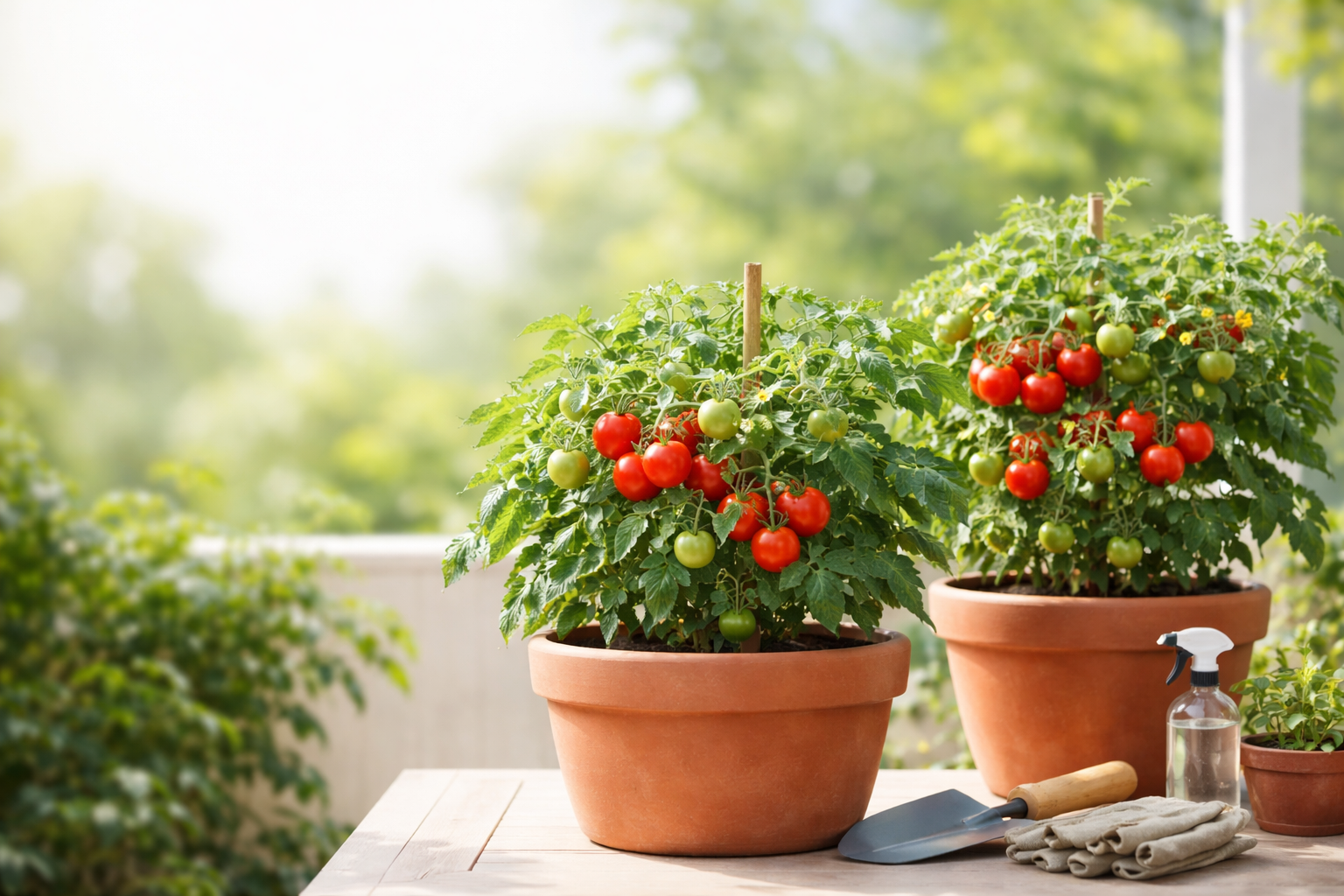
Reading time: 8 minutes
What you will learn:
- Which tomato varieties are best suited for growing in pots?
- How to choose the right pot for healthy, productive plants
- Which soil to use to promote growth and harvest
- How much water should you give tomatoes without causing root problems?
- When to fertilize and which nutrients are most important
- How to Prevent Yellow Leaves, Blossom End Rot, and Other Common Problems
- The most common mistakes that reduce tomato production on the balcony
Have you ever seen a tomato plant growing well… and then suddenly freeze, develop yellow leaves, or produce very little fruit?
It happens a lot more often than you think.
Many people start growing tomatoes in pots with enthusiasm, but they quickly make simple mistakes:
pots that are too small, too little light, incorrect watering or unsuitable soil.
And the result is almost always the same:
weak plants, few tomatoes, and a lot of disappointment.
The good news?
Even a small balcony can produce dozens of tomatoes during the summer, if you know how to properly manage sun, water, and nutrients.
In this guide you will find out:
- which varieties to choose
- How big should the vase be?
- how to avoid the most common mistakes
- how much water do you really need
- how to increase fruit production
What to do immediately if the plant seems to be suffering
👉 Even if you're starting from scratch.
If you are starting from scratch, I recommend you also read our guide on How to create a vegetable garden on your balcony even with little space, where you'll find everything you need to best organize pots, displays, and crops.
IMMEDIATE RESPONSE
To successfully grow tomatoes in pots you need above all:
a pot at least 30 litres large, at least 6 hours of direct sunlight, regular watering and rich but well-draining soil.
The most common mistakes are too little light, too much water, and containers that are too small, which limit growth and drastically reduce the harvest.
Index
The essential tools for growing tomatoes in pots
If you are starting from scratch, I recommend you also read our complete guide on’balcony vegetable garden, where you'll find everything you need to properly organize spaces, displays, and crops.
Why potted tomatoes can produce so much even on the balcony
Many people think you need a garden to grow vegetables. In reality, growing vegetables in containers offers several advantages, especially for those who live in cities.
The first advantage is soil control. In a traditional garden, you often have to adapt to the quality of the existing soil. In a pot, however, you can prepare a perfect substrate, rich in nutrients and well-draining.
A second advantage is plant management. Plants grown in pots are easier to monitor. You can better control irrigation, move containers in strong winds, and protect plants in bad weather.
There is also an aspect that many discover only after they have started:
Checking the growth of plants every day becomes almost relaxing.
Many people start out of curiosity… and end up transforming their balcony into a real mini vegetable garden.
Picking ripe tomatoes from your balcony has a completely different taste than buying them at the supermarket.
A concrete example can help illustrate how productive pot cultivation can be. In a 35-liter pot, a well-tended cherry tomato plant can easily yield between two and four kilos of tomatoes over the summer.
This means having fresh tomatoes practically every day.
My experience with potted tomatoes
When I first started growing tomatoes on my balcony, I made the same mistakes as many beginners. I used pots that were too small, watered irregularly, and thought that more water meant more growth.
The result was always the same: tall but unproductive plants and small fruits.
The turning point came by using containers of at least 30-35 litres, improving drainage and maintaining constant watering during the summer.
Since then the plants have started producing much more and with fewer problems with yellow leaves and blossom end rot.
👉 If you follow the rules explained in this guide, you can achieve excellent results even on a simple balcony.
Growing Tomatoes on Your Balcony: What You Need to Know Before You Start
Even a small balcony can host an impressive crop of tomatoes. The key is choosing the right variety, using suitable containers, and ensuring adequate sunlight throughout the day.
Many people think that a garden is necessary, but in reality, tomatoes on the balcony can produce very well if they receive at least 6 hours of direct light.
Which tomato varieties to choose for pot cultivation?
Not all tomato varieties perform the same when grown in pots. Some grow very tall and require more space, while others are more compact and suitable for balconies.
The most recommended varieties for home cultivation are generally those with small fruit.
Cherry tomatoes
The cherry tomato is probably the easiest variety to grow in a pot. It produces abundant bunches of small, sweet, juicy tomatoes.
It is a very vigorous and resistant plant, capable of adapting well even to less than perfect conditions.
Datterino tomato
The datterino tomato is highly prized for its sweet flavor and firm flesh. This variety also grows well in pots, as long as it has enough space for its roots to develop.
Balcony or dwarf tomato
In recent years, specific varieties have been developed for container growing. These are compact plants, often called dwarf tomatoes or balcony tomatoes.
They are perfect for those who have little space but still want to obtain good production.
How big should the pot for tomatoes be?
Choosing the right pot is one of the most important aspects of successfully growing tomatoes.
Many beginners make the mistake of using containers that are too small. Tomatoes have a fairly extensive root system and require plenty of space.
A pot that is too small limits the growth of the plant and drastically reduces fruit production.

In general, it's recommended to use containers with a minimum capacity of 25 liters. Ideally, choose pots between 30 and 40 liters.
This volume of soil allows the roots to develop properly and helps maintain greater moisture stability.
The pot material can also make a difference. Plastic pots are lightweight and retain moisture better, while terracotta ones promote transpiration but require more frequent watering.
| Type of tomato | Recommended vase |
|---|---|
| Cherry tomato | 25-30 liters |
| Datterino | 30 liters |
| San Marzano | 35-40 liters |
| Ox Heart | 40 liters + |
| Dwarf tomato | 15-20 liters |
How many tomatoes can a plant produce based on the pot size?
| Vessel capacity | Indicative production |
|---|---|
| 15 liters | low |
| 20 liters | discreet |
| 30 liters | good |
| 40 liters | very good |
| over 40 liters | maximum production |
A larger pot allows the roots to develop better and reduces water stress during the warmer months.
What soil to use for potted tomatoes?
Tomatoes are very demanding plants nutritionally. To achieve good yields, it's essential to prepare rich, well-structured soil.
Soil that is too compact can cause waterlogging, while soil that is too light risks drying out quickly.
A balanced mixture can be composed of:
good quality universal soil
mature compost
a small amount of sand or perlite
This combination allows you to obtain a fertile and at the same time well-draining substrate.
Before planting the seedling, it's helpful to mix a slow-release organic fertilizer into the soil. This will provide the plant with the nutrients it needs during the first few weeks of growth.
To improve the fertility of the substrate you can use some natural fertilizers for plants that help growth and fruit production.
The same rules about drainage and soil quality are also useful for those who grow aromatic plants on the balcony in pots.
Where to place tomatoes on the balcony
Tomatoes are sun-loving plants. To thrive, they require at least six hours of direct sunlight a day.
Balconies facing south or southwest are generally the most suitable for growing.
If the balcony receives less sun, the plant can still grow, but the production will probably be lower.
A useful trick is to place the pots near the railing, where the light reaches them more easily.
When to plant tomatoes in pots
The time of sowing or transplanting directly affects the growth of the plant.
In Italy the recommended periods are:
- Northern Italy: April-May
- Central Italy: March-April
- Southern Italy: February-April
Tomatoes are sensitive to the cold and should not be exposed to temperatures below 10°C.
If you buy already developed seedlings, wait until the frost has passed before placing them permanently on the balcony.
What to do immediately to have stronger plants
If you've just bought a tomato plant, there are a few things you should do immediately:
- transfer it to a larger pot
- check that the bottom has drainage holes
- add a brace from the very first days
- avoid saucers full of water
- place it in the sunniest area of the balcony
Many problems begin in the first few weeks after the transplant.
How much water do potted tomatoes need?
Tomatoes grown in pots require more frequent watering than plants grown in the ground.
During spring, watering every 2 or 3 days may be sufficient.
During the hottest periods of summer, daily watering may be necessary.
Signs of low water:
- wilted leaves
- slowed growth
- small fruits
Signs of too much water:
- yellow leaves
- constantly wet ground
- roots that rot
The ideal is to keep the soil slightly moist without creating stagnation.
If you grow more vegetables or herbs, it may be useful to learn more about the techniques of watering the vegetable garden on the balcony to reduce water waste and improve plant growth.
How much water should you give tomatoes in summer?
| Temperature | Indicative water |
|---|---|
| 20-25°C | 0.5-1 liter |
| 25-30°C | 1-1.5 liters |
| over 30°C | up to 2 liters |
Quantities are indicative and may vary depending on the size of the pot, exposure, and variety grown.
Mistakes to avoid during the summer heat
During July and August, many potted tomatoes begin to suffer more from management errors than from the heat itself.
The most common errors are:
- water during the hottest hours
- leave stagnant water in the saucer
- continuously wet the leaves
- using pots that are too small
- forget about fertilizing for weeks
At high temperatures, even small errors can quickly slow down production.
Why do potted tomatoes grow slowly?
If the plant grows poorly, produces few flowers or seems stuck, in most cases the problem is linked to one of these factors:
- vase too small
- a few hours of sunshine
- irregular irrigation
- nutrient-poor soil
- roots too compressed
Many beginners think that the problem is the fertilizer.
In reality, the plant often does not receive enough light or space to develop.
The plant produces flowers but few tomatoes
If the plant produces many flowers but few fruits, the problem may be related to:
- excessive heat
- irregular irrigation
- potassium deficiency
- little pollination
- plant stress
It often happens on very hot and poorly ventilated balconies during the summer.
The importance of supports
Many tomato varieties can grow over five feet tall. Without adequate support, the plant risks bending or breaking under the weight of the fruit.
For this reason, it is important to install a support in the early stages of growth.
To prevent the plant from bending under the weight of the fruit, you can use different types of support.
The most used are:
bamboo canes
tomato cages
metal structures
The support helps the plant grow vertically and improves air circulation between the leaves.
How to fertilize tomatoes for more fruit
During the growing season, tomatoes consume a lot of nutrients.
To keep the plant productive it is useful to carry out periodic fertilization.
The most suitable fertilizers are those rich in:
potassium
phosphorus
organic substance
These elements promote flowering and fruit formation.
Fertilizing every two or three weeks is generally sufficient to keep plants vigorous.
To choose the most effective fertilizers you can read the guide dedicated to natural fertilizer for plants.
Mistakes that kill potted tomatoes
Many problems in growing tomatoes are caused by fairly common mistakes.
One of the most common is using pots that are too small. As we've seen, tomatoes need space to develop their roots.
Another mistake is irregular watering. Periods of drought followed by heavy watering can cause the fruit to crack.
Lack of support can also become a problem when the plant grows rapidly.
Finally, insufficient exposure to sunlight can significantly reduce production.
Many beginners think that more water means faster growth.
In fact, overwatering is one of the most common causes of root rot.
In the middle of summer, a suffering plant can deteriorate very quickly, even in the space of a few days.
Many of these problems are part of the most common mistakes in the balcony garden and can quickly compromise plant production.
The mistakes that most reduce the harvest
Based on the experience of many home growers, the mistakes that cause the greatest production losses are:
- vase too small
- irregular irrigation
- lack of fertilization
- less than 6 hours of direct sunlight
- lack of adequate support
- soil poor in organic matter
Even one of these mistakes can drastically reduce the number of tomatoes produced during the season.
Mistakes I Made During My First Cultivation
When I first grew tomatoes in pots I made a few mistakes that significantly reduced my harvest:
- 20-liter vase only
- irregular watering during the hottest days
- insufficient fertilization
- exposure with few hours of direct sunlight
By correcting these problems the difference in production was evident already in the following season.
How to increase tomato production
To get more tomatoes from each plant, it's important to follow a few simple rules.
- Regularly remove lateral shoots in varieties that require it
- Use adequate supports
- Fertilize throughout the production phase
- Remove damaged or diseased leaves
- Ensure at least 6-8 hours of direct sunlight per day
These measures help the plant to concentrate energy on fruit production.
Proper nutrition is essential: some natural fertilizers for tomatoes and potted vegetables can significantly increase plant productivity.
How much does a potted tomato plant produce?
Production depends on the variety, the pot used and the care received.
Average:
– Cherry tomato: 2-5 kg per plant
– Datterino tomato: 2-4 kg per plant
– Large varieties: 3-8 kg per plant
With proper exposure, regular watering, and adequate fertilization, a single plant can produce tomatoes for several months.
When the plant is really suffering
There are some signs that should not be ignored:
- yellow leaves that increase rapidly
- dark spots on the stem
- ground always wet
- tomatoes rotting underneath
- plant suddenly wilted
Very often these problems start from incorrect watering or poor soil drainage.
In many cases the problem is linked to excessive watering, stagnation or fungal diseases.
Intervening promptly can save a large part of the harvest.
Yellow leaves on tomatoes: what does it mean?
Yellow leaves are one of the most common problems when growing tomatoes in pots.
The most common causes are:
- too much water
- poor drainage
- lack of nutrients
- little sun
- intense heat stress
Checking the soil and exposure promptly can prevent more serious damage to the plant.

When it is best to intervene immediately
If the plant stops growing completely, loses many leaves within a few days or the fruits begin to rot quickly, it is important to check:
- presence of parasites
- pot drainage
- soil quality
- any fungi or mold
Many problems worsen rapidly during the hottest weeks of summer.
When to harvest tomatoes
Tomatoes are generally harvested between June and September.
The right time to harvest depends on the variety and the desired degree of ripeness.
A ripe tomato has an intense color and a firm consistency.
Harvesting the fruits regularly stimulates the plant to produce new ones.
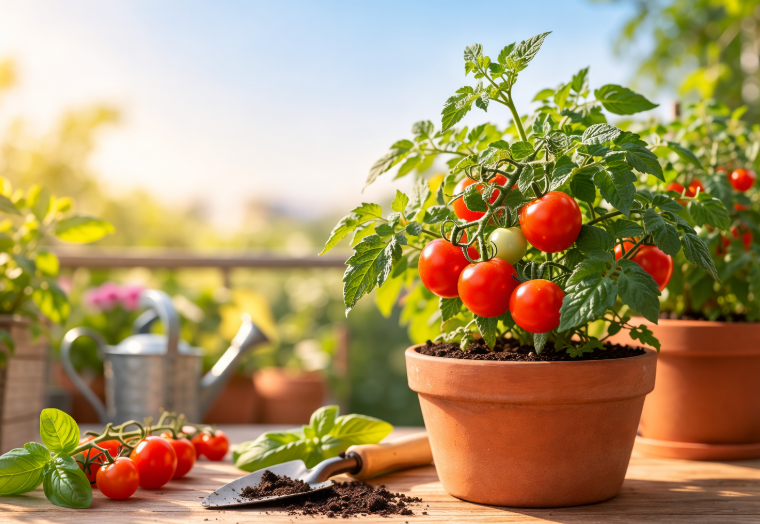
If you're starting from scratch, you might also find it helpful to read the complete guide on how to create a balcony garden and best organize your space.
👉 Read also: “"Balcony Garden: A Complete Guide to Getting Started Even if You Have Little Space"”
Many problems in growing tomatoes can be avoided with a little daily attention.
Below are the most frequently asked questions from first-time potted tomato growers.
Common Potted Tomato Problems
Yellow leaves
They are often caused by overwatering, nutrient deficiencies, or poor drainage.
Falling flowers
Too high temperatures or irregular watering can cause the flowers to drop.
Small tomatoes
The most common cause is insufficient fertilization or poor exposure to sunlight.
Blossom-end rot
It appears as a black spot on the underside of the fruit and is often linked to calcium deficiency or irregular irrigation.
Tomatoes that don't ripen
Lack of sun and unsuitable temperatures can slow down ripening.
Diseases and pests of potted tomatoes
Tomatoes grown in containers can be affected by some common problems.
Aphids
Small insects that accumulate on young shoots and suck the plant's sap.
White fly
It can weaken the plant and promote the development of diseases.
Downy mildew
It causes dark spots on leaves and stems, especially during very humid periods.
Red spider
It appears during intense heat and can cause yellowing of the leaves.
Checking your plants regularly allows you to intervene quickly and limit damage.
How long does it take to harvest the first tomatoes?
After transplanting, a tomato plant generally takes between 60 and 90 days to produce its first ripe fruits.
Cherry tomatoes tend to ripen more quickly than larger varieties like Cuore di Bue or San Marzano.
Temperature, sun exposure and quality of care can significantly influence harvest times.
FAQ - Frequently Asked Questions

How often should you water potted tomatoes?
In summer, it is often necessary to water every day, especially on very sunny balconies.
Do potted tomatoes need direct sunlight?
Yes. To produce well, at least 6 hours of direct light a day is needed.
Why do tomatoes split their skins?
The problem is usually caused by irregular watering after periods of excessively dry soil.
Can you grow tomatoes without a garden?
Yes. Even a small balcony can produce plenty of tomatoes with the right exposure.
When do the first tomatoes ripen?
Generally between June and July, depending on the variety and the climate.
How many tomatoes does a potted plant produce?
A healthy plant can produce from 2 to over 8 kg of tomatoes during the season, depending on the variety and the care received.
What is the best pot for growing tomatoes?
It is advisable to use a pot at least 30-40 cm deep with efficient drainage holes.
When to fertilize potted tomatoes?
After transplanting and then every 10-15 days during the growth and production period.
Why do flowers fall without bearing fruit?
Heat stress, irregular irrigation and lack of pollination are the most common causes.
How many tomatoes can I grow in a pot?
In most cases, it's best to grow only one plant per 30-40 liter pot. Placing multiple plants in the same container increases competition for water and nutrients.
Can I grow tomatoes in pots all year round?
In Italy, cultivation is generally limited to spring and summer. During the winter, low temperatures slow or completely halt growth.
How many liters should the tomato pot hold?
For most varieties, a pot of at least 30 litres is recommended, while for larger varieties, 40 litres or more may be needed.
What is the best soil for potted tomatoes?
A well-draining, organically rich soil enriched with mature compost generally gives the best results.
Potted Tomatoes: Mistakes to Avoid
- using pots that are too small
- leave stagnant water
- fertilize too little
- grow in areas with little sun
- do not use supports
- water irregularly
Conclusion
Growing tomatoes in pots doesn't require advanced experience, but doing the right things from the start can completely change the outcome.
Even a simple balcony can be transformed into a small home production capable of providing fresh tomatoes for months.
The most satisfying part?
Seeing the first tomatoes ripen day after day completely changes your relationship with the balcony and with what you eat.
And eating something truly grown with your own hands gives a satisfaction that no store-bought product can replace.
👉 Have you tried growing tomatoes on your balcony yet? Share your experience or any mistakes you've encountered.
If you want to transform your balcony into a small vegetable garden that is productive all year round, also discover our complete guide on how to create a balcony vegetable garden and make the most of every available space.


 Italian
  English