
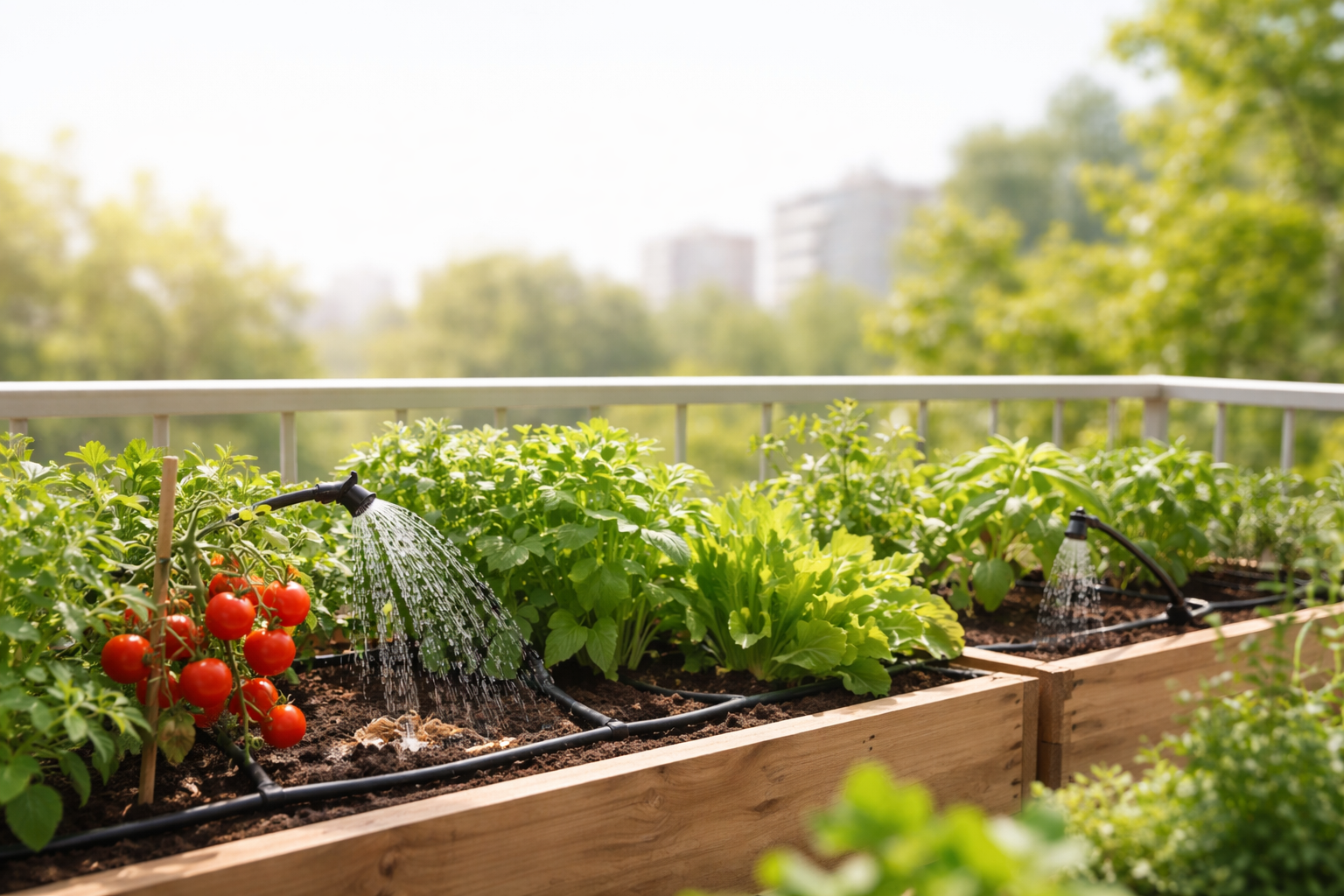
What you will learn
- How much water do potted plants really need?
- When to water to avoid stress and waste
- What is the best irrigation system for balconies?
- How to Keep Your Plants Dry When You're on Vacation
- The most common mistakes that cause roots and vegetables to rot
- How to tell if you're watering too much or too little
Have you ever come home in the summer to find wilted tomatoes, dry basil, and completely parched soil?
It happens a lot more often than you think.
In a balcony garden, just a few hours of intense heat or incorrect watering are enough to stress the plants and completely stunt their growth.
And in most cases the problem isn't the sun.
👉 It's irrigation.
The real secret to having healthy and productive plants is to water them correctly.
In the soil of a traditional garden, water remains available longer. On a balcony, however, plants thrive in a completely different environment. The soil is limited, the sun heats the pots, and evaporation can be rapid.
In the height of summer, you only need to forget to water for a couple of days to find wilted leaves and completely dry soil.
Anyone who has a south-facing balcony knows it well: during July and August, pots can dry out in just a few hours.
The good news is that often, just a few changes—like watering at the right times or using a small automatic timer—can dramatically improve the health and productivity of your plants. Some are completely manual, others allow you to automate irrigation and completely forget about watering.
In this guide, we'll look at how to set up an efficient irrigation system for your balcony garden, with real-world examples and practical advice.
IMMEDIATE RESPONSE
Properly watering a balcony garden requires constant watering, but without stagnant water. In summer, many potted plants require daily watering, especially on sunny balconies. The most effective systems are controlled manual irrigation, drip irrigation, and automatic timers to avoid water stress when you're away.
If you're starting from scratch, you can also read the complete guide to balcony gardening.
👉 Balcony Gardening: A Complete Guide to Getting Started Even if You Have Little Space
Why watering on the balcony is different from watering in the garden
The main difference between a traditional garden and a balcony garden is the container.
In natural terrain, the soil acts as a large water reserve. Roots can expand tens of centimeters and find moisture even in the driest periods.
In a vase, however, space is limited.
This has three very important consequences.
The first concerns evaporation. Potted soil dries out much faster than garden soil. In summer, especially on south-facing balconies, the sun can heat the pot to very high temperatures.
On balconies with a lot of sun, it often happens that small plastic pots dry out completely by early afternoon, especially during the heat waves of July and August.
The second concerns root space. In a container, roots cannot expand freely. This means the plant is completely dependent on external water.
The third concerns temperature. Pots, especially those made of plastic or dark terracotta, tend to heat up quickly.
This further accelerates the evaporation of water.
The result is that a tomato plant grown on the balcony may require much more frequent watering than the same plant grown in the garden.
How much water do potted plants on the balcony need?
Not all plants have the same water needs.
Fruiting vegetables such as tomatoes, peppers, eggplants, and courgettes require a lot of water during growth and especially during fruit production.
Aromatic herbs, on the other hand, have more moderate needs.
Basil, parsley and mint like slightly moist soil but cannot tolerate waterlogging.
Salad plants such as lettuce and arugula prefer consistently cool soil.
A practical example can help to understand better.
On an urban balcony with south exposure:
tomatoes → daily watering in summer
basil → daily but moderate watering
lettuce → watering every 1-2 days
Obviously, everything also depends on the size of the pot and the type of soil.
Larger pots hold more water.
Some aromatic plants, such as basil, suffer greatly from incorrect watering.
👉 Aromatic plants on the balcony: an easy guide to getting started
When to water your balcony garden to avoid stressing your plants
The timing of watering is almost as important as the amount of water.
The best times to water are:
- early morning
- evening
In the morning, plants have time to absorb water before the intense heat arrives.
In the evening, however, evaporation is much reduced and water remains available in the soil for longer.
Watering during the middle of the day is generally not recommended. Water evaporates quickly and can stress the plants.
How to protect plants from the summer heat on the balcony
During summer heat waves, the problem is not just watering more, but preventing the soil from drying out too quickly.
Some very useful tips are:
- use mulch
- choose larger pots
- avoid black vases that are too small
- temporarily move the more delicate plants into partial shade
Even a few degrees less can greatly reduce plant stress.
Manually watering your balcony garden: advantages and limitations
For those who grow just a few pots, manual irrigation remains a perfectly valid solution.
A simple watering can allows you to directly control each plant.
Many urban gardening enthusiasts prefer this method precisely because it allows them to observe the plants every day.
During irrigation you can control:
presence of parasites
state of the leaves
fruit growth
Many problems are discovered during daily watering: yellow leaves, aphids, soil that is too dry, or the first signs of disease.
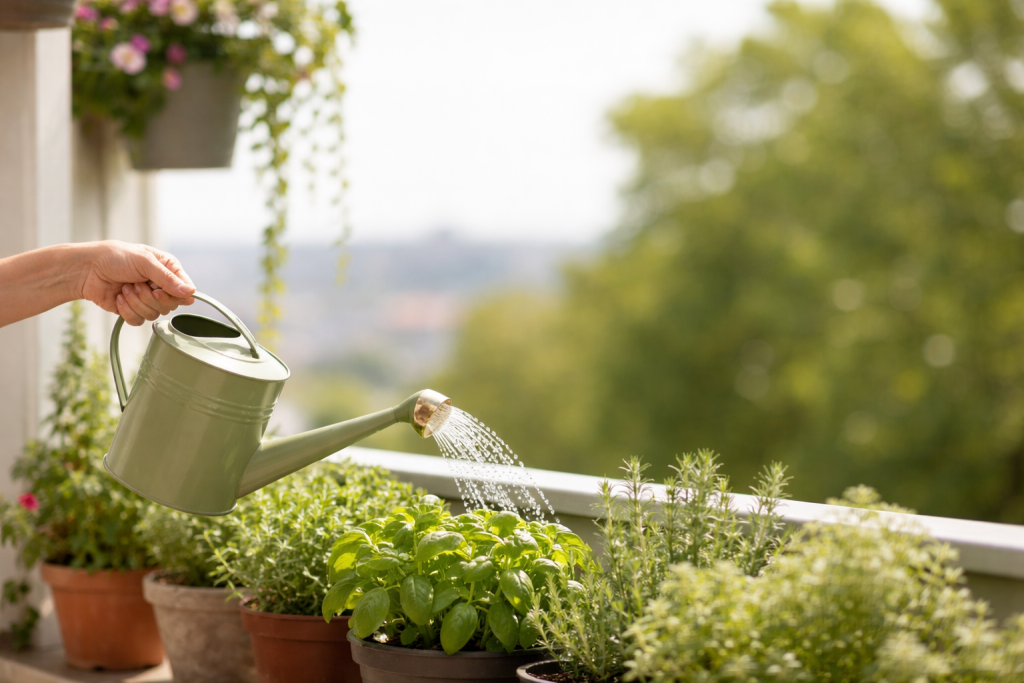
How to water potted plants correctly
One of the most common mistakes is pouring water too quickly.
Dry soil tends to repel water.
If you pour a large amount of water all at once, it often runs down the edges of the pot without actually penetrating the substrate.
The best method is to water slowly.
Pour a small amount of water.
Wait a few seconds.
Repeat.
In this way the water gradually penetrates deep down.
Drip irrigation: the ideal solution for many pots
As the number of plants increases, manual watering becomes more challenging.
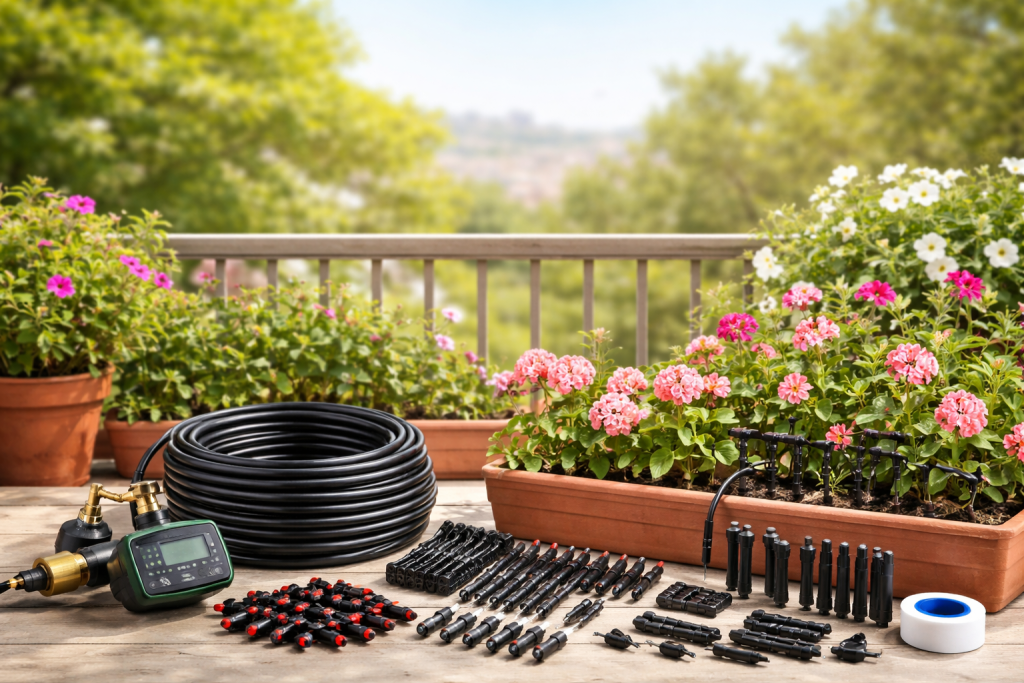
In these cases, drip irrigation is the best solution.
This system uses small tubes connected to drippers that slowly release water near the roots.
The advantages are numerous.
The water is distributed precisely.
Waste is reduced.
The plants receive constant moisture.
As pots begin to grow, manually watering them every day can be time-consuming. This is why many urban gardeners choose automatic drip systems.
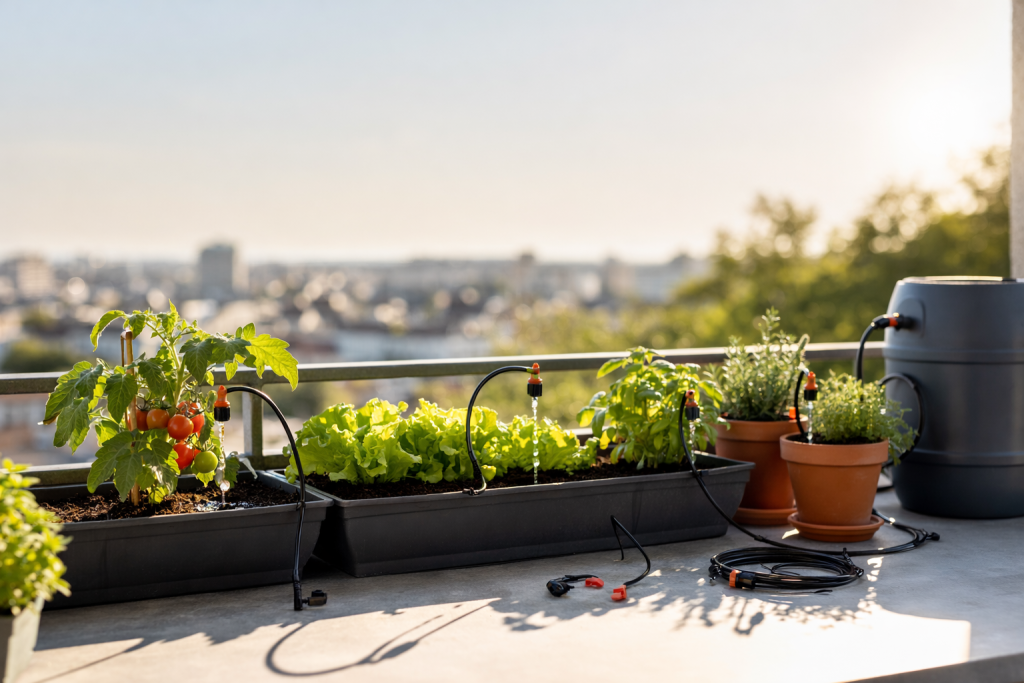
Automatic balcony irrigation: the ideal solution in summer
Anyone who grows a vegetable garden on the balcony sooner or later faces the problem of holidays.
Leaving plants without water for a few days can be disastrous.
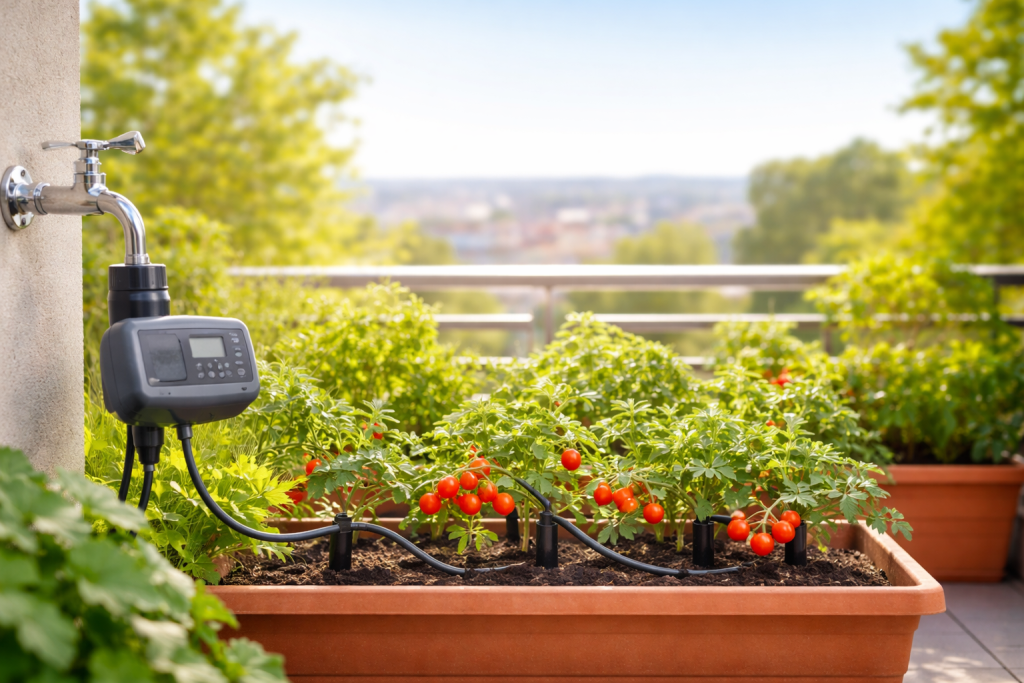
An automatic timer solves the problem.
The device connects to the tap and allows you to program:
irrigation schedules
duration
frequency
This way the plants receive water even when we are not present.
In small spaces, it can be useful to better organize the vertical arrangement of plants.
DIY solutions for watering plants
Not everyone wants to install automatic systems.
There are also simple and very economical solutions.
One of the most widespread is the inverted bottle system.
A small hole is made in the cap of a water bottle and inserted into the jar.
The water is slowly released into the soil.
Another solution is to use terracotta cones that automatically regulate the water release.
Mistakes to avoid when watering your balcony
Among the most common errors we find:
watering too little
watering too often
use pots without drainage
water during the hottest hours
Water stagnation is one of the most common problems.
For this reason it is always essential to use pots with drainage holes.
Many people see wilted leaves and immediately think they're lacking water.
In reality, even waterlogging can cause soft leaves and a suffering plant.
When incorrect watering can ruin plants
Improper water management can cause very serious problems, especially during the summer.
The most common consequences are:
- root rot
- growth arrest
- tomatoes that split
- sunburnt leaves
- appearance of fungi and mold
If plants remain completely dry for several consecutive days, some varieties may never recover.
Potted tomatoes are among the plants that suffer the most from water stress and irregular irrigation.
How to tell if you're watering too much or too little
Many balcony plant problems are caused by incorrect watering.
When water is insufficient, leaves tend to droop quickly, the soil becomes hard, and plants slow down in growth.
However, when you water too much, the following may appear:
- yellow leaves
- mold in the soil
- bad smells
- rotten roots
- weak growth
One of the most common mistakes is watering 'at a fixed time' without really checking the soil.
The best method is to stick your finger into the soil to check the actual moisture.
What to do immediately if your plants are drying out
- Temporarily move the pots into partial shade
- Water slowly in several passes
- Check that the water can really penetrate the soil
- Remove any saucers filled with stagnant water
- Add mulch to reduce evaporation
- Check if the pot is too small for the plant
If you have many pots or are often away from home, small automatic systems can avoid stressing your plants and avoiding forgetting to water them during the summer.
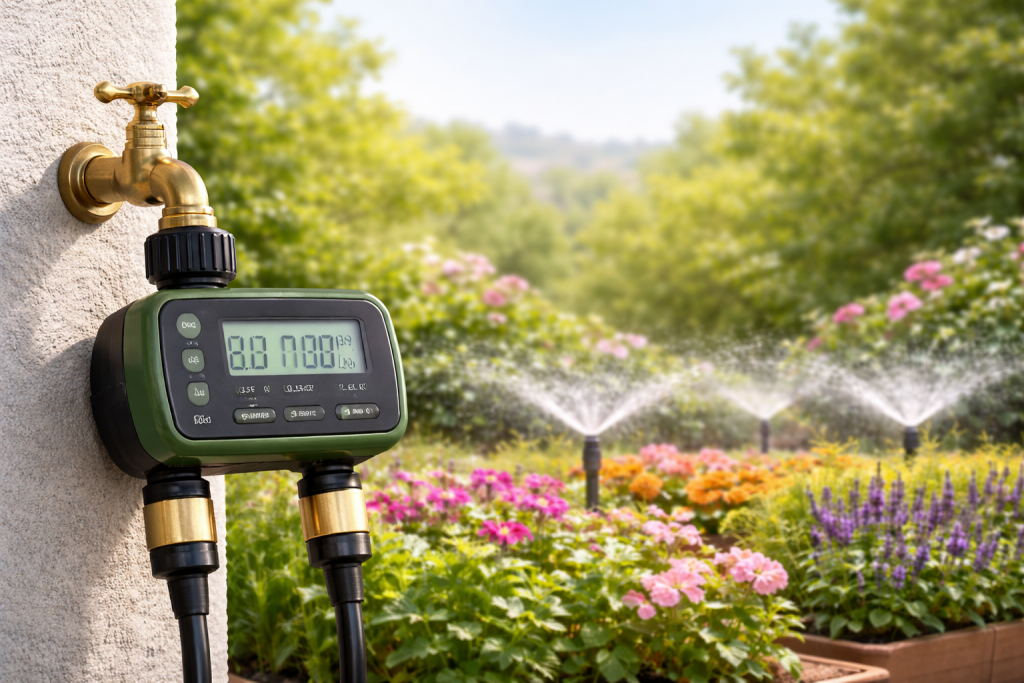
Automatic irrigation timer
It allows you to program watering up to three times a day.

FAQ - Frequently Asked Questions
How often should you water a balcony garden?
In summer, many potted plants require daily watering, especially on sunny balconies. Frequency and amount depend on the pot, temperature, exposure, and plant type.
Is it better to water in the morning or in the evening?
The best times are early morning or evening. During these times, water evaporates less quickly and plants can absorb it better.
What is the best irrigation system for a balcony?
For a few pots, manual watering may suffice. For balconies with many plants, the most effective system is generally drip irrigation with an automatic timer.
How to keep plants alive when you go on vacation?
The best solutions are automatic timers, drip irrigation, or systems with terracotta bottles and cones that release water slowly into the soil.
Can too much water ruin plants?
Yes. Waterlogging can cause root rot, mold, and yellow leaves. This is why it's essential to use pots with drainage and always check the soil before watering.
Is it better to water a little every day or much less frequently?
In most cases, it is best to water deeply and regularly, avoiding both completely dry soil and continuous stagnation.
Conclusion
Over time, every balcony develops its own balance: the amount of water, exposure to the sun, size of the pots, and type of plants vary greatly from house to house.
The important thing is to observe the plants every day and create simple, regular and sustainable irrigation.
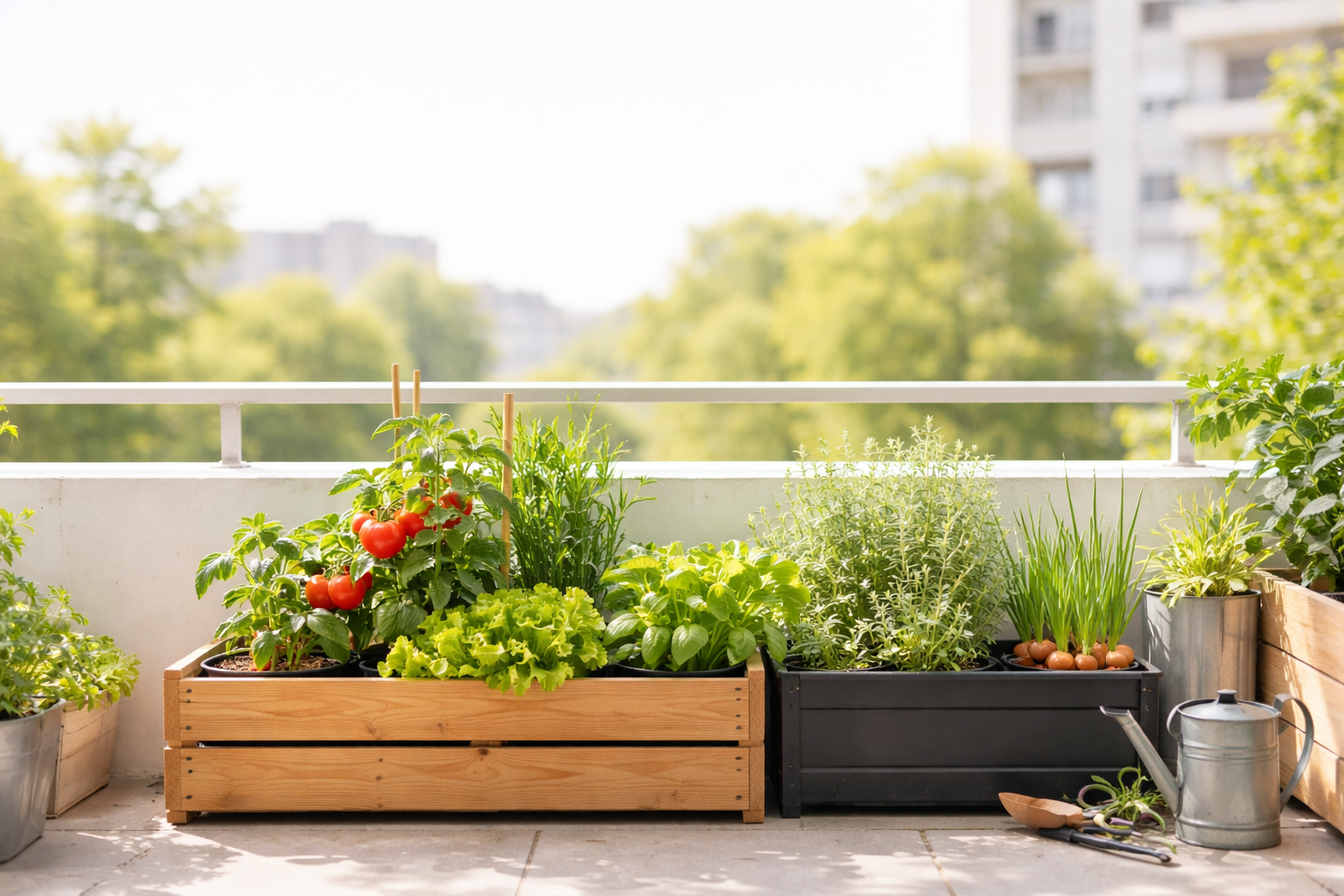
Even a small balcony can be transformed into a productive vegetable garden, providing ripe tomatoes, fragrant basil, and fresh salads all summer long.

 Italian
  English