

Reading time: 8 minutes
What you will learn:
- How to Save Plants During a Heat Wave
- Signs of excessive heat stress
- The most effective strategies for protecting your vegetable garden, balcony, and garden.
- Mistakes that can make the situation worse
- Useful products to reduce damage caused by the sun and high temperatures
It's four in the afternoon.
Open the balcony door and feel the hot air on your skin.
You get close to your plants and something is wrong.
The basil is bent downwards.
The tomato leaves look lifeless.
The flowers have lost their color.
The first question that comes to mind is always the same:
“Am I losing them?”
When a heat wave arrives, just a few days can jeopardize weeks of growth. Many people think that simply adding more water is enough, but that's not always the case.
In fact, extreme heat can cause heat stress, leaf burn, and growth failure even in well-watered plants.
The good news is that in most cases it is possible to intervene in time and limit the damage.
Immediate response
To protect plants from extreme heat and save them from the heat during a heatwave, it's essential to water early in the morning or after sunset, keep the soil moist with mulch, and reduce direct exposure to sunlight during the hottest hours of the day. Potted plants are the most vulnerable because their soil heats up quickly and loses water much faster than garden soil.
Attention
If the leaves are wilted during the hottest hours of the day but return to normal by evening, the plant may simply be reacting to the heat. If, however, they remain wilted even in the early morning, prompt action is necessary to avoid permanent damage.
Index

Why extreme heat makes plants suffer
Plants love light.
But when temperatures exceed 35°C for several consecutive days, the situation changes.
The leaves begin to lose water faster than the roots can absorb it.
The soil dries out quickly.
The roots get hot.
Growth slows.
In the worst cases, the plant completely stops producing flowers and fruits.
Potted plants suffer particularly because they have a limited amount of available soil.
For this reason, many people look for ways to protect potted plants from the summer sun and save them from the heat before the damage becomes irreversible. A single hot day is enough to transform a pot into a veritable "furnace" for roots.
Which plants suffer most from extreme heat?
Some plants can tolerate high temperatures better.
Others, however, quickly show signs of suffering.
Basil and aromatic plants
Basil is often the first to show problems.
The leaves become soft and lose their firmness within a few hours.
Parsley, cilantro and lettuce can also suffer quickly.
Many growers notice the problem especially after a particularly hot weekend. A basil plant that appears healthy on Friday may have completely wilted leaves by Monday morning if it hasn't been properly protected.
If you grow basil or parsley, you may also find it useful to read our complete guide on aromatic plants on the balcony.
Potted tomatoes
Many people think that tomatoes love heat without limits.
In reality, too high temperatures can block the production of new flowers and compromise the harvest.
When temperatures consistently exceed 35°C, tomatoes may temporarily stop setting new fruit. For this reason, many growers use shade netting during the hottest weeks of summer.
If you want to get better harvests even during the summer, consult the guide dedicated to how growing tomatoes in pots.
Geraniums and balcony flowers
Even geraniums can suffer during the most intense heat waves.
The flowers fade faster and the plant requires more attention.
Plants in small containers
The smaller the pot, the faster the soil overheats.
This increases the risk of dehydration and heat stress.

What to do immediately if the leaves are drooping
If you find folded or apparently dry leaves, don't panic.
Many plants can recover.
Here's what to do immediately:
- move the plant to a partially shaded area
- check the soil moisture with your finger
- water slowly at the base
- avoid fertilizers and fertilizers during the hottest hours
- remove any completely burned leaves
Many plants can recover within 24-48 hours if the problem is addressed quickly.
| Problem | Solution |
|---|---|
| Wilted leaves | Water in the morning |
| Dry soil | Mulching |
| Burnt leaves | Shade |
| Potted plants | Move to partial shade |
| Prolonged absences | Drip irrigation |
How to Save Plants During a Heat Wave
Water at the right times
The most common mistake is watering during the central hours of the day.
Most of the water evaporates almost immediately.
The best hours are:
- early morning
- evening after sunset
This way the soil can retain more moisture.
Irrigate deeply
A light superficial wetting is of little use.
The water must reach the roots.
It is better to water less frequently but more thoroughly.
This also promotes the development of stronger roots.
For more information on recommended times and quantities of water, also read the guide on watering the vegetable garden on the balcony.Use mulch
Mulching is one of the most effective techniques for protecting plants from the heat.
A layer of organic material on top of the soil helps retain moisture and reduces evaporation.
You can use:
- hay
- bark
- coconut fiber
- dry leaves
Many urban gardeners use mulch throughout the summer because it keeps the soil cool for longer hours.
Proper nutrition also helps plants tolerate heat better. Learn more in the dedicated guide. natural fertilizer for plants.

👉 Ideal for those growing vegetables, herbs, and flowers in pots. It helps reduce watering frequency and protects roots from summer overheating.

Protect plants with a shade net
During intense heat waves, a shade net can make a big difference.
Reduces the intensity of the sun's rays without completely eliminating the light.
Practical example:
A south-facing balcony can easily exceed 40°C on the hottest days. A shade net can significantly reduce heat stress and prevent leaf scorch.

👉 Particularly useful for south- or west-facing balconies where the sun hits the plants directly for many hours a day.
Move the pots during the hottest hours
If possible, temporarily move the pots to a more protected area.
Even a few meters can make a huge difference.
Particularly useful for:
- basil
- lettuce
- young seedlings
- newly transplanted aromatic herbs
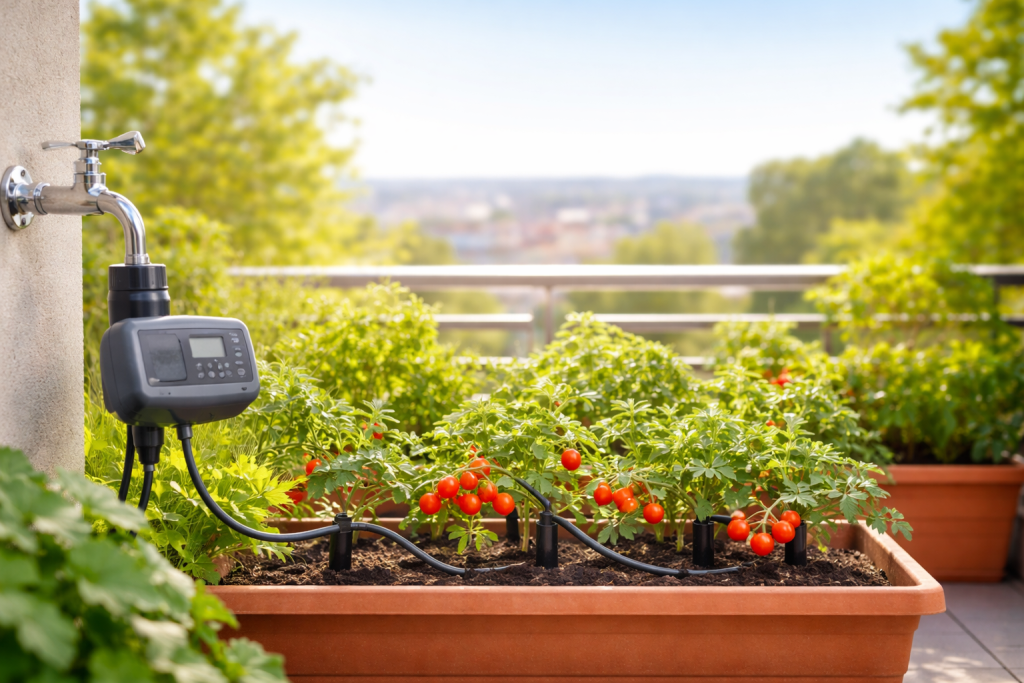
Install a drip irrigation system
If you work all day or go away for a few days, a drip irrigation system can save your garden.
Water is distributed slowly and directly to the roots.
It reduces waste and keeps the soil more stable.
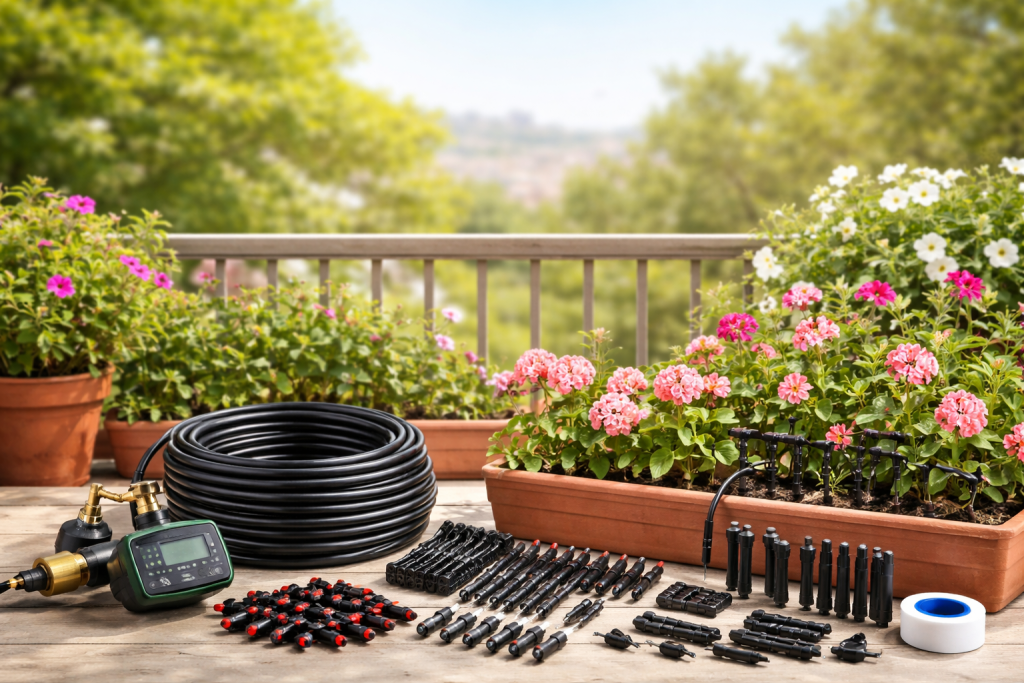
👉 A very convenient solution for those who work all day or are away on summer weekends.
What happens if you don't protect your plants from the heat?
Ignoring the early signs can have serious consequences.
Among the most common problems we find:
- burnt leaves
- slowed growth
- falling flowers
- reduction of the harvest
- radical stress
- death of the plant
For those who grow vegetables, this means losing weeks of work.
For those who buy ornamental flowers, this often means having to replace the plants.
When the heat gets really dangerous
Pay attention if you notice:
- completely dry leaves
- widespread burns
- dry soil a few hours after watering
- fruits that shrivel
- growth completely blocked
These signs indicate advanced stress that requires immediate intervention.
How to tell if a plant is dying from the heat
Some signs indicate that the situation is becoming critical:
- leaves completely dry and fragile
- branches that begin to lose elasticity
- absence of new leaves
- soil that no longer retains moisture
- growth completely blocked
In these cases it is important to intervene quickly to avoid the permanent loss of the plant.
Should we intervene immediately? Costs and benefits
Ignore the problem
Possible consequences:
- loss of plants
- reduced harvest
- increased water consumption
- need for replacement
Potential cost:
From 20 to over 100 euros during a single summer.
Intervene immediately
Possible solutions:
- shade net
- mulching
- automatic irrigation
Average cost:
Between 15 and 50 euros.
Often, a few precautions are enough to avoid much more costly damage.
Common mistakes to avoid
Water during the hottest hours
Most of the water evaporates immediately.
Continuously wet the leaves
Water must reach the soil and roots.
Thinking that more water means better health
Overwatering can cause root rot.
Using pots that are too small
Small containers overheat quickly.
Spray water on the leaves under the sun
Many do this thinking it will refresh the plant.
It can actually increase heat stress and make the problem worse.
Continue to take care of your plants
If you grow vegetables, herbs, or flowers on your balcony, regularly check the leaves during the warmest days.
The first signs of suffering almost always allow us to intervene before the damage becomes serious.
Discover our other guides on balcony gardens, irrigation, and natural plant care for better results all summer long.
Useful products to protect plants from the heat
✔ Coconut fiber mulch
✔ Shading net for balcony and vegetable garden
✔ Drip irrigation kit
✔ Automatic irrigation timer
✔ Self-watering pots
👉 Particularly useful for south- or west-facing balconies where the sun hits the plants directly for many hours a day.
👉 Ideal for those growing vegetables, herbs, and flowers in pots. It helps reduce watering frequency and protects roots from summer overheating.
👉 A very convenient solution for those who work all day or are away on summer weekends.
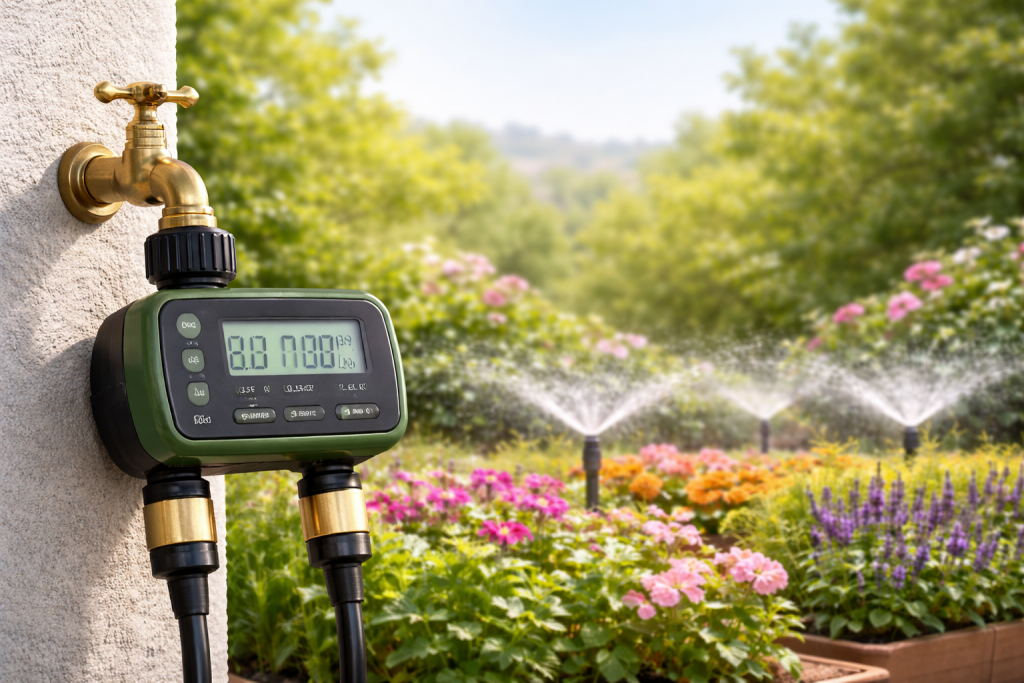
👉 Ideal for fully automating irrigation during holidays or periods of absence. Reduces waste.sI forget about watering on the hottest days.

👉 Perfect for balconies with plenty of sun. They maintain a water reserve available for the roots and help reduce heat stress.
How to protect potted plants from the summer sun
Potted plants are the ones that suffer the most during heat waves.
Available soil is limited and heats up much faster than garden soil.
To protect them effectively:
- use larger pots when possible
- add a layer of mulch
- avoid surfaces that accumulate heat
- move the containers into partial shade during the hottest hours
- use automatic irrigation systems if you are often absent
These simple measures can significantly reduce the risk of dehydration and heat stress.

FAQ - Frequently Asked Questions
Can plants die from too much sun?
Yes. High temperatures and direct sunlight can cause leaf burn, root stress, and desiccation.
Is it better to water every day during hot weather?
It depends on the plant and the size of the pot. Container plants require daily checks.
How can you tell if a plant is suffering from heat or lack of water?
Check the soil. If it's still moist but the plant appears wilted, it may be heat stress.
Do potted plants suffer more than those in the garden?
Yes. The available land is much less and overheats quickly.
Does shade netting really work?
Yes. It reduces the intensity of the sun and protects leaves and fruits during the hottest days.
Can plants recover from sunburn?
It depends on the extent of the damage. If the roots are still healthy, many plants can produce new leaves after a few weeks.
Is it useful to place pots near a wall during hot weather?
Not always. Walls exposed to the sun can accumulate a lot of heat and increase the temperature around the plants.
Should plants be watered in the morning or evening when it's very hot?
In general, it's best to water early in the morning. Water remains available to the roots longer, and the plant copes better with the hottest hours of the day.
Conclusion
Heat waves can put even the most robust plants at risk, especially if grown in pots or exposed to the sun for long hours.
Fortunately, early intervention is often enough to avoid permanent damage.
Proper watering, mulching, and shading are the three most effective strategies for protecting your vegetable garden, balcony, and garden during the summer.
To avoid common problems during the summer, also read the guide dedicated to mistakes in the balcony garden.
If you're starting from scratch, our complete guide to’vegetable garden on the balcony.


 Italian
  English