

Reading time: 6 minutes
Immediate response
If your car heater isn't working, first check whether cold air is coming out of the vents or whether no air is coming out at all.
If air is coming out but not heating up, possible causes are insufficient coolant, a stuck open thermostat, a blocked heating radiator, or a defective mixing valve.
If no air comes out, the problem could be with the cabin fan, a fuse, or the ventilation control system.
Caution: If the heater stops working along with an abnormal increase in engine temperature, stop safely. There may be a problem with the cooling circuit.
What you will learn:
How to understand why the heating isn't working.
What are the most common causes?.
How to distinguish cold air from lack of ventilation.
What checks can you do without disassembling components?.
When you need a mechanic.
Index
Heating the car interior isn't just about keeping you comfortable in the winter. It's also important for defogging the windows and maintaining good visibility.
When it stops working, it is a good idea to identify the type of problem before replacing components unnecessarily.
How car heating works
In traditional cars with internal combustion engines, the heater normally uses the heat from the coolant.
The hot liquid passes through a small radiator located in the passenger compartment's air conditioning unit.
The fan pushes air through the system, while special baffles regulate the temperature of the air sent to the vents.
If there is a lack of heat or the air is not circulating properly, the heating may become weak or stop working.
Hybrid and electric cars work differently: some models use electric heaters or heat pumps.
To better understand how the coolant circulates, also read the guide on car cooling system and the functioning of its components.
Car heating not working: the main causes
Possible cause | Most common symptom |
|---|---|
Low coolant | Weak or irregular heating |
Thermostat stuck open | Engine slow to warm up |
Clogged heating radiator | Not very warm air |
Mixing bulkhead blocked | Temperature that doesn't change |
Cabin fan faulty | No air coming from the vents |
Faulty fuse or regulator | Fan stopped or abnormal speed |
Air in the refrigerant circuit | Intermittent heating |
These symptoms help guide the inspection, but by themselves they do not allow you to identify the faulty component with certainty.
Why does the car heater blow cold air?
If the fan runs but the air remains cold, first check the engine temperature behavior and any anomalies in the cooling circuit.
1. Insufficient coolant
Too low a level can prevent proper circulation of the fluid through the heating radiator.
Possible signs are:
Air that remains cold or warm.
Heating that works intermittently.
Fluid level continues to decrease.
Abnormal engine temperature.
Check the level in the reservoir only when the engine is completely cold.
Never open the coolant cap when it is hot. The fluid can be under pressure and cause serious burns.
If the level drops repeatedly, the cause of the leak must be identified.

If the level continues to decrease, find out What are the symptoms and risks of low coolant?.
HELPFUL TIP

Antifreeze tester
Tool for indicatively checking the frost protection of compatible coolant.
See on Amazon →
2. Thermostat stuck open
The thermostat regulates the flow of coolant in the cooling circuit.
If it gets stuck open, the engine may take a long time to reach the correct temperature.
In this case, you may notice weak heating, especially during short journeys or at very low outside temperatures.
A diagnostic check of the actual coolant temperature can help confirm the suspicion.
To recognize other signs of this problem, see the guide on Car thermostat stuck: symptoms and what to do.
3. Clogged heating radiator
The heating radiator can lose efficiency due to deposits or contamination in the circuit.
The engine reaches normal operating temperature, but little warm air reaches the passenger compartment.
If the radiator leaks, a sweetish smell, humidity in the passenger compartment, and abnormal fogging of the windows may also appear.
Cleaning or replacement requires a technical evaluation.
4. Mixing bulkhead blocked
The air conditioning system's bulkheads regulate the passage of hot and cold air.
When a bulkhead or its actuator jams, you can set the maximum temperature without getting hot air.
In cars with dual-zone climate control, it can happen that one side of the passenger compartment gets hot while the other remains cold.
In some cases, small repeated clicks can be heard behind the dashboard when the temperature is changed.
No air coming out of the vents: what to check
When no air comes out of the vents, the problem may be with the ventilation system and not necessarily the heating.
The most common causes are:
Faulty cabin fan.
Fuse blown.
Faulty resistor or electronic regulator.
Damaged wiring or electrical connections.
Climate controls not working.
If the fan only runs at certain speeds, the fault may be with the regulator.
If you hear the fan running but the airflow is weak, also check the condition of the cabin filter, if applicable.
Important: A fuse that repeatedly blows should not be replaced with one of a higher amperage. The electrical problem must be identified.

Five simple checks to do
Before taking your car to the workshop, you can carry out some checks without dismantling any components.
1. Check your settings
Set the temperature to warm and make sure the fan is on.
If your vehicle has dual-zone climate control, check both zones.
2. Test the fan speeds
Switch from minimum to maximum speed.
If you don't hear the fan running, there may be an electrical or motor problem.
3. Observe the engine temperature
On combustion engine cars, check whether the engine reaches operating temperature normally.
If the temperature gets too high or an overheat warning light appears, stop safely.
4. Check the coolant
With the engine completely cold, check that the level is between the required marks.
If you're running low on fluid, don't just top up repeatedly without looking for the cause.
5. Listen for any noises
Clicks behind the dashboard may be consistent with a problem with the bulkhead actuators.
Abnormal fan noises may indicate wear or the presence of a foreign body.
These tests are meant to gather clues, not to confirm a diagnosis.
An OBD2 reader compatible with your vehicle can help display the coolant temperature, when this parameter is available. This is useful for troubleshooting some heating issues related to engine temperature.
HELPFUL TIP
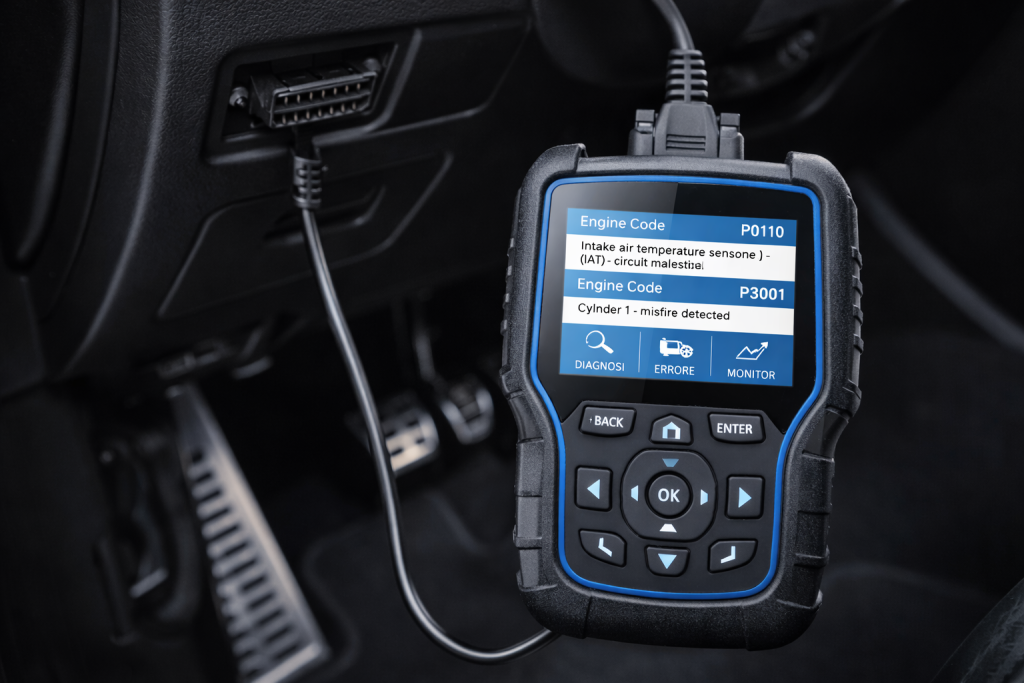
OBD2 diagnostic scanner
See on Amazon →
When to go to the mechanic?
It is advisable to contact a workshop when:
The heater stays cool even when the engine is at room temperature.
The coolant drops repeatedly.
The fan is not working.
The engine temperature is abnormal.
There is a smell of coolant or leaks in the passenger compartment.
The windshield does not defog properly.
If the engine overheats, do not continue driving to try to get the heater to work.
If you notice an abnormal increase in engine temperature, read also what to do when your car overheats.
Mistakes to avoid
Sreplace the thermostat immediately. Cold air can also be caused by heating radiators or bulkheads.
Continuously top up the liquid. If the level drops, the cause must be identified.
Confusing fan and heating. A stopped fan is a different problem than cold air coming out.
Open the hot circuit. It is dangerous because of the pressure and temperature of the liquid.
Ignore fogged windows. Poor visibility makes driving dangerous.
In summary
If your car heater isn't working, first check to see if it's lacking heat or airflow.
If cold air is coming out, the problem could be with the coolant, thermostat, heater core, or bulkhead.
If no air comes out, check the operation of the fan and ventilation system.
An initial check-up can guide the diagnosis, but is not a substitute for a professional check-up.

FAQ - Frequently Asked Questions
Why does the car heater blow cold air?
Causes may include insufficient coolant, a faulty thermostat, a clogged heating radiator or a blocked mixing valve.
Why does the heating only work when I accelerate?
It could be due to insufficient coolant circulation, air in the circuit, or other cooling system problems. It's necessary to check it, especially if the coolant level is low.
Does the car heater work without air conditioning?
Yes. In traditional cars, heat normally comes from the engine's cooling circuit. However, air conditioning can help dehumidify the air and defog the windows.
Can I drive with the heating broken?
It depends on the cause. If the engine maintains the correct temperature and visibility is good, the problem may be limited to the passenger compartment system.
However, if there are coolant leaks, overheating, or windows that won't clear, it's not wise to continue.
Conclusion
A car heater that doesn't work doesn't always indicate an expensive breakdown.
Sometimes the problem is related to ventilation or temperature regulation. In other cases, it may be related to the engine cooling system.
The important thing is to recognize the symptoms, check the safely accessible elements, and don't ignore any signs of overheating.


 Italian
 English