

Reading time: 5 minutes
Immediate response
If the’car overheating If the temperature continues to rise, reduce speed, and stop as soon as it is safe to do so. Turn off the engine if the temperature continues to rise, the red warning light appears, or you see steam coming from the engine compartment.
Never open the coolant reservoir or radiator cap when the engine is hot: The circuit can be pressurized and cause burns. Check the fluid level only after the engine has cooled.
What you will learn:
- What to do immediately if the engine temperature rises.
- When you have to stop.
- Why a car overheats.
- What checks can you do on a cold engine?.
- When is the best time to call for assistance?.
Index
Overheating doesn't necessarily mean the engine is already damaged. But continuing to drive when the temperature is too high can turn a relatively simple problem into a costly repair.
For this reason the first thing to understand is not which component is faulty, but when to stop and what to do without making the situation worse.
How to tell if your engine is overheating
The signs may vary from car to car, but the ones you shouldn't ignore are:
- unusually high temperature gauge;
- red temperature light;
- high engine temperature message;
- steam coming from the engine compartment;
- obvious coolant leak;
- abnormal smell coming from the engine.
If the relevant warning appears on the instrument panel, read also Engine temperature warning light on: what to do immediately to understand what it indicates and when it is necessary to stop.
Car Overheating: What to Do Right Away
If the temperature continues to rise, don't wait to see steam from the engine.
1. Get to a safe place
Reduce your speed and avoid asking the engine for additional power.
Stop as soon as you find a safe spot, especially if:
- the temperature light is red;
- the indicator is in the critical zone;
- an overheating warning appears;
- steam is coming out of the engine compartment.
2. Turn off the engine
Once safely stopped, turn off the engine if the temperature is excessive or continues to rise.
Continuing to drive can make the problem worse.
3. Do not open the coolant cap
Do not unscrew the expansion tank or radiator cap when the engine is hot.
The cooling circuit may be pressurized and very hot fluid may suddenly escape.
4. Let the engine cool down
Wait for the engine to cool before checking the coolant level.
There is no set number of minutes that applies to all cars: if the circuit is still hot or under pressure, do not open it.
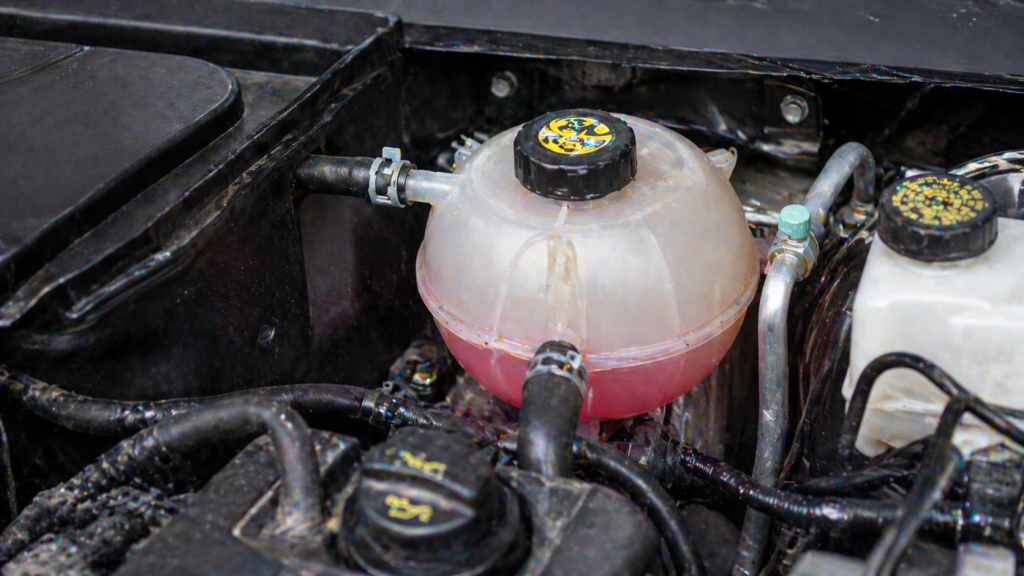
5. Check the liquid only when cold
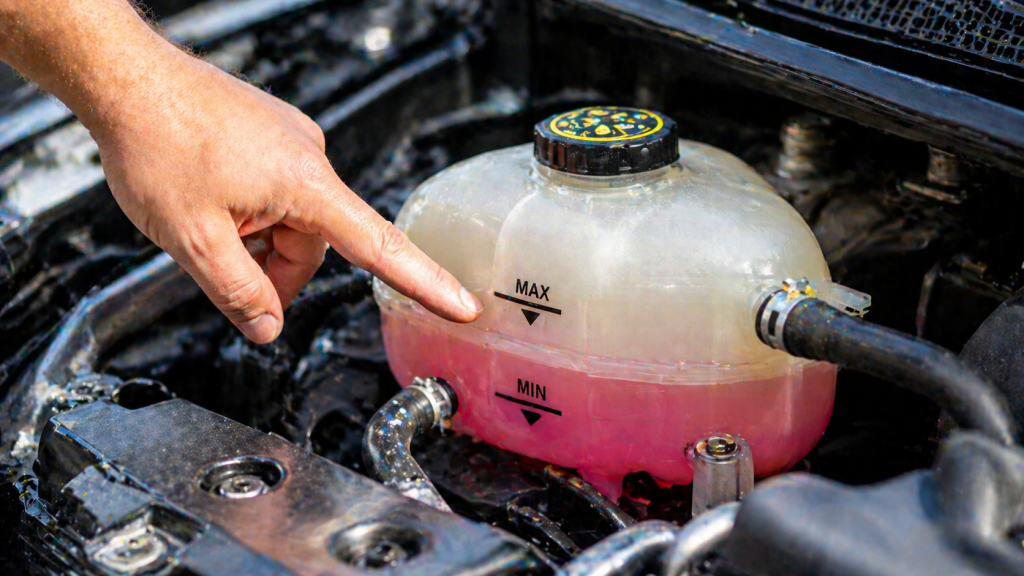
When the engine is cold you can check:
- level in the tray;
- any losses;
- traces of coolant in the engine compartment or under the car
If the level is low, you also need to understand why has it decreased.
Why your car overheats: the most common causes
Summer heat can make an existing problem more evident, but an efficient cooling system must be able to control the temperature under normal conditions of use.
1. Low coolant or leak
If there is a lack of refrigerant, the system loses the ability to absorb and transfer heat properly.
Leaks can come from:
- sleeves;
- radiator;
- tray;
- fittings;
- water pump;
- other circuit components.
A small leak may be difficult to see immediately.
2. Radiator fan not working
The fan becomes especially important when the car is moving slowly or is stopped in traffic.
If the temperature rises especially in a queue or stationary, while it decreases while driving, the fan and its circuit are among the elements to be checked.
Learn more: Radiator fan always on: causes, risks, and solutions
3. Dirty or clogged radiator
A radiator that fails to exchange heat properly reduces the efficiency of the entire system.
The problem can concern both the external part and the internal circuit.
Read also: Dirty car radiator: symptoms, causes, and solutions
4. Faulty thermostat
The thermostat regulates the flow of refrigerant in the circuit.
If it does not work properly, the engine temperature can rise rapidly.
Read also: Car thermostat stuck: symptoms, risks, and what to do immediately
5. Faulty water pump
The pump allows coolant to circulate through the engine and radiator.
A pump problem can cause overheating even if the fluid level appears normal.
6. Head gasket problems
This is one of the most serious causes, but you shouldn't automatically conclude that the gasket is damaged just because the engine has overheated.
Signs that require further checks may include:
- continuous loss of refrigerant;
- repeated overheating;
- contamination between oil and refrigerant;
- abnormal engine operation;
- abnormal pressure in the circuit.
A diagnosis is needed before establishing the cause.
Why does the car overheat, especially in traffic?
If the problem occurs mainly when stationary or at low speed, one of the first things to consider is the air flow through the radiator.
While driving, air naturally flows through the radiator. In traffic, this flow decreases, and the fan's work becomes more important.
For this reason, a fan defect can become apparent earlier in the city than while driving.
The heat outside can increase the work required of the system, but It should not by itself cause a system in good condition to overheat..
When you don't have to leave again
Do not continue your journey if:
- the temperature quickly returns to the critical zone;
- the red light stays on;
- there is an obvious coolant leak;
- steam continues to come out;
- the fluid level drops again;
- the engine is running abnormally.
In these cases it is more prudent to ask for assistance.
A top-up can temporarily restore the level, but does not repair a leak or a faulty component.
How much can an overheating problem cost?
There is no one-size-fits-all cost.
A top-up or a small leak may require a relatively simple repair. A thermostat, radiator, fan, or water pump, on the other hand, require diagnosis and possible replacement of the component.
If the engine continues to run too hot, more expensive components, including the cylinder head, may also be affected.
Because of this stopping in time can make a big difference on the final cost.
How to prevent overheating
Periodically, and always with a cold engine:
- check the coolant level;
- check for leaks;
- observe any abnormal changes in temperature;
- have the system checked if the level continues to decrease.
The refrigerant must comply with the specifications provided by the car manufacturer. Don’t choose a product just because it’s labeled “universal.”.
Useful products
If you need to purchase coolant, first check your vehicle's owner's manual for the specifics. Color and the wording "universal" alone don't guarantee compatibility.
HELPFUL TIP

Universal coolant
See on Amazon →
If you have to stop for an engine problem, having the necessary equipment in your car to make yourself visible and manage the emergency can be especially useful when traveling.
HELPFUL TIP

Car emergency kit
See on Amazon →
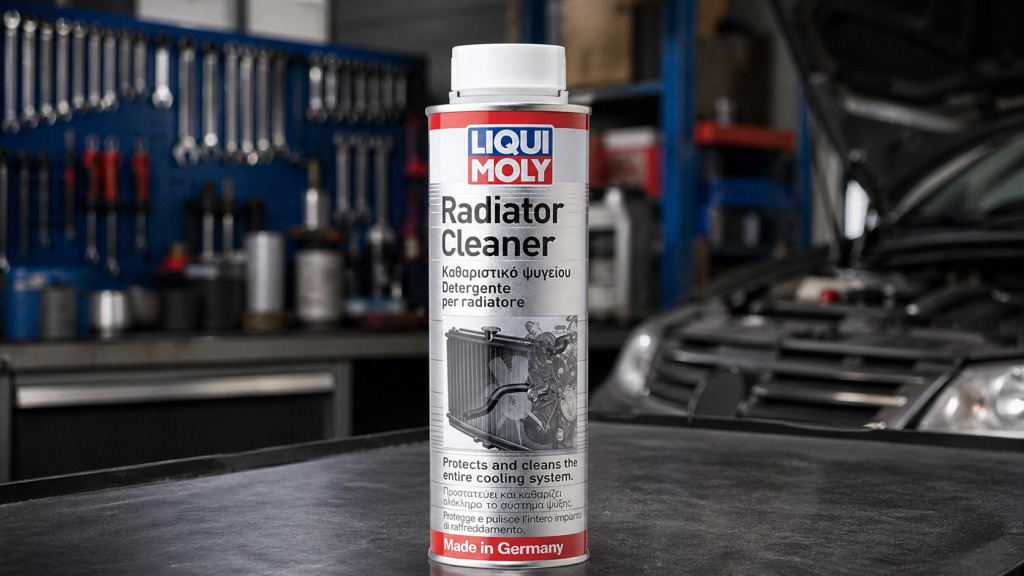
A circuit cleaner can be useful for some maintenance tasks, but it won't fix leaks, faulty pumps, stuck thermostats, or other mechanical problems. Always check compatibility with your car's circuit.
HELPFUL TIP
Radiator cleaning additive
See on Amazon →
In summary
If the car overheats:
- stop as soon as it is safe to do so;
- turn off the engine if the temperature is critical;
- do not open the coolant cap when hot;
- let the engine cool;
- check level and leaks only when cold;
- Do not restart if the temperature rises or there is an obvious leak.
The cause could be as simple as a low level, but could also involve the fan, radiator, thermostat, water pump, or other components of the cooling system.

FAQ - Frequently Asked Questions
Can I continue driving if the engine overheats?
If the temperature reaches the critical zone, a red warning light appears, or steam comes out of the engine compartment, stop as soon as it is safe to do so. Continuing to drive could cause more serious damage.
Can I open the hood when the engine is hot?
Once the car is safely stopped, opening the hood without getting close to any jets of steam can help heat dissipate. However, do not open the reservoir or radiator cap when the circuit is hot and pressurized.
Can I add water if I run out of coolant?
In an emergency, it depends on the vehicle and the manufacturer's instructions. However, do not pour cold fluids into a very hot system and do not open the cap until the system has cooled.
For a normal top-up, use the coolant with the specification provided by the manufacturer.
Why does the temperature only rise when I'm standing still?
One possible cause is a problem with the radiator fan or its control. When driving, the radiator receives more air; when stationary, it relies more on the fan.
Can summer heat cause your car to overheat?
High outside temperatures increase the work required of the cooling system, but a car in good condition should not normally overheat just because it is hot outside.
Conclusion
A'’car overheating It shouldn't be ignored, but it doesn't automatically mean that the engine is damaged.
The most important thing is to avoid continuing to drive with a critical temperature and do not open the cooling circuit when it is still hot and pressurized.
After the engine has cooled, checking the level and leaks can provide the first clues. If the temperature rises again, you need to identify the cause before continuing your journey.


 Italian
  English