
Reading time: 5 minutes
Immediate response
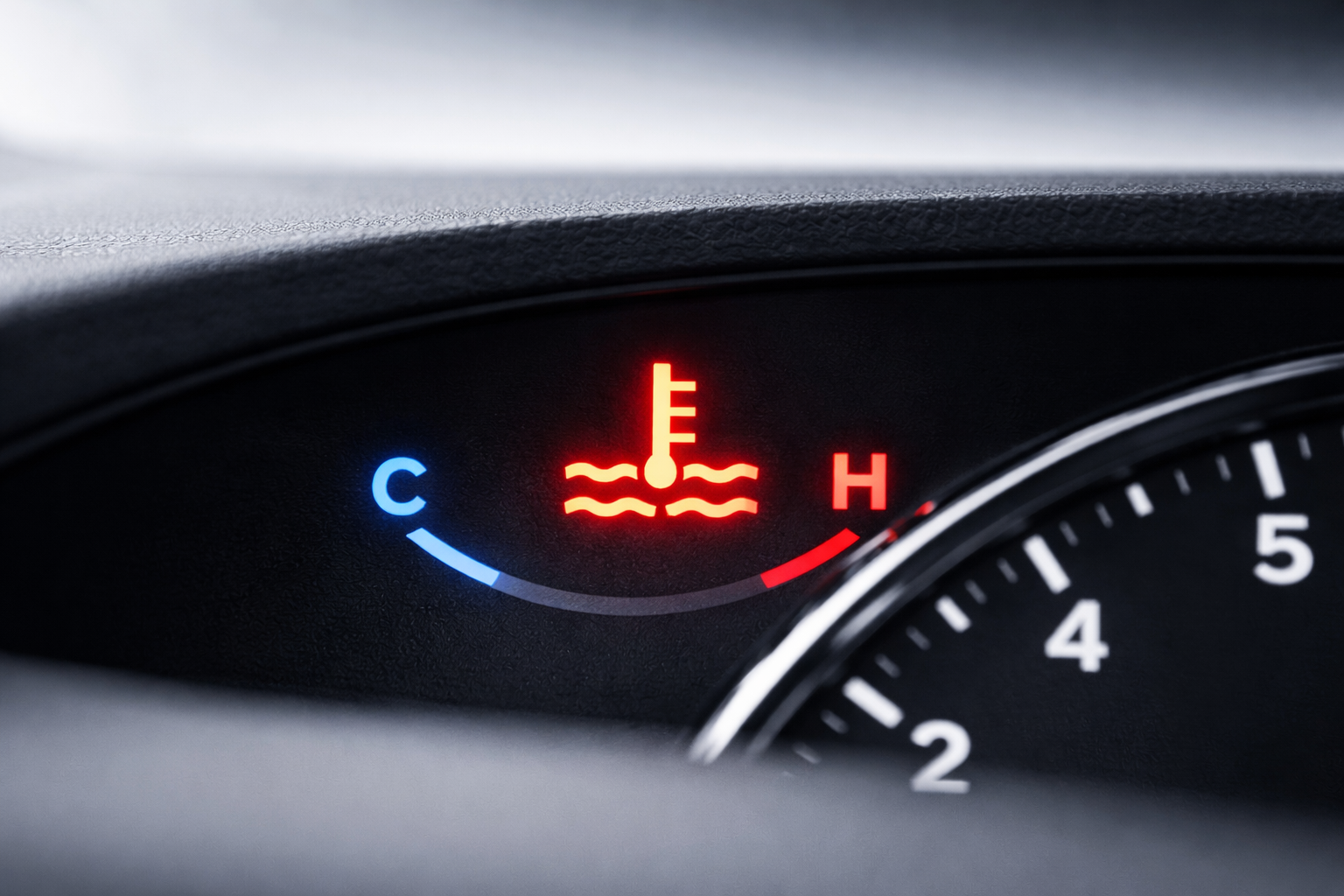
Engine temperature light on? If it is red or indicates excessive temperature, Stop as soon as possible in a safe place and turn off the engine.
Don't continue your journey hoping that the temperature will drop by itself and do not open the radiator or expansion tank cap when the engine is hot: the circuit may be pressurized and the boiling liquid may cause burns.
Once the engine has cooled completely, you can check the coolant level and look for any leaks. If the light reappears or the engine continues to overheat, do not restart.
What you will learn:
- What does the engine temperature warning light mean?.
- When you need to stop immediately.
- What to check after cooling.
- Because the engine can overheat.
- How to recognize a faulty fan, thermostat, pump, or sensor.
- What mistakes can seriously damage the engine.
Index
Engine temperature warning light on: what does it mean?
The temperature warning light signals a fault related to the engine temperature or the cooling system.
It is also often called water temperature warning light, coolant warning light or, more simply, radiator warning light.
If the indicator is red and appears while driving, you should consider the possibility that the engine is reaching excessive temperatures.
The exact threshold varies by vehicle: there is no universal temperature at which the light should necessarily come on.
If you want to delve deeper into the general problem, read Car Overheating: Causes and What to Do Right Away
What to do immediately if the temperature light comes on
If the light comes on while you are driving:
- reach a safe point to stop;
- turn off the engine;
- do not open the cooling circuit cap when hot;
- wait for the engine to cool completely;
- only then check the coolant level;
- Check if any leaks are visible under the car.
If a lot of steam comes out of the hood, the fluid leaks out or the temperature continues to rise, do not continue the journey.
Can I continue driving with the temperature light on?
If the red light indicates overheating, continuing to drive is not advisable.
The issue isn't whether you can go another 2, 5, or 10 kilometers: there's no safe distance that works in all situations.
A truly overheated engine can suffer significant damage, including:
- deterioration of the head gasket;
- cylinder head deformation;
- damage to engine components;
- in the most serious cases, engine seizure or failure.
The priority is therefore stop safely, you don't necessarily have to drive to your home or workshop.
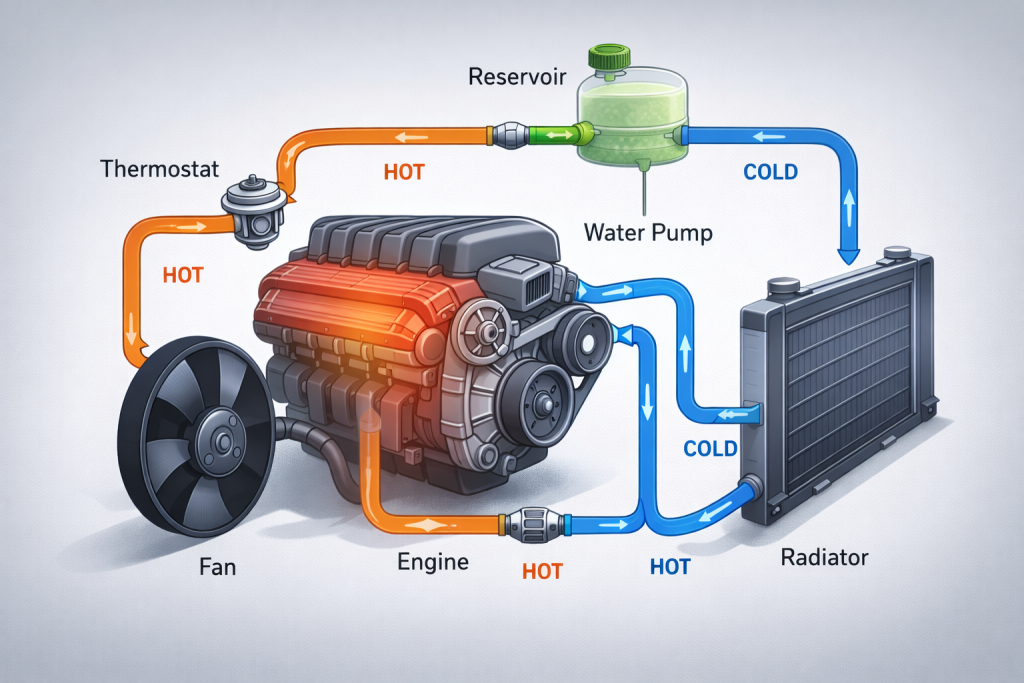
How the cooling system works
The engine produces a lot of heat during operation. The cooling system must maintain its temperature within the range specified by the manufacturer.
The main components are:
- coolant, which absorbs and transports heat;
- water pump, which circulates the liquid;
- thermostat, which regulates the passage of the coolant;
- radiator, which disperses heat;
- fan, especially important when airflow through the radiator is reduced;
- temperature sensor, which communicates the temperature to the vehicle management system.
Not all of these components have to fail for the engine to overheat: it's enough for one of them to fail.
Why does the engine temperature warning light come on?
The causes can be very diverse. These are the ones to check most frequently.
Low coolant
If there is too little coolant in the system, the system may have difficulty transferring heat from the engine to the radiator properly.
A low level may be due to a leak from hoses, radiator, reservoir, water pump or other components in the circuit.
If you need to top up frequently, don't just add liquid: we need to understand where this is going.
Radiator fan not working
It is a particularly suspicious cause when the temperature rises in traffic or with the car stopped, but tends to improve as you go.
When the vehicle is stationary, there is no natural airflow through the radiator and the fan becomes very important.
The problem may concern the fan itself or its control circuit.
Thermostat stuck
The thermostat regulates the flow of coolant to the radiator.
If it gets stuck in a position that restricts circulation, the temperature can rise rapidly even if there is enough fluid in the circuit.
Faulty water pump
The pump allows the coolant to circulate in the engine.
If it doesn't work properly, the fluid can't transfer heat effectively to the radiator and the engine can overheat.
Blocked or inefficient radiator
External dirt, compromised internal passages, or other problems can reduce the radiator's ability to disperse heat.
Air in the circuit
Air pockets in the system can impede the proper circulation of the refrigerant.
This can happen, for example, after some interventions on the circuit or in the presence of a leak.
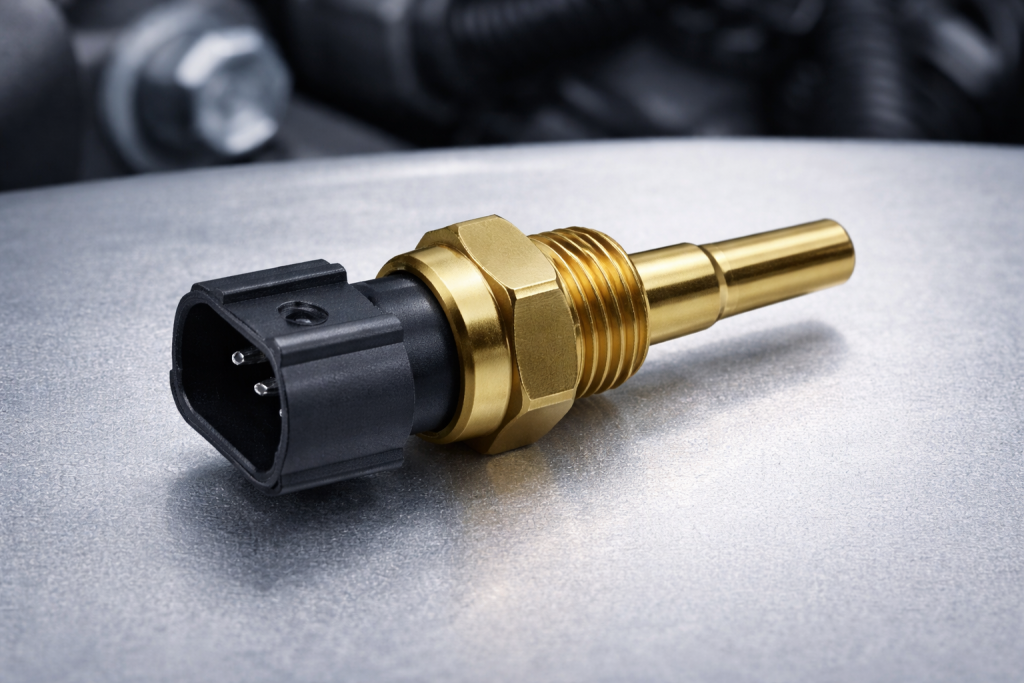
Defective temperature sensor
An abnormal signal does not always mean that the engine is actually overheating.
A sensor, its wiring, or an electrical problem may be giving an incorrect reading.
If the light appears with the engine completely cold, this possibility deserves particular attention.
Temperature warning light only on in traffic
This behavior may provide a useful clue.
If the temperature remains normal while driving but rises when the car is stationary in traffic, The radiator fan is one of the first items to check.
This does not automatically mean that the fan is faulty: there could be problems with the controls, sensors, relays, wiring, or other circuit anomalies.
But the fact that the problem appears mainly at low speed is very useful information for diagnosis.
Temperature warning light on the highway: what it could mean
However, if the temperature increases during a journey, especially under load, the causes may be different.
Insufficient coolant, a faulty thermostat, water pump, radiator, or other circuit problems can prevent your system from properly dissipating heat.
Summer heat, air conditioning and a heavily loaded vehicle can increase working conditions, but An efficient cooling system must be designed to handle normal car use.
If the warning light comes on, therefore, do not automatically attribute the problem to the outside temperature.
How to Check Temperature with an OBD2 Scanner
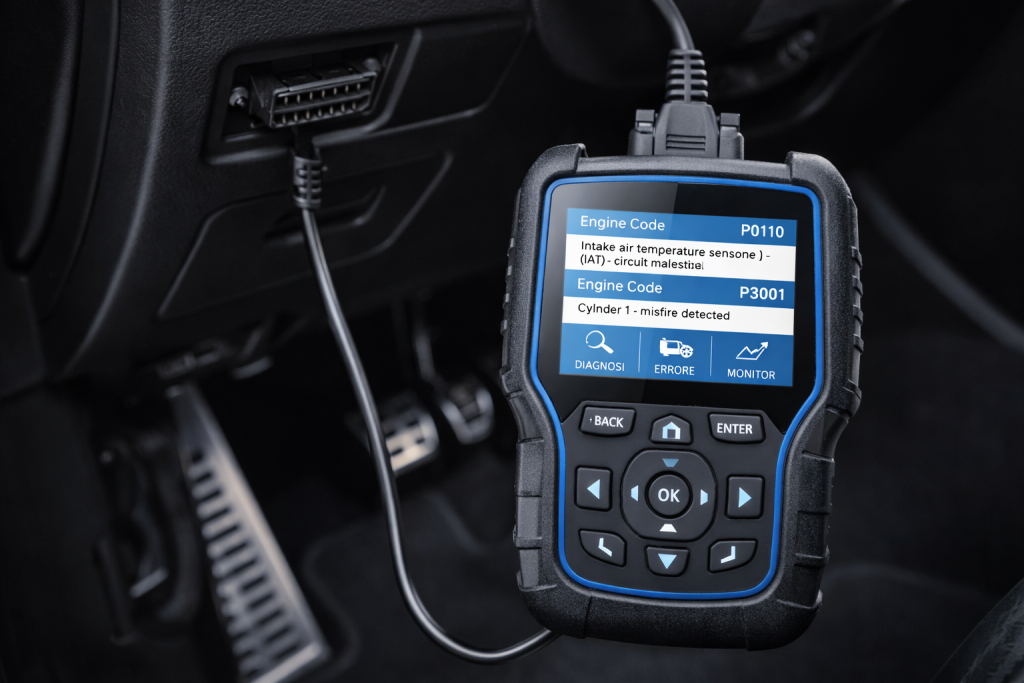
On many vehicles, a compatible diagnostic scanner allows you to view the coolant temperature read by the control unit.
It can be helpful to observe how the temperature varies and to check for any available error codes.
The scanner, however, does not replace mechanical controls: a leak, a faulty pump or a problem with the cooling circuit must still be checked directly.
HELPFUL TIP
Bluetooth OBD2 Reader
It allows you to read many diagnostic codes available on the car's ECU via your smartphone. Before purchasing, check compatibility with your vehicle and the app you're using.
See on Amazon →
What to check when the engine has cooled down
Only when the engine is completely cold can you do some basic checks.
Verify:
- coolant level in the reservoir;
- any traces of loss;
- visibly damaged sleeves;
- presence of liquid under the car;
- any other warning lights on the dashboard.
If the level is very low, don't assume that just topping up is enough.
The coolant should not continuously decrease without cause.
Can I top up the coolant?
If the engine is completely cold and the level is low, it may need to be reset.
But you have to use a coolant that meets the specifications set by the vehicle manufacturer.
Color or the wording “universal” are not sufficient to automatically establish compatibility.
If the level has dropped significantly or continues to drop, the cause must also be identified before considering the problem solved.
HELPFUL TIP
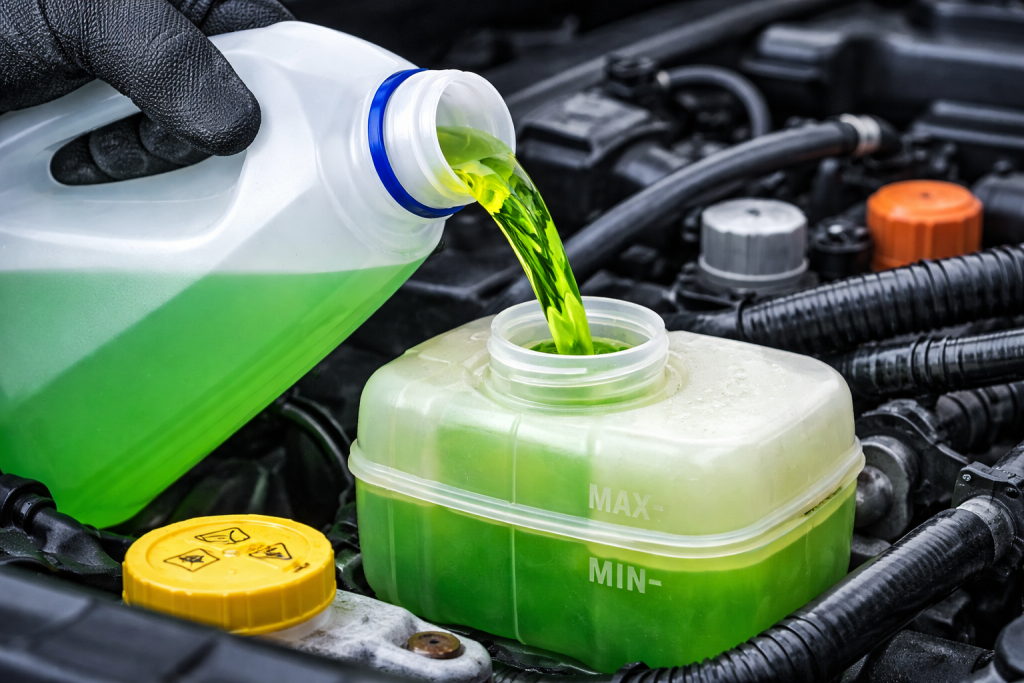
Coolant
Before purchasing, always check the specifications required by your car manufacturer.
See on Amazon →
Do not open the cap when the engine is hot
This is one of the most dangerous mistakes.
When the engine is hot, the cooling system may be pressurized. Opening the radiator cap or reservoir cap can cause a sudden release of hot coolant and steam.
So don't rely on a fixed time like "20 minutes" or "30 minutes.".
Wait until the engine has cooled completely.
Mistakes to avoid when the temperature light is on
- Continue driving to see if the light goes off.
- Open the circuit cap when the engine is hot.
- Immediately pour cold liquid into a very hot system.
- Consider topping up as a permanent solution without looking for the leak.
- Ignoring a light that comes on and then goes off.
- Thinking that overheating in summer is normal.
How to prevent overheating problems
Check the coolant level periodically when the engine is cold and pay attention to any abnormal decreases.
There is no universal interval for fluid replacement: follow the instructions given by the car manufacturer, using the correct specification.
During maintenance, it is also useful to check the hoses, radiator, fan and possible signs of leaks.
In summary
If the appears engine temperature light on, the priority is to prevent a cooling system problem from causing more serious damage.
Stop safely → turn off the engine → let it cool completely → check the coolant level and any leaks.
If the light comes back on, the fluid continues to decrease, or the engine overheats again, do not continue your journey and have the vehicle checked.
To find out about other instrument panel warnings, read Car warning lights on: what they mean and what to do.

Frequently asked questions about the engine temperature warning light on
Can I continue driving with the temperature light on?
If the red light indicates overheating, it's advisable to stop as soon as it's safe to do so. There's no set number of miles that can be considered safe in every situation.
Why does the temperature warning light only come on when driving?
One of the first things to check is the radiator fan, because it becomes especially important when the car is stationary and there is no normal airflow through the radiator.
Why does the temperature light come on when the engine is cold?
If the engine is actually cold, the warning may be due to the temperature sensor, wiring, or another electrical issue. Diagnosis is required to identify the cause.
Can summer heat cause the temperature light to come on?
Heat increases the working conditions of the system, but It should not be considered alone as a normal explanation for the warning light coming on.. Instead, it can bring to light an already struggling cooling system.
Can I open the coolant reservoir after turning off the engine?
Not while the system is still hot or pressurized. Wait until the engine has completely cooled before opening the cap.
If I top up the coolant, can I start again?
It depends on the cause. If the level dropped due to a leak or another system fault, the problem can quickly recur. If the temperature rises again, do not continue your journey.
Conclusion
La engine temperature light on requires immediate attention because real overheating can cause serious damage.
Don't try to gain a few kilometers and don't open the circuit while hot.
Stop safely, let the engine cool completely, and check the system before driving again. If the problem recurs, the solution isn't to continue topping up: we need to find the cause of the overheating.


 Italian
  English