
Reading time: 8 minutes
What you will learn:
- which natural fertilizers really work
- mistakes that can ruin plants
- How to fertilize your vegetable garden, balcony, and garden
- when to fertilize to avoid problems
- Which natural fertilizers to use for each plant
- How to understand if a plant has a nutrient deficiency
Are your plants growing slowly, producing few leaves or flowers despite water and sun?
Very often the problem is not the pot, nor the irrigation.
👉 The soil may be nutrient-poor.
And this is where natural plant fertilizer comes into play, an increasingly popular solution for those who want to grow healthier plants without using harsh chemical fertilizers.
This happens often, especially with potted plants, where there is little available soil and it becomes impoverished more quickly than garden soil.
In recent years, more and more people are abandoning chemical fertilizers and choosing more sustainable solutions. The reason is simple: natural fertilizers nourish plants without damaging the soil, improve soil fertility, and are much safer, even for those growing vegetables for the table.
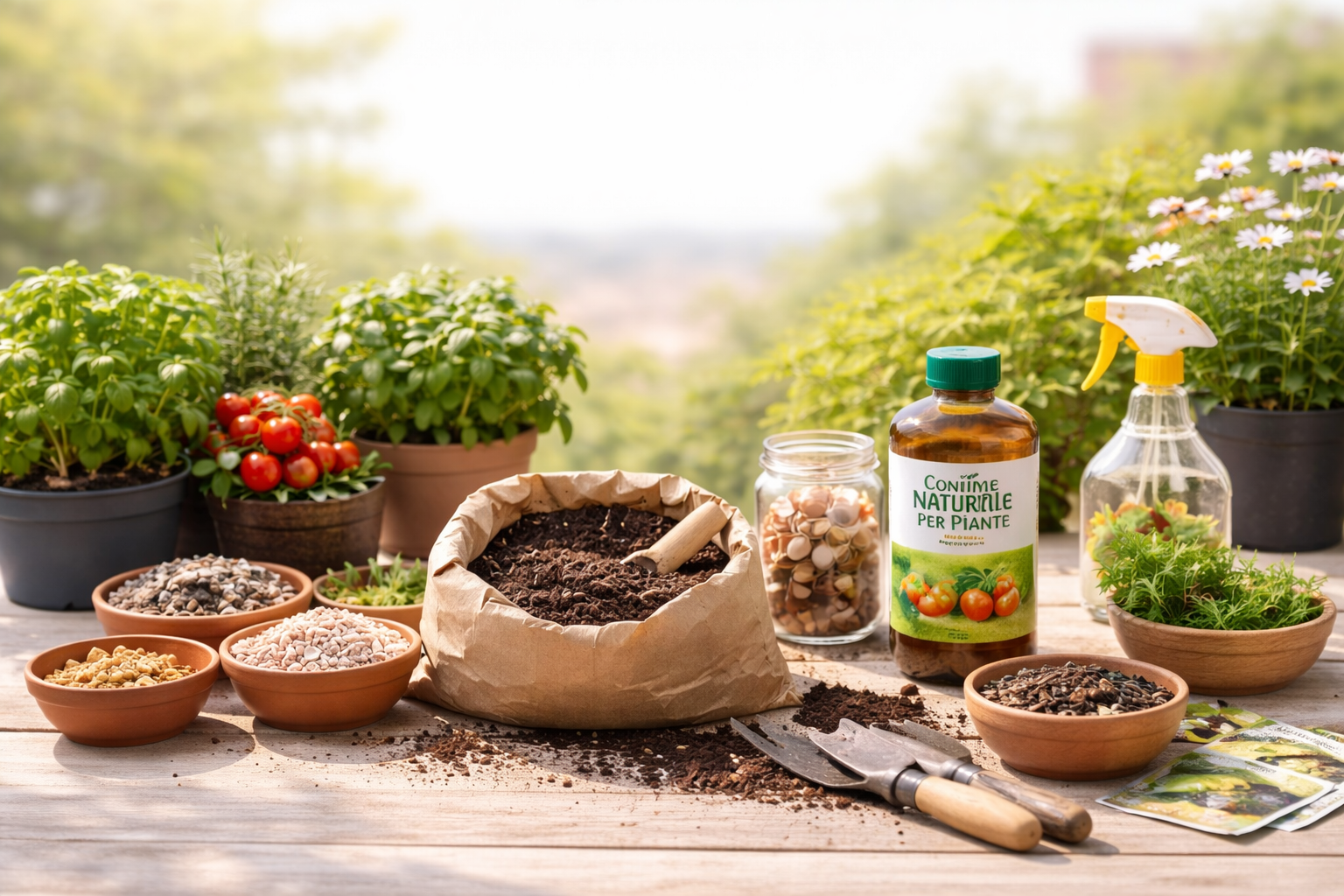
Many natural fertilizers can be made at home for next to nothing. Examples include coffee grounds, eggshells, and home compost, which have been used for years in organic gardens.
In this comprehensive guide we will look at:
which are the best natural fertilizers
how to use them correctly
which ones actually work
Which organic products are best to buy?
How to fertilize your vegetable garden, potted plants, and garden
All with real examples of home cultivation.
IMMEDIATE RESPONSE
If you're looking for the best natural fertilizer for plants, the most effective options are worm castings, mature compost, and pelleted organic fertilizers. These fertilizers improve soil fertility, promote root development, and release nutrients gradually without damaging the soil.
Best natural fertilizers for plants: a quick ranking
1. Earthworm humus
Ideal for vegetables, tomatoes and potted plants.
2. Mature compost
Improves soil fertility and structure.
3. Pelleted manure
Perfect for vegetable gardens and gardens.
4. Coffee grounds
Useful for many aromatic plants.
5. Eggshells
Natural source of calcium.
Index
If you don't have time to make your own compost or fertilizer, there are also ready-made organic fertilizers that are highly appreciated by those who grow vegetables and plants on the balcony.
| Type of cultivation | Recommended fertilizer |
|---|---|
| Tomatoes | Earthworm humus |
| Aromatic plants | Mature compost |
| Potted vegetables | Pelleted organic fertilizer |
| Flowering plants | Composted banana peels |
| Home garden | Compost and humus |
Which fertilizer to choose quickly?
• Tomatoes → Worm humus
• Basil → Mature compost
• Aromatic plants → Light compost
• Home garden → Compost + humus
• Flowering plants → Fertilizer rich in potassium
Types of natural fertilizer for plants
There are different types of natural fertilizers for plants. Some improve soil fertility, others provide specific nutrients like nitrogen, phosphorus, or potassium.
Compost
Earthworm humus
Pelleted manure
Coffee grounds
Banana peels
Eggshells
What is the best natural fertilizer for plants?
There's no single, perfect natural fertilizer for all plants. The choice depends on the type of cultivation, the soil, and the objectives. Generally, mature compost, worm castings, and pelleted organic fertilizers are the most comprehensive solutions for most vegetables, herbs, and ornamental plants.
When it comes to the best natural fertilizer, there's no one-size-fits-all answer. Compost, worm castings, and pelleted organic fertilizers are among the most popular options for vegetable gardens, balcony gardens, and gardens.
Natural plant fertilizer: which one to choose?
Choose the best natural fertilizer for plants It depends on the type of cultivation and the nutritional needs of the plant.
For container-grown plants, a natural fertilizer for potted plants slow-release, such as worm castings or mature compost, which nourish the soil gradually without stressing the roots.
If you grow vegetables, a natural fertilizer for the vegetable garden rich in organic matter, it helps improve soil fertility and promotes more abundant harvests.
For demanding crops such as tomatoes and peppers it may be useful to use a natural fertilizer for tomatoes containing potassium and calcium, essential for fruit production.
Many gardeners also prefer a organic natural fertilizer because it improves the structure of the soil and promotes the development of beneficial microorganisms.
In general, mature compost, worm humus and pelleted organic fertilizer represent the most complete solutions for those looking for a natural fertilizer for plants effective and sustainable in the long term.
Best natural fertilizers to buy
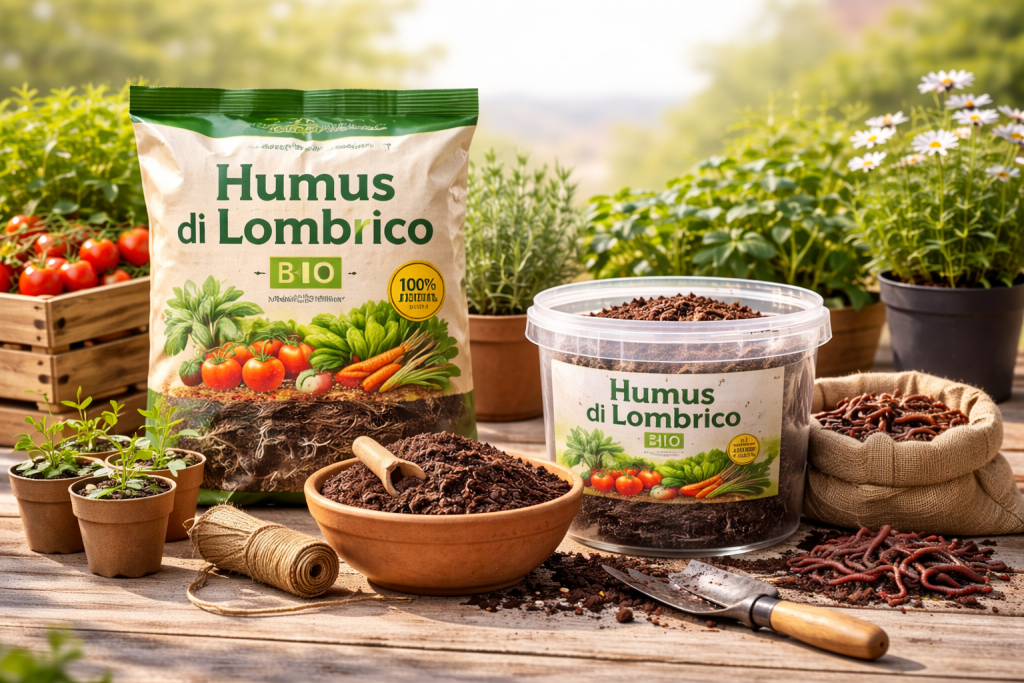
Organic earthworm humus
Natural 100% Fertilizer
improves soil fertility
ideal for vegetables and potted plants
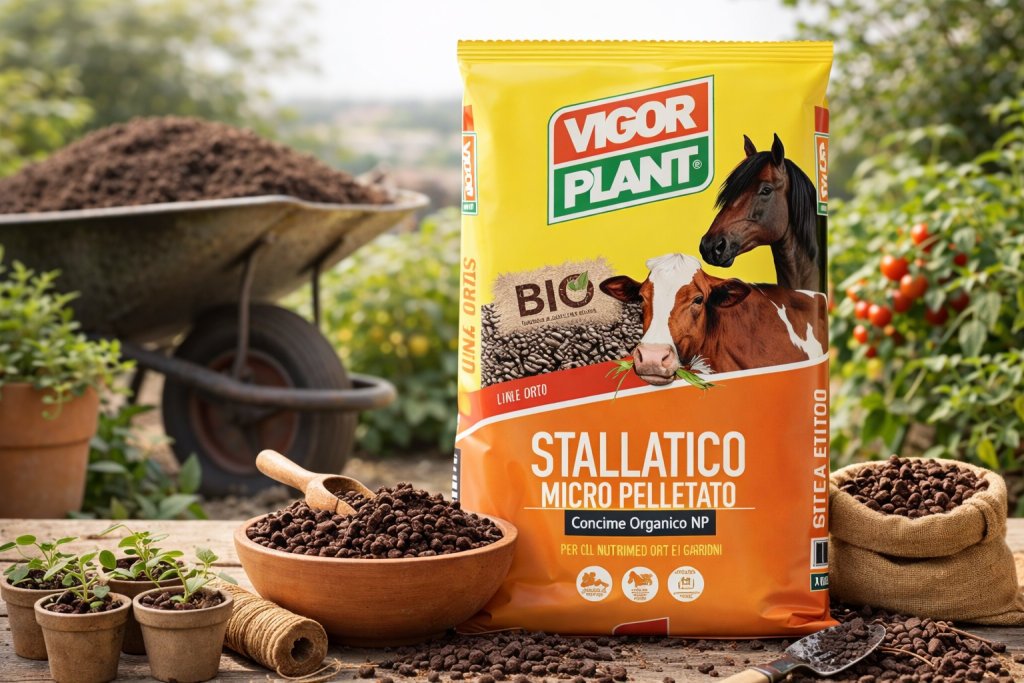
Pelleted organic fertilizer
Slow and steady nourishment
suitable for vegetable gardens and gardens
easy to distribute
Why use a natural fertilizer instead of a chemical one?
Many people think that natural fertilizers are less effective than chemical ones. In reality, the exact opposite is true in the medium term.
Chemical fertilizers act quickly, but often they impoverish the soil because they do not improve the soil structure. Natural fertilizers, on the other hand, work more slowly but they regenerate the soil.
When using a natural fertilizer, several important things happen.
The soil becomes richer in beneficial microorganisms.
The soil structure improves and retains water better.
The roots grow stronger.
Plants become more resistant to diseases.
A concrete example comes from home gardens.
A neighbor of mine has been growing tomatoes on his balcony for over ten years. For a long time, he used liquid chemical fertilizers purchased from the supermarket. The plants grew quickly, but every year he had to completely replace the soil because it became hard and poor.
For a few seasons now, he's been using only compost and coffee grounds. The result? The soil is much softer and the plants produce more flavorful tomatoes.
This is because the natural fertilizer nourishes both the plant and the soil.
What nutrients do plants really need?
To understand how to choose the best natural fertilizer, you must first understand what plants need.
There are three main nutrients.
Nitrogen
Nitrogen promotes the growth of leaves and shoots.
It is essential for green plants such as lettuce, basil or spinach.
Phosphorus
Phosphorus stimulates root growth and flower production.
Potassium
Potassium improves plant resistance and fruit quality.
Natural fertilizers often contain a combination of these elements, but in different quantities.
How to understand if a plant needs fertilizer
Many people add fertilizer without understanding whether the plant really needs it.
In reality, there are very clear signs that indicate a nutritional deficiency:
- yellow leaves
- slow growth
- poor flowering
- small leaves
- vegetables that produce little
Observing these symptoms helps you avoid mistakes and use the right fertilizer at the right time.
Best DIY Natural Fertilizers That Really Work
One of the most interesting aspects of natural gardening is that many fertilizers are already found in the kitchen.
In fact, many food wastes are very rich in nutrients useful for plants.
Some work really well even on small city balconies, while others are less effective than you might think.
Those who want to save money can prepare a natural DIY fertilizer using materials easily found in the kitchen such as coffee grounds, eggshells and banana peels.
Coffee grounds
Coffee grounds are probably the best-known natural fertilizer.
They are rich in nitrogen and improve soil structure.
They can be used in several ways:
mixed with the soil
added to compost
scattered on the surface of the ground
On my balcony, I often use coffee grounds for aromatic plants like basil, mint, and rosemary. After a few weeks, I notice more vigorous leaf growth.
The important thing is not to overdo it: too many coffee grounds can make the soil too acidic.
In my case, I've noticed improvements especially with basil and mint grown in pots during the summer, when the soil tends to become impoverished more quickly.
Banana peels
Banana peels are a real mine of potassium.
This nutrient is very important for plants that produce flowers or fruits.
To use them, simply:
cut them into small pieces
bury them near the plant
or leave them to soak in water for a few days
The resulting water becomes a natural liquid fertilizer, perfect for flowering plants such as geraniums or roses.
Eggshells
Eggshells are rich in calcium and help prevent some nutrient deficiencies.
They are especially useful for plants such as tomatoes and courgettes.
To use them, simply:
wash them
let them dry
reduce them to dust
The powder can be mixed into the soil or added to compost.
Home compost
Compost is probably the best natural fertilizer ever.
It is obtained from the decomposition of organic waste such as:
fruit peels
vegetables
dry leaves
cut grass
Many gardeners also call it “the black gold of the garden”.
In home gardens, compost is also often used to recover tired soil or old soil reused for several seasons.
Compost improves:
soil fertility
water retention
microbiological activity

Best natural fertilizer for aromatic plants
Basil, parsley, rosemary, and thyme don't require harsh fertilization. Well-rotted compost is often sufficient to ensure healthy growth and more vigorous aromatic foliage.
If you grow basil, rosemary or thyme, you may also find it useful to read our complete guide on aromatic plants on the balcony.
Natural fertilizer for basil
Basil grows best in rich but not overly fertilized soil. Well-seasoned compost and small amounts of worm castings are the most effective solutions for promoting healthy leaf growth.
Mistakes to avoid with natural fertilizers
Many people think that because they're natural, they can be used without limits. In reality, too much organic fertilizer can cause:
- unbalanced growth
- accumulation of salts in the soil
- root rot
- appearance of mold
It is always best to use small amounts and observe the plants' response.
Excessive use of fertilizers, along with other common growing mistakes, can compromise plant growth and reduce garden productivity. To avoid these problems, discover the main mistakes in the balcony garden.
Best ready-made organic natural fertilizers
Not everyone has the time or space to make their own fertilizer. In these cases, you can use ready-made organic natural fertilizers.
A good organic garden fertilizer helps improve soil fertility and obtain more abundant harvests without resorting to aggressive chemical fertilizers.
Here are some of the most used.
Earthworm humus
Worm castings are one of the most effective natural fertilizers.
It is produced by the digestion of earthworms and contains a large amount of nutrients and beneficial microorganisms.
It is often used in:
organic gardens
professional crops
home gardens
Best natural fertilizer for tomatoes
Tomatoes are among the most nutritionally demanding crops. Worm castings are one of the best natural fertilizers because they improve soil structure and provide nutrients throughout the season.
Tomatoes are among the crops that consume the most nutrients during the season. To obtain abundant fruit and healthy plants, it is also important to know the best techniques for growing tomatoes in pots.

If you grow in small spaces, properly organize a balcony vegetable garden It can help you make better use of the available land and improve fertilization results.
Organic earthworm humus
Natural 100% Fertilizer
improves soil fertility
ideal for vegetables and potted plants
Pelleted organic fertilizer
Slow and steady nourishment
suitable for vegetable gardens and gardens
easy to distribute
Natural fertilizer for the vegetable garden
For vegetables like tomatoes, zucchini, peppers, and lettuce, the most effective natural fertilizers are worm castings, mature compost, and pelleted manure. These products improve the soil and provide consistent nutrients throughout the season. Regular use helps achieve higher yields and more resistant plants to climate conditions and common diseases.
How to properly fertilize potted plants
Plants grown in pots need more frequent fertilization than those grown in the ground.
The reason is simple: the soil in the pot contains a limited amount of nutrients.
For this reason it is advisable:
fertilize every 2-3 weeks
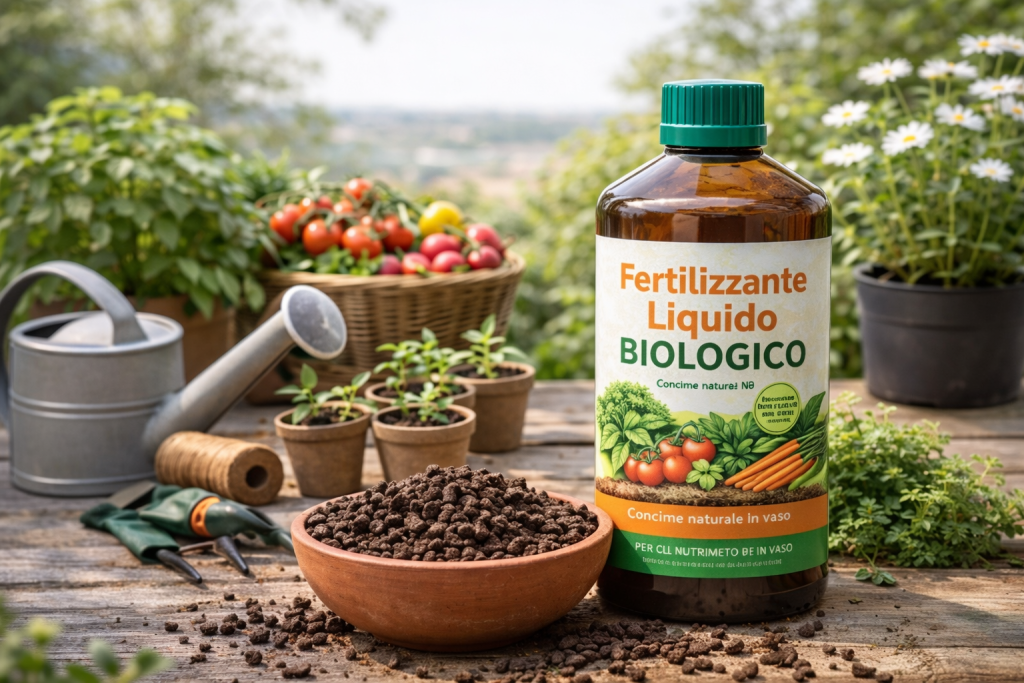
use liquid natural fertilizers
renew the soil once a year
A concrete example concerns balcony geraniums.
Many people notice that after a few months their plants stop flowering. In many cases, the cause isn't light or water, but a lack of nutrients.
A natural fertilizer rich in potassium can solve the problem.
A correct one irrigation and good container management are essential for growing tomatoes in a pot healthy and productive throughout the season.
What to do immediately if a plant seems weak
If a plant appears dull, with yellow leaves or slow growth, it is a good idea to check immediately:
- soil quality
- pot drainage
- presence of stagnation
- amount of fertilizer used
- exposure to light
Many times the problem is not a lack of water but soil that is now poor in nutrients.
When is it best to fertilize plants?
One of the most common mistakes is fertilizing at the wrong time.
Most plants absorb nutrients best during their active growth phase, which is in spring and summer.
In winter, however, many plants slow down their growth and require less fertilizer.
For this reason it is important to avoid excesses, especially with houseplants.
Proper fertilization works even better when combined with good water management. For this reason, it is also important to know the techniques of watering the vegetable garden on the balcony.
Common mistakes that can ruin plants
Even natural fertilizers can be used incorrectly.
One of the most common mistakes is to think that since they are natural they can be used without limits.
Actually too much fertilizer can also damage plants.
Other common errors include:
use non-composted food scraps
fertilize too often
using fertilizers not suitable for the type of plant
The best rule is always to observe the plants.
Yellow leaves, slow growth, or poor flowering may indicate a nutrient deficiency.
How to choose the right natural fertilizer for each plant
The choice depends mainly on three factors:
type of plant
type of soil
growth phase
Green plants require more nitrogen.
Flowering plants need potassium.
Fruiting vegetables such as tomatoes and peppers benefit from complete fertilizers.
Which natural fertilizer should I use for each plant?
| Plant | Recommended natural fertilizer |
|---|---|
| Tomato | Earthworm humus |
| Basil | Mature compost |
| Rosemary | Lightweight compost |
| Geraniums | Banana peels |
| Rose | Compost and potassium |
| Peppers | Earthworm humus |
| Zuchinis | Mature compost |
The choice of natural fertilizer depends on the specific needs of the plant. Fruiting vegetables like tomatoes and peppers generally require more nutrients than aromatic herbs, while flowering plants benefit from potassium-rich fertilizers. Using the right fertilizer helps achieve more vigorous growth and better harvests.
When natural fertilizer is not enough
If a plant continues to deteriorate despite fertilizer, the problem may not be nutritional.
In some cases the causes may be:
- root rot
- excess water
- fungal diseases
- parasites
- now degraded soil
For this reason, it is important to always observe the leaves, roots and condition of the soil before adding more fertilizer.
Mistakes that make the ground worse over time
Many people think that simply adding fertilizer will ensure healthy plants.
In reality, some errors can quickly impoverish the soil:
- using too much fertilizer
- overwatering
- never change the soil
- always grow the same plants in the same pot
- using cheap soils that are too poor
In the long term, these problems can stunt plant growth even if fertilizer is used.
Natural fertilizer for potted plants
Plants grown in pots quickly consume available nutrients. For this reason, it's advisable to periodically supplement them with worm castings or mature compost in small amounts.
Proper fertilization is essential for achieving satisfactory harvests even in small spaces. If you're just starting out, it might be helpful to follow a comprehensive guide on how to create a balcony vegetable garden productive and easy to manage.
My experience with natural fertilizers
Over the years, I've tried various natural fertilizers for growing basil, tomatoes, and other aromatic plants on my balcony. Of all the solutions I've tried, I've achieved the best results with well-rotted compost and worm castings.
Compost helps keep the soil softer and richer in organic matter, while worm castings gradually add nutrients without stressing the roots. I've noticed more vigorous plant growth and better leaf and fruit production compared to using liquid fertilizers alone.
I've also used coffee grounds and eggshells, which are useful as supplements but less effective when used alone. In my experience, combining compost and worm castings is one of the simplest and most effective solutions for maintaining healthy plants and fertile soil over time.
Natural fertilizer or chemical fertilizer: which should you choose?
When it comes to feeding plants, many wonder whether it's better to use a natural fertilizer or a chemical one. Both solutions can promote plant growth, but they work differently.
Chemical fertilizers provide readily available nutrients and often produce rapid results. However, frequent use can deplete the soil over time and reduce the activity of beneficial soil microorganisms.
Natural fertilizers, on the other hand, release nutrients more slowly but improve soil fertility season after season. Compost, worm castings, and organic fertilizers help keep the soil more alive, improve water retention, and promote balanced root development.
For those who grow vegetables, herbs, or potted plants, natural fertilizer is often the most sustainable and safe choice, especially when the products grown are intended for human consumption.
In general, if you're looking for long-lasting results and more fertile soil over time, natural fertilizer is the best solution. Chemical fertilizers can be useful in specific situations, but should be used carefully and sparingly.
| Feature | Natural fertilizer | Chemical fertilizer |
|---|---|---|
| Nourishment | Gradual | Quick |
| Soil health | It improves | It can impoverish |
| Duration | Long | Brief |
| Organic farming | Yes | No |
| Risk of overdose | Minor | Greater |
Do natural fertilizers really work?
Many gardeners notice improvements after just a few weeks of using compost, worm castings, or organic fertilizers. Results depend on the type of plant, soil quality, and regular fertilization, but in the long run, these products help keep the soil more fertile and vibrant than many chemical fertilizers.
Anyone who regularly grows a home garden can achieve even better results by combining correct fertilization with good irrigation and choosing varieties suitable for the growing on the balcony.
How long does it take to see the results of natural fertilizer?
Many people expect immediate results after fertilizing. In reality, natural fertilizers work gradually. Compost and worm castings begin to improve the soil after just a few weeks, while the most noticeable effects on plant growth are generally observed after one or two months of regular use.
For this reason, it is important to be consistent and not increase the doses thinking that this will speed up the process.
What is the best time to fertilize plants?
Most plants benefit from fertilization during spring and summer, when growth is most intense. In fall and winter, many species slow down their growth and require less fertilizer. Fertilizing at the right time allows plants to better absorb nutrients and reduces the risk of waste.

FAQ - Frequently Asked Questions
What is the best natural fertilizer for potted plants?
Worm castings and organic liquid fertilizers are among the best for potted plants because they quickly nourish the soil without stressing the roots.
Can coffee grounds be used for all plants?
No. Some acid-loving plants tolerate them well, but excessive use can alter the soil's pH. It's best to use them sparingly.
How often should plants be fertilized?
It depends on the type of plant and the time of year. In spring and summer, many plants benefit from fertilizing every 2-3 weeks.
Is natural fertilizer really effective?
Yes, especially in the long term. Natural fertilizers improve soil quality and help plants grow stronger and more resilient.
What is the best natural fertilizer for tomatoes?
Mature compost, worm castings, and fertilizers rich in potassium and calcium are very useful for tomatoes.
Are eggshells really good for plants?
Yes. Eggshells provide calcium and can help some plants like tomatoes and zucchini avoid nutrient deficiencies.
What is the best natural fertilizer for basil and aromatic herbs?
For basil, parsley, and other aromatic plants, light compost, worm castings, and small amounts of coffee grounds are very useful.
Are coffee grounds a good natural fertilizer?
They can be useful in small quantities, but they should not replace a complete fertilizer.
Can you use too much natural fertilizer?
Yes. Even natural fertilizers can cause problems if used in excess. Overdosing can promote root rot, salt accumulation, and unbalanced plant growth. It's always advisable to follow the recommended doses and observe the crops' response.
What is the best natural fertilizer for a vegetable garden?
For vegetables and greens, worm castings, mature compost and pelleted manure are particularly effective.
What is the best natural fertilizer for plants?
Compost, worm castings, and organic fertilizers are the most comprehensive solutions.
What natural fertilizer should I use for basil?
Basil grows well with well-rotted compost and small amounts of worm castings.
Conclusion
Use a natural fertilizer for plants It is one of the best ways to grow sustainably and achieve better results in the long term.
Whether it's a small balcony or a large garden, nourishing the soil with natural fertilizers means improving the health of the plants and the quality of the harvest.
Often, small everyday gestures—like reusing coffee grounds or creating home compost—are enough to transform simple waste into valuable resources for the garden.
Want healthier plants without using harsh chemical fertilizers?

© 2026 All Rights Reserved



 Italian
  English