
Reading time: 5 minutes
Immediate response
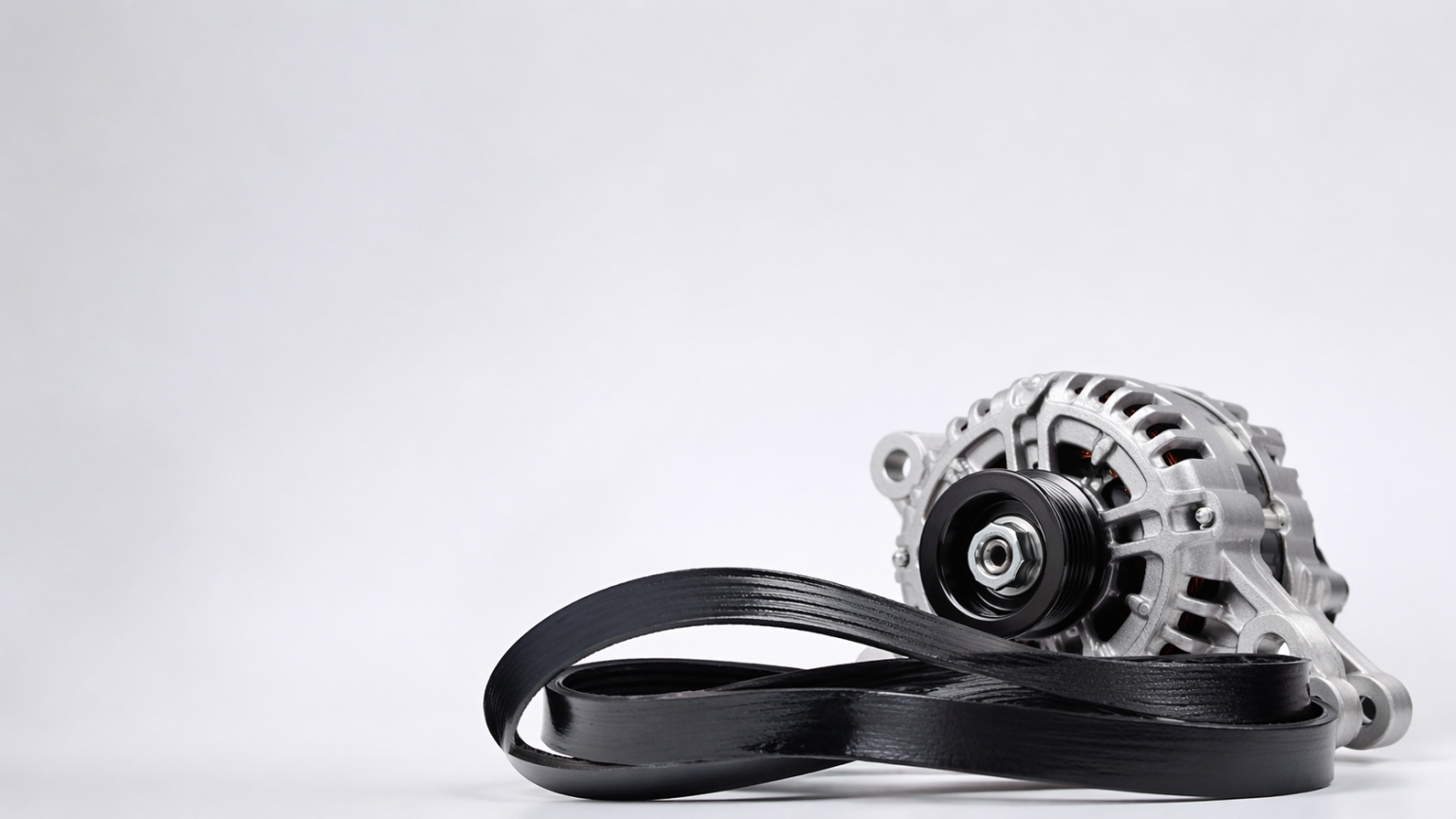
La alternator belt, also called service belt, transmits the engine's movement to the alternator and, depending on the car, can also operate other auxiliary components.
Whistling or squealing noises, cracks, damaged edges, and charging system problems may indicate that something in the transmission is not working properly. But the belt is not always the cause: Belt tensioners, pulleys and alternator can cause similar symptoms.
If the belt breaks, the alternator will no longer operate and the battery will stop charging. On some engines, other components connected to the same belt may also stop working.
What you will learn:
- What is the alternator belt for?.
- What signs may indicate wear or problems.
- How to distinguish the belt from other faults.
- What happens if the belt breaks.
- When to check it and when to replace it.
- Because the belt tensioners and pulleys also need to be checked.
Index
What is the alternator belt and how does it work?
La alternator belt, often called a service belt or accessory belt, transfers the motion of the crankshaft to some auxiliary components.
Among these there may be:
- alternator;
- air conditioning compressor;
- power steering pump on some vehicles;
- water pump on some configurations.
The layout changes depending on the engine.
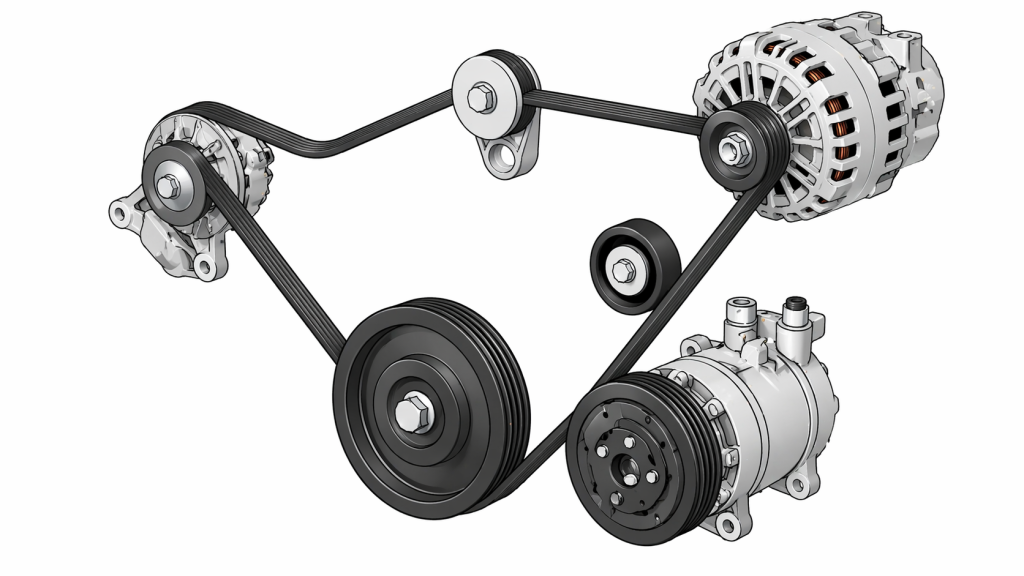
The alternator uses the mechanical energy received from the engine to produce electrical energy and keep the battery charged.
If the belt that drives it slips, comes out of its groove, or breaks, the charging system can stop working properly.
Read also: Car alternator failure: symptoms, what happens, and when to stop
Alternator belt and timing belt: they are not the same thing
It's easy to confuse them, but they perform different functions.
La timing belt synchronizes key parts of the engine, while the service belt operates one or more auxiliary components.
The consequences of the breakup are also different.
A broken timing belt can cause serious internal damage to many engines. A broken service belt, on the other hand, primarily causes the loss of the accessories it powers.
This doesn't mean it can be ignored: if it operates the water pump, for example, its failure can quickly cause a cooling problem.
Symptoms of a worn alternator belt
A belt or service system that needs checking can manifest itself through several signs.
The most common are:
- whistling or squealing from the engine compartment;
- cracks or missing parts;
- damaged or frayed edges;
- very shiny or abnormal surface;
- belt or belt tensioner vibrations;
- charging problems if the belt does not drive the alternator properly.
Not all of these symptoms necessarily mean that the belt needs to be replaced.
A noise, for example, can also come from belt tensioners, pulleys, bearings or other components driven by the same belt.
Alternator Belt Whistle: When to Worry
A whistling noise coming from the accessory belt area deserves attention, especially if it occurs frequently when starting, during acceleration, or when certain accessories are activated.
Possible causes include:
- belt slippage;
- incorrect tension;
- worn belt tensioner;
- faulty pulley or bearing;
- belt contamination;
- misalignment.
For this the only noise It does not allow us to establish with certainty which component is faulty.
If the whistling persists or gets worse, it is best to check the entire timing belt system rather than automatically replacing the belt.
Battery light on: could it be the belt?
Yes, but it's not the only option.
The battery light normally indicates a fault in the charging system, not just a dead battery.
If the belt is not driving the alternator properly, charging may stop and the warning light may come on.
But the same symptom can also depend on:
- alternator;
- voltage regulator;
- electrical connections;
- wiring;
- other charging system problems.
So battery light on ≠ alternator belt definitely faulty.
Read also: Battery light on: what it really means and what to do immediately
Cracks and wear: how to check your belt
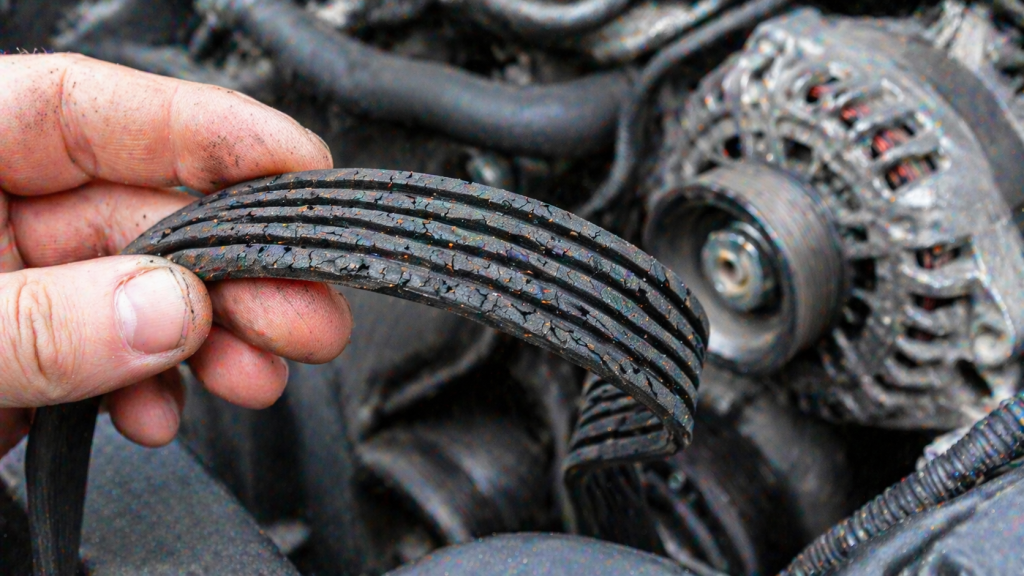
With the engine off and in safe conditions, a visual inspection may reveal some signs that deserve further investigation.
Check for:
- frayed edges;
- missing parts;
- rib damage;
- contamination by oil or other fluids;
- obvious signs of deterioration;
- anomalies in the belt path.
On modern EPDM belts the wear It does not necessarily manifest itself with large visible cracks, so the external appearance alone does not always allow us to determine its condition.
If you find oil or other fluids on the belt, it is also important to locate the leak that caused the contamination.
Do not place hands, clothing or tools near the belt while the engine is running.
Broken alternator belt: what's happening?
If the belt that drives the alternator breaks, the alternator stops being driven by the engine.
From that moment on, the electrical system uses the energy available in the battery.
The following may appear:
- battery warning light;
- electrical anomalies;
- uneven lighting;
- progressive loss of some functions;
- engine shutdown when the available energy is no longer sufficient.
There is no safe number of miles you can drive after a breakdown.
Furthermore, it is necessary to consider What other components are driven by the same belt?.
If the belt on your engine also drives the water pump, continued driving can cause the temperature to rise rapidly.
If you use a hydraulic power steering system, however, the steering can become noticeably heavier.
Therefore, if you suspect that the timing belt has broken while you are driving, reach a safe point and stop as soon as possible. If the engine temperature also increases, stop safely and do not continue your journey.
When to change the alternator belt
There is no universal interval that applies to all cars.
The correct timing depends on:
- vehicle and engine;
- type of belt;
- manufacturer's instructions;
- belt tensioner condition;
- state of the pulleys;
- contaminations;
- terms of use;
- age and condition of the component.
The first indication to follow is therefore that provided by the maintenance plan for your vehicle.
The belt should also be checked when noises, visible deterioration, tension problems or anomalies in the system it drives appear.
The mistake is to expect a generic mileage figure found online and assume it applies to any car.
Belt tensioners and pulleys: why they need to be checked
The belt is only one part of the system.
The belt tensioner maintains the intended tension during operation, while the pulleys guide the belt correctly along its path.
A problem with these components can cause:
- noises;
- vibrations;
- slippage;
- irregular wear;
- misalignment;
- premature belt deterioration.
For this reason, when replacing a worn belt, it is useful also check belt tensioners and pulleys.
This does not mean that they should always be replaced automatically: the decision depends on the condition of the components and the indications provided for that vehicle.
How much does it cost to change the alternator belt?
The cost can vary greatly from car to car.
It mainly depends on:
- model and engine;
- belt accessibility;
- type of spare part;
- time needed for the work;
- possible replacement of belt tensioners or pulleys.
A simple belt replacement can be relatively inexpensive, while a job involving other components of the service system can cost significantly more.
Before comparing prices it is therefore important to understand What does the quote include?.
Mistakes to avoid
Thinking that every whistle comes from the belt
Belt tensioners, pulleys, and bearings can make similar noises.
Change the battery as soon as the light comes on
The light indicates a problem with the charging system. Before replacing the battery, you need to identify the cause.
Wait for the belt to break
An obviously damaged belt or system that is showing anomalies should be checked before it breaks.
Just look at the cracks
On modern belts, wear is not always obvious at first glance.
Replacing the belt without checking the rest
A faulty belt tensioner or pulley can quickly ruin even a new belt.
Useful tools for checking the service belt
A simple visual inspection doesn't require particularly complex tools. However, if you want to service the belt, you need to know the procedure for your engine.
Belt tensioner wrench kit
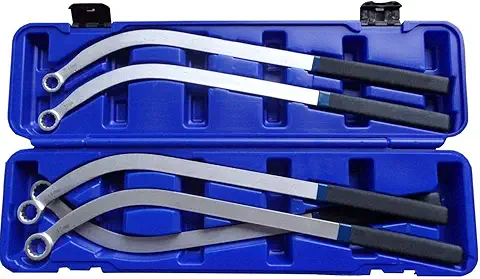
On some vehicles, accessing the belt tensioner requires tools appropriate to the engine configuration.
Before purchasing, it is important to check that the kit is compatible with the type of intervention to be performed.
HELPFUL TIP
Belt tensioner wrench kit
This type of keys is specially designed to work on the service belt tensioner.
They allow you to:
- loosen the belt tension
- remove the belt safely
- work on the pulleys without damaging the bolts
See on Amazon →
LED workshop torch
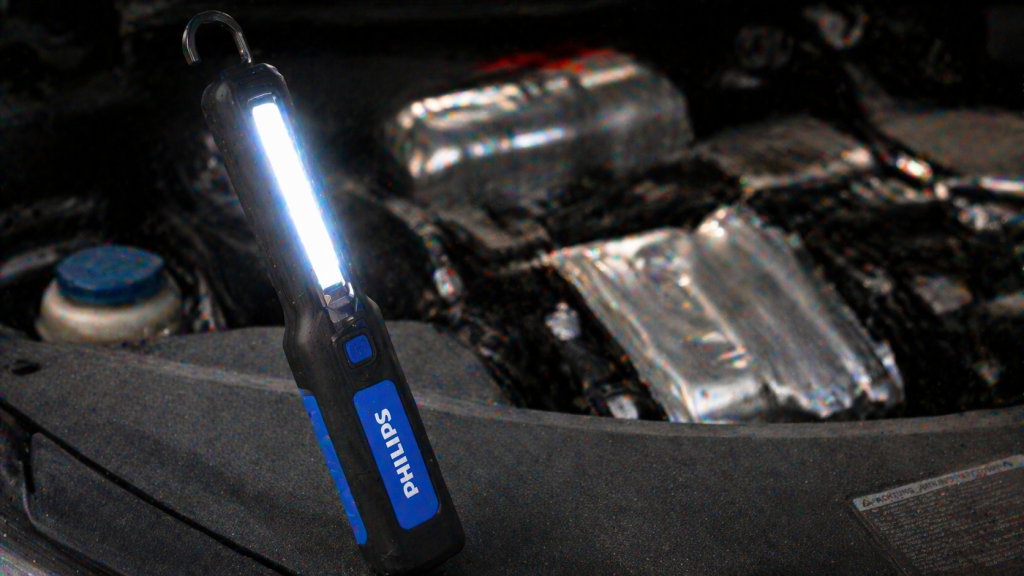
Good lighting helps you see the belt, pulleys, and less accessible areas of the engine compartment without working in the dark.
A flashlight with a magnetic base can be particularly handy because it leaves both hands free.
HELPFUL TIP
LED workshop torch
An LED workshop torch allows you to:
- better see any cracks on the belt
- check the alignment of the pulleys
- illuminate the most hidden parts of the engine
Many models also have magnetic base, so you can fix it directly in the engine compartment and work with both hands free.
See on Amazon →
Mechanic's gloves

During small checks in the engine compartment they can protect your hands from dirt and abrasions and improve your grip on tools.
HELPFUL TIP
Mechanic's gloves
Mechanic gloves help to:
- avoid cuts or abrasions
- improve grip on tools
- protect yourself from oil and dirt
They are one of the most used accessories in workshops.
See on Amazon →
If you are inexperienced with the belt tensioner system, don't improvise the replacement. A belt fitted with the incorrect routing or tension can create new problems.
In summary
La alternator belt It is part of the system that transfers the engine's movement to the alternator and, on some cars, to other accessories.
Remember above all:
- a whistle does not automatically mean the belt needs changing;
- the battery light indicates a problem with the charging system;
- cracks, fraying or contamination deserves an inspection;
- there is no universal mileage for replacement;
- belt tensioners and pulleys should be evaluated together with the belt;
- If your belt breaks, it's important to know which components stop working on your engine.

FAQ - Frequently Asked Questions
How often should the alternator belt be changed?
There's no one-size-fits-all mileage interval for all cars. It's important to follow the manufacturer's maintenance schedule and assess the condition of the belt and other service system components.
How to tell if the alternator belt is worn?
Noises, deterioration, fraying, contamination, or tension problems may indicate the need for an inspection. However, belt tensioners and pulleys can also cause similar symptoms.
Can the battery light come on because of the alternator belt?
Yes. If the belt isn't properly driving the alternator, the charging system may stop working. However, the warning light could also be caused by the alternator or other electrical problems.
Does a broken alternator belt drain your battery?
If the belt drives the alternator and breaks, the alternator can no longer recharge the battery. The car will then use the remaining energy available until it is no longer sufficient.
Can I drive with a broken alternator belt?
It's impossible to establish a safe distance. In addition to the loss of power, on some engines the same belt can drive other important components. It's therefore prudent to stop safely as soon as possible.
Are alternator belt and service belt the same thing?
In common parlance, "alternator belt" is often used to refer to the accessory belt that drives the alternator. However, the same belt can also power other accessories, depending on the vehicle.
How much does it cost to change the alternator belt?
It depends on the vehicle, its accessibility, and any other components that need replacing. Therefore, it's more useful to request a specific quote than to rely on an average price for any car.
Conclusion
La alternator belt It is a relatively simple component, but a problem with it can interrupt battery charging and, on some engines, also affect other auxiliary systems.
Whistling, visible wear or a battery warning light deserve attention, but there is no need to replace components by trial and error. Checking the belt, tensioner, pulleys, and charging system can help identify the actual cause.
If the belt is damaged or the system is faulty, intervening before it breaks is the most prudent choice.
Read also: Car alternator failure: symptoms, what happens, and when to stop


 Italian
  English