
Reading time: 4 minutes
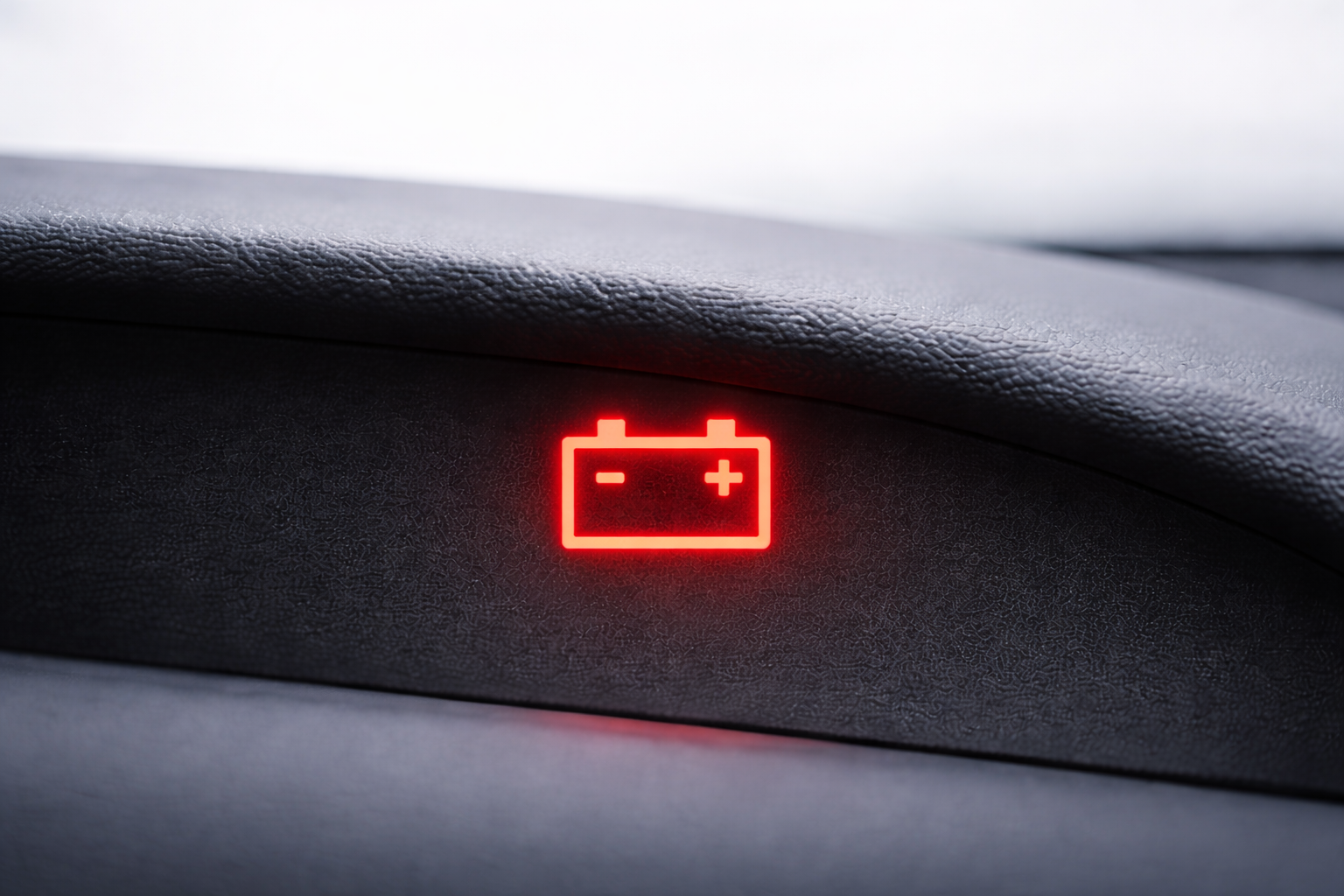
La battery light on While driving, it doesn't necessarily mean the battery needs changing. More often, it indicates a problem in the charging system: the car can continue to run for a while, but it risks shutting down when the available energy is no longer sufficient.
Immediate response
If the red battery light comes on while driving:
- turn off the air conditioning, radio and other unnecessary electrical accessories;
- avoid intentionally turning off the engine until you have reached a safe place, because it may not start again;
- seek a safe place or assistance as soon as possible;
- If other warning lights appear, the steering becomes heavy, or electrical systems begin to shut down, stop safely.
There is no reliable number of kilometers you can still drive: it depends on the fault, the remaining charge and the car's electricity consumption.
What you will learn:
- What the battery light really means.
- Because often the problem isn't the battery.
- What are the most common causes?.
- What to do if it appears while driving.
- How to recognize the signs of insufficient charging.
- How to distinguish a battery problem from a charging system problem.
Index
Battery light on: what does it mean?
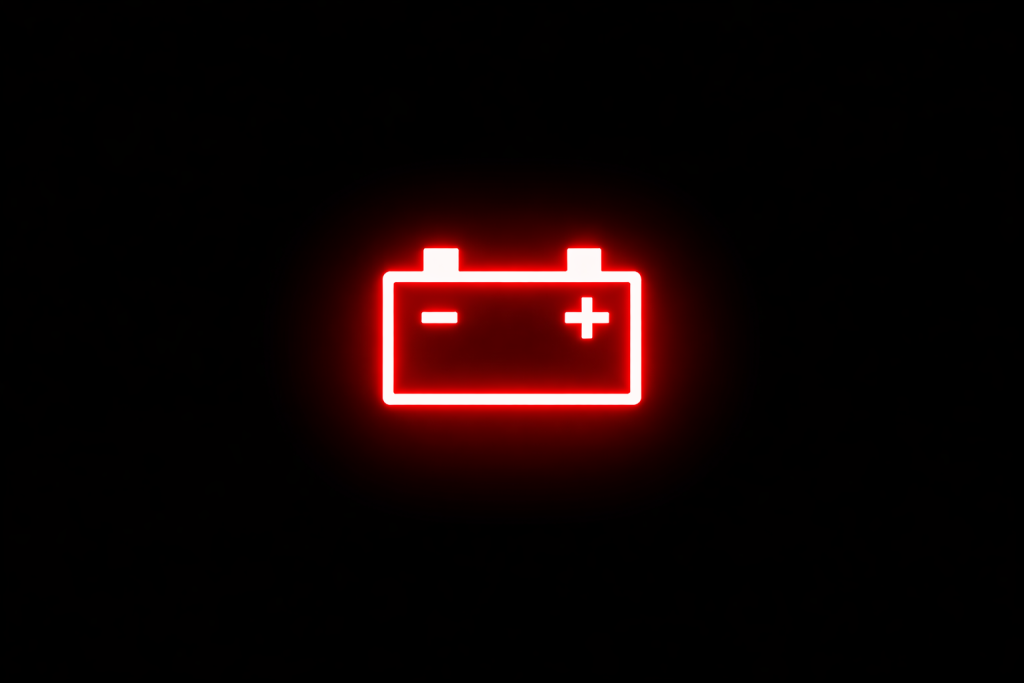
The light with the battery symbol is mainly concerned with the car electrical and charging system.
When the engine is running, the alternator — or equivalent system provided by the vehicle — must provide energy to the electrical consumers and keep the battery charged.
If charging becomes insufficient, the car can initially continue to operate using the energy available in the battery.
But this situation cannot last indefinitely.
When there is no longer enough energy to power control units and other essential systems, various malfunctions can appear and the car can eventually stop.
Battery light on: what causes it?
The battery is just one of the possible causes.
Alternator or charging system
It's one of the first things to check.
An alternator that is not producing current properly can prevent the battery from charging while driving.
The problem may also concern the voltage regulator or other components of the charging system.
Service belt
On many cars the alternator is driven by the timing belt.
If the belt breaks, slips, or is no longer able to drive the alternator properly, charging may stop.
If you hear a loud squealing noise from the engine compartment along with the battery warning light, the problem needs to be checked quickly.
Electrical connections
Loose terminals, damaged cables, faulty grounds or oxidized connections can cause charging problems.
In these cases the warning light may also appear and disappear.
Deteriorated battery
A very worn battery can also contribute to the problem.
However, this does not mean that the solution is always to replace it.
Installing a new battery without checking the charging system may only temporarily solve the problem if the real cause lies elsewhere.
What to do immediately when the battery light comes on
If it appears while driving, the goal is to reduce electricity consumption and achieve a safe situation.
1. Reduce electricity consumption
When possible without compromising security, disable unnecessary users:
- air conditioning;
- heated rear window;
- heated seats;
- charger;
- radio and other accessories.
Do not turn off headlights, windshield wipers, or other devices necessary for safe driving.
2. Find a safe place
Do not plan to continue your journey as normal.
Get to a safe place or a workshop as soon as possible, if the car and road conditions allow it.
3. Avoid intentionally turning off the engine before you are safe.
With a faulty charging system, after you turn off the engine you may not have enough power to restart it.
Once you reach a safe location, however, the priority becomes to avoid remaining in a dangerous position and to request assistance if necessary.
4. Observe other signs
If other lights start to appear or electrical devices malfunction, the available power may no longer be sufficient.
In this case, stop as soon as it is safe to do so.
How far can I drive with the battery light on?
There is no safe distance that applies to all cars.
You may be able to travel quite a distance or have very little time available.
It depends mainly on:
- remaining battery charge;
- battery status;
- type of failure;
- number of active electrical devices;
- car features.
For this reason, it is not a good idea to think in terms of "how many kilometers do I have left".
Instead, think of the warning light as a warning that requires you to reach a safe situation as soon as possible.
Signs that your car may be about to stop
When the available voltage drops, various systems can begin to malfunction.
You may notice:
- headlights becoming dimmer;
- cabin fan slowing down;
- display or radio turning off;
- appearance of other spies;
- electric power steering that becomes heavier;
- irregular functioning of some electronic systems.
If several symptoms appear at the same time, do not try to gain any more miles: stop in a safe place.
Alternator or battery: how to tell the difference?
The warning light alone does not allow you to determine with certainty which component is faulty.
A voltage check can, however, provide some indications.
Using a multimeter, you can check the voltage at the battery terminals both with the engine off and while the engine is running.
On many conventional cars, when the system is charging properly, the voltage with the engine running generally tends to be higher than the voltage with the engine off.
However, the values may vary depending on the vehicle and the electronic management of the charging. For this reason A single measurement is not always enough to diagnose a faulty alternator, especially on modern cars.
If the check suggests a charging problem, in the guide “Faulty alternator: symptoms, causes, and what to do” find other signs to check.
For an initial check of the battery and charging system, a digital multimeter can be helpful. This measurement helps identify abnormal values, but it's no substitute for a complete diagnosis.
HELPFUL TIP
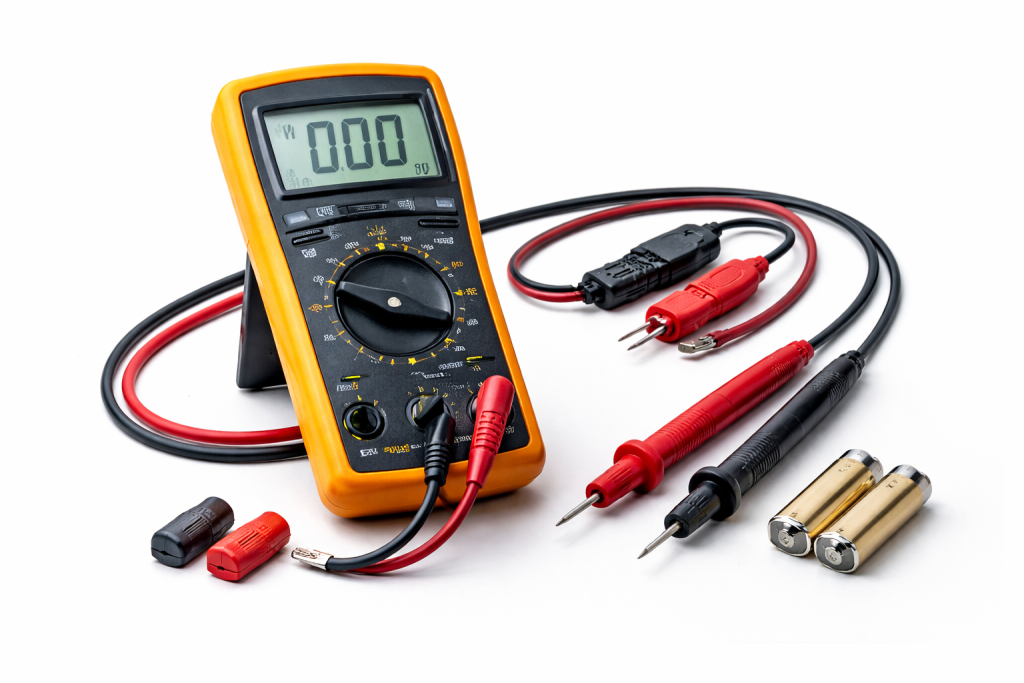
Digital multimeter for cars
Useful for checking battery voltage and carrying out simple checks on the electrical system.
See on Amazon →
Battery light on and then off
Don't ignore it just because it went out on its own.
An intermittent ignition can be linked, for example, to:
- unstable electrical connections;
- slipping belt;
- alternator or regulator not working properly;
- abnormal voltage variations.
If the light appears repeatedly, it is a good idea to check the charging system before the problem becomes permanent.
If your battery dies and your car won't start, a booster can be useful for emergency starting. However, remember that it won't fix a faulty alternator.
HELPFUL TIP
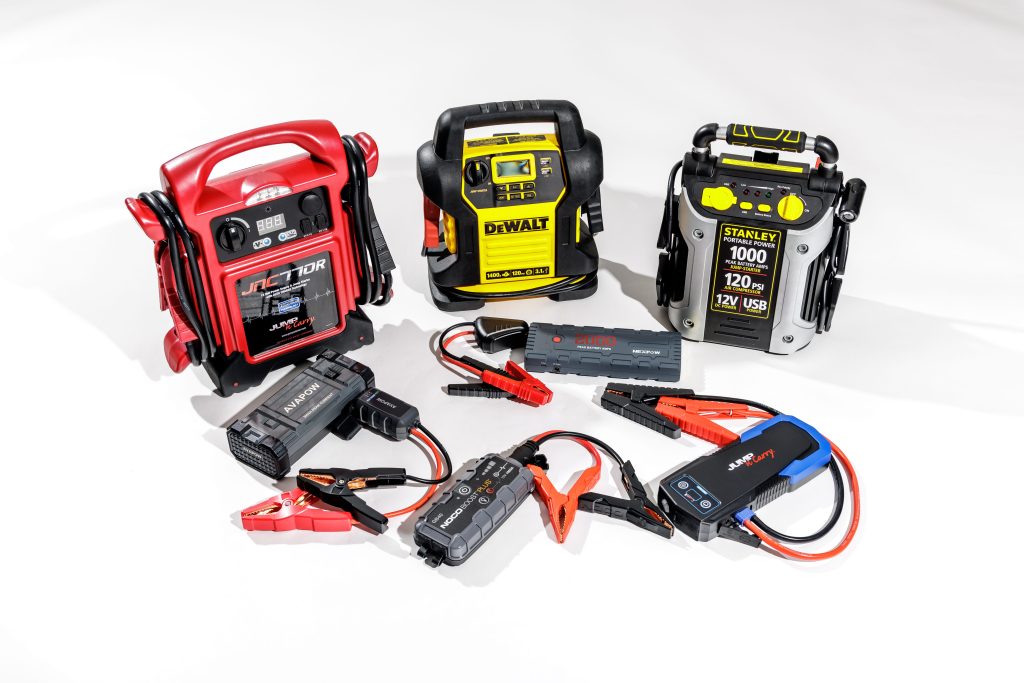
Car starter booster
Portable jump starter to keep in your car for emergencies with a flat battery.
See on Amazon →
Battery warning light on hybrid cars
In hybrid cars, it is necessary to distinguish between the high-voltage battery used by the hybrid system and the low-voltage battery and its electrical circuit.
The exact meaning of the lights may vary from model to model.
For this reason, on hybrid and electrified cars, it is particularly important to consult the vehicle manual before automatically attributing the warning light to the 12 V battery alone.
How to prevent charging system problems
A few simple checks can help pinpoint the problem before you get stuck:
- check the battery status periodically;
- make sure the clamps are clean and secure;
- don't ignore increasingly slow starts;
- have abnormal noises coming from the belt area checked;
- Check the charging system if the light appears even occasionally.
The age of the battery is a useful indicator, but it alone is not enough to decide when to replace it.
For cars that are used infrequently or left unused for long periods, a smart charger can help keep the battery in good condition.
HELPFUL TIP
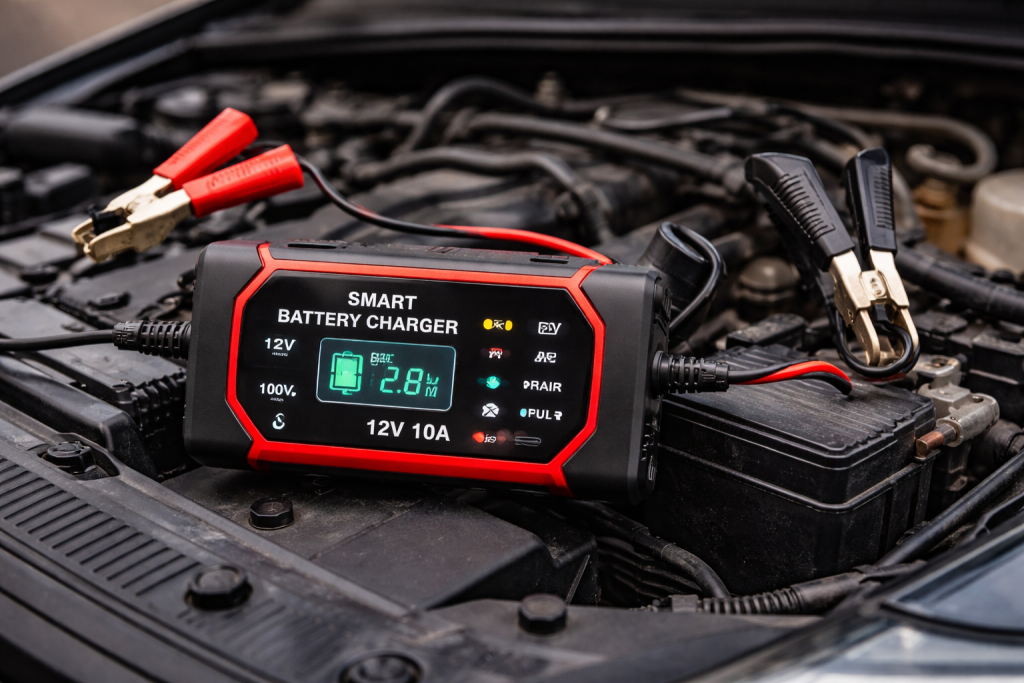
12V Smart Battery Charger
Useful for maintaining and recharging the battery when the car is stationary for a long time.
See on Amazon →
In summary
La battery light on while driving indicates that there is a problem with the electrical or charging system and does not automatically mean that you need to buy a new battery.
If it appears:
- reduce unnecessary electricity consumption;
- do not intentionally turn off the engine before reaching a safe place;
- don't rely on a specific number of kilometers remaining;
- if other malfunctions appear, stop safely;
- Have your battery, alternator, belt and connections checked.
Also read
If you want to learn more about the most common cause of charging problems, in the guide “Faulty alternator: symptoms, causes, and what to do” find the signals to check and the possible faults.
If you want to understand when a battery has actually reached the end of its life, read “How long does a car battery really last?”.
To understand the differences between the main batteries used on modern cars, you can also find “AGM vs EFB batteries: real differences, which one to choose and when it really pays off”.
If other symbols appear on the dashboard, consult the guide “Car dashboard warning lights: meaning, colors, and what to do immediately”.

FAQ – Battery Indicator
Does the battery light mean I need to change the battery?
No. It may indicate a battery problem, but often the alternator, charging system, belt, and electrical connections also need to be checked.
How many miles can I go with the battery light on?
There's no reliable number. The distance depends on the remaining charge, the type of fault, the power consumption, and the vehicle. It's best to reach a safe situation as soon as possible.
Can I turn off the engine?
If you're still on the road and looking for a safe place, consider that the car may not restart after turning off the engine. Once you reach a safe place, consider assistance and diagnostics.
Can the battery light come on intermittently?
Yes. It could be caused by a loose connection, a slipping belt, or an intermittent problem with the charging system. Even if it shuts down, don't ignore it.
Can I restart with a booster?
A booster can help start a car with a dead battery, but it won't fix a charging system problem. If the alternator or another component isn't charging the battery, the problem can quickly recur.
How do I know if the problem is the alternator?
The warning light alone isn't enough to diagnose it. A voltage and charging system check can provide clues, but the diagnosis must take into account the type of car and the system used.


 Italian
  English