

What you will learn:
- How to tell if your radiator fan is bad
- What are the most common causes of the problem?
- What to do immediately to avoid engine damage
- When it is dangerous to continue driving
- How much could the repair cost?
You're stuck in traffic.
It's 35 degrees outside.
The air conditioner loses effectiveness.
The engine temperature rises slowly.
You look at the dashboard and start to worry.
Can I continue driving?
Risk of breaking the engine?
How much will this repair cost me?
When your radiator fan isn't working, every minute can make a difference.
The good news is that early symptoms often allow intervention before the problem becomes truly costly.
👉 If the engine temperature is already rising, read also Car overheating: what to do immediately.
Immediate response
If the radiator fan isn't working, the engine can overheat, especially in traffic, at traffic lights, or on very hot days. The most common causes are a blown fuse, faulty relay, faulty temperature sensor, damaged wiring, or a faulty fan motor. If the temperature exceeds normal, it's advisable to stop as soon as possible to avoid costly engine damage.
The 5 most common causes
If the radiator fan does not start, in most cases the problem depends on:
- Blown fuse
- Faulty relay
- Faulty temperature sensor
- Damaged wiring
- Worn fan motor
Starting from these checks often allows you to quickly identify the fault without replacing components unnecessarily.
Index
Can I continue driving with a broken fan?
It's the first question almost all drivers ask themselves when they see the temperature rising.
The answer depends on the situation.
If the temperature remains normal, you can get to a safe place and check the problem.
However, if the needle goes above the usual value, the engine temperature warning light comes on or you smell hot coolant, it is advisable to stop as soon as possible.
Continuing to drive with an overheated engine can cause very expensive damage.

What is the radiator fan for and why is it essential?
Most people only discover the existence of the radiator fan when an abnormal temperature appears on the dashboard or the air conditioning stops cooling in traffic.
The fan has a very important task.
When the car is moving, air coming in from the front naturally cools the radiator.
However, when you are stopped in traffic or moving slowly, the airflow decreases dramatically.
At this point the fan starts up, forcing air through the radiator and keeping the engine temperature within safe limits.
Without its intervention, the risk of overheating increases rapidly.
How to tell if your radiator fan is bad
Engine temperature rising in traffic
It is the most common symptom.
On the highway the temperature seems normal.
Then you get to town, you stop at a traffic light and the needle starts to go up.
Less effective air conditioning
Many drivers discover the problem during the summer.
The air conditioning cools well when the car is moving but almost stops working in traffic jams or at traffic lights.
This is one of the most typical signs of a fan that is not working properly.
👉 Learn more: Car air conditioning not blowing cold air.
Completely silent fan
Normally the fan turns on periodically.
If you never hear it kick in, there might be a problem.
Engine temperature warning light on
This is one of the most important signs that should not be ignored.
Smell of hot liquid
In some cases you may notice a sweetish odor coming from the engine compartment.
A very common example
Many drivers notice a peculiar behavior: on the highway the temperature remains perfectly stable, while in city traffic it tends to rise rapidly.
When this happens, the problem oftenso it's not the radiator but the fan that can't cool it when there's no natural airflow generated by driving.

Why the radiator fan doesn't turn on
Blown fuse
After a dead battery, a power surge, or simply due to wear and tear, the fan fuse can blow.
It is one of the quickest and least expensive checks to do.
Faulty relay
The relay controls the fan switch.
If it fails, the fan may not receive power.
Faulty temperature sensor
If the sensor sends incorrect data to the control unit, the fan may not activate at the right time.
Damaged wiring
Humidity, vibration and oxidation can cause false contacts.
Electric fan motor faulty
Over the years, the fan motor can wear out and stop working.
How to Check if Your Radiator Fan is Working
Visually check the fan
Leaves, dirt and small debris can block its movement.
Check the fuses
Consult your car's manual to locate the correct fuse.
Listen to how it works
Bring the engine to normal temperature and check if the fan starts.
Check the coolant
An insufficient level can compromise engine cooling.
You may also find it useful to read Low coolant: symptoms and risks.
Test with air conditioning on
Many cars turn on the fan a few minutes after the air conditioning is turned on.
If the fan remains completely stopped, there may be an electrical problem.
What to do immediately if the fan does not start
If the temperature is still normal:
- avoid heavy traffic
- keep an eye on your engine temperature
- check fuses and relays
- check the coolant level
If the temperature rises rapidly:
- stop as soon as possible
- turn off the engine
- let the system cool down
- do not open the radiator cap immediately
What NOT to do if your radiator fan isn't working
When you notice your engine temperature rising or suspect a radiator fan problem, certain actions can make the situation worse and cause very expensive damage.
Avoid these mistakes:
Don't ignore engine temperature
Many drivers continue driving thinking it is just a temporary anomaly.
If the temperature exceeds the normal value, the risk of overheating increases rapidly.
Don't continue driving with the red light on
The engine temperature warning light indicates a potentially dangerous situation.
Continuing to drive could damage the head gasket or other engine components.
Do not open the radiator cap when the engine is hot
The cooling circuit works under pressure.
Opening the cap when the engine is still hot can cause boiling coolant to spill out, posing a risk of burns.
Do not pour cold water on a hot engine
The thermal shock can cause deformation or damage to some mechanical components.
Don't put off your check-up for days
Even if the problem seems occasional, a malfunctioning fan almost always gets worse over time.

Useful products for checking the cooling system
Bluetooth OBD2 Scanner
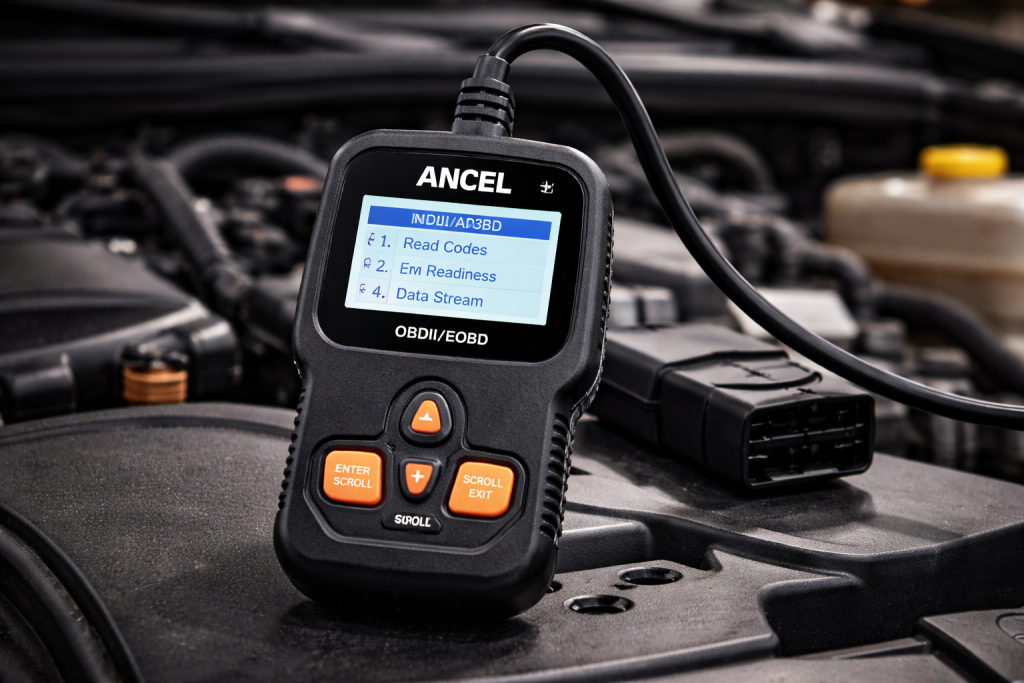
Digital multimeter

Coolant

When it is dangerous to continue driving
It is not always necessary to stop immediately.
However, you should stop riding as soon as possible if:
- the temperature exceeds 100-110°C
- the red engine temperature light appears
- you smell hot coolant
- the air conditioner suddenly stops cooling
- notice leaks under the vehicle
In these situations the risk of serious damage increases rapidly.
If a warning light has appeared on the dashboard, also consult the guide dedicated to the engine temperature light on.
How much does it cost to repair a broken radiator fan?
Fuse
From 5 to 20 euros.
Relay
From 15 to 50 euros.
Temperature sensor
From 30 to 120 euros.
Fan motor
From 100 to 400 euros.
Complete fan assembly
From 150 to 700 euros.
In most cases, the problem doesn't require a complete fan replacement. Often, the fault involves fuses, relays, or sensors, components that cost much less than a complete fan assembly.
👉 In some cases the problem can also be linked to a dirty car radiator which reduces cooling efficiency.
Common mistakes to avoid
Continue driving in high temperatures
It's the most costly mistake.
Ignoring the early symptoms
Many are waiting for the red light to appear.
Continuously top up the liquid without looking for the cause
It's just a temporary solution.
Underestimating an air conditioner that cools poorly
This could be one of the first signs of a faulty fan.
When to go to the mechanic
Book a check-up as soon as possible if:
- the fan never starts
- the temperature often rises in traffic
- the engine temperature warning light appears
- the air conditioner cools much less than normal
- you smell strange odors coming from the engine compartment
An early diagnosis can prevent much more costly damage.

FAQ - Frequently Asked Questions
Can I drive with a broken radiator fan?
Only for short journeys and constantly monitoring the engine temperature.
Should the radiator fan run when the engine is cold?
No. It normally only starts working when certain temperatures are reached or when the air conditioning is on.
Can a faulty fan affect my air conditioner?
Yes. In many cases the air conditioner cools poorly precisely because of the fan.
Can the radiator fan drain the battery?
Yes, if it stays on all the time due to an electrical fault.
How much does it cost to replace a radiator fan?
Generally between 150 and 500 euros, depending on the car model.
Should the radiator fan run when the air conditioning is on?
In many cars, yes. If you turn on the air conditioning and the fan never comes on, there could be an electrical problem, a faulty relay, or a defect in the fan control system.
Why is the radiator fan always on?
A fan that continues to run even when the engine isn't particularly warm could indicate a faulty temperature sensor, a stuck relay, or a problem with the control unit. In these cases, it's advisable to perform a diagnosis.
Attention
Never open the radiator cap or coolant reservoir cap when the engine is hot.
The internal pressure of the circuit can cause boiling liquid to leak out and cause serious burns.
If you need to check the coolant level, always wait until the engine is completely cold.
Conclusion
A faulty radiator fan may seem like a minor problem, but it is often the first step towards costly engine overheating.
Intervening at the first symptoms almost always saves time, money and possible mechanical damage.
Have you noticed that the temperature rises in traffic or that the air conditioning cools less than usual?
Read also:
👉 Car overheating: what to do immediately
👉 Low coolant: symptoms and risks
👉 Dirty car radiator: symptoms and solutions
👉 Car air conditioning not blowing cold air
👉 Car air conditioning compressor faulty
Often, identifying the problem early means avoiding repairs costing hundreds or thousands of euros.


 Italian
  English