
Reading time: 8 minutes
Immediate response
The automatic car transmission errors The most important ones to avoid are mainly oil maintenance, shifting from D to R while the car is still moving, aggressive driving when cold, leaks, jerking, slipping and using an inappropriate fluid.
Not all automatic transmissions work the same way: torque converters, dual clutches, and CVTs have different characteristics and maintenance requirements. This is why the most important rule is: follow the instructions provided for the transmission fitted to your car.
What you will learn:
- What are the 14 mistakes to avoid.
- When your gear oil needs attention.
- How to use D, R, N and P correctly.
- What habits change between converter, DCT and CVT.
- What symptoms should you have checked out immediately?.
Index
What really ruins an automatic transmission?
An automatic transmission can be damaged by both inadequate maintenance and incorrect use.
Among the most important factors are excessive temperature, incorrect lubrication, deteriorated or insufficient oil and improper mechanical stresses.
But we must avoid generalizing: there is no single “automatic transmission”.
Correct behavior also depends on the technology used.
What types of automatic transmissions exist?
Transmission with torque converter
It uses a hydraulic converter and, in modern transmissions, different clutch and gear systems to manage the ratios.
It is generally very smooth, but maintenance, oil specifications and behaviour when towing depend on the model.
Dual Clutch Transmission (DCT)
It uses two clutches to handle different groups of gears.
In slow-moving traffic and frequent manoeuvring, some dual-clutch transmissions can be put under greater strain, especially when the clutches are slipping for extended periods.
CVT gearbox
It continuously varies the gear ratio instead of using a traditional sequence of gears.
Requires the fluid specified for that transmission. Using an incompatible product may compromise its functionality.
The first thing to know, therefore, is Which gearbox does your car actually have?.
1. Not checking the transmission oil maintenance
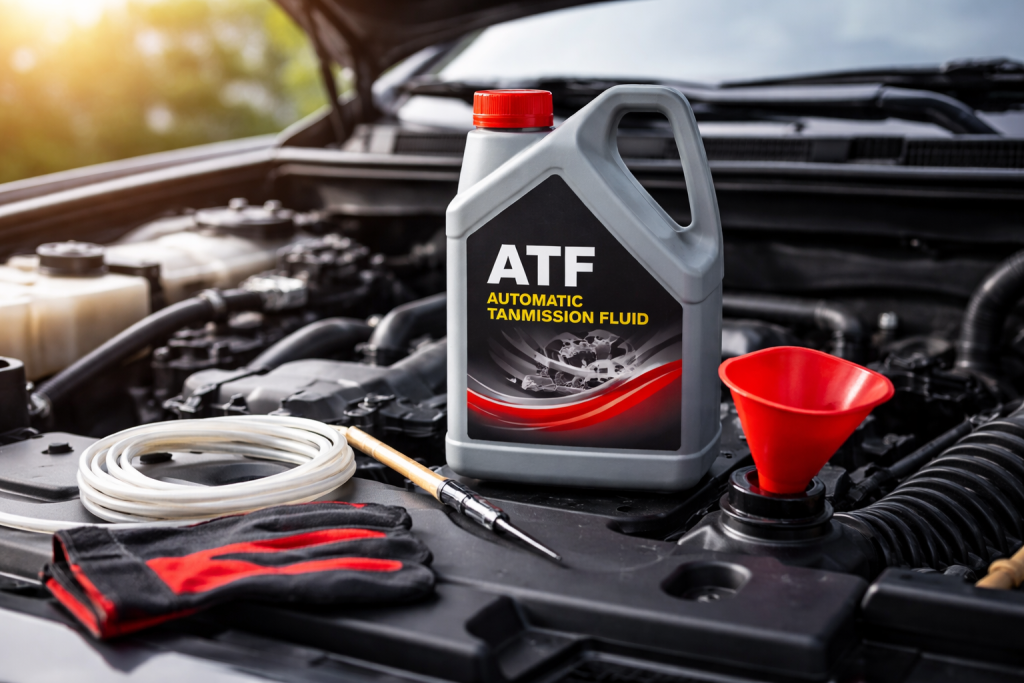
Transmission oil performs critical functions that may include lubrication, cooling, and hydraulic operation.
With use it can degrade and become contaminated.
The important point, however, is this: There is no universal replacement interval that applies to all automatic transmissions..
Some manufacturers require periodic replacement, others indicate different checks or procedures based on the transmission and conditions of use.
When should you change your automatic transmission oil?
First of all, check:
- car maintenance plan;
- transmission specifications;
- any indications for heavy use;
- maintenance history, especially on a used car.
If you don't know what maintenance was performed, it's best to have the transmission, fluid, and procedure correctly identified before doing so.
If you need to buy fluid, don't choose a generic ATF just because it says "automatic transmission": Always check the specifics required by your broadcast.
HELPFUL TIP
ATF automatic transmission oil
See on Amazon →
2. Switching from D to R with the car still moving
During a maneuver, you may find yourself shifting into R while the car is still moving forward, or into D while it is still moving backward.
It's a habit to avoid.
Before reversing the direction of travel, stop the car completely with the brake and then select D or R.
Modern transmissions may have electronic protections, but that's no reason to rely on them all the time.
3. Using D, N and P incorrectly during stops
Staying in D during a normal short stop at a traffic light is not automatically a mistake.
Transmission behavior varies greatly between torque converter, dual-clutch, hybrid, and other modern systems.
For a normal short stop you can generally use the brake and let the system work as intended by the vehicle.
For longer stops, parking or special situations, follow the manufacturer's instructions.
Above all, avoid continually switching D → N → D at every very short stop thinking that this necessarily protects the gearbox.
4. Accelerate hard when the engine and transmission are cold
Even when cold, the transmission fluids have not yet reached normal operating conditions.
There is no need to leave the car stationary for a long time.
It is easier to start normally and, in the first few minutes, avoid:
- very aggressive starts;
- full acceleration;
- high power demands;
- unnecessarily sporty driving.
Progressive driving allows the engine and transmission to gradually reach operating temperature.
5. Put P into gear before the car has come to a complete stop
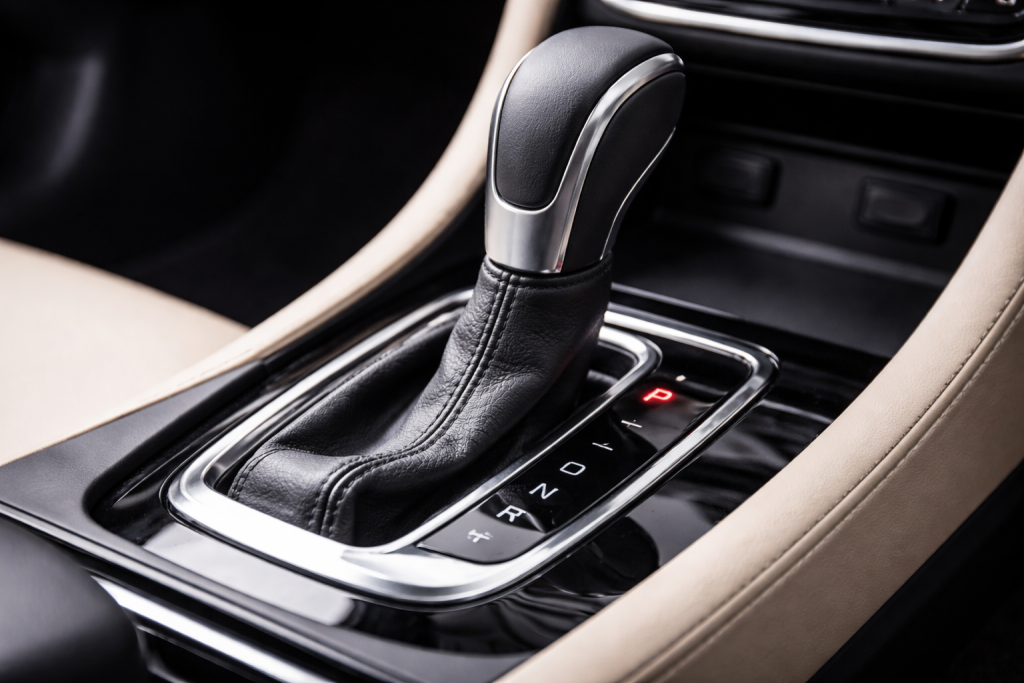
The P position uses a parking mechanism that locks the transmission.
For this reason it should not be used to stop a vehicle that is still moving.
The simple sequence is:
- bring the car to a complete stop with the brake;
- apply the parking brake according to the procedure provided by the car;
- select P.
On modern cars part of the procedure can be automated, but it remains essential do not use P while the vehicle is still moving.
6. Rely only on the P position in parking
Especially on slopes, it is good practice to also use the parking brake correctly.
This way the weight of the car is not left unnecessarily on the transmission parking mechanism alone.
On many modern cars the electric parking brake is applied automatically.
The important thing is to check that the vehicle is actually immobilized before releasing the brake pedal.
7. Towing without considering the limitations of the car and the gearbox
Towing a caravan or trailer increases the load on your engine, cooling, and transmission.
But that doesn't mean every automatic needs modifications.
Before towing, check:
- permissible towable mass;
- manufacturer's instructions;
- possible dedicated towing mode;
- maintenance expected in severe conditions;
- cooling system status.
If your vehicle is designed for that type of towing, use the designated methods and procedures.
In some heavy-duty applications, transmission temperature can become a critical parameter. However, a supplemental radiator isn't automatically installed on every car: compatibility and specific needs must first be verified for that specific transmission.
HELPFUL TIP
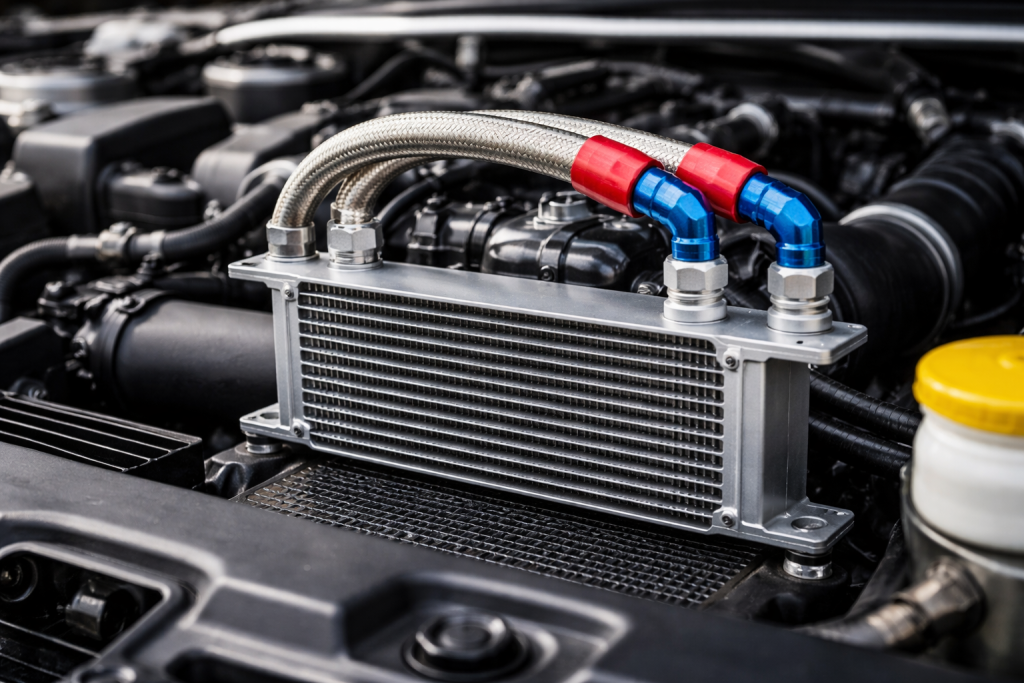
Gearbox oil cooler
See on Amazon →
8. Always use Sport mode
Sport mode modifies the car's response and, depending on the model, can maintain lower gears or higher revs.
Using it does not automatically mean damaging the gearbox: it is a mode provided by the manufacturer.
The problem is confusing “Sport” with permission to always drive aggressively.
Continuous acceleration, high temperatures and heavy use can increase the stress on various components regardless of the selected mode.
So use Sport when you need it or when you want a quicker response, without considering it either dangerous or necessary for everyday driving.
9. Using manual or sequential mode incorrectly
The paddles on the steering wheel or the manual mode allow you to choose or suggest the desired gear.
Modern control units normally prevent many selections that are incompatible with engine speed and engine rpm.
This does not mean, however, that it is useful to continually force the transmission with aggressive driving.
Use manual mode especially when it can give you more control, for example on certain descents, climbs or driving situations intended by the manufacturer.
10. Rely only on the brakes on long descents
The main problem here is not “ruining the gearbox”.
On long descents, continuously use only the brake pedal. overheat especially the braking system.
When enabled by your car, a gear or mode that increases engine braking can help control speed and reduce brake work.
However, do not select modes or ratios that are incompatible with the vehicle's instructions.
11. Ignoring a transmission oil leak
A fluid leak deserves attention.
An insufficient level, when the transmission requires that type of fluid, can compromise lubrication, pressure and cooling.
Don't rely solely on the color of the stain under your car: fluids can change color with age, and a leak can come from multiple systems.
If you find new traces under the vehicle or at the same time notice gearbox anomalies, identify the source of the leak.
12. Using oil that does not meet specifications
This is different than simply “not changing the oil.”.
Two automatic transmission fluids may have different characteristics and specifications.
An incompatible product can alter the transmission's behavior and, in some cases, damage internal components.
When you need to top up or replace the fluid:
- identifies the transmission;
- check the specific request;
- use the correct procedure;
- Don't mix products just because they have a similar color.
The color of the oil does not determine compatibility.
13. Wash the engine compartment aggressively
A high-pressure wash in the engine compartment does not “directly ruin the automatic transmission”.
However, it can cause problems if water and detergents get into connectors, sensors or electrical components.
In a modern car these systems communicate with each other and an electrical fault can also affect the operation of the transmission.
If you clean the engine compartment, avoid high-pressure jets close to electrical parts and follow the precautions provided for the vehicle.
14. Ignore jerks, slips, or changes in operation
Much more important is to recognize when the change he starts behaving differently than usual.
Pay attention to:
- new or persistent tugs;
- delay in inserting D or R;
- slippage;
- increase in revs without proportionate acceleration;
- unusual vibrations;
- new noises;
- abnormal odor;
- transmission-related lights or messages.
A single, occasional behavior does not allow for diagnosing a fault.
However, if the symptom recurs, It is advisable to have it checked before continuing to use the car normally.
How to understand if there is a problem with the automatic transmission?
Some symptoms may indicate a transmission problem, but they alone do not allow us to determine the cause.
Treads
They may depend on the gearbox, the electronic management or even other components of the vehicle.
Slippage
If the engine revs up but acceleration does not increase normally, it needs to be checked.
Delay in inserting D or R
A new or repeated delay warrants diagnosis, especially if accompanied by knocks or vibrations.
Fault warning light or message
The control unit can store error codes useful for identifying the system involved.
Don't necessarily wait until the gear stops working: A correct diagnosis is needed to understand what is happening before replacing components by trial and error..
Automatic transmission maintenance: what to check
In addition to the fluid, depending on the type of transmission, checks may be required on:
- filter;
- gaskets and leaks;
- pipes and cooling system;
- any software updates;
- stored error codes.
Not all of these interventions are foreseen for every gearbox.
For this reason the reference remains the maintenance plan for the specific transmission, not a generic range found online.
How long does an automatic transmission last?
There is no mileage that can tell you how long an automatic transmission will last.
The duration depends on many factors:
- design;
- type of transmission;
- maintenance;
- operating temperature;
- city or motorway use;
- towing;
- driving style;
- any previous faults.
A properly used and maintained automatic transmission according to the manufacturer's specifications can last a very long time, but there is no guaranteed mileage.
In summary
To avoid the errors that ruin the automatic transmission:
- check the fluid maintenance schedule;
- use only oil that meets the specification;
- come to a complete stop before shifting from D to R;
- do not put P in while the car is still moving;
- drive sparingly when cold;
- use the parking brake correctly;
- respects the limits set for towing;
- don't ignore losses;
- have it checked for new jerks, slips or delays.
The most important thing is to avoid universal rules: A correct behavior for a torque converter may not be ideal for a dual-clutch or CVT.

FAQ - Frequently Asked Questions
Does the automatic transmission oil need to be changed?
It depends on the transmission and the manufacturer's maintenance schedule. There's no universal maintenance interval for all automatic transmissions. If the car is used and you don't know its history, it's a good idea to check the maintenance schedule for that specific transmission.
At the traffic light, should you put N or leave D?
During a normal short stop, leaving D isn't automatically a mistake. How you handle it depends on the transmission type and the car. It's not necessary to constantly shift from D to N at every traffic light unless the manufacturer requires it.
Can you shift from D to R while the car is moving?
It's best to stop the vehicle completely before reversing. While some modern transmissions have electronic protections, they shouldn't be used as a substitute for proper maneuvering.
Does Sport mode ruin the automatic transmission?
Not per se. It's a default mode for the vehicle. However, consistently aggressive driving can increase temperatures and stress, regardless of whether Sport mode is selected.
How long does an automatic transmission last?
There's no one-size-fits-all lifespan. Transmission type, maintenance, temperature, driving style, and vehicle usage can significantly impact longevity.
How can you tell if your automatic transmission is starting to have problems?
New jerks, slipping, delays in shifting from D or R, vibrations, unusual noises, and warning lights are signs that should be investigated if they become persistent. The cause must be identified with a diagnosis, not just the symptom.
Conclusion
The automatic transmission is not necessarily fragile, but It must be used and maintained according to its technology.
The simplest habits are also the ones that matter most: stopping before changing direction, using the correct fluid, following scheduled maintenance, and not ignoring obvious changes in performance.
If you also want to protect your engine from bad daily habits, read also 17 Engine-Ruining Mistakes: What to Really Avoid.
 Italian
  English