
Reading time: 6 minutes
Immediate response
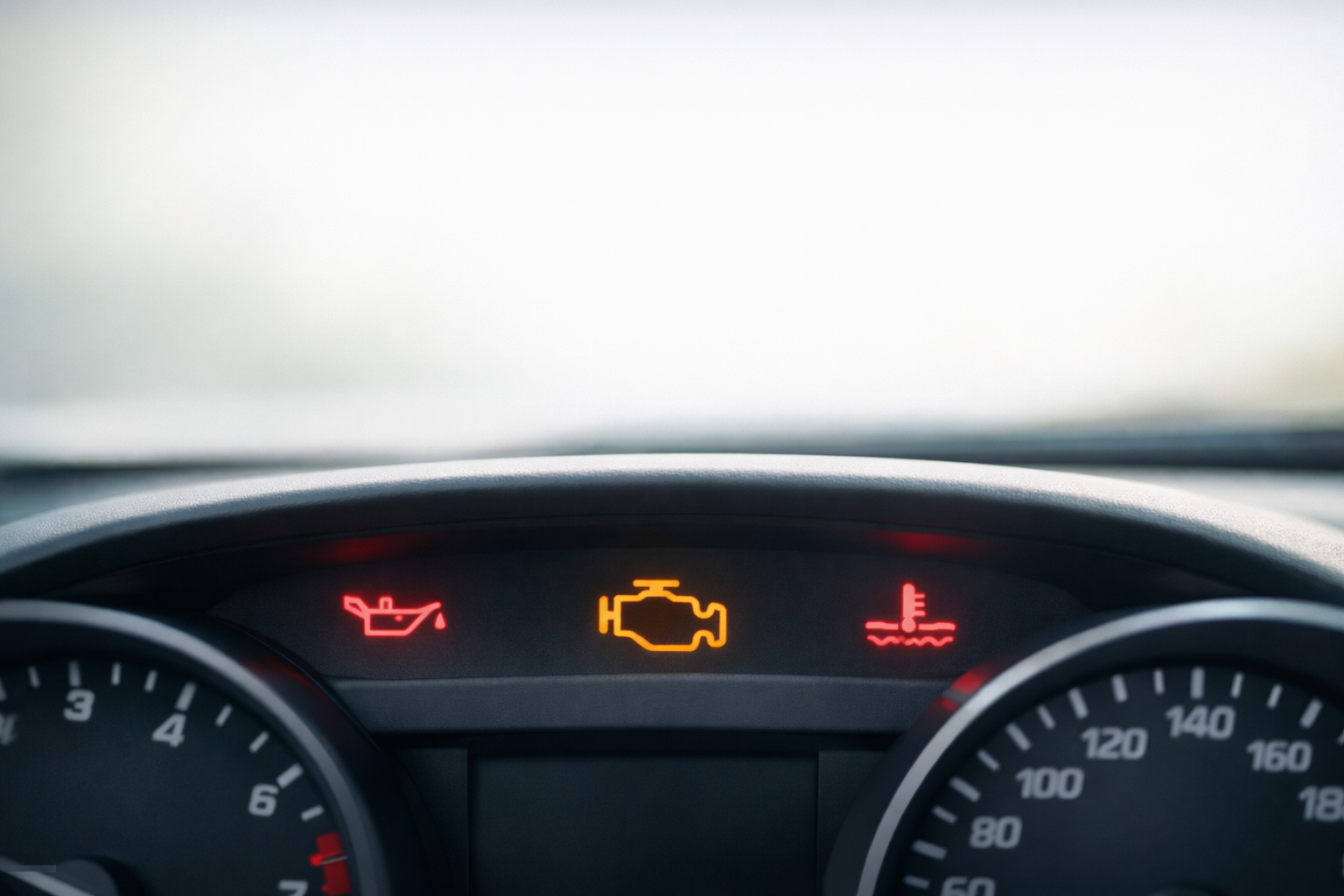
If you have one of the car lights on, First, look at the color and symbol. A red light may indicate a problem that requires you to stop safely, while a yellow or orange light generally signals a malfunction that needs to be checked.
Green, blue, or white lights are usually informational and indicate that a car function is active.
If the light flashes or appears loss of power, abnormal noises, smoke, high temperature or braking problems, don't rely on color alone: slow down and consider stopping safely.
What you will learn:
- How to interpret the color of the lights.
- Which warning lights require the most attention.
- What to do immediately when a warning light appears.
- When an OBD2 diagnosis can be useful.
- Where to learn more about individual anomalies.
Index
Car warning lights on: what the colors mean
The color allows us to make a first evaluation, but does not replace the meaning of the specific symbol. Symbols and behavior of the lights may also vary slightly between brands and models.
🔴 Red light: high alert
It may indicate a serious problem or condition that requires you to stop as soon as it is safe to do so.
🟠 Yellow or orange light: check required
It usually indicates a malfunction or a system that needs to be checked. In many cases, you can proceed with caution, but it depends on the warning light and the car's behavior.
🟢🔵 Green or blue light: information
It usually indicates that a car function is active, for example lights, direction indicators or certain assistance systems.
Attention: A flashing light may have a different meaning than the same light when it's on continuously. Always check the specific symbol and the instructions in your vehicle's manual.
Red lights: when to stop
Red lights deserve special attention because they may concern systems that are important for the engine or for safety.
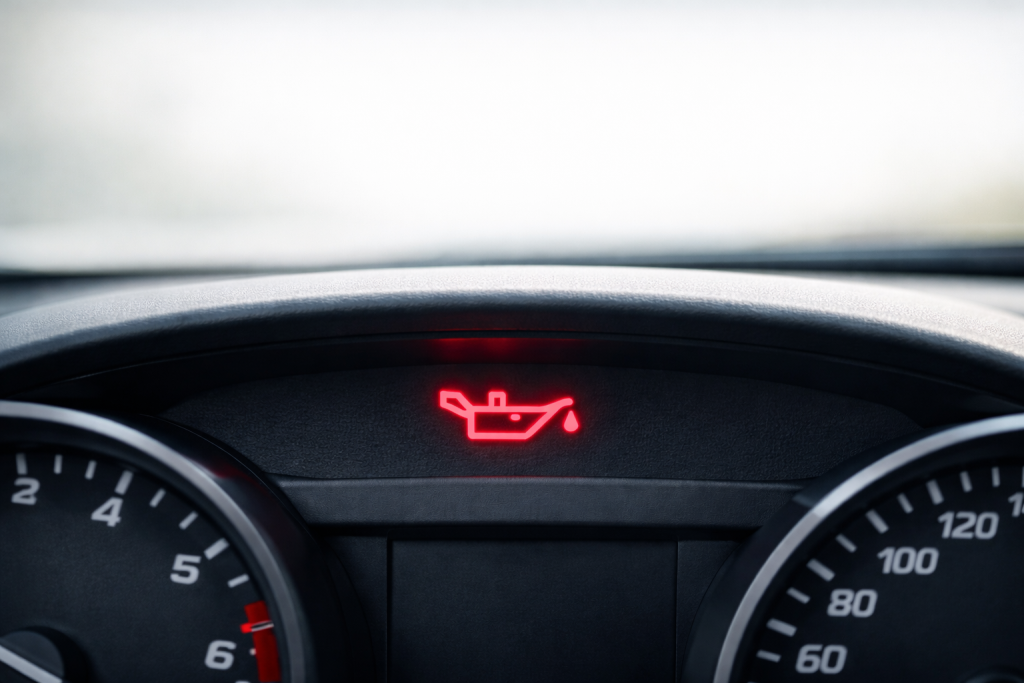
Engine oil warning light
When the red oil light comes on while driving, it may indicate a pressure or lubrication problem.
What to do:
- pull over safely;
- turn off the engine;
- check the oil level following the manufacturer's instructions;
- If the level is correct but the warning light remains on, do not continue driving without checking.
For further information, read the guide Oil light on: what it really means and what to do.
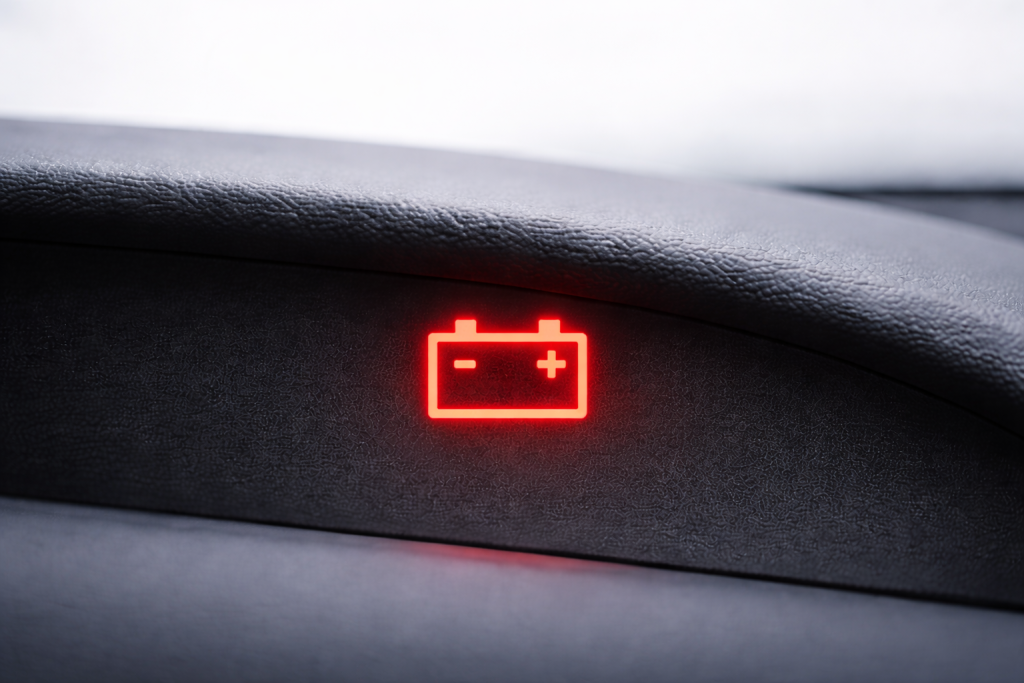
Battery warning light
The battery warning light does not necessarily mean that the battery is simply flat. If it stays on with the engine running, there may be a fault in the charging system, for example in the alternator, connections or other components.
The car may temporarily continue to run using the energy remaining in the battery.
What to do:
- turn off unnecessary electrical appliances;
- avoid going further than necessary;
- if other anomalies appear, stop safely;
- have your charging system checked.
If the light stays on while driving, the problem may also be with the alternator or the charging system. For more information, read Battery light on: causes and what to check.
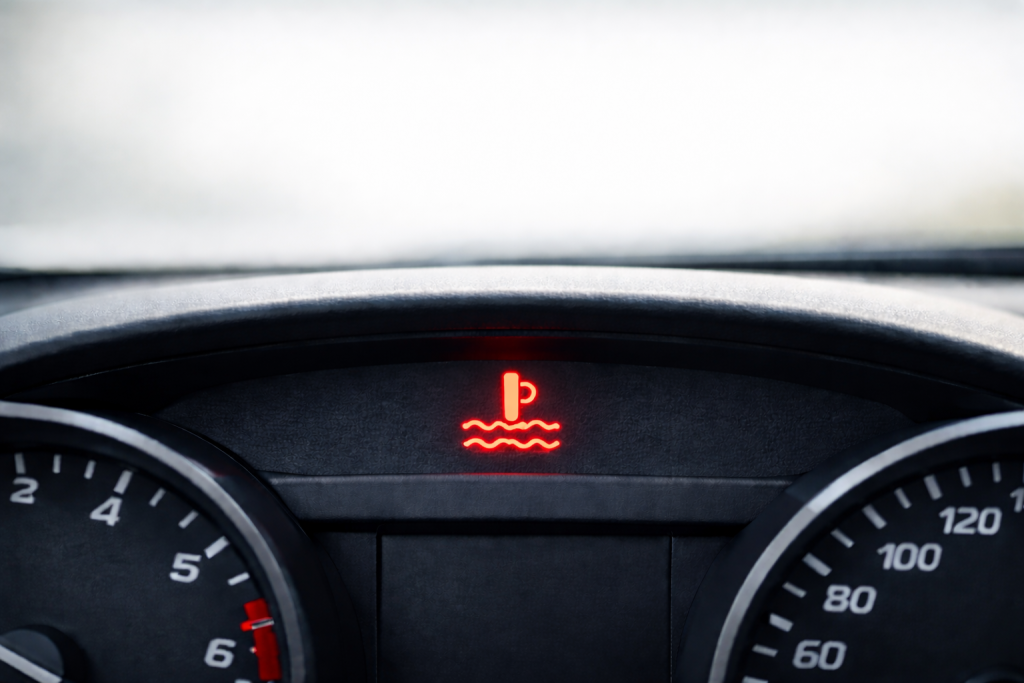
Engine temperature warning light
Excessive temperature can cause serious engine damage.
If the red temperature light appears or the indicator enters the critical zone:
- stop as soon as it is safe to do so;
- turn off the engine;
- let the system cool down;
- Do not open the coolant circuit cap when the system is hot or under pressure.
If you find an obvious leak or the problem recurs, do not continue your journey without identifying the cause.
If the warning light comes on, in the guide on engine temperature light on find the meaning of the symbol and what to do immediately.
If, however, the engine tends to overheat or the problem recurs, look into the possible causes in the guide on engine overheating.
After the engine has cooled, a low coolant level may be one of the checks to be performed following the manufacturer's instructions. The coolant used must be compatible with the vehicle's specifications.
HELPFUL TIP

Ready-to-use coolant
Useful to keep on hand for any top-ups, as long as it is compatible with the specifications required by your car.
See on Amazon →
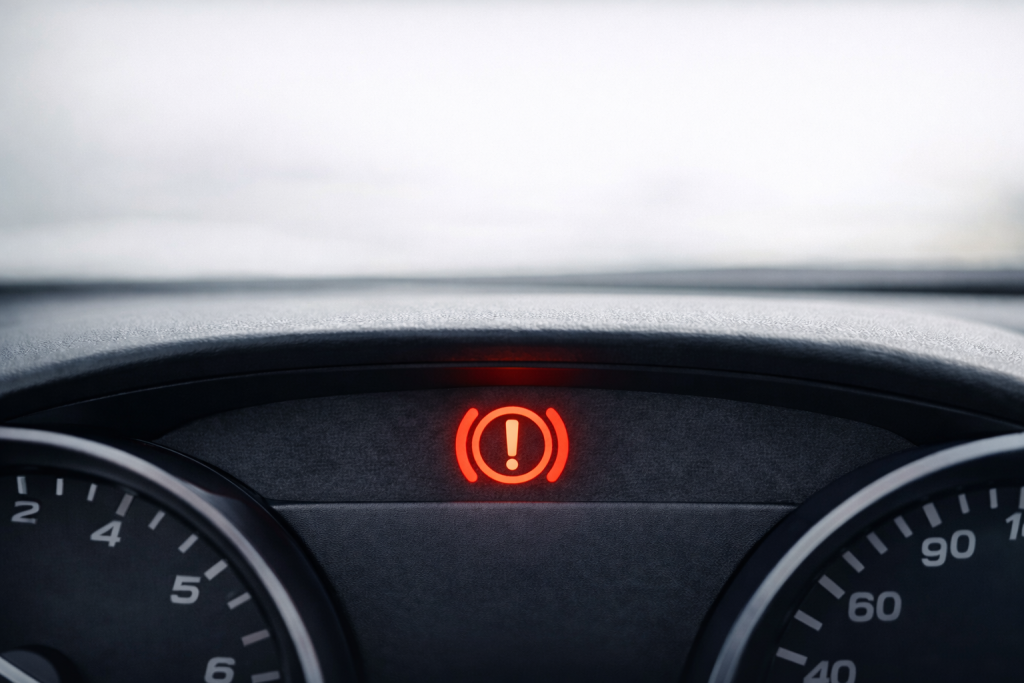
Brake system warning light
A red brake light can have different meanings. It may appear, for example, when the parking brake is engaged, or it may indicate a system fault.
If it stays on after releasing the parking brake, especially if the pedal changes behavior or braking seems abnormal, Stop safely and have the vehicle checked.
If the following appears on the dashboard: brake system warning light, Don't ignore it: it could be due to the handbrake being engaged, low brake fluid level, or a system fault. Read our guide on brake system warning light on to understand what to check and when it is best to stop.
Yellow or orange lights: what to check
Yellow or orange lights generally indicate an anomaly that requires checking, but do not automatically mean that it is safe to continue driving.
What matters is the specific symbol, whether the light is steady or flashing and, above all, how the car behaves.
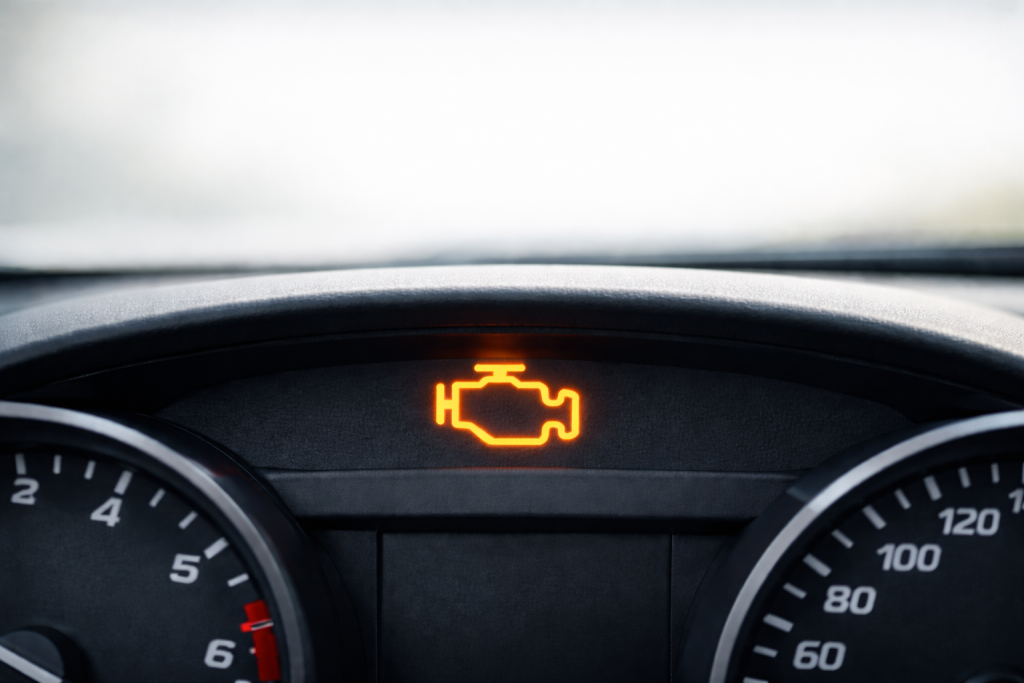
Engine indicator light
The engine light, or check engine, can appear due to very different anomalies.
If it is fixed and the car is operating normally, have the problem diagnosed as soon as possible.
If instead flashes, the engine loses power, jerks, or runs erratically, avoid continuing normally and consider stopping safely.
If you want to know more about the possible causes, read Engine light on: causes, risks, and what to do.
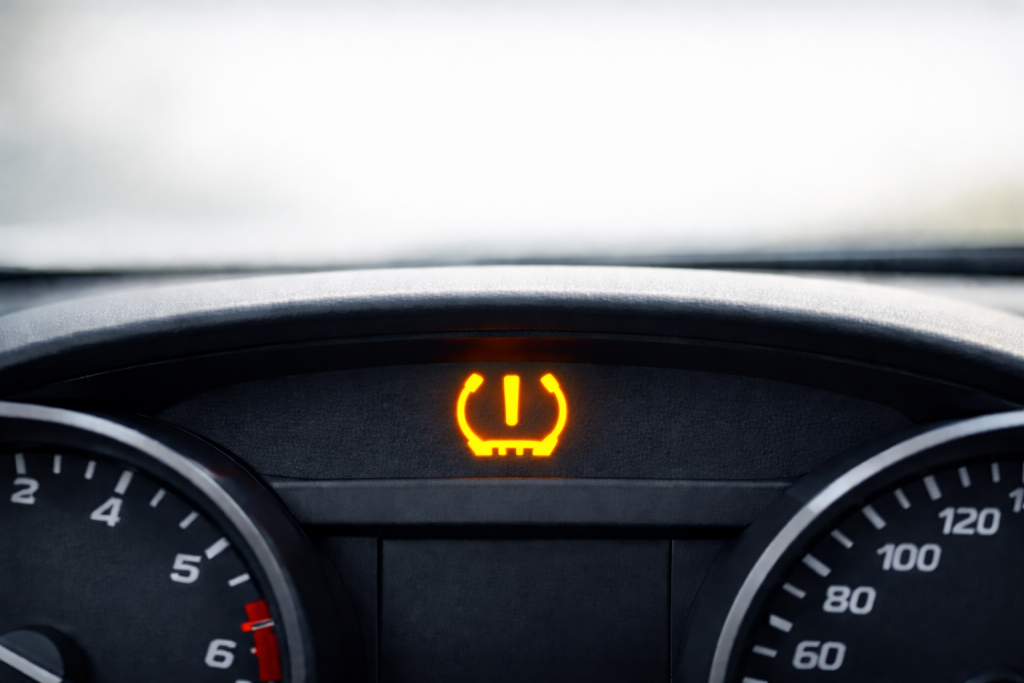
Tire pressure warning light
The TPMS warning light indicates that one or more tires may be underinflated or, on some vehicles, that the monitoring system is malfunctioning.
Visually check your tires and measure the pressure cold, comparing it with the values indicated by the manufacturer.
If a tire loses pressure again shortly after you inflate it, you may have a puncture or other leak.
If the tire pressure warning light remains on even after checking and correcting the pressure, read the guide dedicated to the TPMS warning light, where you can find the most common causes and what to check.
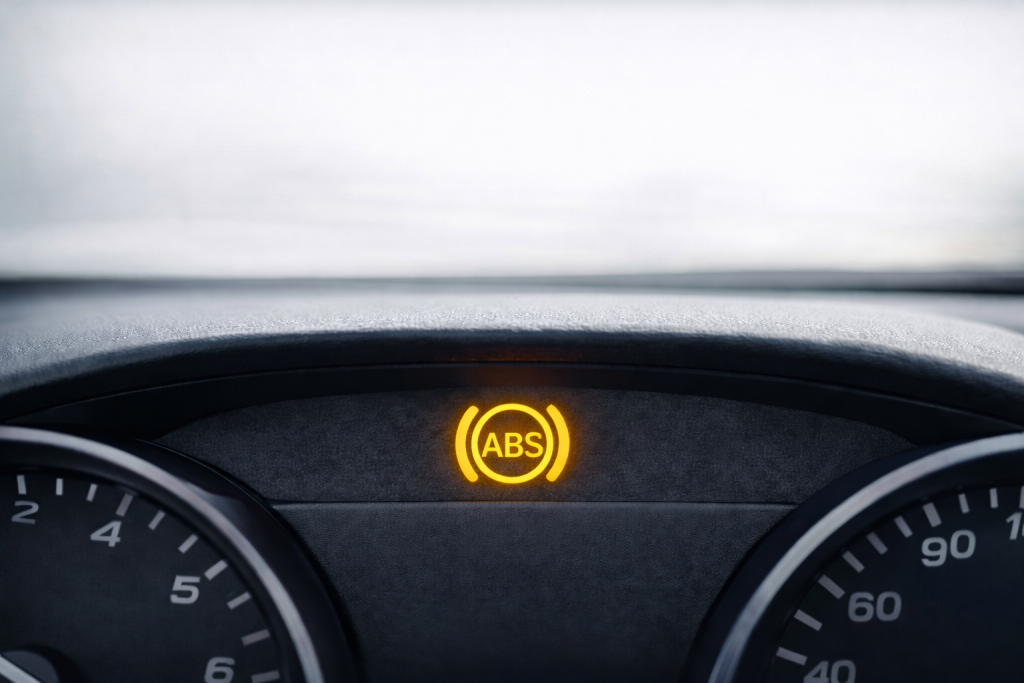
ABS or stability control light
A persistent ABS warning light may indicate a malfunction with the anti-lock braking system. Normal braking may still be available, but the ABS may not intervene when needed.
The stability control warning light may flash while the system is working; if it remains on, it may indicate that the system is deactivated or has a fault.
To better understand how the system works, read What is auto ABS?; if the light remains on, you will find the main controls in the guide ABS light on: is it dangerous? What to do immediately.
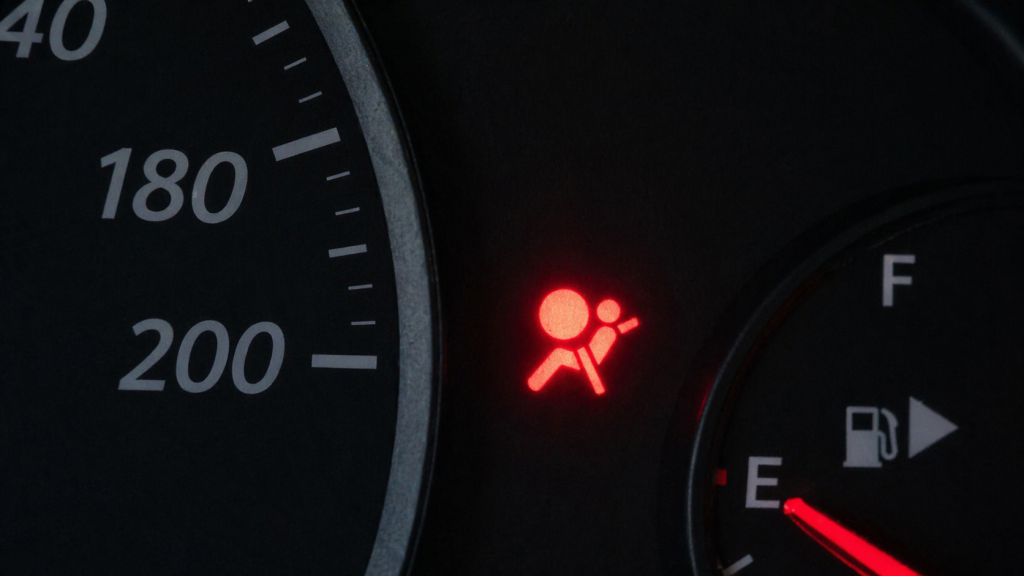
Airbag warning light
The airbag warning light on indicates a fault in the restraint system or its components.
The car can continue to move, but Airbags or pretensioners may not function as intended in a crash.
Have your system checked as soon as possible.
For the most common causes and checks to be done, read Airbag warning light on: real causes, risks, and solutions.
Green and Blue Lights: What They Mean
The green, blue and, on some vehicles, white lights typically have an informational function: they indicate that a device or function is active.
For example:
- direction indicators;
- lights;
- dazzling headlights;
- cruise control;
- some driving modes.
They don't usually indicate a fault, but it's still useful to know what function they're signaling.
What to do immediately when a car warning light comes on
If you see a symbol you don't recognize:
- Look at the color.
- Identify the symbol.
- Check if the light is on fixed or flashing.
- Check your car for noise, vibration, power loss, high temperatures, or braking problems.
- Consult your vehicle manual for specific meaning.
- If the situation may compromise safety or damage the engine, pull over to a safe place and ask for assistance.
The color is therefore only the first clue. The decision must depend on the specific warning light and the car's behavior.
When an OBD2 scanner can be useful
When you turn on the check engine light, a compatible OBD2 scanner can read the error codes stored by the control unit and provide an initial indication of the anomaly.
But be careful: Reading an error code does not mean you have diagnosed the fault. The same code can have different causes and a simple OBD2 reader cannot diagnose every warning light on the dashboard.
If you want to understand how the diagnosis works, read also OBD2 for cars: what it is and how to read errors.
HELPFUL TIP
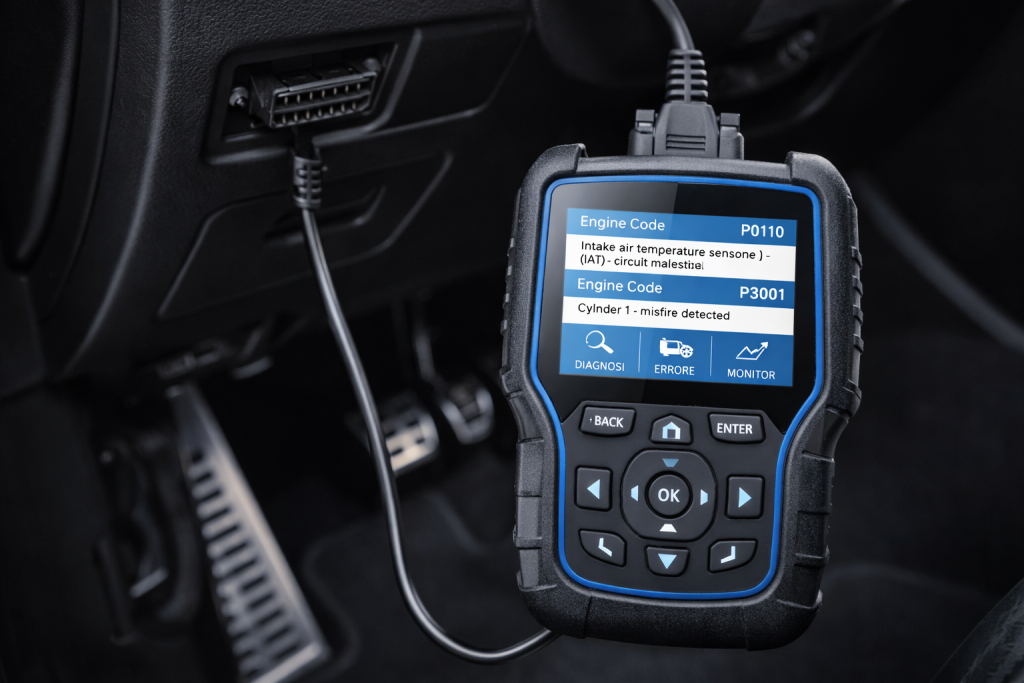
Bluetooth OBD2 Scanner
Useful for reading compatible error codes from your smartphone and getting an initial indication when the engine warning light appears.
See on Amazon →
Why you shouldn't ignore a spy
A warning light doesn't necessarily indicate a serious fault, but ignoring it means missing a warning that the car is providing.
A small problem can get worse if you continue to use the vehicle without checking the cause. This is especially important for oil, temperature, brakes and safety systems.
Intervening early allows you to understand whether it is a simple warning or a problem that requires repair.
How to reduce the risk of failures and anomalies
You can't prevent warning lights from coming on when your car detects a problem. However, you can reduce the risk of some problems with regular maintenance.
- Respect the scheduled maintenance intervals.
- Check oil and fluids periodically.
- Keep your tires at the correct pressure.
- Don't ignore noises, vibrations, or changes in your car's handling.
- Get any abnormalities checked before they get worse.
In summary
When you find one of the car lights on, don't let yourself be guided only by color.
🔴 Red: may require a safe stop.
🟠 Yellow/orange: generally requires checking.
🟢🔵 Green/Blue: usually indicates an active function.
Always check which symbol appeared, whether it is steady or flashing and how the car behaves.
In case of doubt, the main reference remains the vehicle manual.

FAQ about car warning lights
Can I continue driving with a warning light on?
It depends on the light. The color helps you understand your overall level of attention, but you need to identify the symbol and consider the car's behavior. If certain red lights or obvious anomalies occur, you should stop safely.
What does a red light mean?
It generally indicates a condition that requires immediate attention. Identify the symbol and consult the manufacturer's instructions before continuing your journey.
What does a yellow or orange light mean?
It usually indicates an anomaly or a necessary check. It doesn't always require immediate stoppage, but it shouldn't be ignored.
What to do if the engine light flashes?
A flashing engine light warrants more attention than a steady light. If the engine stutters, loses power, or runs poorly, slow down and consider stopping safely.
Can an OBD2 scanner figure out why a warning light came on?
It can read some error codes and help to locate the affected system, but does not replace a complete diagnosis.
Conclusion
Dashboard lights are there to let you know what's going on in your car.
When one appears, check the vehicle's color, symbol, and behavior. Don't ignore a warning light just because your car appears to be running normally.
Quickly recognizing the main signs can help you intervene before a small anomaly becomes a more serious problem.


 Italian
  English