
Reading time: 4 minutes
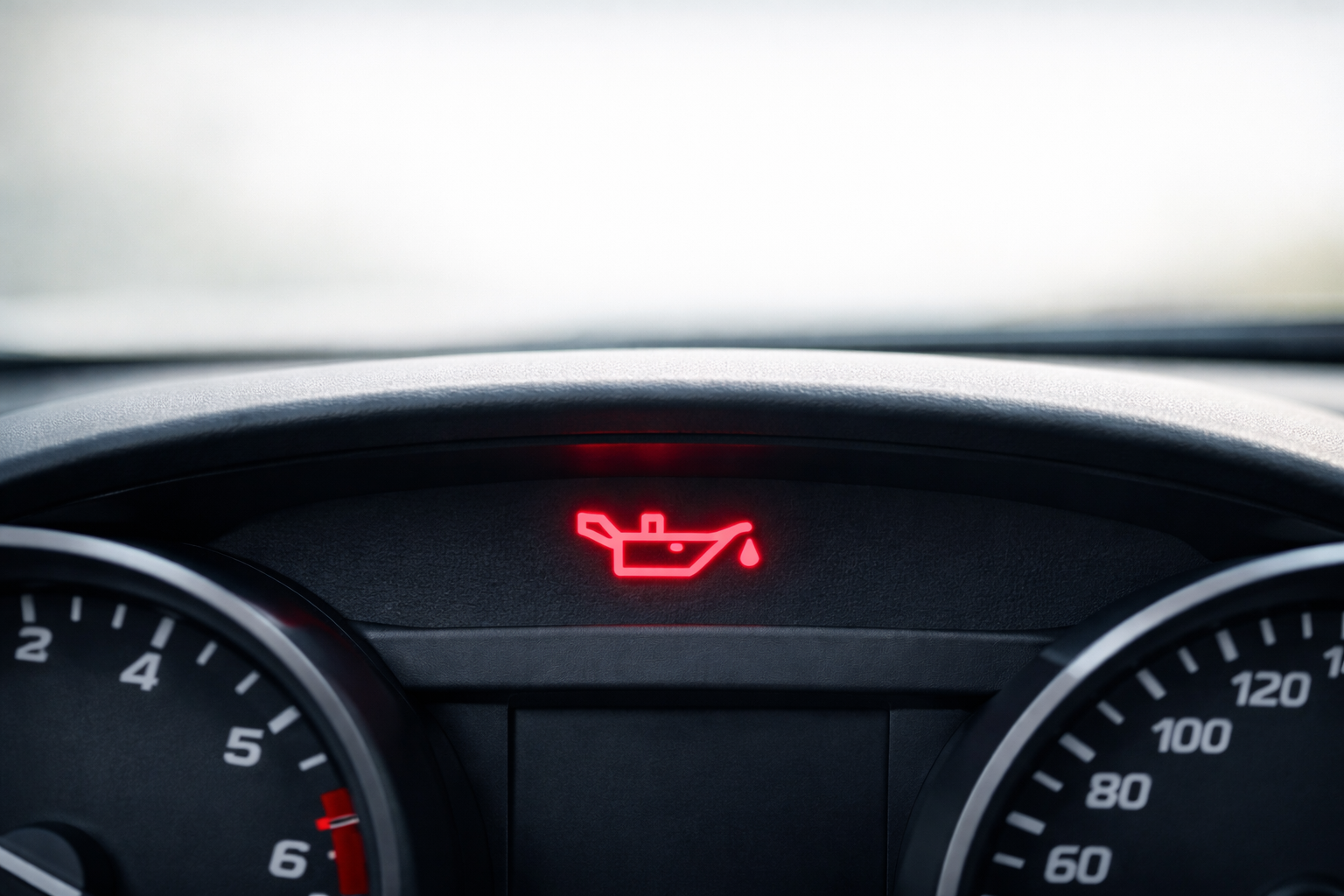
La oil light on Don't ignore it while driving. If it's red, it could indicate low oil pressure, and continuing to drive could cause serious engine damage.
Immediate response
If the oil light comes on while you're driving:
- 🔴 Red light: Pull over safely and turn off the engine.
- 🟡 Yellow light: Check the oil level as soon as possible.
If you hear metallic noises, notice a loss of power, smoke, a burning smell, or a high temperature along with the warning light, do not continue driving.
What you will learn:
- What does the oil light on mean?.
- The difference between red and yellow light.
- What are the most common causes?.
- What to do if it appears while driving.
- When you can leave again and when you need assistance.
Index
Oil light on: what does it mean?
The oil warning light signals an anomaly that concerns the level or engine lubrication system.
Oil creates a protective film between moving metal parts. If the quantity or pressure is insufficient, friction increases and the engine can quickly fail.
This is why the color of the indicator light is important.
Red or yellow oil light: what's the difference?
🔴 Red oil light
This is the most serious situation.
It can indicate a insufficient oil pressure due, for example, to:
- very low level;
- oil leak;
- faulty oil pump;
- clogged filter;
- faulty pressure sensor.
If it appears while driving, Pull over as soon as it is safe to do so and turn off the engine.
Don't continue simply because the car appears to be working normally.
🟡 Yellow oil light
It generally signals a less urgent situation, such as:
- low oil level;
- need for top-up;
- check or maintenance required.
Get to a safe place and check the level.
If it is low, only use an oil that meets the specifications indicated by the car manufacturer.
Why does the oil light come on?
There could be various causes. These are the ones to check first.
Oil level too low
It is one of the most common causes.
The level may decrease due to normal engine wear, a leak or excessively long maintenance intervals.
A spy that appears above all when cornering or braking It could be a sign of a very low level: the oil moves into the sump and the draft could become temporarily insufficient.
Oil leak
Check for stains underneath the car.
Leaks can come from the sump, gaskets, oil seals, or the drain plug.
A major leak can quickly lower the oil level.
Oil pump
The pump must keep the lubricant circulating.
If it is not working properly, the level on the dipstick may be normal but the pressure in the circuit may be insufficient.
In this case topping up doesn't solve the problem.
Faulty pressure sensor
It may happen that the level and pressure are correct but the light remains on due to the sensor.
However, you should not assume that it is the sensor without checking: a real lubrication problem must first be ruled out.
Incorrect oil or filter
A clogged filter, severely degraded oil, or a viscosity that does not meet engine specifications can interfere with proper lubrication.
The problem can also appear after a poorly performed service.
What to do if the oil light comes on while driving
The procedure is simple.
1. Reduce speed
Avoid acceleration and do not put the engine under strain.
2. Pull over safely
Find the first safe place to stop.
3. Turn off the engine
Do not leave the engine running unnecessarily when the red light is on.
4. Check the oil level
Wait a few minutes, leave the car on a possibly flat surface and check the level with the dipstick, if present.
If it is below the minimum, top up only with an oil suitable for your engine.
5. Check the situation again
If the level is correct but the red light stays on, do not continue driving.
There may be a pressure, pump, sensor, or lubrication circuit problem that requires diagnosis.
When you don't have to leave again
Do not restart if:
- the light is red and stays on;
- the oil level is correct but the warning light doesn't go off;
- you hear metallic noises;
- the engine loses power;
- smoke appears;
- you smell something burning;
- you notice a major oil leak.
In these situations it is more prudent to request assistance rather than risk the engine.
The most expensive mistake: "I'll go all the way home"“
This is probably the most dangerous mistake.
The light comes on, the car seems to be driving normally and you decide to drive a few more kilometers.
The problem is that an engine with insufficient lubrication can start to damage itself. before the driver notices noise or loss of performance.
If the light is red, then don't use the car's seemingly normal behavior as evidence that it's safe to continue.
Oil light on after service
If it appears right after an oil change, check the situation quickly.
Possible causes include:
- insufficient amount of oil;
- drain plug leak;
- incorrectly fitted filter;
- sensor or connector disconnected;
- oil does not comply with the required specifications.
Don't assume that you simply need to "reset the light", especially if it is red.
If you need to top up, always check the viscosity and specifications required by the manufacturer first. Don't choose oil based solely on the brand.
HELPFUL TIP
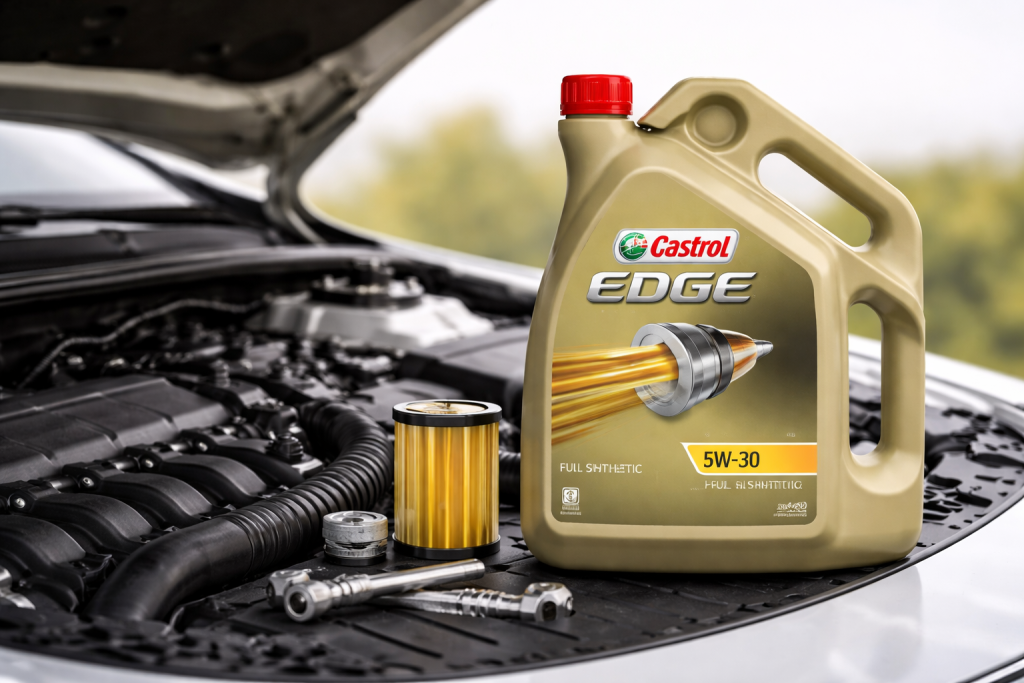
Engine oil
Engine oil compatible with car specifications
See on Amazon →
How to prevent the problem
A few controls can greatly reduce the risk:
- check the oil level periodically;
- respect the service intervals;
- use oil with the correct specifications;
- check for any stains under the car;
- Don't ignore abnormal oil consumption.
Before a long journey, checking the level takes just a few minutes and can avoid much more serious problems.
For those who perform minor checks on their car, an OBD2 reader can help read errors stored by the ECU. However, it's no substitute for checking the oil pressure when the red light stays on.
HELPFUL TIP
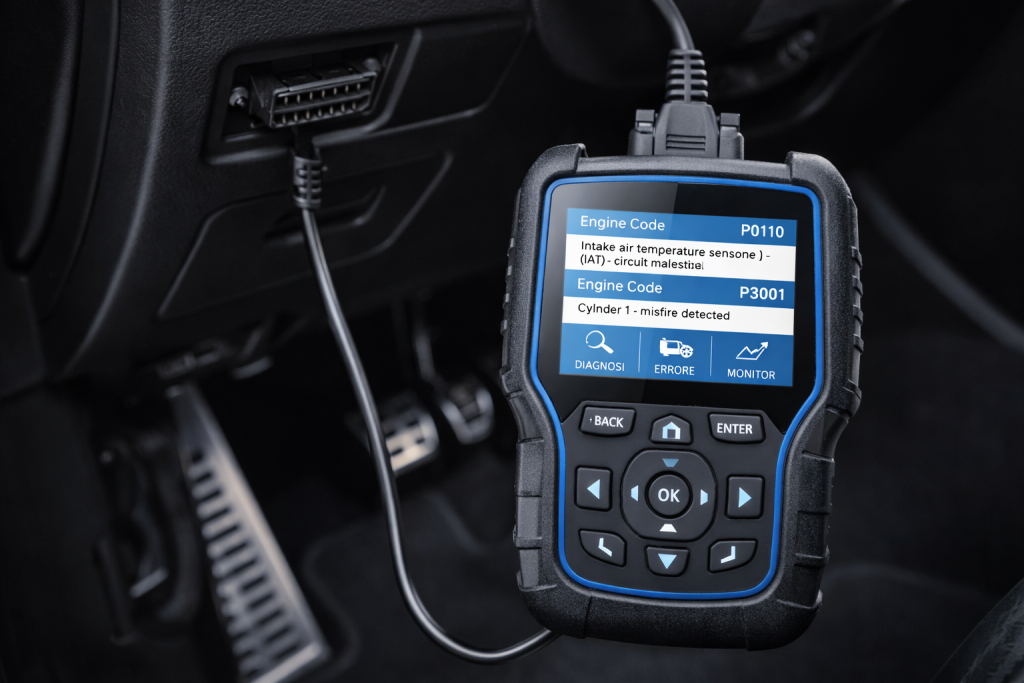
Bluetooth OBD2 Reader
It allows you to read many diagnostic codes available on the car's ECU via your smartphone. Before purchasing, check compatibility with your vehicle and the app you're using.
See on Amazon →
In summary
La oil light on always requires attention.
🔴 Red: Pull over safely and turn off the engine.
🟡 Yellow: Check the oil level as soon as possible.
If the level is correct but the red light remains on, don't keep driving: the problem could be with the pressure or the lubrication system.
Also read
To understand the other signals on the instrument panel, read the guide “Car dashboard warning lights: meaning, colors, and what to do immediately”, where you can find the main red, yellow and green lights and their level of urgency.
If instead the red brake light, in the guide “Brake system warning light on: what it means and when to stop” find the most common causes and the cases in which it is better not to proceed.
If you want to avoid problems caused by neglected maintenance, it can also be useful to “Mistakes that destroy the engine: what mechanics see every day”.
To learn more about preventative maintenance, you can also find “How to make your car engine last up to 500,000 km”.

FAQ: Oil light on
Can I drive with the oil light on?
With the red light noPull over safely and turn off the engine. When the yellow light is on, check the level as soon as possible and follow the manufacturer's instructions.
Oil light on but the level is correct: what does it mean?
There may be a problem with the oil pressure, pump, sensor, or lubrication circuit. If the light is red and stays on, do not continue driving.
Why does the oil light come on when cornering or braking?
One possible cause is a very low oil level. When the oil moves around in the sump, the suction may become temporarily insufficient.
Can I top up and go again?
If the level was low, topping up may solve the problem. However, you must use the correct oil and check that the warning light goes off. If the red light remains on, do not drive.
Why does the oil light come on after the service?
Possible causes include an incorrect level, a leak, a poorly installed filter, incorrect oil, or a sensor problem. A red light should still be checked after the service.
Can I use an OBD2 scanner to figure out the problem?
It can help to locate some errors recorded by the ECU, but does not replace checking the oil level and pressure nor a mechanical diagnosis when the red light stays on.


 Italian
  English