
Reading time: 5 minutes
Immediate response
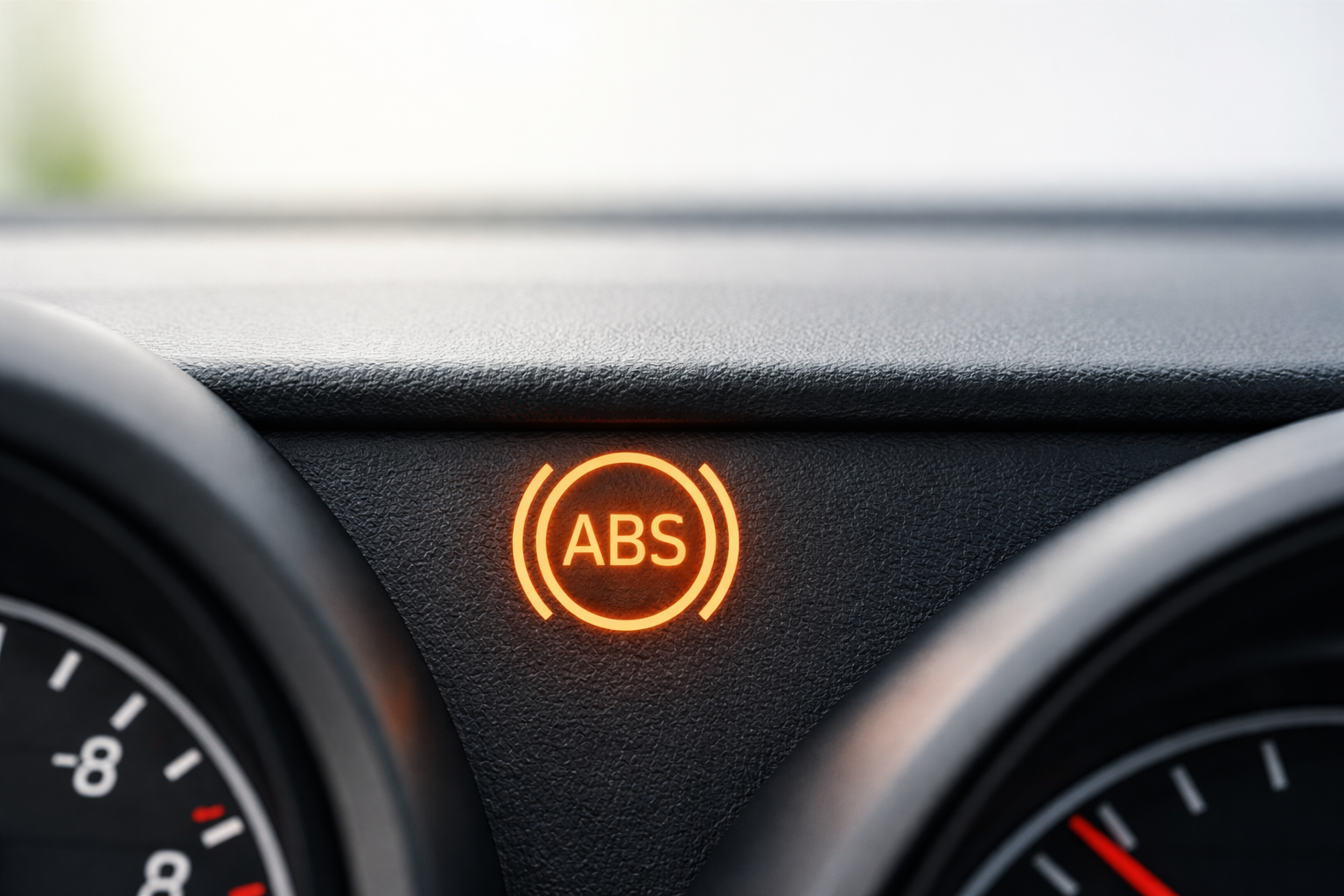
If the ABS light is on, The brakes will normally continue to work, but the anti-lock braking system may be deactivated. In an emergency braking situation, especially on wet or slippery roads, the wheels may lock, making the car more difficult to control.
If the car brakes normally and there are no other red lights, you can safely drive to a safe place or workshop. If the red brake light appears along with the ABS warning light, or the pedal changes behavior, stop as soon as it is safe to do so and have the braking system checked.
What you will learn:
- What does the ABS light on mean?.
- When you can keep driving.
- When it is better to stop instead.
- What are the most common causes?.
- What to check before going to the mechanic.
- How an OBD2 diagnosis can help you.
Index
ABS indicator light on: what it means
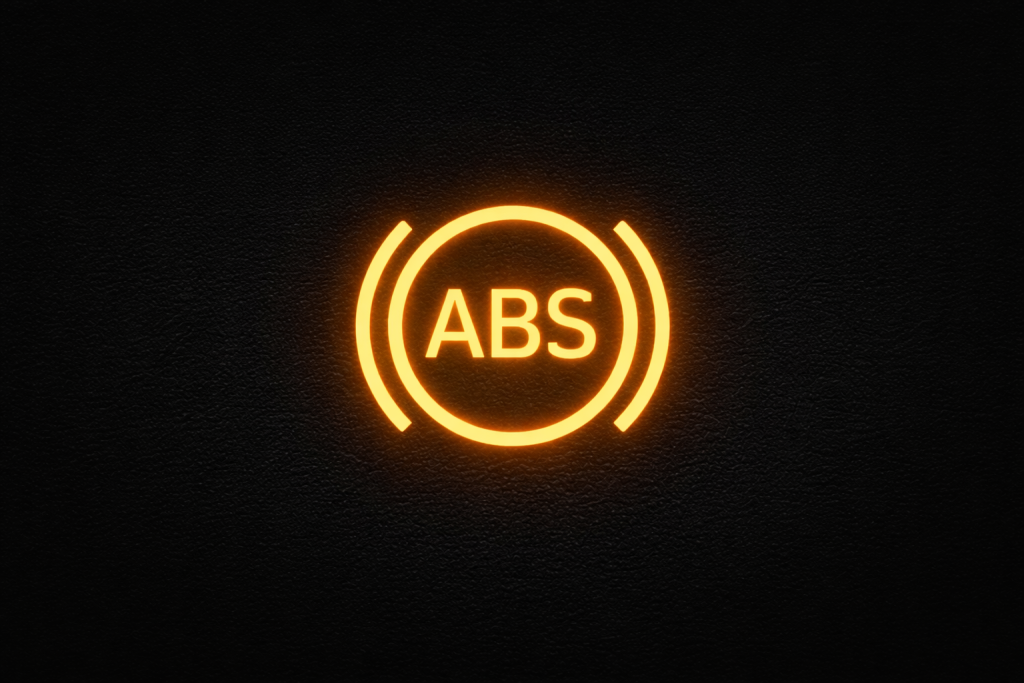
When the ABS warning light stays on while driving, the control unit has detected a fault in the anti-lock braking system.
The braking system may continue to function, but ABS may not intervene during heavy braking.
This means that, especially on wet or slippery surfaces, one or more wheels can lock up, making it more difficult to maintain control of the car.
When starting, however, it is normal to see the ABS light come on for a few seconds and then go off.
Can I drive with the ABS light on?
It depends on what's going on with the spy.
If:
- the car brakes normally;
- the pedal behaves as always;
- the red brake light is not on;
- you do not notice any abnormal noises or behaviors;
you can generally safely reach a workshop or a safe place.
In the meantime, avoid high speeds, sudden braking and, if possible, poor grip conditions.
When to stop
The situation requires more attention if:
- ABS and red brake light they are lit together;
- the brake pedal becomes abnormal;
- the car pulls to one side or loses stability when braking;
- unusual noises appear from the wheels;
- braking doesn't feel normal.
In these cases, do not consider the problem as a simple electronic fault.
If the red brake system warning light appears together with the ABS, read Brake system warning light on: what it means and when to stop.
What is the ABS system and what is it for?
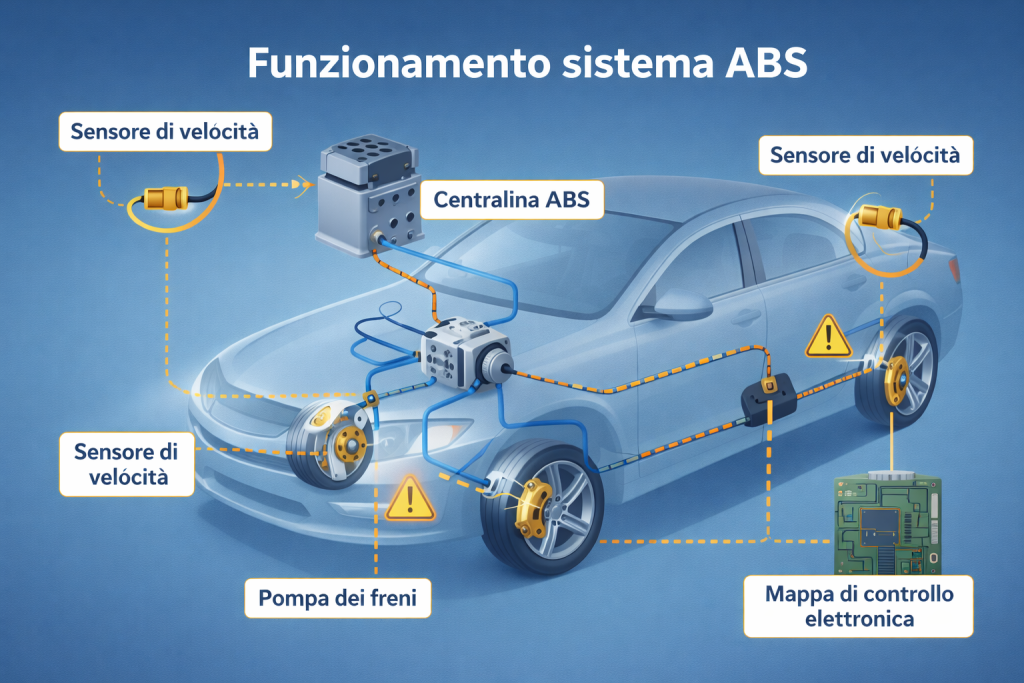
ABS means Anti-lock Braking System.
During heavy braking, sensors continuously monitor wheel speed. If a wheel is about to lock up, the system quickly adjusts brake pressure.
The main purpose is to allow the wheels to continue turning enough to maintain the ability to steer during an emergency stop.
For this reason, an ABS warning light on does not necessarily mean that the car is no longer braking: it means that an important safety feature may not be available.
Why does the ABS light come on?
There could be various causes. The most common ones involve sensors, electrical connections, or wheel components.
| Problem | Frequency | Repair |
|---|---|---|
| Dirty ABS sensor | Very common | Easy |
| Broken ABS sensor | Common | Average |
| Wheel bearing | Fairly common | Average |
| Weak battery | Occasional | Easy |
| ABS control unit | Rare | Difficult |
1 Dirty or broken ABS sensor
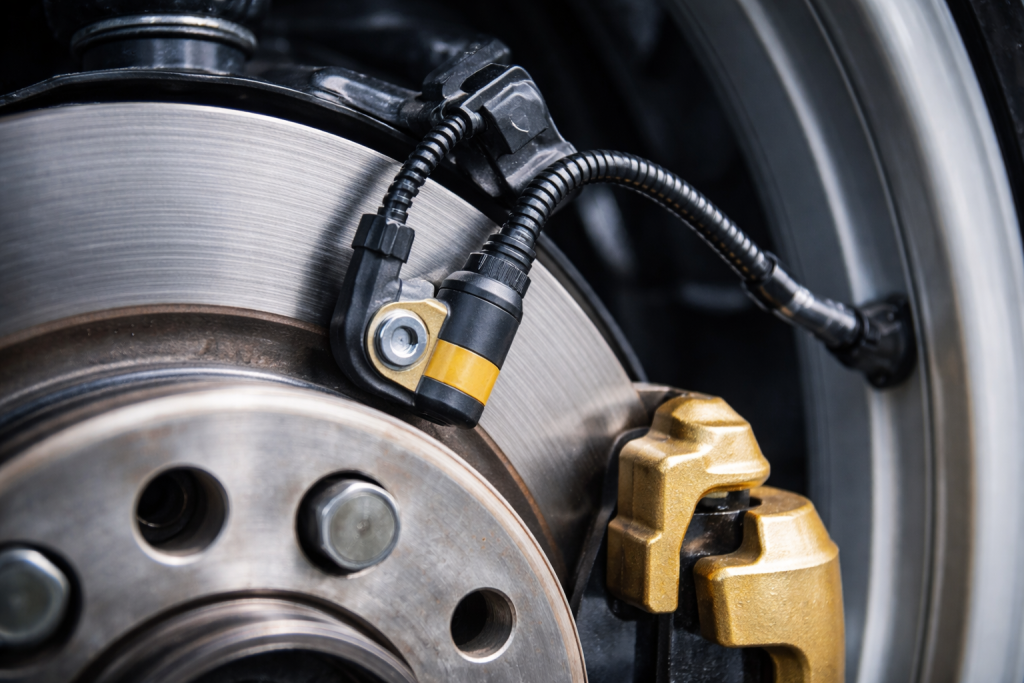
Each wheel uses a sensor to detect the rotation speed.
Mud, dirt, oxidation, damaged wiring or a faulty sensor can send incorrect data to the control unit and cause the warning light to come on.
The problem can also appear after work on bearings, brakes or suspension if a sensor or its wiring is damaged or incorrectly positioned.
2. Bearing or phonic ring
On some vehicles the signal used by the ABS is linked to the wheel bearing or the tone ring.
A worn, damaged, or incorrectly mounted component can therefore cause inconsistent readings.
Noises or vibrations coming from one wheel along with the ABS warning light are worth checking.
3. Weak battery or abnormal voltage
Too low a voltage, especially during start-up, can cause errors in the electronic control units.
If the light appeared after a discharged battery, difficult starting, or a battery replacement, it is also worth checking the voltage.
If you suspect a power supply problem, you can investigate further with How long does a car battery last? or Battery light on: what it means and what to do.
4. Fuse or wiring
A blown fuse, a oxidized connector, or a damaged wire can interrupt communication with one of the ABS components.
Fuse location and amperage vary from car to car: always check your vehicle manual.
5. ABS control unit or group
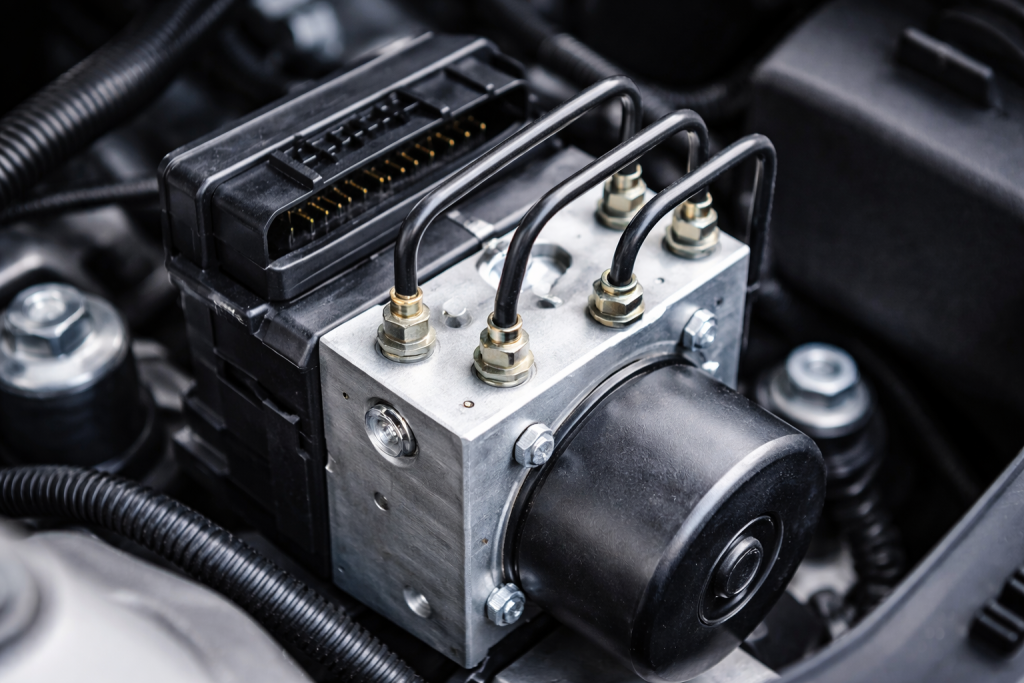
This is a less simple cause to verify.
An electronic or hydraulic problem in the ABS assembly can keep the light on and usually requires professional diagnosis before replacing any components.
ABS and ESP warning lights on together
ABS, ESP and traction control use different information from the same wheel sensors.
For this reason, a single problem can cause multiple warning lights to come on at the same time.
This does not necessarily mean that there are three different faults.
However, if the red brake light, the situation must be handled with greater caution and the braking system must be checked.
What to check right away
Before replacing any component:
- check if the light stays on after restarting;
- check if the ESP or brake light is also on;
- observe whether the brake pedal behaves normally;
- listen for any noises coming from the wheels;
- consider whether the problem appeared after a flat battery or work on the wheels, brakes or suspension;
- If possible, run an electronic diagnostic.
This allows us to greatly narrow down the possible causes without having to change parts by trial and error.
Diagnosis with OBD2 scanner
A diagnostic scanner compatible with ABS systems can help pinpoint the fault area.
The control unit can store codes relating, for example, to a wheel sensor or the ABS circuit.
But be careful: The code does not automatically prove that the sensor needs to be replaced. The same error can be caused by the sensor, the wiring, the connector, or the wheel reading system.
This is why the diagnosis is primarily useful as a starting point.
To understand the source of the error, an OBD2 scanner compatible with the ABS control unit can be useful. Before purchasing, however, check compatibility with your car: not all inexpensive adapters can read the ABS module.
HELPFUL TIP
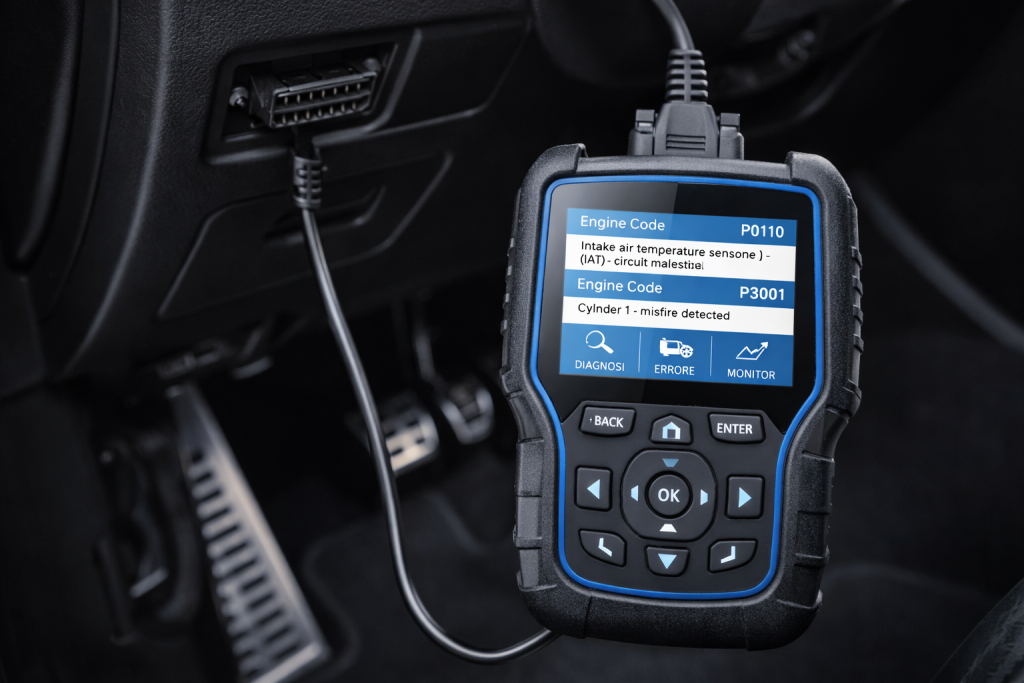
Bluetooth OBD2 Reader
It allows you to read many diagnostic codes available on the car's ECU via your smartphone. Before purchasing, check compatibility with your vehicle and the app you're using.
See on Amazon →
Mistakes to avoid
- Ignoring the light for weeks because the car appears to brake normally.
- Simply clear the error code.
- Change the sensor immediately without checking the wiring and wheel.
- Continue a journey if the red brake light also appears.
- Consider any OBD2 scanner automatically compatible with ABS.
How much does it cost to repair the ABS light?
The cost depends entirely on the cause.
A dirty connector, fuse, or wiring problem may require a relatively simple fix. A sensor or bearing requires a different job, while a faulty ABS unit can be much more expensive.
Because of this it is not advisable to start by replacing the components: first the fault must be identified through inspection and diagnosis.
In summary
La ABS indicator light on It does not necessarily mean that the car has completely lost its brakes.
However, it does mean that the anti-lock braking system may not be available just when it is needed most: during an emergency braking.
If the car brakes normally and no other red lights appear, drive safely to a safe location or repair shop and have the problem diagnosed.
ABS + red brake light or abnormal braking behavior = do not continue your journey normally.
To recognize the other dashboard warnings, read Car warning lights on: what they mean and what to do.

FAQ - Frequently Asked Questions
Can I drive with the ABS light on?
If the braking system is functioning normally and there are no other red lights, you can generally safely drive to a safe location or repair shop. However, avoid ignoring the problem.
ABS and brake light on together: can I drive?
This is a more serious situation than just the ABS light. If the red brake light appears or the braking system is abnormal, stop as soon as it's safe to do so and have the system checked.
Why does the ABS light come on and then go off?
It could be an intermittent fault, such as a loose electrical connection, a sensor occasionally providing incorrect data, or a voltage fluctuation. If the problem recurs, it's a good idea to get it diagnosed.
Can a dead battery turn on the ABS light?
Insufficient voltage during start-up can cause errors in the electronic control units, including the ABS. However, if the warning light stays on, don't assume the battery is necessarily the cause.
Can the ABS light come on after a pothole?
Yes. A collision can damage a sensor, wiring, or wheel components used by the ABS system. If the warning light appears immediately after a pothole or collision, report this detail during diagnostics.
Can rain cause the ABS light to come on?
Water and humidity can highlight existing problems with connectors or wiring. If the light appears during rain or high humidity and then disappears, the electrical connection still deserves a check.
Conclusion
The ABS warning light shouldn't be ignored, but it doesn't automatically mean an expensive repair is needed.
Often the problem could be related to a sensor, an electrical connection or a wheel component. The important thing is diagnose the cause before replacing parts by trial and error.
If the ABS light is the only warning and the car brakes normally, proceed with caution until it's checked. If the red brake light also appears or the braking behavior changes, consider the problem more urgent.


 Italian
  English