
Reading time: about 7 minutes
What you will learn:
- How to tell if your car's thermostat is stuck
- What symptoms should you not ignore?
- when the problem can become dangerous
- What to check before going to the workshop
- How much could the repair cost?
Have you ever seen your engine temperature rise for no apparent reason?
Or the opposite?
Engine that takes a very long time to warm up, almost non-existent cabin heating and higher-than-usual fuel consumption?
Many drivers immediately think of the radiator, fan, or coolant.
In reality, the culprit could be a small, inexpensive component: the thermostat.
When it blocks, it can compromise the entire cooling system and, in the worst cases, cause serious damage to the engine.
The good news is that symptoms are often obvious and allow for intervention before the problem becomes costly.
Immediate response
The car thermostat is a valve that regulates the flow of coolant between the engine and the radiator. If it gets stuck closed, the engine can overheat quickly. If it gets stuck open, the engine struggles to reach the correct temperature, increasing fuel consumption and wear. In both cases, it's advisable to have it checked as soon as possible.
The most common symptoms of a stuck car thermostat
If the thermostat is faulty you may notice:
- engine temperature too high
- engine not reaching normal temperature
- weak passenger compartment heating
- higher fuel consumption
- radiator fan working abnormally
Recognizing these symptoms early can prevent very costly engine damage.
Table of Contents
The 5 most common causes
In most cases the problem depends on:
- Thermostat wear
- Deposits in the cooling circuit
- Deteriorated coolant
- Internal corrosion
- Lack of system maintenance
Can I continue driving?
It depends on how the thermostat got stuck.
If it is stuck open, you can often continue driving for some time, although the engine will run poorly.
If it is stuck closed, however, the situation is much more dangerous.
The temperature can rise rapidly to the point of overheating.
In this case it is advisable to stop as soon as possible.

What is a thermostat and what is it used for?
The thermostat is an automatic valve that controls the circulation of the coolant.
When the engine is cold it remains closed.
This allows the engine to quickly reach the ideal operating temperature.
Once the correct temperature is reached, the thermostat opens and allows coolant to circulate in the radiator.
It seems like a simple component.
It is actually essential for the correct functioning of the engine.
How to tell if your thermostat is stuck
Engine temperature too high
It is the most dangerous symptom.
The needle rises rapidly and may approach the red zone.
👉 Read also Engine temperature warning light on: what to do immediately.
Engine never reaches normal temperature
If the thermostat is left open, the engine can take a very long time to warm up.
Weak cabin heating
Many drivers notice the problem in winter.
The hot air arrives very slowly or not at all.
Higher fuel consumption
An engine that runs too cold tends to consume more fuel.
Radiator fan always on
In some cases the system continuously tries to compensate for the problem.
👉 You may also be interested in the guide on Radiator fan always on: causes, risks, and solutions.

A very common example
Imagine a winter morning.
After twenty minutes of driving the engine temperature is still low.
The passenger compartment remains cool.
Windows fog up more easily.
Many think it's a heating problem.
Often, however, the thermostat remained stuck open.
Thermostat stuck open or closed: differences
Thermostat stuck open
Main symptoms:
- cold engine
- high consumption
- poor heating
- unstable temperature
Thermostat stuck closed
Main symptoms:
- rapidly rising temperature
- risk of overheating
- possible coolant leak
- engine temperature light on
This is the most dangerous situation.
What damage can a faulty thermostat cause?
A faulty thermostat is more than just a minor inconvenience.
If it gets stuck closed it can cause:
- engine overheating
- head gasket damage
- coolant leak
- header deformation
- expensive engine repairs
👉 If the temperature rises rapidly, also consult the guide Car overheating: what to do immediately.
If it remains stuck open, it can cause:
- higher consumption
- increased engine wear
- inefficient cabin heating
- lower performance
- increase in emissions
Intervening quickly is almost always the most economical solution.
How to check the problem

Check the engine temperature
Observe the behavior of the needle while driving.
Check the cabin heating
If it takes too long to produce hot air, there may be a problem.
Check the coolant
An insufficient level can make the situation worse.
👉 Read also Low coolant: symptoms and risks.
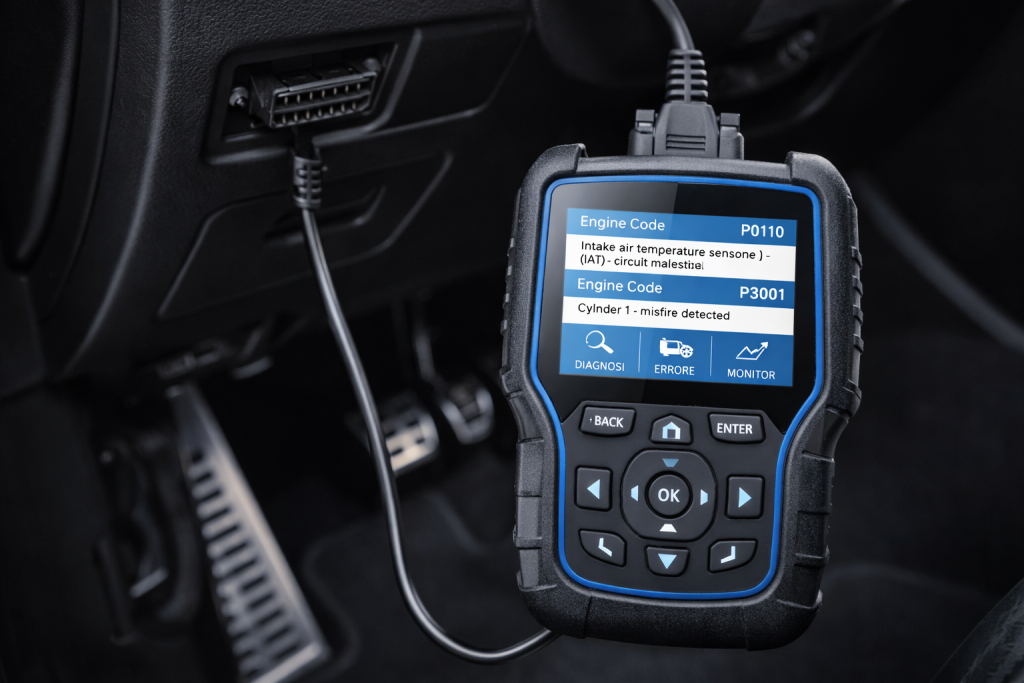
Perform an OBD diagnosis
A diagnostic scanner can identify any engine temperature-related errors.
What to do now
If you suspect a stuck thermostat:
- monitor engine temperature
- check the coolant level
- avoid long journeys if the temperature rises too much
- perform an electronic diagnosis
If the engine overheats:
- stop as soon as possible
- turn off the engine
- wait for it to cool down
- do not open the radiator cap when hot
What NOT to do
Don't ignore the high temperature
It's the quickest way to cause engine damage.
Don't continue driving with the red light on
The risk of serious damage increases rapidly.
Don't keep topping up the fluid without looking for the cause
You may be hiding the problem without solving it.
Don't replace components at random
Before purchasing spare parts it is always best to carry out a diagnosis.
Useful products to identify the problem
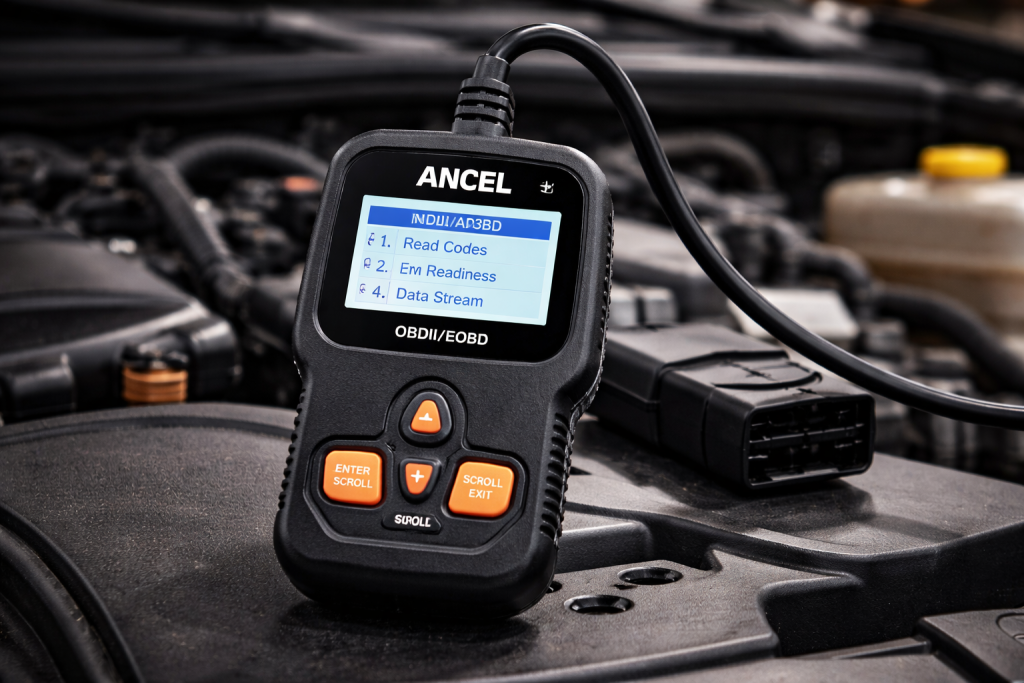
Bluetooth OBD2 Scanner
Coolant

Digital laser thermometer

When it is dangerous to continue driving
Do an immediate check if you notice:
- temperature close to the red zone
- coolant leak
- engine temperature light on
- steam from the engine compartment
- smell of hot coolant
👉 Also see the guide on engine temperature light on.

How much does the repair cost?
Thermostat
From 20 to 100 euros.
Labor
From 50 to 200 euros.
Complete intervention
From 80 to 300 euros in most cases.
Compared to damage caused by overheating, this is often a relatively inexpensive repair.
When to go to the mechanic
Book a check-up if:
- the temperature is unstable
- the engine gets too hot
- the heating is not working properly
- a warning light appears on the dashboard
- the problem occurs frequently
Attention
Never open the radiator cap or coolant reservoir cap when the engine is hot.
The pressure in the circuit can cause the sudden release of boiling liquid and cause serious burns.

FAQ - Frequently Asked Questions
Can a stuck thermostat cause the engine to overheat?
Yes. If it remains closed, the coolant cannot reach the radiator.
Can I drive with the thermostat stuck open?
For short periods, yes, but the engine will be working in less than optimal conditions.
How long does a car thermostat last?
Generally between 100,000 and 200,000 km, but it depends on the vehicle and maintenance.
Can the thermostat increase consumption?
Yes. An engine that runs too cold tends to consume more fuel.
Can a faulty thermostat turn on the engine light?
Yes. Many modern vehicles detect anomalies in operating temperature.
Can your car thermostat suddenly break?
Yes. In many cases, the fault appears without obvious signs, especially on vehicles with high mileage or irregular coolant maintenance.
How long does it take to replace a thermostat?
In most cars, replacement takes 30 minutes to 2 hours, depending on the location of the component and the complexity of the job.
Conclusion
The thermostat is a small but essential component.
When it stalls it can cause problems ranging from high fuel consumption to engine overheating.
Recognizing the symptoms early almost always allows you to avoid more costly damage and keep your cooling system efficient.
You may also be interested in
👉 Car radiator fan not working: symptoms, causes, and what to do immediately
👉 Radiator fan always on: causes, risks and solutionsi
👉 Car overheating: what to do immediately
👉 Low coolant: symptoms and risks
👉 Dirty car radiator: symptoms and solutions
Often, simple preventative maintenance can avoid much more expensive repairs.


 Italian
  English