

Reading time: 7 minutes
Immediate response
Why won't the car start but the lights come on?
If the instrument panel or headlights come on but the engine does not start, the battery may still be dead or deteriorated.
Lights generally require much less current than the starter motor.
Other possible causes are oxidized terminals, faulty ground connections, starter motor problems, or failure to authorize ignition.
What to do immediately: Listen to what happens when you try to start the engine. Do you hear a clicking sound, does the engine turn slowly, or does nothing happen?
This difference helps to identify the next control.
What you will learn:
Because the lights work even with a weak battery.
What do clicking, silent, and slow start mean?.
What checks to do without dismantling components.
How to distinguish between a battery and a starter motor.
When a booster can be useful.
When to ask for assistance.
Index
You turn the key or press the Start button.
The dashboard lights up, the radio works, and maybe even the headlights come on normally.
But the engine doesn't start.
The first reaction is to think, «If the lights work, the battery is good.».
In reality, this is not always the case.
A battery can power the lights without being able to provide the current needed for starting.
Before buying spare parts, it's a good idea to understand how your car performs.
Why do the lights come on but the car won't start?
In a traditional car, the headlights, radio, and instrument panel are powered by the 12-volt electrical system.
The starter motor also uses the battery, but requires a much higher current.
A deteriorated battery may maintain a seemingly normal voltage under small loads and experience a sharp voltage drop during cranking.
This is why the headlights may appear bright even when the battery is unable to crank the engine properly.
The same behavior can occur with oxidized terminals or faulty electrical connections.
The lights on are not a sign of battery health.
If you suspect an electrical problem, also read our guide Battery or alternator? How to tell which is bad., useful for distinguishing a battery problem from a charging defect.
Car won't start but the lights come on: 4 signs to watch for
Before carrying out checks, pay attention to the vehicle's behavior.
| What's happening | Possible causes |
|---|---|
| The motor turns slowly | Weak battery, bad connections or motor |
| You hear repeated clicks | Insufficient power or bad connections |
| You hear just one click | Solenoid, motor or power supply |
| You don't feel anything | Start command, authorization, relay or electrical circuit |
These symptoms are intended to guide the diagnosis, not to identify a faulty component with certainty.
What if the motor runs normally?
If the starter motor cranks the engine at normal speed, but the engine does not start, you must also consider the fuel supply, ignition, sensors and electronic management.
In this case, replacing the battery without further checks may be useless.
For an overview of other possible causes, see the guide Why the car won't start: causes and what to check.
The 6 most common causes
1. Battery discharged or damaged
It is one of the first elements to check.
A battery can become weak due to:
Aging.
Long periods of inactivity.
Short and frequent journeys.
Low temperatures.
Problems in the charging system.
During the winter the problem can become more evident because the low temperatures reduce the battery's performance.
Typical signal: The lights work, but the motor turns slowly or you hear repeated clicking sounds.
Don't replace the battery right away. It's a good idea to check its condition first.

2. Oxidized or loose terminals
The terminals connect the battery to the electrical system.
If they are oxidized or loose, they can create a high resistance to the passage of current.
The current may be enough to power the lights, but not to operate the motor properly.
What to check: With the engine off, check for any whitish or greenish deposits, damaged cables, or apparently loose connections.
Do not operate the terminals if you do not know the correct procedure provided by the manufacturer.
3. Faulty ground connection
The ground circuit allows the current to return to the battery.
A oxidized, loose, or damaged connection can cause a voltage drop during start-up.
Symptoms may be similar to those of a weak battery.
Possible signs include slow starting and intermittent electrical problems.
To confirm the fault, it may be necessary to measure the voltage drop under load.
4. Starter motor faulty
The small motor is used to rotate the heat engine.
When it has a problem, you can hear a clicking sound without the motor being dragged.
In other cases, operation may be intermittent.
Possible causes include internal wear, solenoid failure, and power supply problems.
Attention: A single click does not automatically prove that the motor is faulty.
A weak battery or a faulty connection can also produce the same symptom.

To learn about the specific symptoms of the component, read the guide Faulty starter motor: symptoms and what to do.
5. Start control problem
Many modern cars only allow starting when certain conditions are met.
For example:
Automatic gear shift in P or N.
Brake pedal pressed.
Clutch pressed, when applicable.
Electronic key recognized.
If any of these conditions are missing, the system may not operate the motor.
Check any messages on the dashboard and consult the vehicle manual.
6. Power or engine management problem
If the starter motor turns normally, but the engine does not start, the cause may lie elsewhere.
Among the possibilities are:
Fuel supply.
Ignition system.
Crankshaft position sensor.
Electronic management.
Immobilizer.
In these cases, electronic diagnosis may be necessary.
It is not correct to automatically attribute the problem to the battery.
What to check immediately when the car won't start
Before calling roadside assistance, you can perform some simple checks.
1. Secure the vehicle
Make sure your car is parked in a safe place.
Apply the parking brake and check that the gear lever is in the correct position.
If you are in a dangerous area, avoid checking the engine compartment.
2. Observe the lights during start-up
If the instrument panel or headlights dim significantly when you try to start, a severe voltage drop may occur.
It's a clue, not a diagnosis.
A weak battery, a faulty connection, or abnormal current draw can produce similar symptoms.
3. Listen to the engine
If it turns slowly, the first checks concern the battery and the starting circuit.
If it runs normally, the troubleshooting must also consider other systems.
4. Read any messages
Some vehicles display problems with the electronic key, gearbox, or start authorization.
Please read the message before making any further attempts.
5. Don't insist repeatedly
Continuing to crank the starter motor can further discharge the battery and overheat the components.
If the engine doesn't start after a few reasonable attempts, stop.
How to Test Your Battery with a Multimeter
A multimeter can help you determine if your battery is seriously discharged.
For a normal 12-volt lead-acid battery, with the engine off and after a rest period, the indicative values are:
| Resting tension | Indication |
|---|---|
| 12.6–12.8 V | Generally well charged |
| About 12.4 V | Partial charge |
| About 12.2 V | Reduced charge |
| 12.0 V or less | Very low |
These values may vary depending on technology, temperature and measurement conditions.
Can a battery have 12.6V and still be bad?
Yes.
The quiescent voltage does not prove that the battery is capable of supplying the current required by the motor.
A deteriorated battery may show a seemingly correct voltage and fail under load.
For a reliable verification, a specific battery test and measurements during start-up may be necessary.
For hybrid and electric cars, the procedures may be different: always follow the manufacturer's instructions and do not work on high-voltage circuits.
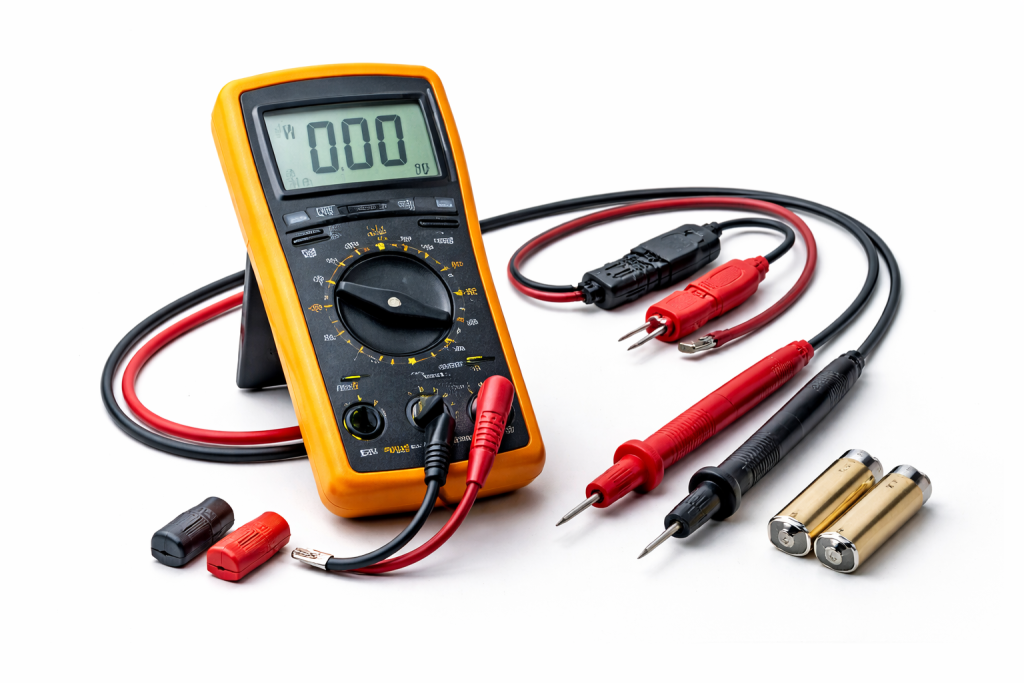
To check quiescent voltage, a digital multimeter with adequate protection can be useful. It's a simple tool to use for those who know the correct measurement procedures.
HELPFUL TIP
Digital multimeter for cars
Useful for checking battery voltage and carrying out simple checks on the electrical system.
See on Amazon →
Battery or starter motor? How to tell the difference
Vehicle behavior can help determine the next check.
When to suspect the battery
Slow start.
Repeated clicks.
Sharp dimming of the lights.
More obvious problems with the cold.
Battery already discharged in the previous days.
In these situations, you need to check the battery and connections.
When to suspect the scooter
The battery passes an appropriate test.
The main connections are efficient.
The motor receives the command correctly.
The motor does not turn or works intermittently.
The fault must be confirmed with appropriate electrical checks.
Don't replace the starter motor just because you hear a clicking sound.
If the main symptom is a clicking sound when trying to start, please read the guide further. Car clicks but won't start: causes and checks.
Can you start your car with a booster?
If the problem is due to a flat battery, a compatible booster can allow starting.
First check:
That the manufacturer allows the procedure.
That the booster is suitable for the vehicle.
That the connection points are correct.
That there is no obvious damage to the battery.
If the battery is swollen, leaking, frozen, or damaged, do not attempt to jump-start it.
Even when the engine starts again, it is important to understand why the battery has discharged.
A booster does not repair a damaged battery or a defect in the charging system.
If your vehicle supports jump starting from a 12-volt battery, a compatible booster may be useful to keep in your car. Check your vehicle and device specifications before purchasing.
HELPFUL TIP
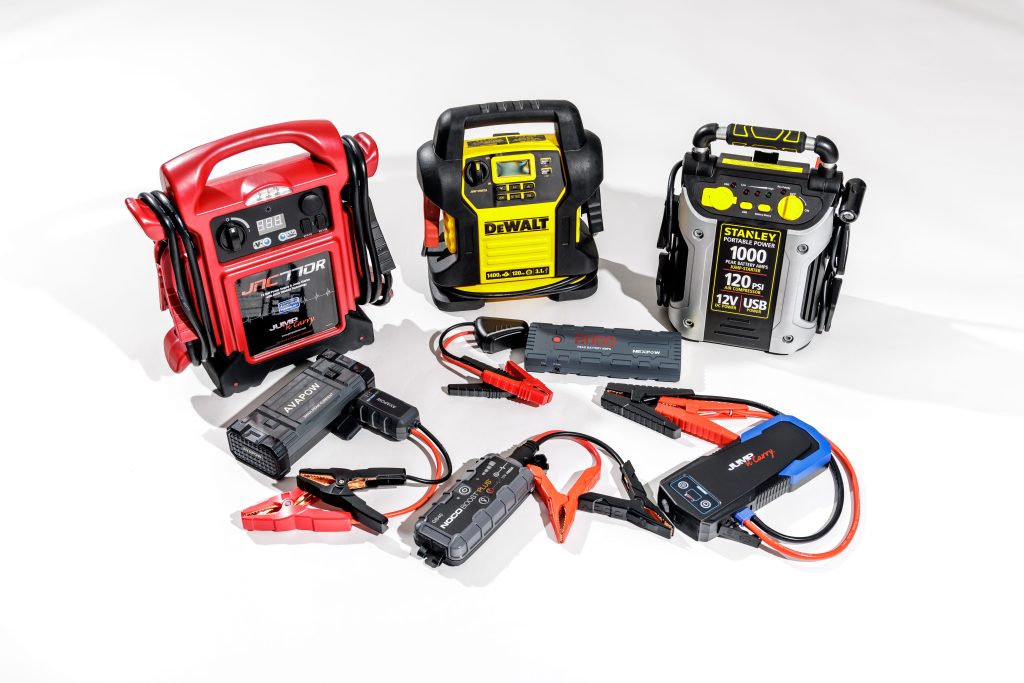
Portable jump starter
Useful for attempting to start a flat battery without necessarily having to connect a second car.
See on Amazon →
Five mistakes to avoid
Change the battery immediately
Failure to start is not sufficient evidence to replace it.
Persist with the key
Repeated attempts may make the situation worse.
Ignore the electrical connections
A faulty clamp or ground connection can mimic a battery failure.
Replacing the starter motor without diagnosis
One click is not enough to condemn him.
Using starter spray without knowing the fault
Jumpstart sprays do not solve battery or scooter problems.
Improper use, especially on some modern diesels, can be dangerous.
When to call the mechanic
It is appropriate to ask for assistance when:
The battery is good but the engine doesn't start.
You hear abnormal mechanical noises.
The problem occurs intermittently.
Error messages appear.
Damaged cables are visible.
The car still won't start after initial checks.
If you notice smoke, overheating cables, or a strong burning smell, stop attempting to connect immediately.
Under these conditions, do not use the vehicle until the problem has been verified.
In summary
If the car won't start but the lights come on, the battery isn't automatically ruled out.
Initial checks include:
Behavior of the scooter.
Battery and connections.
Ground clamps and cables.
Command and start authorization.
Any messages on the board.
The most important distinction is whether the starter motor does not turn or whether the engine cranks normally but does not start.
This information helps avoid unnecessary substitutions.

FAQ - Frequently Asked Questions
If the lights come on, is the battery good?
Not necessarily. A battery can power the lights without providing enough current to start the engine.
Why does the dashboard light up but the motor doesn't turn?
Causes may include a weak battery, faulty electrical connections, starter control or starter motor failure.
If I hear a clicking sound, do I need to replace the motor?
No. First you need to check the battery, power supply and connections.
Can a battery read 12.6 volts and still be bad?
Yes. The quiescent voltage does not demonstrate whether the battery is efficient under load.
Can cold weather prevent starting even with the lights on?
Yes. Cold temperatures reduce battery performance and can make starting more difficult.
What if the engine runs normally but the car doesn't start?
There could be a problem with the fuel supply, ignition, sensors, or electronics. A specific diagnosis is required.
Conclusion
When the lights come on but the engine doesn't start, it doesn't automatically mean that the battery is good or that the starter motor is faulty.
The problem could be caused by a weak battery, faulty electrical connections, or another component of the starting system.
Before buying spare parts, observe how the car behaves and try to identify the circuit involved.
A proper check can avoid unnecessary expenses and help you resolve the fault more quickly.
Continue reading on Consutil
Want to better understand your car's starting and electrical problems?
Visit the category Cars and Motorcycles by Consutil, where you can find guides dedicated to the battery, alternator, starter motor, and the most common faults.


 Italian
 English