

Reading time: 7 minutes
Immediate response
A car engine noise Just because the engine is new doesn't automatically mean it's about to break down. Ticking, knocking, whistling, and rattling noises could be caused by the oil, belts, timing belt, turbo, mounts, or other components.
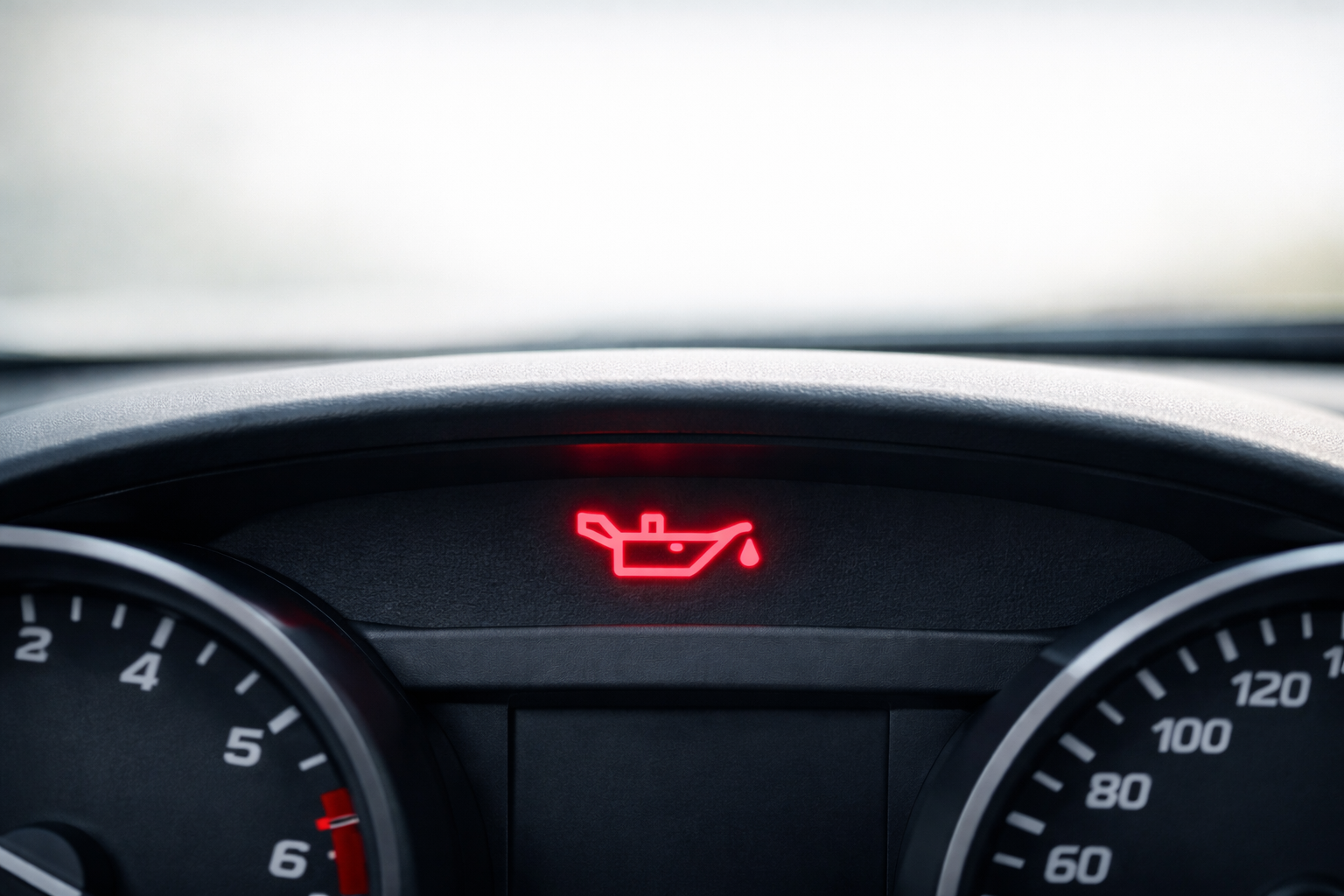
Stop as soon as it is safe to do so If the noise is sudden and loud or appears along with a red light, abnormal temperature, severe loss of power, smoke, or very intense vibrations, don't ignore it and schedule a checkup.
What you will learn:
- How to distinguish the most common noises.
- What a ticking noise could mean.
- What could cause a metallic knock?.
- What to check if you hear a whistling or rattling noise.
- When it is safe to stop.
Index
Car Engine Noises: Meaning in Brief
Before looking for a precise cause from the sound alone, observe when the noise appears and how the car behaves.
| Noise | Possible causes | What to do |
|---|---|---|
| Ticking | oil, tappets, valves, injectors | check the oil and see if it changes when hot |
| Metallic beat | abnormal combustion or mechanical problem | if strong or sudden, stop safely |
| Whistle | belt, turbo, pulleys, air leak | check if it increases by accelerating |
| Rattling | distribution, tensioner, loose accessories | have it checked if it persists |
| Vibration + noise | supports, engine or transmission | check if it is new or branded |
| Breath | intake or exhaust | check for any power loss |
When to Stop Immediately for an Engine Noise
The type of noise alone is not always enough to decide whether to continue driving.
It becomes more important when it appears together with other signals.
Stop as soon as possible in a safe place if:
- an important red light appears;
- the engine temperature rises abnormally;
- you hear a sudden loud metallic noise;
- the engine loses a lot of power;
- smoke or burning smell appears;
- the vibrations become very strong;
- the noise gets worse rapidly.
If you hear a slight noise, the car is operating normally, and no warning lights or other symptoms appear, it doesn't necessarily mean you need to stop immediately.
However, it remains to be understood why that noise appeared.
Where does the noise come from?
Before thinking about the cause, try to understand which area it comes from.
Keep hands, clothing, or objects away from belts, fans, and other moving parts.
Front of the engine
A whistling, squealing, or buzzing sound can come from:
- service belt;
- pulleys;
- alternator;
- water pump;
- air conditioning compressor.
Upper part
A ticking noise can be linked to several components in the upper part of the engine, but injectors and other systems can also produce regular noises.
Because of this a ticking sound does not automatically indicate a valve problem.
Lower part
Deep or metallic knocking requires more attention because it can, in some cases, be related to internal engine components.
Aspiration, turbo or exhaust
Whistling and hissing noises can come from hoses, ducts, manifolds, turbocharger, or exhaust.
Understand when the noise appears It is often more useful than trying to identify it by ear alone.
1. Cold engine ticking: what could it mean?
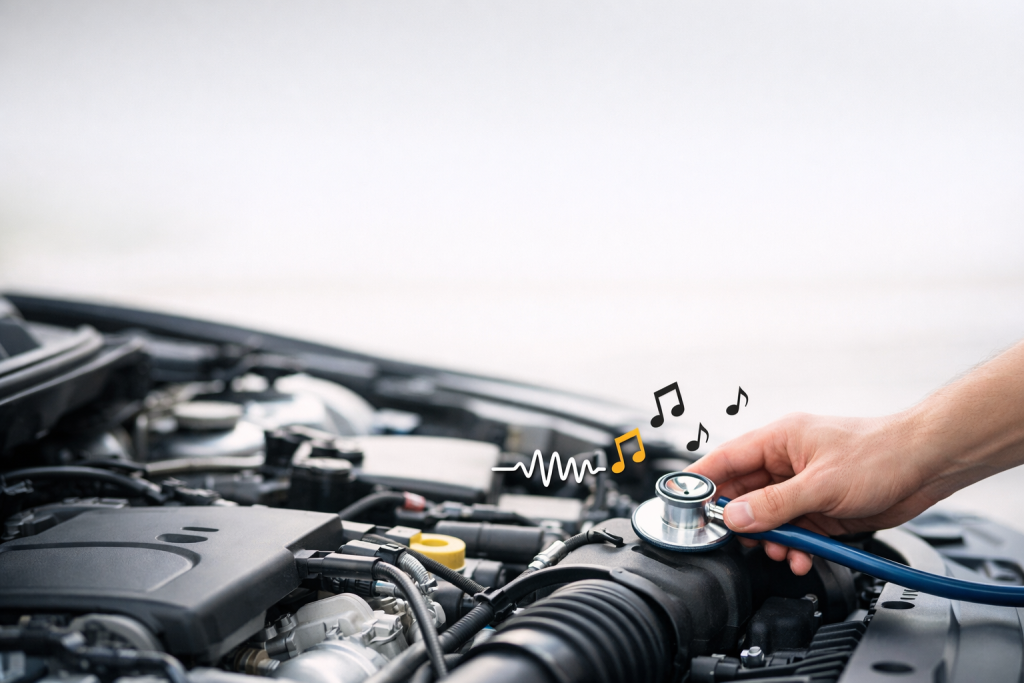
A cold engine ticking It can have various causes:
- low oil level;
- non-compliant or deteriorated oil;
- tappets or valves;
- injectors;
- components that change noise level with temperature.
Some engines typically produce more noise in the first few seconds after starting.
What matters is to understand if the sound is new, persistent, or increasing.
When to worry
Have it checked if the ticking:
- it appeared suddenly;
- get stronger;
- continues even with a hot engine;
- he is accompanied by spies;
- appears together with irregular functioning.
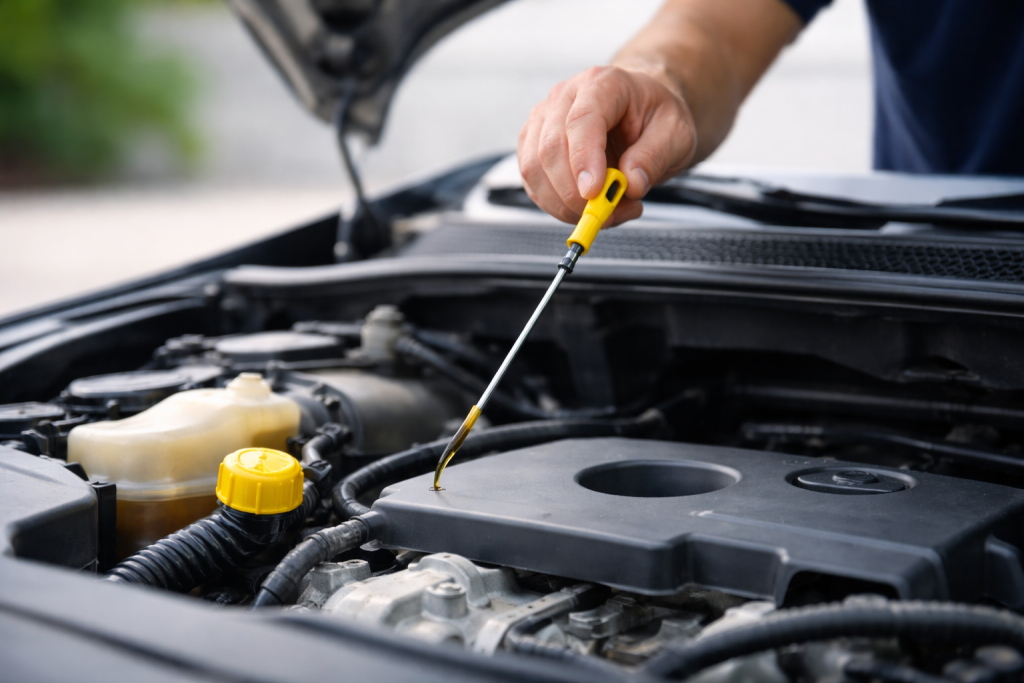
The first simple check is to correctly check the oil level following the instructions provided for the car.
If a red oil pressure light appears, the problem should not be treated as a simple ticking.
2. Metallic knocking of the engine
A metallic knock can have various origins.
It may be related to combustion, while a deep noise synchronized with the engine speed may require a mechanical check.
Possible causes include:
- abnormal combustion;
- lubrication problems;
- mechanical games;
- worn or damaged internal components.
When to stop
If the heartbeat is strong, new and growing rapidly, especially in conjunction with loss of power, warning lights, or oil pressure abnormalities, do not continue driving to see if it goes away.
Stop safely and have your vehicle checked.
3. Engine whistling when accelerating
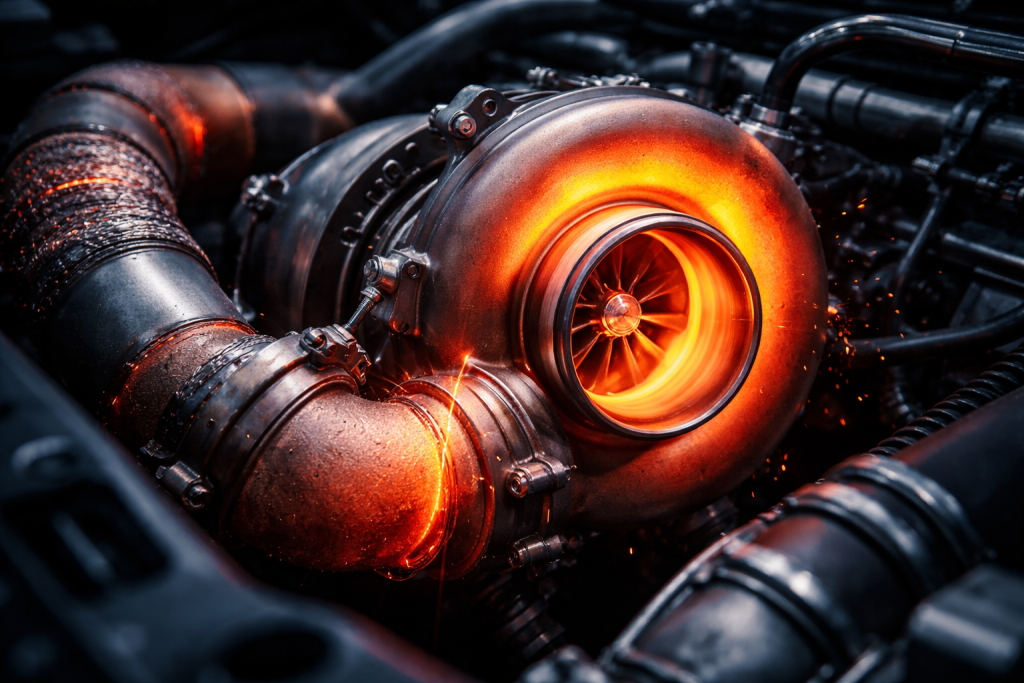
A whistling sound that changes with revs or load can come from multiple places.
Possible causes:
- turbocharger;
- air ducts or sleeves;
- service belt;
- pulleys;
- aspiration;
- leaks in the boost circuit.
Some turbo hiss may be normal on some cars.
It is more important to understand whether the noise is it new or has it suddenly become much more noticeable.
If the whistling sound is accompanied by loss of power, smoke, or other symptoms, it is necessary to have it checked.
If you're considering a turbo cleaner, always check that it's compatible with your engine and follow the manufacturer's instructions. An additive can't repair a damaged turbine or mechanical failure.
HELPFUL TIP
Turbo cleaning additive
See on Amazon →
4. Clanking or clanking noise
A rattling noise can come from many different components.
Possible origins:
- timing chain or tensioner;
- belts and related components;
- thermal protections;
- pulleys;
- exhaust parts;
- other loose components.
A clanking noise It does not automatically mean that the problem is distribution.
If it is persistent, increases with revs or seems to come from the timing area, it is best to have it checked quickly.
5. Engine noise only when cold
Some noises are more noticeable immediately after start-up and decrease as the engine reaches operating temperature.
This may depend on:
- initial oil circulation;
- engine features;
- play and expansion of the components;
- injection systems;
- accessories.
A noise that lasts a few seconds and that the engine has always produced does not have the same meaning as a new noise that becomes progressively louder.
If it changes from the car's normal behavior, it's worth looking into.
6. Engine noise when accelerating
If the noise appears mainly under acceleration, also observe:
- if it increases with the revs;
- if it appears only under heavy load;
- if the car loses power;
- if you feel vibrations;
- if warning lights appear;
- if there is smoke.
Possible causes may involve the engine, turbo, intake, exhaust, mounts, or transmission.
The timing of the noise is a clue, not a diagnosis.
7. Noise accompanied by vibrations
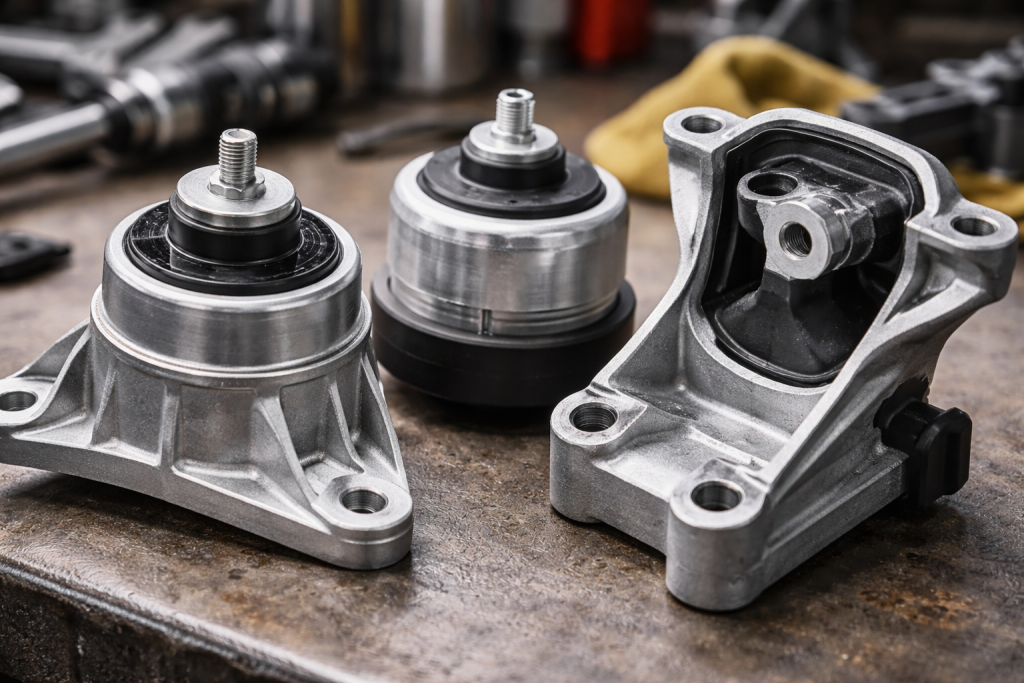
Noise and vibrations together can depend on the engine mounts, but not only.
Possible causes include:
- deteriorated media;
- engine misfires;
- power or ignition problems;
- transmission components;
- other mechanical elements.
If the vibration is new, strong, or increases rapidly, it's best to have your car checked.
8. Blowing noise
A blowing noise coming from the engine compartment can be linked to:
- leaks in air ducts;
- collectors;
- gaskets;
- exhaust system;
- turbo circuit on supercharged engines.
If it appears together with a loss of power or noticeable changes in operation, the cause must be identified.
Do diesel and petrol make different noises?
Yes. Not all engines have the same normal noise.
Diesel engine
A diesel may have a more pronounced running and more noticeable combustion noise, especially when cold.
What matters above all is a change from his usual noise.
Petrol engine
Many gasoline engines run smoother and quieter, but even then, injectors, valve trains, and other components can still produce normal noises.
The most useful comparison is therefore not between diesel and petrol, but between what does that engine normally sound like and what has changed.
What to check immediately for safety
Before thinking about a repair, you can gather some useful information.
Check:
- any warning lights on the dashboard;
- engine temperature;
- oil level according to the expected procedure;
- coolant level only under the conditions indicated by the manufacturer and without opening the hot circuit;
- any leaks under the car;
- presence of smoke or unusual odors.
Then try to understand:
When did it start? Cold or hot? At idle or accelerating? Does it change with revs? Does it appear with the air conditioning on?
This information is also useful when you need to describe the problem to the mechanic.
OBD2 Scanner: Can It Identify Noise?
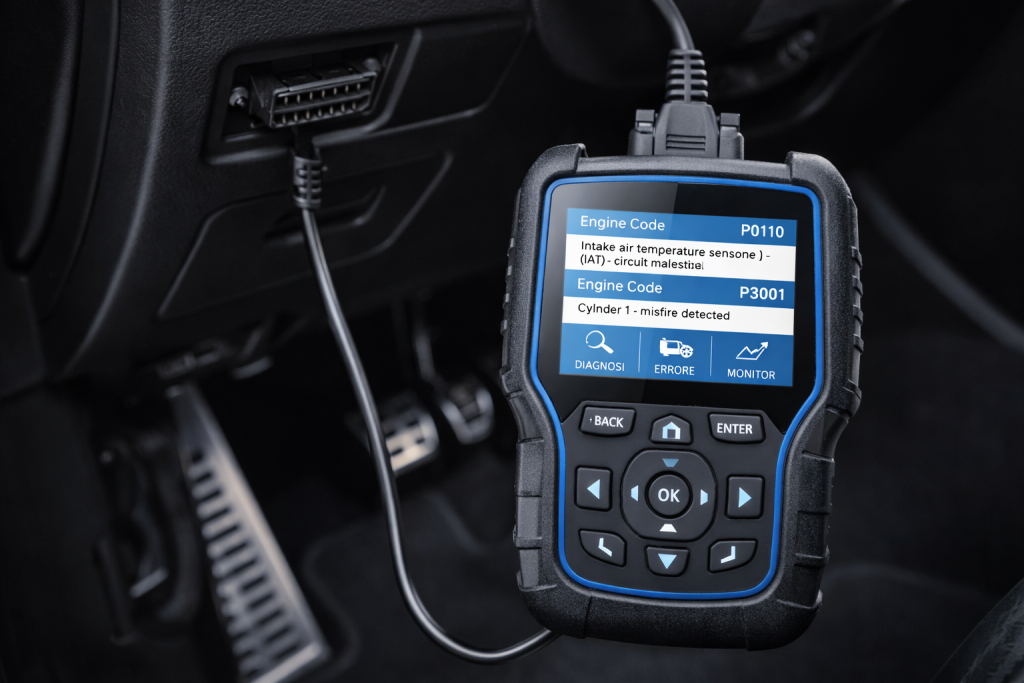
An OBD2 scanner does not directly identify a mechanical noise.
However, it can be useful when the problem is accompanied by an engine warning light or electronic anomalies, because it allows you to read the error codes available on the supported systems.
A fault code is a starting point for diagnosis, not proof that a particular component needs to be replaced.
If you want to read any error codes yourself when a warning light appears, an OBD2 scanner can be a useful tool. However, it's not a substitute for diagnosing a mechanical noise.
HELPFUL TIP
OBD2 diagnostic scanner
See on Amazon →
Can oil cause engine noise?
Yes. Improper lubrication can affect noise and, in some cases, be associated with major problems.
But that doesn't mean that adding oil will fix any ticking or knocking.
Check the level first. If topping up is necessary, use oil that meets the engine's specifications.
If, however, the level continues to drop or an oil pressure warning light appears, the cause must be identified.
If you need to buy oil for top-up or maintenance, don't just choose based on the viscosity indicated on the package: also check the specifications required by your car manufacturer.
HELPFUL TIP
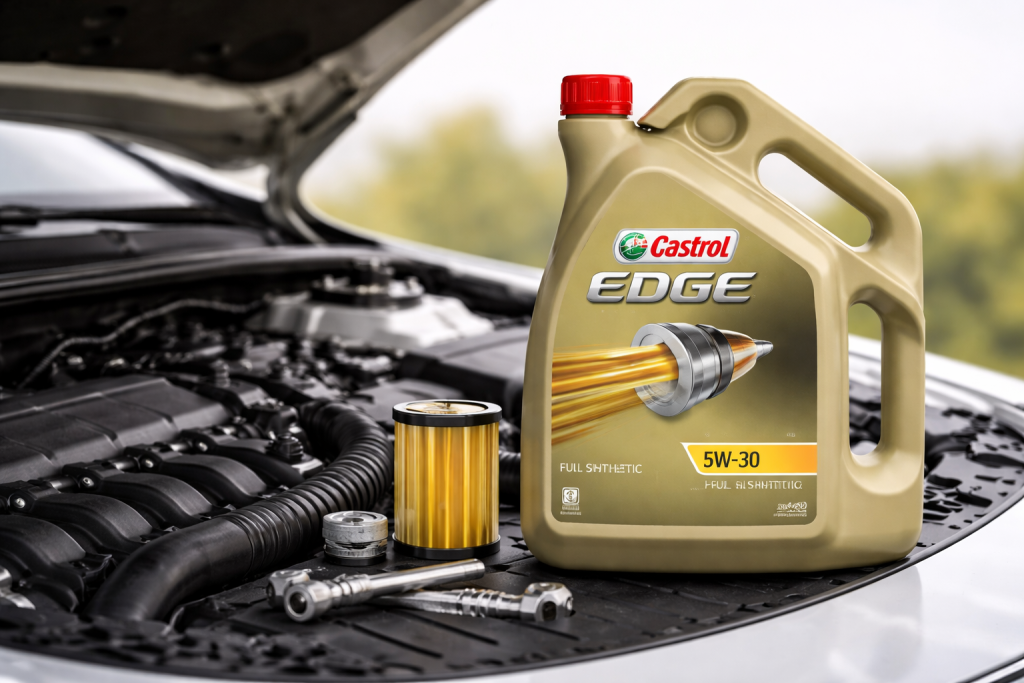
Synthetic engine oil
See on Amazon →
Engine cleaner additive: can it eliminate noise?
An additive or cleaning product should not be used as a method to “cure” an unknown noise.
A noise can have mechanical, electrical, distribution, turbo, accessory or many other origins.
There are specific products for periodic engine cleaning, but don't use them to mask an unknown noise. A mechanical problem must be ruled out first.
HELPFUL TIP
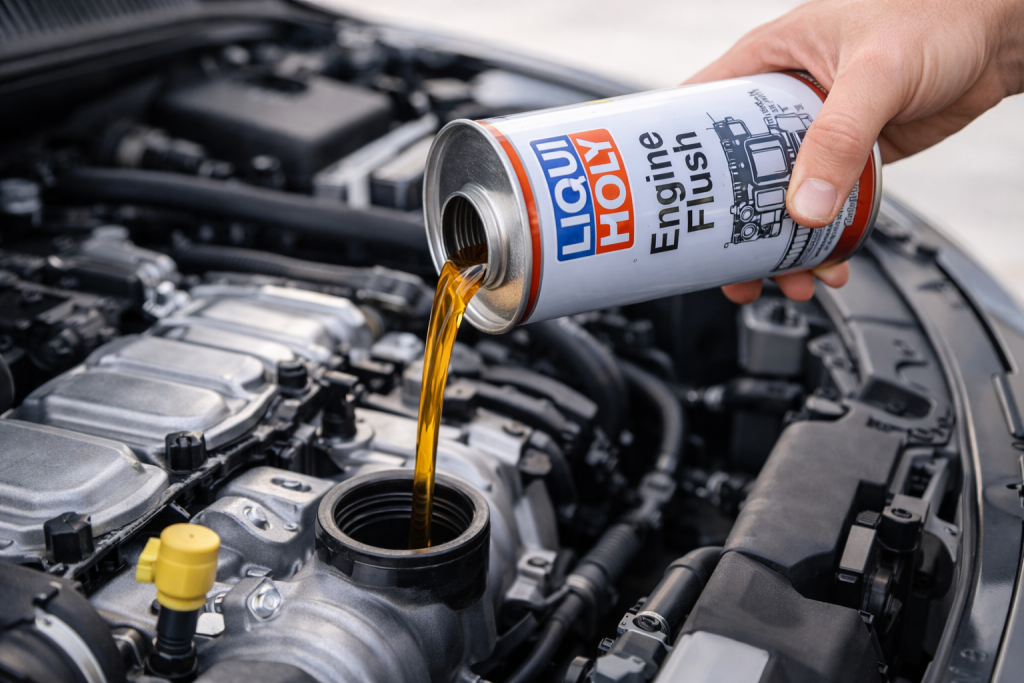
Engine cleaning additive
See on Amazon →
Engine noise: when a diagnosis is needed
Have your car checked especially when the noise:
- it's new;
- persists;
- increases over time;
- changes with the turns;
- appears together with a spy;
- it is accompanied by loss of power;
- appears together with smoke or abnormal temperature.
There's no need to wait for it to get really strong.
At the same time, It is not possible to determine from a simple “tick”, “tock” or “whistle” which component is faulty.
A correct diagnosis includes the noise, the conditions in which it occurs, visual checks, any error codes, and mechanical checks.
In summary
If you feel a car engine noise that you had never noticed:
- watch when it appears;
- check lights and temperature;
- check the oil level correctly;
- don't ignore a noise that gets worse;
- avoid diagnoses based on sound alone;
- Stop safely if important signs appear simultaneously.
A slight noise does not automatically mean a broken engine. But a new and persistent change deserves attention.

FAQ – Frequently Asked Questions
Is it normal for the engine to make noise when cold?
Some engines are louder in the first few seconds after starting. However, if the noise is new, lasts longer than usual, increases, or persists even when the engine is warm, it's a good idea to have it checked.
Can I drive with a light ticking?
It depends on the cause and other symptoms. If there are no warning lights, abnormal temperatures, or loss of power, a light ticking doesn't automatically mean you need to stop immediately. Check the oil and have the noise checked if it persists.
What does a metallic knock from the engine mean?
It could be due to combustion or mechanical problems. A strong, sudden knocking, or a knock accompanied by warning lights, loss of power, or other symptoms requires particular caution and may require you to stop.
Does a whistling noise from the engine mean the turbine is broken?
No. It could also be caused by belts, pulleys, air ducts, or other components. If it's new and increases under acceleration, especially along with loss of power or smoke, it should be checked.
Can an engine noise go away on its own?
Some noises change with temperature, humidity, or operating conditions. If a new noise disappears but then returns, it's still a good idea to report it during an inspection.
Can additives eliminate engine noise?
They cannot be considered a general solution. An additive cannot repair damaged mechanical components, a faulty timing system, or a faulty turbine.
Conclusion
A new noise is above all information not to be ignored, not an automatic diagnosis of a broken engine.
Observe when it appears, check the lights and temperature, and pay particular attention when the noise is accompanied by loss of power, smoke, overheating, or strong vibrations.
If the noise persists or changes from the car's normal operation, a timely check allows you to understand the cause before having to replace components by trial and error.
 Italian
  English