

Reading time: 8 minutes
What you will learn:
In this guide, you'll discover the 15 most common skincare mistakes that can cause pimples, irritation, dull skin, excess sebum, and premature aging.
You'll learn how to recognize the habits that are sabotaging your routine, how to choose products best suited to your skin type, and what changes to make immediately to achieve better results.
You'll also discover when skincare is truly effective, which mistakes to absolutely avoid, and how to build a simple, balanced, and sustainable routine over time.
Immediate response
The most common skin problems aren't always caused by the products you use. The mistakes that cause the most damage are washing your face too often, not using sunscreen, choosing products that aren't suitable for your skin type, and constantly changing your routine. Correcting these habits can visibly improve your skin in just a few weeks.
In short
✔ Wash your face twice a day
✔ Use SPF every day
✔ Choose products suitable for your skin type
✔ Don't change your skincare continuously
✔ Be consistent for at least 4 weeks
Index
You take care of your skin every day-but are you sure you're doing it the right way?
Many people follow a skincare routine convinced they are getting results, but they keep seeing:
- pimples
- dull skin
- irritations
- enlarged pores
The problem is not always what you do ... but the mistakes you don't know you're making.
Introduction
Skincare mistakes are a major cause of skin problems, even among those who use quality products.
In Italy, more and more people are investing in skincare, but often without any real knowledge of their skin type or the ingredients used.
The truth is that healthy skin does not depend on complicated routines, but on correct and consistent habits.
In this comprehensive guide you will discover:
- the 15 most common skincare mistakes
- How to really avoid them
- how to build an effective routine
- Which products to choose based on your skin
What is proper skincare
Proper skincare is a simple routine consisting of cleanser, moisturizer and sunscreen, adapted to your skin type and followed consistently.
What are the most harmful skincare mistakes?
The mistakes that cause the most skin problems are:
- do not use sunscreen
- wash the face too often
- using unsuitable products
- exfoliate excessively
- pop pimples
Correcting these habits can visibly improve your skin within the first few weeks.
Why Your Skincare Isn't Really Working
Even if you use expensive products or follow viral routines seen on social media, you may not get results.
This happens because:
- every skin is different
- Too many products create skin stress
- Small daily mistakes compromise results
👉 Often just correcting a few habits is enough to see improvements as early as 2-4 weeks.
What are the most common skincare mistakes?
Common skincare mistakes include:
- wash the face too often
- do not use sunscreen
- choose wrong products
- exfoliate excessively
- change routines too often
Avoiding them is key to maintaining healthy, glowing, blemish-free skin.
Who is this guide for
This guide is useful if:
- you have acne or impurities
- your skin does not improve despite the products
- you don't know which products to choose
- you want a simple but effective routine
What to do immediately if your skin doesn't improve
If your skin continues to have pimples, irritation or excessive shine:
- reduce your routine to essential products
- use a gentle cleanser
- apply a moisturizer suitable for your skin type
- use SPF every day
- avoid introducing new products for at least 3-4 weeks
Often these simple changes can quickly identify what is causing the problem.
Mistake No. 1: washing the face too often
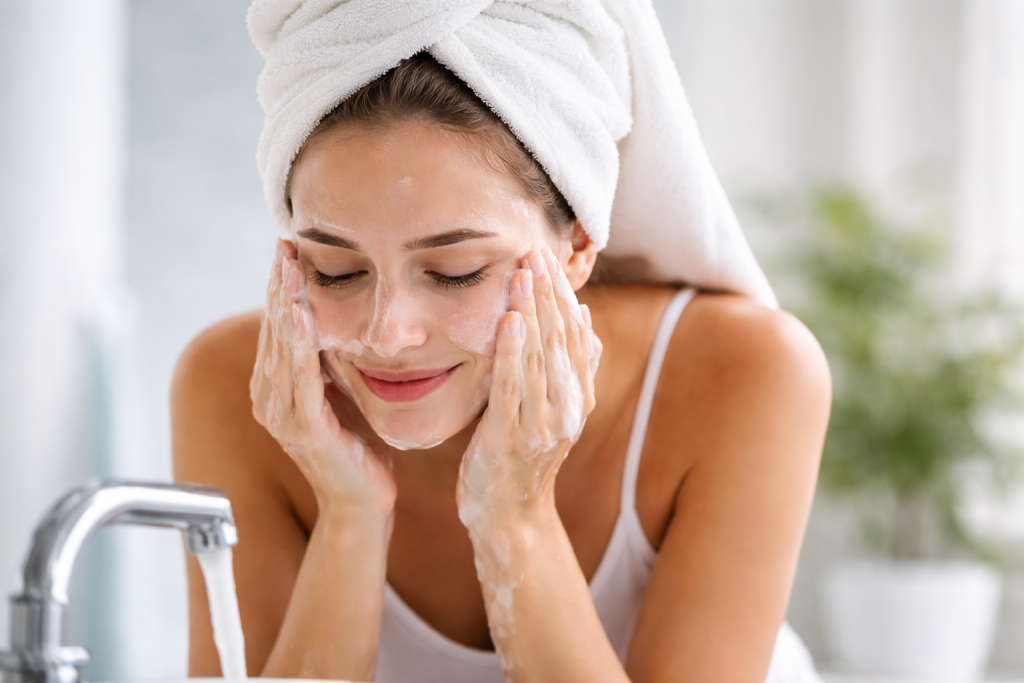
What happens to your skin when you wash your face too often
Many people think that washing their face frequently helps keep their skin clean, but in fact it can cause the opposite effect.
The skin is protected by a thin layer called hydrolipidic film, consisting of:
- water
- lipids (natural fats)
- protective substances
This layer has a fundamental function: Protect the skin from bacteria, pollution and dehydration.
The negative effects of excessive washing
When you wash your face too often, this balance is altered.
The most common consequences are:
- increased sebum production
- shinier skin during the day
- “skin pulling” feeling”
- greater sensitivity
- appearance of pimples and impurities
This happens because the skin tries to compensate for the loss of protection by producing even more sebum.
Warning: common mistake in oily skin
Those with oily skin tend to wash their faces several times a day, thinking they will improve the situation.
What actually happens is this:
- the skin becomes dehydrated
- the body produces more sebum
- pores get clogged more easily
Result: more acne, not less.
How often should you really wash your face?
The ideal frequency is simple:
- 2 times a day
- morning
- evening
Only in specific cases (sports, heavy sweat) may extra cleansing be useful.
Practical advice
Always choose a cleaner:
- delicate
- without aggressive alcohol
- suitable for your skin type
Proper cleansing is the first step to effective skincare.
Washing the face more than twice a day alters the pH of the skin and compromises the skin barrier.
This leads to a rebound effect:
- more sebum
- more impurities
- greater sensitivity
Solution: Cleanse morning and evening with gentle products.
Mistake No. 2: Using products not suitable for your skin type
How to recognize your skin type (practical guide)
One of the most common mistakes in skincare is not knowing your skin type.
Choosing the wrong products can quickly worsen the situation, causing:
- impurities
- dryness
- irritations
- glossy effect
👉 To avoid this error, it is critical to understand. How your skin behaves during the day.
The 5 main skin types
Dry skin
- feeling of skin pulling
- possible desquamation
- dull appearance
Oily skin
- widespread lucidity
- enlarged pores
- frequent presence of pimples
Mixed skin
- T-zone (forehead, nose, chin) shiny
- normal or dry cheeks
Sensitive skin
- frequent redness
- reactions to products
- burning sensation
Acne skin
- persistent pimples
- blackheads
- inflammation
Quick test to understand your skin
You can do a simple test at home:
- Wash your face with a mild cleanser
- Do not apply anything
- Wait 30-60 minutes
👉 Observe what happens:
- skin pulling → dry
- glossy → oily
- glossy only T zone → mixed
- reddened → sensitive
Why using the wrong products makes the skin worse
Using unsuitable products can:
- alter the pH of the skin
- clog pores
- increase sebum production
- weaken the skin barrier
👉 For example, too rich a cream on oily skin can cause pimples and blackheads.
Practical advice (dermatological)
To choose the right products:
- prefer formulas non-comedogenic
- avoids overly aggressive ingredients
- choose products specific to your skin type
Effective skincare always starts with a conscious choice.
Understanding one's skin type is crucial.
A wrong choice can cause:
- pore occlusion
- dryness
- irritations
Council: Observe how your skin reacts after cleansing.
If you notice tight, flaky or uncomfortable skin after cleansing, it may be helpful to learn more about the main causes of dry skin and the most effective remedies to protect it every day.
Read also:
Real example
People with oily skin often purchase very harsh cleansers, thinking they'll strip away their sebum. After a few weeks, their skin appears even shinier and more irritated. In most cases, the problem isn't the sebum itself, but a skin barrier altered by overly harsh products.
Mistake No. 3: Not using sunscreen
Why sun protection is critical in Italy
Many people think that sunscreen is only needed at the beach or in summer.
In fact, UV exposure in Italy is significant throughout the year.
Even in the winter months or on cloudy days, UV rays:
- penetrate through the clouds
- They also affect the skin in the city
- contribute to skin aging
Attention in cities and coastal areas
Those who live in cities or areas such as:
- ribs
- busy urban areas
- areas with high solar radiation
Is particularly susceptible to skin damage caused by:
- UVA rays (aging)
- UVB rays (sunburn)
- pollution
This is especially relevant in many areas of Italy, where the sun is present much of the yearo.
Even in winter, the skin is at risk
A common mistake is to stop using SPF in the cold months.
Actually:
- UVA rays are present throughout the year
- go through glass and windows
- Accelerate the formation of wrinkles and spots
Being near a window or driving also exposes the skin.
Which sunscreen to choose
For effective protection:
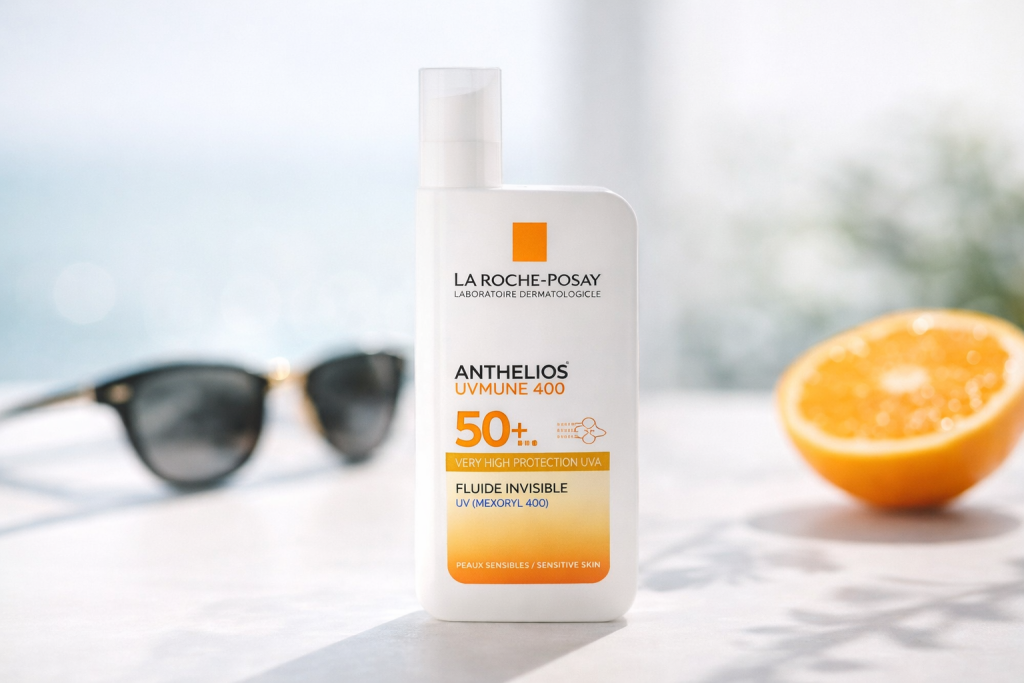
- use SPF 30 o 50 every day
- choose light formulas for daily use
- Apply protection as the last step of skincare
Reapplying throughout the day is ideal, especially in summer.
Practical advice
If you live in Italy, consider sunscreen not as an option, but as a an indispensable daily habit.
It is the most effective anti-aging product there is.
In Italy, UV exposure is also high in winter, especially in southern regions and coastal cities.
Recommended SPF: minimum 30, best 50.
Mistake #4: exfoliating too much
Why exfoliating too much can damage the skin
Exfoliation is a useful step in skincare, but when done too often it can turn into one of the major mistakes.
Many people use exfoliants every day thinking they will get smoother and brighter skin, but in reality they risk weaken the skin barrier.
What happens when you overdo exfoliation
Excessive use of exfoliants, both chemical and physical, can cause:
- persistent irritation
- redness
- touch-sensitive skin
- burning sensation
- increase in impurities
👉 Paradoxically, over-exfoliated skin can become more responsive and less uniform.
Difference between chemical and physical exfoliation
Understanding the type of exfoliation is critical:
Chemical exfoliants (AHA, BHA)
- They dissolve dead cells
- act in depth
- more delicate when used correctly
Physical exfoliants (scrubs)
- mechanically remove cells
- can be more aggressive
- to be used with caution
How many times to really exfoliate
The ideal frequency depends on skin type, but in general:
- 1-2 times a week → ideal for most people
- 1 time per week → sensitive skin
- 2 times a week → oily or resistant skin
Exceeding this frequency increases the risk of irritation.
Signs that you are exfoliating too much
Pay attention if you notice:
- shiny skin but irritated
- sudden appearance of redness
- products that “burn”
- increased sensitivity
👉 These are clear signs of a compromised skin barrier.
Practical advice
To achieve benefits without damaging the skin:
- choose gentle exfoliants
- Avoid combining too many actives together
- Always moisturizes the skin after exfoliation
The goal is not to exfoliate more, but to exfoliate better.
Mistake No. 5: sleeping made up
What happens to your skin overnight (and why removing makeup is critical)
During the night, the skin enters its most important phase: the cell regeneration.
Right now:
- cells renew themselves faster
- the skin repairs damage sustained during the day
- increases collagen production
It is precisely while you sleep that your skin “repairs itself.”.
Why sleeping with makeup is so harmful
If you go to bed without removing your makeup, your pores remain clogged by:
- makeup
- sebum
- smog
- impurities accumulated during the day
This prevents the skin from breathing properly and impairs the regeneration process.
The most common consequences
Sleeping with makeup can cause:
- pimples and blackheads
- dull and dull skin
- enlarged pores
- premature aging
- loss of brightness
Even one night can have visible effects on the skin.
Warning: underestimated mistake
Many people skip evening cleansing when they are tired, but this is one of the most impactful mistakes in the long run.
Evening cleansing is more important than the morning.
Minimal evening routine (even when you are tired)
If you are short on time, 2 steps are enough:
- mild detergent
- moisturizer
Better a simple routine done all the time than a perfect one done rarely.
Practical advice
Keep on hand at all times:
- micellar water
- make-up remover pads
- mild detergent
Reducing effort helps you to be consistent.
During the night the skin regenerates up to 3 times faster.
Sleeping with makeup blocks this process.
Mistake 6: changing skincare too often
The skin needs stability.
Why the skin needs time to adapt
From a dermatological point of view, the skin follows a natural process called cell renewal.
This process takes on average:
- about 28 days in young adults
- until 40-50 days with advancing age
During this cycle:
- new cells form in the deep layers
- gradually rise to the surface
- replace the old ones
👉 This means that skincare results are not immediate, but they take time.
What happens if you change products too often
Constantly changing products disrupts this natural balance and can cause:
- skin irritation
- increased sensitivity
- appearance of impurities
- ineffectiveness of treatments
Basically, the skin does not have time to adapt to the active ingredients in the products.
How long to wait before evaluating a product
To find out if a product really works, it is recommended:
- wait at least 3-4 weeks
- Avoid introducing multiple new products at the same time
- observe any progressive improvements
Only after this period can you consider whether to continue or change products.
Dermatological advice
Many dermatologists recommend an approach called “gradual introduction”:
- insert one product at a time
- use it consistently
- monitor skin reaction
This method reduces the risk of irritation and allows more stable results over time.
The cell cycle lasts about 28 days.
Mistake 7: Using too many products
Perfect skincare is simpler than you think
One of the most common mistakes is to believe that effective skincare must be long and complex.
In fact, using too many products can:
- irritate the skin
- create conflicts between ingredients
- compromise the skin barrier
The truth is simple: less products, but right, work better.
The ideal basic routine (for everyone)
Effective skincare can consist of only 3 basic steps:
- Detergent
Removes dirt, sebum and impurities - Moisturizing cream
Keeps the skin balanced and protected - Sun Protection (SPF)
Prevents damage, staining and aging
This is the basis of any effective routine.
When to add more products
Serums and exfoliants can be helpful, but only if needed.
Add them only if you have specific needs:
- acne → salicylic acid
- stains → vitamin C
- wrinkles → retinol
They are not needed by everyone, and they should not be used together without judgment.
The risks of overly complex routines
Following 8-10 step routines (often seen on social media) can cause:
- irritations
- skin overload
- worst results
The skin does not need “everything,” but balance.
Golden rule of skincare
If your skin is fine, don't complicate the routine.
Many people make their skin worse precisely by adding too many unnecessary products.
Practical advice
If you have doubts, do this:
- Reduce the routine to a minimum for 2 weeks
- observe how the skin reacts
- add one product at a time
This method helps you understand what really works.
Ideal routine:
- detergent
- cream
- SPF
Mistake 8: Frequent touching of the face
Daily hygiene: the hidden factor that ruins the skin
Many people focus only on skincare products, but they ignore a key element: daily hygiene.
Even with the best routine, some habits can completely undermine results.
In particular, two factors that are often underestimated are:
- hands
- the pillowcase
Hands and face: continuous (and risky) contact
Throughout the day we are constantly touching:
- smartphone
- keyboards
- handles
- public surfaces
Hands accumulate bacteria that are easily transferred to the face.
Frequent touching of the face can cause:
- pimples
- irritations
- skin infections
- acne worsening
Even small automatic gestures can make a difference.
The role of the smartphone (modern mistake)
One of the most contaminated objects is the smartphone.
Placing it against the face during calls can transfer:
- bacteria
- dirt
- sebum residue
This can contribute to the appearance of impurities especially on the cheeks and jaw.
Council: Clean the screen at least 1 time a day.
The pillowcase: an invisible accumulation
During the night, the pillowcase absorbs:
- sweat
- sebum
- dead cells
- product residues
Sleeping on a dirty pillowcase means exposing the skin to bacteria for hours.
This can cause:
- acne
- irritations
- unclean skin
How often to change the pillowcase
The ideal frequency is:
- 2-3 times a week
- even more often in case of acne
A small gesture that can visibly improve the skin.
Golden rules for cleaner skin
To really improve skin health:
- Avoid touching the face during the day
- wash your hands often
- clean your smartphone
- regularly change the pillowcase
These habits often make more difference than many products.
Hands transfer bacteria continuously.
Mistake 9: Not moisturizing oily skin
Oily skin ≠ moisturized skin.
Many people confuse oily skin with well-hydrated skin. In reality, understanding the Causes of oily skin and the most common blemishes can help you choose more suitable products.
Why even oily skin needs hydration
Many people avoid moisturizer because they fear it will make their skin shinier.
In reality, dehydrated skin produces even more sebum to compensate for the lack of water.
A lightweight, non-comedogenic cream helps rebalance skin and reduce shine over time.

Mistake 10: squeezing pimples
Why squeezing pimples makes it worse
Crushing pimples may seem like a quick fix, but it is actually one of the most damaging mistakes for the skin.
When you squeeze a pimple, you don't simply remove the blemish; you risk pushing bacteria and sebum even deeper into the skin.
This can worsen the inflammation instead of resolving it.
What's really going on under the skin
A pimple is a small inflammation of the hair follicle.
Crushing it:
- break the structure of the skin
- Spread bacteria to surrounding areas
- you increase the risk of infection
The result? A bigger problem than the initial one.
The most common consequences
This gesture can cause:
- permanent scars
- dark spots (hyperpigmentation)
- Larger, inflamed pimples
- longer healing time
In some cases the marks may remain for months or years.
Beware of acne scars
Scarring is among the most difficult consequences to treat.
They can be:
- deep
- perms
- Expensive to correct (laser, dermatological treatments)
Prevention is much easier than cure.
What to do instead of crushing
To treat a pimple properly:
- uses targeted treatments (e.g., salicylic acid)
- apply soothing products
- keep your skin clean
- avoid touching the area
Let the pimple heal naturally.
Practical advice
If you just can't resist:
Avoid “do-it-yourself” and go to a professional (dermatologist or qualified esthetician).
It can cause permanent scarring.
Mistake 11: Not reading the ingredients of cosmetics

Which skincare ingredients to avoid and which to choose
Understanding the ingredients in skincare products is critical to avoid irritation and get real results.
Many skin problems arise precisely from the use of cosmetics with unsuitable ingredients.
Ingredients to avoid (especially for sensitive or acne-prone skin)
Some ingredients may cause unwanted reactions:
- Denatured Alcohol (Alcohol Denat.) → can dry out and irritate
- Perfumes (Fragrance/Parfum) → can cause redness
- Comedogenic oils → can clog pores
- Aggressive sulfates (SLS/SLES) → can alter the skin barrier
Not everyone needs to avoid them, but it is important to know about them.
Useful ingredients to look for
In contrast, some actives are particularly effective:
- Niacinamide → regulates sebum and improves texture
- Salicylic acid (BHA) → ideal for acne and clogged pores
- Hyaluronic acid → deeply hydrates
- Retinol → helps against wrinkles and imperfections
Choose ingredients according to your skin's needs.
How to read INCI (the easy way)
The INCI is the list of ingredients on each product.
👉 Basic rule:
- ingredients are listed in order of quantity
- the first ones are the most present
- the shorter the list, the simpler the formula
Frequently asked question: are natural ingredients always better?
❌ No, not always.
👉 Even natural ingredients can cause irritation (e.g., essential oils).
The important thing is that the product is suitable for your skin, not just “natural.”.
Practical advice
When you choose a product:
- avoids overly complex formulas
- prefer dermatologically tested products
- introduce one new product at a time
This allows you to understand what really works.
Ingredients to know:
- niacinamide
- salicylic acid
- retinol

Mistake 12: Don't change the pillowcase often

How often to change the pillowcase to avoid impurities
The pillowcase is one of the most underrated elements in skin care, but it can greatly affect the appearance of pimples and blemishes.
During the night, the tissue accumulates:
- sebum
- sweat
- dead cells
- residues of hair and skincare products
👉 Sleeping on a dirty pillowcase means exposing the skin to these impurities for several consecutive hours.
Ideal frequency for changing the pillowcase
To keep the skin clean, experts recommend:
- 2 times a week → for most people
- 3 or more times a week → if you have acne prone or very oily skin
Changing it more often can visibly reduce impurities.
Attention to materials
Not all pillowcases are the same.
The best options are:
- cotton (breathable and easy to wash)
- silk (reduces friction and irritation)
Avoid synthetic fabrics that can retain heat and bacteria.
Practical tips to improve your routine
To achieve real benefits:
- change the pillowcase regularly
- wash pillowcases at high temperatures
- avoid going to bed with dirty hair
- always remove makeup before sleeping
Small habits that make a big difference.
Signal that you are doing it wrong
If you notice:
- Pimples always in the same area (cheeks, jaw)
- irritated skin upon awakening
the pillowcase might just be the problem.
Recommended change: every 2-3 days.
Mistake 13: Not cleansing the face after physical activity

When we exercise, the skin produces sweat to regulate body temperature.
Sweat in itself is not harmful to the skin, but if it stays on the face for a long time it can mix with:
bacteria
sebum
dirt
This can contribute to the appearance of impurities.
For this reason, it is always advisable to wash the face after doing sports, using a mild detergent.
Sweat promotes impurities
How long to wait after training
The ideal is to cleanse your face within 30 minutes of finishing physical activity.
Sweat, sebum and bacteria can promote the appearance of impurities, especially in people with oily or acne-prone skin.

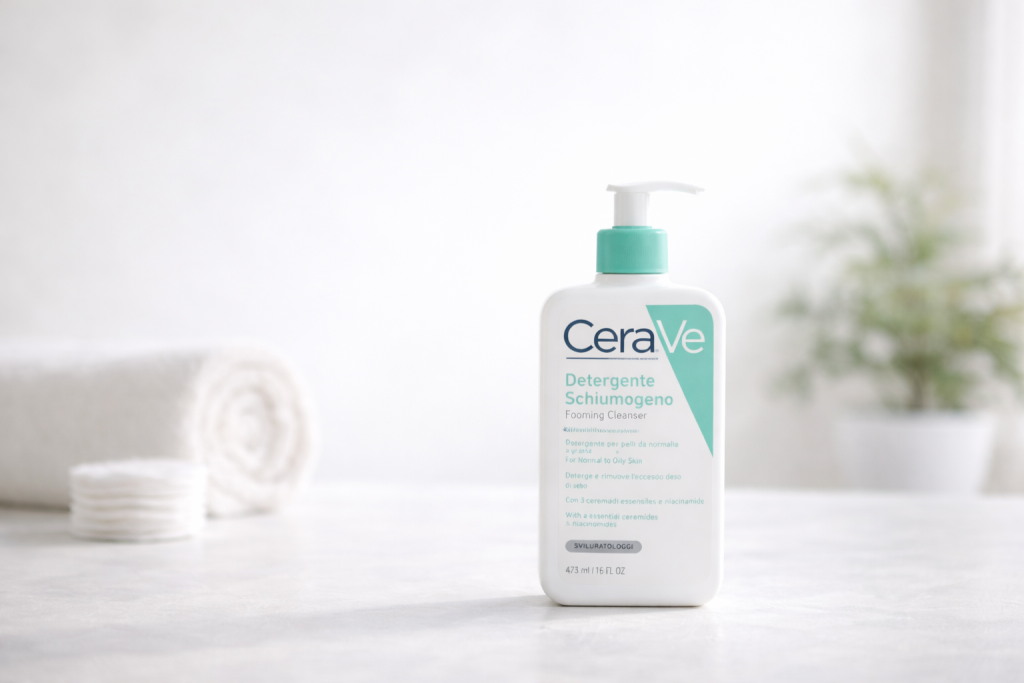
CeraVe Moisturizing Cleanser
Clean, fresh and moisturized skin for 24 hours, without dehydration or dryness. Non-comedogenic, fragrance-free.
Mistake 14: Not drinking enough water

The link between lifestyle and skin health
Skincare is not only about the products you apply to your face, but also about your daily habits.
The skin mirrors the overall health of the body.
Even the best skincare routine can yield limited results if the lifestyle is not balanced.
The importance of hydration
Drinking water is essential to maintain the skin:
- elastic
- bright
- hydrated
Poor hydration can cause:
- dull skin
- loss of tone
- increased visibility of wrinkles
Recommended quantity: 1.5 to 2 liters per day
If you want to delve deeper into the connection between hydration and overall health, it can be helpful to know the basics of one healthy lifestyle and habits that improve daily well-being.
Nutrition and skin: what to know
What you eat directly affects your skin.
Some foods help to improve skin appearance:
Recommended foods
- fruits and vegetables rich in antioxidants
- omega-3 rich fish
- dried fruit
❌ Foods to limit
- refined sugars
- ultra-processed foods
- Excess dairy products (in some cases)
A balanced diet can reduce inflammation and impurities.
Sleep and skin regeneration
Little or bad sleep negatively affects the skin.
During sleep:
- increases collagen production
- the skin repairs itself
- oxidative stress is reduced
Sleeping less than 6 hours can promote:
- dark circles
- dull skin
- premature aging
Ideal: 7-8 hours per night
Sleep is just one of the habits that influence skin health. Diet, physical activity, and stress management also make a difference in maintaining a healthy skin. healthy lifestyle and improve overall well-being.
Stress and skin: an underestimated link
Chronic stress can cause:
- acne
- dermatitis
- increased sebum
This happens because cortisol increases, which alters the balance of the skin.
If you notice that blemishes and irritations get worse during busier periods, it may be helpful to discover some practical strategies to reduce stress in everyday life naturally.
Golden rules for healthy skin
To really improve the skin:
- drink enough water
- follow a balanced diet
- get enough sleep
- reduce stress
Skincare works best when it is supported by a healthy lifestyle.
The skin reflects the internal state of the body.
Mistake 15: Expecting immediate results

Many people abandon a skincare product after a few days because they do not see immediate results.
In fact, the skin needs time to renew itself.
The cell renewal cycle lasts about 28 days.
This means that most skincare products require at least 4 weeks To show visible effects.
Constantly changing products can confuse the skin and make it worse.
Skincare works best when it is:
simple
constant
suitable for your skin type
How long does it take to see results?
Average:
- hydration → 1-2 weeks
- reduced lucidity → 2-4 weeks
- acne improvement → 4-8 weeks
- reduction of blemishes → several months
Consistency is more important than speed.
Mistakes that make skin worse faster
The three errors that cause the most problems are:
- Don't use sunscreen.
- Washing your face too many times a day.
- Using products that are not suitable for your skin type.
Correcting these mistakes often produces more noticeable improvements than purchasing new cosmetics.
How to create an effective skincare routine for your skin type
Essential basic steps
- Cleansing
- Hydration
- Sun protection
Advanced steps (optional)
- Serums
- Exfoliants
- Targeted treatments
The most important rule in skincare
If there is one thing that really makes a difference in skin care, it is this:
constancy beats any expensive product.
Many people are constantly changing routines, trying new products and following viral trends without getting results.
The reality is that skin improves when:
- follow a simple routine
- use suitable products
- avoid common mistakes
- maintain the same habits over time
You don't need to complicate, you need to be consistent.
When is it advisable to consult a dermatologist?
Book a visit if:
- acne leaves scars
- persistent redness appears
- you have constant itching or burning
- skin gets worse despite a proper routine
- you notice suspicious spots or sudden changes
A professional assessment can save you months of wasted effort.

FAQ - Frequently Asked Questions
How many times a day should you wash your face?
Generally, twice a day: morning and evening. More frequent washing can alter the skin barrier.
Do we really need sunscreen even in winter?
Yes. UVA rays are present year-round and contribute to wrinkles, dark spots, and premature aging.
How long does it take for skincare to start working?
Most products take at least 4 weeks to show visible results.
Is it better to use few products or many products?
In most cases, a simple routine with cleanser, moisturizer, and SPF is more effective than a very complex routine.
Does oily skin need moisturizer?
Yes. Even oily skin can be dehydrated and requires adequate hydration.
What is the most harmful skincare mistake?
Not using sunscreen daily is considered one of the most harmful mistakes for skin health and aging.
What is the minimum recommended skincare routine?
For most people, three products are enough:
- mild detergent
- moisturizer
- SPF 30 or 50 sunscreen
A simple, consistent routine is often more effective than complex skincare.
The 3 worst mistakes in skincare
If you have to avoid only 3 mistakes, these are them:
- do not use SPF
- washing the face too much
- use the wrong products
👉 Avoiding them really changes the skin.
Summary table of skincare mistakes
| Mistake | Main consequence |
|---|---|
| Washing your face too much | More sebum and irritation |
| Wrong products | Pimples and sensitivity |
| No SPF | Premature aging |
| Excessive exfoliation | Damaged skin barrier |
| Sleeping with your makeup on | Clogged pores |
| Change your routine often | No results |
| Too many products | Irritations |
| Touching the face | Bacteria and impurities |
| Don't moisturize oily skin | More sebum |
| Pop pimples | Scars |
| Ignore the ingredients | Adverse reactions |
| Dirty pillowcase | Acne and impurities |
| No cleansing after sports | Clogged pores |
| Drink little water | Dull skin |
| Expect immediate results | Abandoning the routine |
Conclusion
Which mistake will you start with?
There's no need to buy new products or follow complicated routines.
Start by eliminating one or two of the mistakes described in this guide and observe your skin for the next 4 weeks.
Often the most noticeable improvements come from correct habits, not from the most expensive cosmetics.
📌 Save this guide to refer back to whenever you need it.
📌 Share this with anyone looking to improve their skincare routine.
📌 Put these tips into practice starting today.
Do you really want to improve your skin?
No need to buy dozens of products.
👉 It starts like this:
- eliminates the most common errors
- simplifies your routine
- be consistent for at least 4 weeks
The results will come.
📌 Save this guide
📌 Share it
📌 Apply it from today


 Italian
  English