
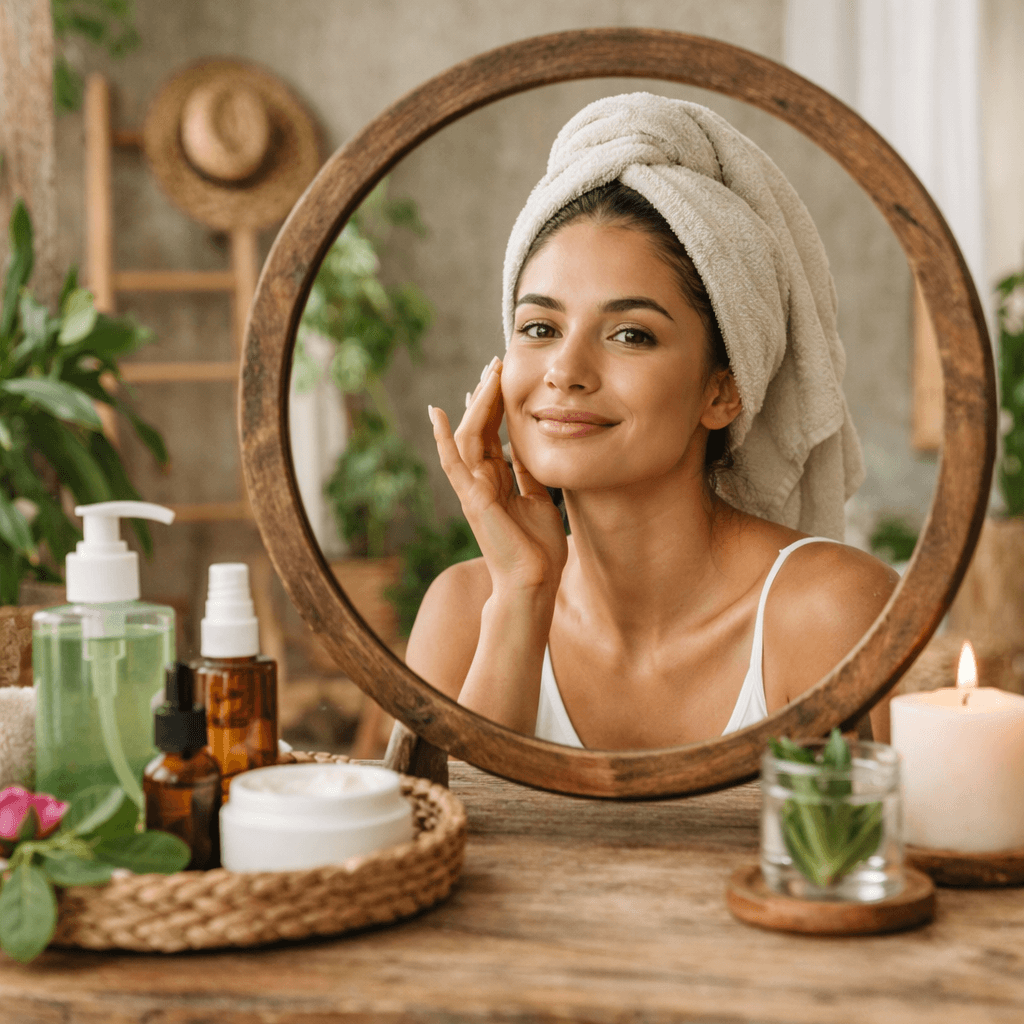
📖 Reading time: 6 minutes
What you will learn:
In this guide, you'll discover why skin becomes oily and blemished, which mistakes make pimples and blackheads worse, which remedies really work, and how to create a simple and effective routine to improve the appearance of your skin every day.
This guide is useful if:
✔ Your skin will be shiny after just a few hours
✔ You have frequent blackheads
✔ You have occasional pimples
✔ You don't know which products to choose
✔ You want to improve your skin without complicated routines
Oily and impure skin is one of the most common conditions, especially in adolescence but also in adulthood. Lucidity, enlarged pores, blackheads and pimples can become both aesthetically and emotionally troublesome.
If your skin feels shiny after a few hours, you have frequent blackheads, or small pimples that keep coming back, you're probably making mistakes that are fueling the problem without realizing it.
The good news is that in most cases it is possible to visibly improve the situation with a correct, consistent and non-aggressive routine.
In this guide you will find out:
why the skin becomes oily
what “unclean skin” really means”
which natural remedies work
an easy daily skincare
Immediate response
Oily and blemished skin is caused by excessive sebum production, which can lead to clogged pores, blackheads, and pimples. To improve it, it's essential to use gentle cleansers, an oil-free moisturizer, exfoliants with salicylic acid, and daily sunscreen. Avoiding harsh products helps prevent the problem from worsening.
| Problem | What to do |
|---|---|
| Very shiny skin | Gentle cleanser morning and evening |
| Blackheads | BHA exfoliant 1-2 times a week |
| Dehydrated skin | Daily oil-free cream |
| Occasional pimples | Consistent routine and non-comedogenic products |
| Post-pimple spots | SPF50 sunscreen |
Why skin becomes oily: the most common causes
The skin naturally produces sebum, a useful substance to protect it.
However, when the sebaceous glands work too hard, sebum increases and impurities appear.
The most common causes are:
Hormonal changes (puberty, cycle, stress)
genetics
cosmetics that are too heavy or comedogenic
Aggressive cleaning (which makes the problem worse)
diet high in sugar and dairy products
stress and lack of sleep
Many people think that oily skin is due to poor hygiene, but this isn't the case. In most cases, it's due to increased sebaceous gland activity, influenced by hormonal, genetic, and environmental factors.
Even one healthy lifestyle can help improve the appearance of your skin in the long term.

The role of hormones in oily skin
Hormones directly influence the activity of the sebaceous glands. For this reason, oily skin is particularly common during adolescence, but can also appear or worsen in adulthood.
The most common situations that can increase sebum production are:
- puberty
- menstrual cycle
- pregnancy
- menopause
- periods of high stress
- hormonal disorders
When hormones overstimulate the sebaceous glands, the skin tends to shine more easily and the likelihood of developing blackheads and blemishes increases.
What does it mean to have blemished skin?
Impure skin is skin that presents:
clogged pores
blackheads
occasional pimples
shiny but dehydrated skin
irregular texture
Very often, impure skin is also sensitive, so it needs to be treated gently.
Difference between oily skin and acne-prone skin
Many people confuse oily skin with acne, but they are not the same thing.
Oily skin is mainly characterized by:
- excess sebum
- widespread lucidity
- enlarged pores
- blackheads
Acne-prone skin, on the other hand, also presents:
- inflamed pimples
- papules and pustules
- nodules
- possible scars
Oily skin doesn't necessarily lead to acne, but improper skin management can lead to more visible inflammation and blemishes.
Daily skincare for oily and blemish-prone skin: essential steps
1. Gentle cleansing morning and evening
Overwashing or using harsh soaps worsens sebum production.
Choose a gentle purifying, alcohol-free cleanser.
Ideal: cleansing gel with niacinamide or zinc.

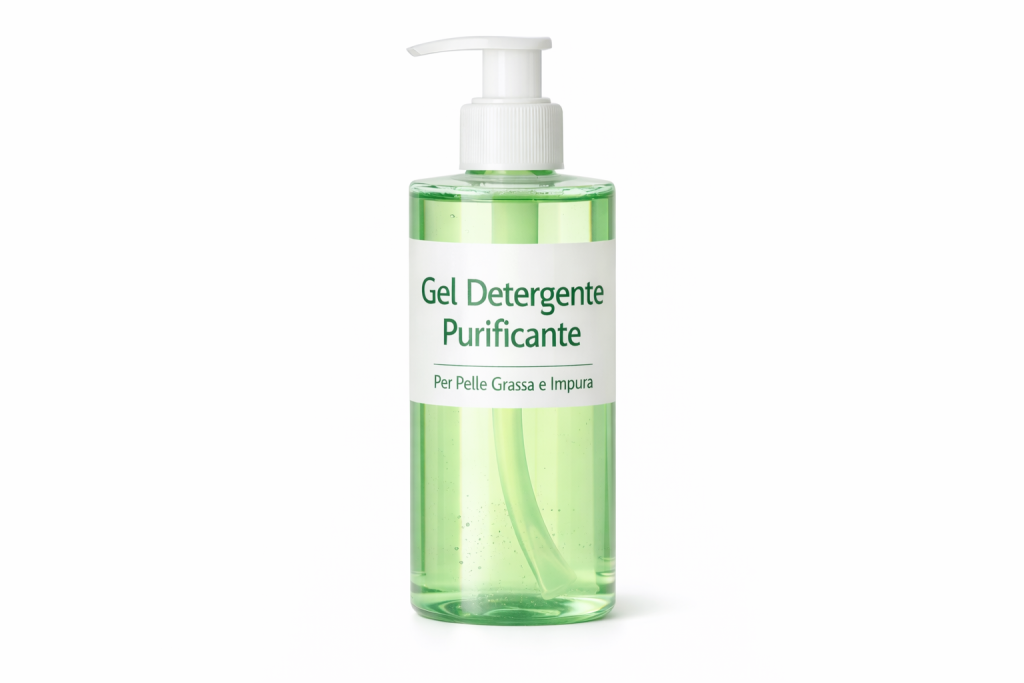
Facial purifying cleansing gel
Perfect for oily and impure skin, it cleanses without drying and reduces shine.
2. Rebalancing tonic (optional but useful)
A good toner helps tighten pores and calm the skin.
Look for ingredients such as:
witch hazel water
tea tree (in small doses)
niacinamide
3. Hydration: yes, even if the skin is oily
One of the most common mistakes is to avoid cream.
Oily skin may be dehydrated → produces even more sebum.
Choose a light “oil-free” cream.
Also find out how to create a simple and effective beauty routine for daily skin care.
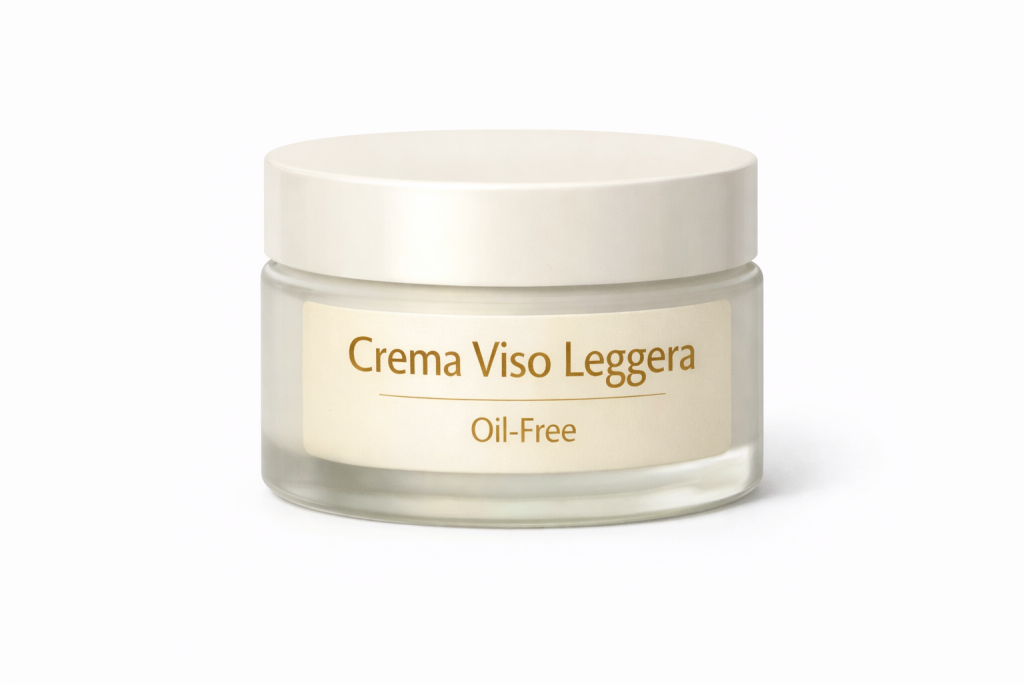
Light mattifying face cream
It moisturizes without greasiness and helps keep skin more even.
4. Exfoliation 1-2 times a week
Gentle exfoliation is needed to avoid clogged pores.
Better BHA (salicylic acid) than aggressive scrubs.
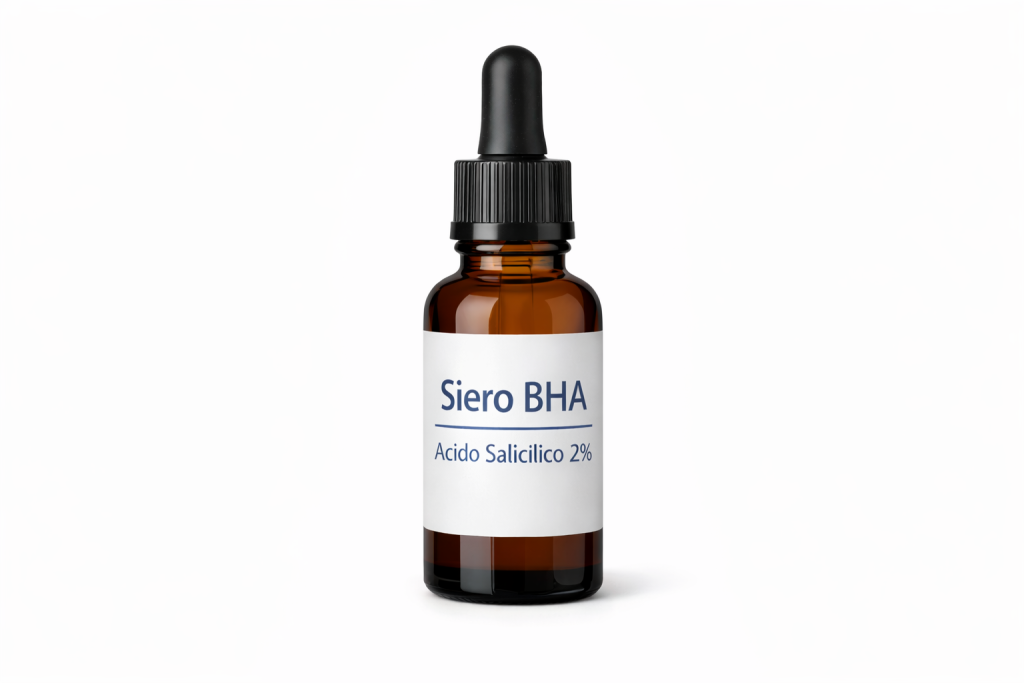
Exfoliating serum with salicylic acid (BHA)
Perfect against blackheads and impurities.
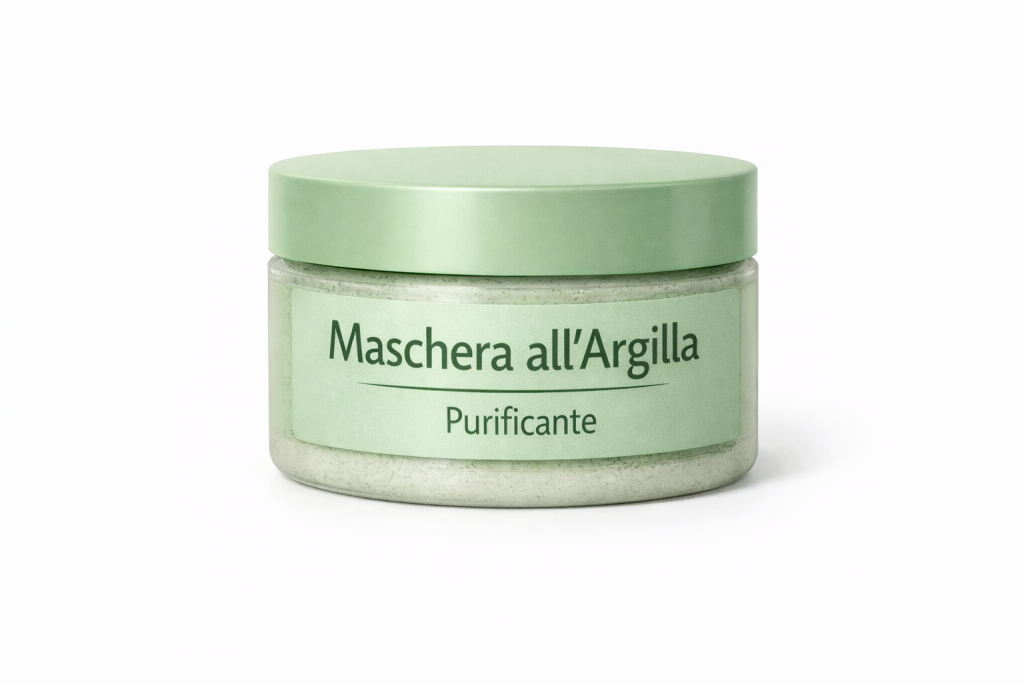
5. Clay mask 1 time a week
Green or white clay absorbs sebum and purifies pores.
Do not let it dry completely on the face: rinse while it is still soft.

6. Sunscreen every day
Many people think the sun “dries pimples,” but it actually makes spots and inflammation worse.
Choose SPF 50 light, matte effect.
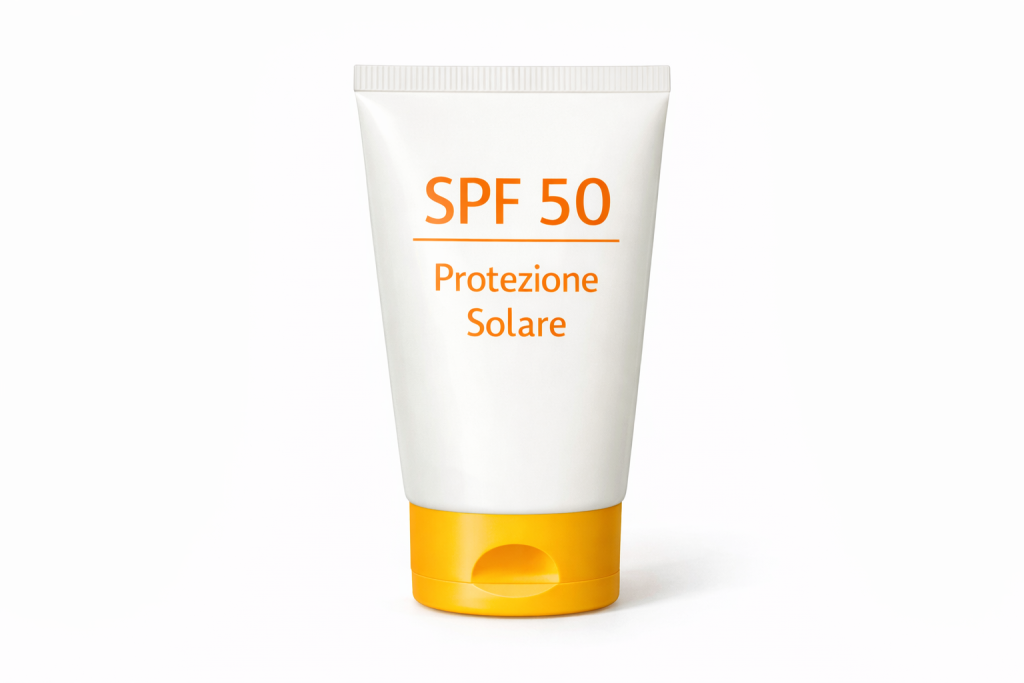
Facial sunscreen oily skin SPF50
It is non-greasy and protects without occluding pores.
What to do immediately if your skin is very shiny and impure
If your skin produces a lot of oil throughout the day, start by simplifying your routine. Use a gentle cleanser morning and night, apply a light moisturizer, and use a sunscreen specifically designed for oily skin. Avoid washing your face continuously, as this could stimulate even more oil production.
Extra natural remedies (without stressing the skin)
✔ Wraps with cold green tea.
✔ Pure aloe vera as a soothing gel.
✔ Tea tree essential oil only locally (never pure all over the face)
Remember that natural remedies can help soothe skin, but they're no substitute for a proper skincare routine. The best results are achieved with consistency and products suited to your skin type.
Nutrition and oily skin: how much does it really matter?
Diet isn't the only cause of oily skin, but it can influence its appearance in some people.
Several studies suggest that excessive consumption of:
- refined sugars
- sugary drinks
- industrial sweets
- high glycemic index foods
can contribute to increasing blemishes.
To promote more balanced skin, it may be useful to prioritize:
- fresh vegetables
- fruit
- whole grains
- omega-3 rich fish
- adequate hydration
Small changes in eating habits can effectively complement a good skincare routine.
One healthy lifestyle It can also positively influence the appearance of the skin.
Also regular physical activity It can promote overall well-being and help better manage stress and inflammation.

Mistakes that make oily skin worse without you realizing it
Many people try to eliminate sebum as much as possible, but often achieve the opposite effect.
The most common errors are:
🚫 Washing your face too often during the day
🚫 Use harsh or alcohol-based detergents
🚫 Skip the moisturizer
🚫 Pop blackheads and pimples
🚫 Constantly change skincare products
🚫 Sleep without removing makeup and impurities
🚫 Using cosmetics that are too heavy or comedogenic
Correcting these habits can make a significant difference after just a few weeks.
When to see a dermatologist
In most cases, oily skin can be managed with a proper routine. However, it's advisable to consult a specialist if:
- the pimples are painful or very inflamed
- scars appear
- blemishes persist for months
- the situation gets worse despite good skincare
- acne causes psychological distress or loss of self-esteem
A dermatologist can assess the situation and recommend any specific treatments, avoiding unnecessary attempts and expenses.
Want to improve your beauty routine without complications?
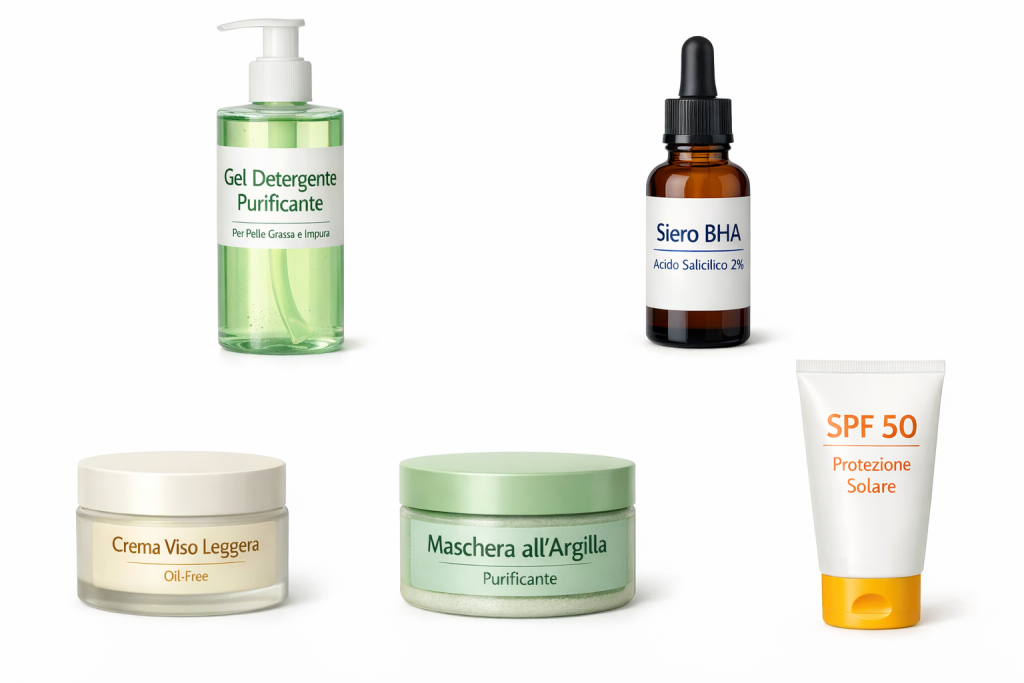
More balanced skin doesn't require dozens of products, but a simple, consistent routine. Start with the basics and choose products suited to your skin type.
How to understand if the products are working
Don't expect immediate improvements. Your skin may appear unchanged for the first few days. Initial results are generally visible after 4-8 weeks of consistent use.
Positive signals:
- less clarity during the day
- reduction of blackheads
- fewer inflamed pimples
- more even skin
- less visible pores
This intercepts a lot of information searches.

FAQ - Frequently Asked Questions
Can oily skin become normal?
Yes. With a proper routine and control of sebum-stimulating factors, skin can appear much more balanced over time.
What is the best ingredient for blackheads?
Salicylic acid (BHA) is among the most effective ingredients because it helps clear pores of sebum and impurities.
Does moisturizer make oily skin worse?
No. A light, oil-free cream helps maintain a healthy skin barrier and can reduce excess sebum production.
Does the sun really improve pimples?
Only temporarily. Long-term sun exposure can increase inflammation, blemishes, and imperfections.
How long does it take to see improvements?
It typically takes 4 to 8 weeks of consistent routine before you notice noticeable results.
Does diet affect oily skin?
In some people, a high consumption of refined sugars and high glycemic index foods can promote impurities.
Does oily skin get worse in summer?
Yes, heat and humidity can increase sebum production and skin shine. For this reason, in summer it's even more important to use gentle cleansers, lightweight oil-free products, and a sunscreen specifically designed for oily skin.
Conclusion
Oily and blemish-prone skin doesn't go away overnight, but with the right habits, it can improve significantly. The key is to avoid harsh products, maintain a simple routine, and give your skin the time it needs to regain its balance.
Remember that gentle cleansing, hydration, controlled exfoliation, and sun protection are the foundation of any effective skincare routine.
👉 Start with the essential products recommended in this guide and build a routine suited to your skin's needs.
 Italian
  English