
Daily habits directly influence energy, concentration, and quality of life.
The most effective include: keeping your home tidy, moving every day, spending time outdoors, and reducing stress while traveling.
This practical guide contains simple, concrete strategies you can implement immediately to improve your day without drastic changes.
What are the best daily habits for better living?
- Keep your home tidy with daily micro-routines
- Move at least 20 minutes a day
- Expose yourself to natural light every morning
- Taking mental breaks without devices
- Reduce stress while traveling
The best daily habits for living better are simple and consistent ones: keeping your home tidy, exercising daily, using natural light, and managing stress.
There is a scene that repeats itself every day, often without our really noticing: we enter the house, put down our keys, leave our jacket on the chair, open the phone. All automatic. All fast. Yet in these very small gestures lies a simple but powerful truth: home affects our mental state more than we think.
You don't need to live in a perfect apartment or have an extreme minimalist style. But you do need one basic thing: consistency between space and mind. When the environment is chaotic, even the brain struggles to find order.
According to several studies in environmental psychology, cluttered spaces increase perceived stress levels. This is not just a feeling: it is an actual response of our body. The brain interprets clutter as “tasks not completed,” creating a constant background of tension.
The first impact of the day: the morning
Many people start the day already in a hurry: alarm clock, phone, notifications, running. But all it takes 5 minutes well managed To completely change the energy of the day.
A simple routine might be:
- Making the bed
- Open windows
- Drink a glass of water
- Avoid the phone for the first few minutes
Making the bed, for example, seems trivial. But it is a immediate micro-victory: The brain registers that you have already completed something. This increases motivation and a sense of control.
Real-world example:
Those who work from home (increasingly common in Italy) often notice that starting the day in an already orderly environment reduces procrastination. It's not magic, it's mental structure.
The problem of “I'll do it later”
One of the most common mistakes in home management is procrastination.
“I'll fix it later,” “tomorrow I'll clean it,” “on the weekend I'll do everything.”.
The result? Accumulation.
And accumulation generates stress because:
- increases the mental load
- makes the tasks heavier
- reduces the desire to start
This is where an extremely effective strategy comes into play: the 10-minute rule.
The 10-minute rule (that really works)
Instead of thinking “I have to clean the whole house,” do this:
👉 sets a 10-minute timer
👉 rearrange only what you can
End.
This technique works because:
- lowers mental stamina
- eliminates pressure
- creates continuity
Most importantly: often, after 10 minutes-you continue spontaneously.
Daily practice routine (5 real minutes)
- 1 minute: visible surfaces system
- 2 minutes: tidy up misplaced objects
- 2 minutes: Prepare the space for the next day
👉 Result: house always manageable without accumulation
Practical minimalism (not extreme)
There is a widespread problem in many Italian homes: the invisible accumulation.
Drawers full of unused items, closets overflowing, surfaces occupied by things that are not really needed. It's not just an aesthetic issue: it's a mental issue.
Every object:
- occupies physical space
- requires attention
- creates micro-decisions
👉 More objects = more mental noise
No need to eliminate everything, but ask a simple question:
“Do I really need this item?”
Organizing spaces for better living
It is not just a matter of cleanliness, but of functionality.
A well-organized home has:
- a defined work zone
- a relaxation area without distractions
- clear and consistent spaces
Concrete example:
If you work at the kitchen table, your brain doesn't distinguish between work and relaxation. Result? It struggles to “disconnect.”.
Even in small apartments (very common in Italian cities) is enough:
- a dedicated lamp
- a different chair
- a specific position
To create mental separation.
The importance of light (often ignored)
Natural light is one of the most underestimated elements in the home routine.
Affects:
- mood
- energy
- sleep quality
Opening windows in the morning is not just for air, but to “activate” the brain.
When natural light is not enough:
- prefer warm lights in the evening
- avoid bright lights before sleeping
Evening: the moment that decides everything
Many people underestimate the evening routine, but this is where the next day is built.
A good evening routine includes:
- quickly arrange spaces
- Prepare what you need for the next day
- Reduce smartphone use
👉 This reduces morning stress and improves sleep.
Real-world example:
Those who prepare clothes and items in the evening take less time in the morning and leave with less anxiety.
Home as an ally, not a burden
When the home is disorganized, it becomes a source of stress.
When functional, it becomes a stable base.
Keeping your home tidy is one of the most effective daily habits for reducing mental stress.
It does not have to be perfect. It has to be:
- livable
- consistent
- manageable
Read also:
👉 Home and kitchen: comprehensive guide to organizing, furnishing and better living spaces



Home is not just a physical space. It is an extension of your mind.
If you start improving this environment, the rest will follow. Not all at once. Not perfectly.
👉 But every day, a little better.
Personal well-being

There is one thing we often ignore until it becomes obvious: the body always presents the bill. No matter how busy we are, how much we work or how much we procrastinate, if we neglect personal well-being, sooner or later we pay for it in energy, lucidity and mood.
Yet, in daily life-especially in Italian cities where the pace is ever faster-taking care of oneself almost always ends up in last place. Work first, then commitments, then others. And only if time remains, us.
The point is that it should work the other way around.
According to the Harvard Medical School, daily habits related to movement, sleep and stress management have a direct impact on quality of life and chronic disease prevention.
It's not about doing everything perfectly, but building a solid foundation made up of small sustainable actions.
Daily movement: the effective minimum
One of the most widely held beliefs is:
“If I don't go to the gym, it's no use.”.
This is false.
The human body does not need extreme workouts, but the constant motion.
In Italy, we have a huge advantage: walkable cities, waterfronts, historic centers, bike paths. Yet we often choose the car even for short distances.
Real-world example:
A person who starts walking 20 to 30 minutes a day (perhaps on the Trieste waterfront or simply in his or her own neighborhood) notices after a few weeks:
- greater energy
- improvement of mood
- more regular sleep
👉 No need to do more. It needs to do it every day.
The minimum effective (without gym)
- 20 minute walk
- 5 minute stretching
- 2 active breaks during work
👉 Total: less than 30 minutes, but high impact
The problem of invisible sedentariness
Many people think they are “active” because they work all day. In reality, sitting in front of a computer for 8 hours is one of the main causes of:
- chronic fatigue
- muscle aches
- drop in concentration
Simple solution:
👉 get up every 60 minutes
👉 do 2-3 minutes of movement
It seems small, but in the long run it changes everything.
Nutrition: balance, not restriction
When it comes to wellness, nutrition is always a sensitive topic. It is often approached in extremes: strict diets, restrictions, guilt.
But in real life-that of quick lunches, dinners out and irregular rhythms-a different approach is needed: sustainable balance.
Simple guidelines:
- reduce refined sugars
- prefer fresh foods
- avoid too heavy meals in the evening
- eat leisurely (not in front of the screen)
👉 It is not perfection, it is awareness.
Hydration: the most underrated habit
It sounds trivial, but it is not. Many people live in a state of mild dehydration without realizing it.
Common symptoms:
- fatigue
- concentration difficulties
- headache
A simple habit can make all the difference:
👉 drink water as soon as you wake up
👉 always keep a bottle handy
Concrete example:
Those who introduce this habit often notice an improvement in mental energy within the first few days.
The mental break (real, not digital)
One of the biggest problems today is not the lack of time, but the lack of real breaks.
Scrolling the phone is not a break.
It's just another kind of stimulus.
The brain needs:
- silence
- slowdown
- space
👉 Even just 5 minutes without stimulation can “reset” the mind.
Simple technique:
- sit down
- breathe slowly
- do nothing
At first it may seem strange. Then it becomes necessary.
Breathing and stress
Breathing is one of the most powerful and immediate tools for managing stress, but it is almost always ignored.
Basic technique:
- inhale for 4 seconds
- exhale for 6 seconds
Repeat for 2-3 minutes:
- lowers the voltage
- slows down the beat
- improves lucidity
👉 It is a tool that is always available, everywhere.
Sleep: the true energy multiplier
Many seek more energy through coffee or supplements, but ignore the main factor: sleep.
Bad sleep means:
- be less productive
- more irritable
- less lucid
And often the problem is not time, but quality.
Habits that improve sleep:
- go to bed at the same time
- avoid screens before sleeping
- reduce bright lights
- keep the room cool
Real-world example:
Those who eliminate their smartphones 30 minutes before bedtime often improve sleep within a few days.
The micro-habits that change everything
Big changes are not needed. Small repeated actions are needed:
- drink water in the morning
- do 5 minutes of stretching
- walk every day
- take real breaks
👉 The secret is not to do a lot. It is always doing.
The role of constancy (more than motivation)
Motivation comes and goes.
Constancy remains.
Many people start enthusiastically and then quit. Not because they are not capable, but because they aim too high too soon.
Best strategy:
👉 start small
👉 make the habit easy
👉 repeat it every day

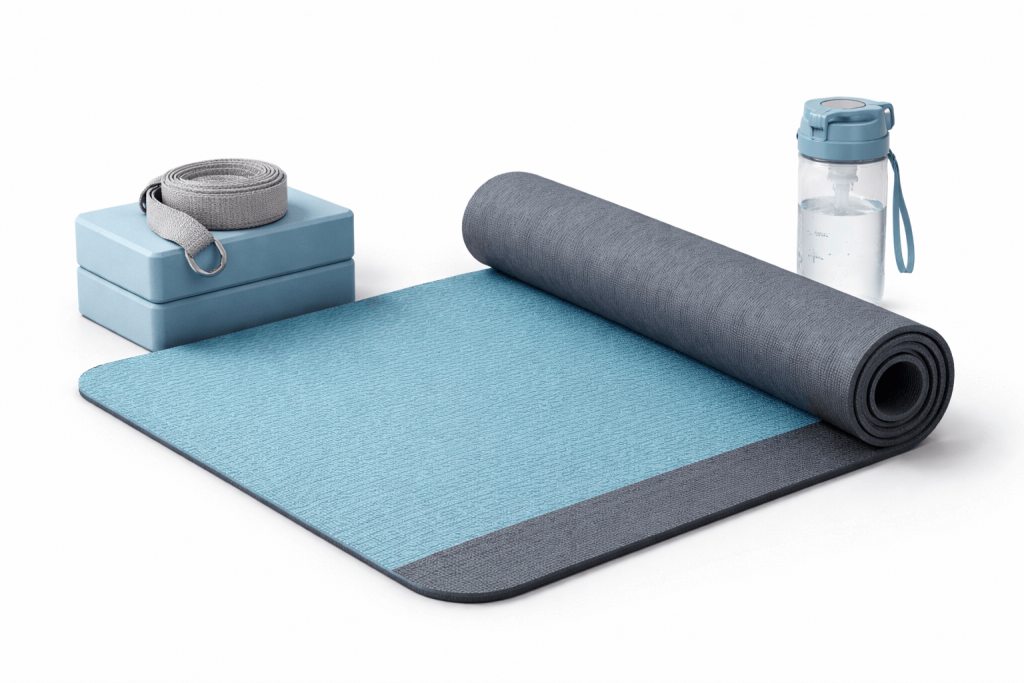

Personal well-being is not something that is added to the day.
It is what makes the day sustainable.
If you start taking care of your body and mind, everything else-work, relationships, energy-improves accordingly.
👉 No need to do everything.
It needs to start.
Outdoor activities

Spending time outdoors is one of the most underrated yet most effective daily habits.
There is something we tend to forget living in cities: we are not meant to be indoors all the time.
Between home, office, cars and digital devices, we spend most of our time in artificial environments. Artificial lighting, air conditioning, screens. All comfortable, all functional -- but not natural.
Yet, just getting outside for even a few minutes is enough to notice one thing: the body changes. The mind becomes lighter. The breath becomes deeper.
It is not a suggestion. It is biology.
According to the National Institute for Health and Care Excellence, contact with nature has direct effects on reducing stress, improving mood and even preventing some mental disorders.
The problem of “indoor” living”
Modern life has led us to be inside all the time:
- we work on the computer
- we move by car
- we relax in front of a screen
The result is continuous mental overload.
The brain receives constant stimuli:
- notifications
- noises
- information
👉 He never really has a break.
Why nature really works
Three things happen when we enter a natural environment:
- Reduction of artificial stimuli
- Activation of more relaxed attention
- Lowering stress levels
It is what psychologists call the “restorative effect”: regenerative effect.
Real-world example:
After a walk along the waterfront or in a park, many people experience a feeling of mental lightness. It is not only pleasant: it is a cognitive reset.
The 15-minute rule (simple but powerful)
Many people think that it takes “going to the mountains” or hiking to get benefits.
It doesn't.
👉 Enough 15-20 minutes a day outdoors.
It can be:
- a walk in the neighborhood
- a break on a bench
- a ride in the park
Consistency is the key.
Common mistake to avoid
Thinking that “free time” is needed.
👉 Solution:
Integrate the outdoors into your routine:
- make phone calls while walking
- lunch break outside
- errands on foot
Realistic outdoor activities
You don't need to change your life. Just adapt the one you have.
Practical ideas:
- Taking lunch breaks outside instead of indoors
- Walking instead of taking the car for short distances
- Taking an evening walk after dinner
- Using the weekend to be in nature
In many Italian cities-even small ones-there are:
- parks
- bike paths
- waterfront
- easily accessible hills
👉 The problem is not lack of space. It is the habit.
Concrete example (very common)
Typical person:
- works all day on the computer
- comes home tired
- Spend the evening on phone or TV
Introducing one habit:
👉 20 minutes of walking a day
After a few weeks:
- sleeps better
- is less irritable
- has more energy
👉 No drastic changes. Just constancy.
.
Nature and creativity
There is another aspect that is little considered: nature stimulates thinking.
When we are surrounded by greenery:
- the brain slows down
- new connections are activated
- ideas emerge
This is why many people find solutions to problems just as they walk.
Reduce digital time (without forcing yourself)
One of the most interesting effects of outdoor activities is that they automatically reduce time in front of screens.
No need to impose “less phone.”.
Just replace.
👉 30 minutes out = 30 minutes less online
The role of natural light
Sunlight has a direct impact on:
- circadian rhythm (sleep-wake)
- vitamin D production
- mood
Exposing yourself to natural light, especially in the morning, helps regulate the body naturally.
Simple but effective outdoor activities
No need to be sporty. Light activities are enough:
- brisk walk
- bicycle
- light jogging
- stretching in the park
👉 The important thing is contact with the environment, not performance.
Sustainable weekly routine
A common mistake is to think in extremes:
“Since Monday I have been going to the mountains every weekend.”.
Just as well:
- 15-20 min per day
- 1 longer weekend outing
👉 Sustainable = effective
The benefit on relationships
Being outdoors also improves relationships.
A walk:
- facilitates conversation
- reduces tensions
- create connection
It is very different than sitting in front of a screen.
Read also:


Nature is not a luxury. It is a necessity.
No need to change lives, move or make big choices.
It just needs to go out.
👉 Even a little. Even every day.
Because the body and mind do not need more stimulation.
They need balance.
Driving and stress

Reducing stress while traveling directly improves the quality of daily life.
There is a time of day that, more than others, can determine how we feel: displacements.
It doesn't matter if it's going to work, dropping someone off, or running errands. In Italy, especially in cities and urban areas, mobility is often a major source of daily stress.
Between traffic, difficult parking, delays and unforeseen events, it takes little to start the day with tension-or end it worse than it began.
And the problem is that this stress does not remain confined to driving-we carry it around with us, affecting work, relationships, and mood.
The invisible stress of mobility
Many people do not realize how much driving affects their well-being.
Typical signals:
- irritability for no apparent reason
- mental fatigue already in the morning
- impatience in relationships
👉 Often the cause is precisely the way we experience travel.
Real-world example:
Those who spend 30-40 minutes in traffic every day accumulate constant tension, even if they are not always aware of it.
The first mistake: starting already late
One of the main stressors is time.
When leaving late:
- every traffic light becomes a problem
- every slowdown irritates
- every contingency weighs twice as much
Simple but very powerful solution:
👉 leave 10 minutes earlier
It seems little, but it completely changes the perception of the trip.
Immediate anti-stress strategy
Before leaving:
- choose what to listen to (podcast/music)
- set the path
- accept travel time
👉 This eliminates the 70% of perceived stress
Turning “lost” time into useful time
One of the reasons why driving is stressful is the feeling of “wasted time.”.
But that time can become a valuable space.
How?
- Podcast
- Audiobooks
- Training content.
- Relaxing music
👉 Instead of suffering the traffic, you use it.
Concrete example:
Many people start listening to podcasts while commuting and, over time, acquire new skills without devoting extra time.
Breathing at the wheel (immediate technique)
When we are in traffic, the body enters a state of tension:
- quickening pulse
- shortness of breath
- contracted muscles
The simplest solution is also the most underestimated: breathing.
Practical technique:
- inhale slowly for 4 seconds
- exhale for 6 seconds
Repeat for a few minutes:
- reduces tension
- improves concentration
- avoids knee-jerk reactions
👉 You can do it even when stopped at traffic lights.
Changing perspective (not just habits)
We can't always eliminate traffic. But we can change the way we experience it.
Two approaches:
❌ “I need to get there as soon as possible.”
✅ “I have time, I manage the journey.”
This mental difference completely changes the experience.
Alternative mobility (when possible)
In many Italian cities, alternatives have increased in recent years:
- bike paths
- improved public transportation
- sharing services
They are not always perfect, but in some cases they can reduce stress.
👉 Even using the bike 1-2 times a week can make a difference.
Walking: the easiest solution
For short trips, walking is often underestimated.
Advantages:
- zero traffic stress
- physical movement
- time to think
👉 In some cases it is even faster than the car (especially in urban centers).
The environment inside the car
The indoor environment also greatly affects the experience.
Small details make a big difference:
- balanced temperature
- comfortable seat
- appropriate music
- light fragrance
👉 The car becomes a personal space, not just a vehicle.
Real example
Two people take the same route every day.
Person A:
- starts late
- tension guide
- arrives stressed
Person B:
- part one
- listen to podcast
- drive slowly
👉 Same traffic, completely different experience.
Reduce reactivity
One of the main problems in driving is reaction to others:
- horn
- aggressive overtaking
- misbehavior
We cannot control others, but we can control our own reaction.
👉 Less reactivity = less stress
Smart mobility routines
Little habits that make everything better:
- check the route before leaving
- avoid peak times whenever possible
- organizing committees
Daily Routine Example: A Simple Plan for a Better Life
A well-structured daily routine helps improve productivity, energy, and well-being without stress.
Here is a practical and realistic example to follow every day.
Example of a complete daily routine
Morning
- 07:00 → wake up and natural light
- 07:05 → drink water
- 07:10 → make the bed
- 07:15 → Preparation without smartphone
👉 Goal: Start the day with order and concentration
During the day
- 10:00 → active break (2–3 minutes)
- 1:00 PM → Screen-free lunch
- 3:00 PM → short walk or exercise
👉 Goal: Maintain energy and reduce tiredness
Afternoon / evening
- 6:00 PM → Walk or outdoor activity
- 7:30 PM → light dinner
- 9:00 PM → Reduce smartphone use
👉 Goal: To release the stress of the day
Before going to sleep
- 10:00 PM → Quick house tidying up (5–10 minutes)
- 10.15pm → Preparation for the next day
- 10:30 PM → low lights, no screens
👉 Goal: Improve sleep and start the next day better
Sample daily routine (minimal version)
If you're short on time, follow this basic outline:
- Morning → water + natural light
- Day → 20 minutes of movement
- Evening → 10 minutes of tidying up
- Night → no smartphone before sleeping
👉 This is a simple yet effective daily routine
How to adapt your daily routine
Every daily routine should be:
- flexible
- realistic
- sustainable
👉 Start with a few habits and make them automatic
Why this routine works
This sample daily routine works because:
- reduces stress
- improves energy and concentration
- creates mental structure
👉 Even small daily changes bring concrete results over time
Read also:
👉 How to organize daily life: home, work and leisure time
👉 Reducing stress in daily life: practical strategies for home, driving and habits


Mobility is not just getting around. It is a part of your day.
If you live it badly, it ruins everything else.
If you manage it well, it can become a useful, even enjoyable space.
👉 You can't always change the traffic.
But you can change the way you go through it.

FAQ – Daily Habits
What habits really improve the quality of life?
Sustainable ones: daily exercise, order at home, regular sleep, and stress management.
How long does it take to see results?
Improvements in energy and concentration can be noticed after just 1–2 weeks.
Is it better to start with many habits or just a few?
Better to have a few simple but consistent habits.
Do daily habits reduce stress?
Yes, especially routine, movement and organization of spaces.
How to maintain consistency over time?
Making habits easy and repeatable every day.
The quality of your life doesn't depend on how much you do, but on how sustainable your daily habits are over time.
Conclusion
Living better doesn't require radical changes, but sustainable daily habits.
Start with just one thing today:
a walk, a tidier house, or a simpler evening routine.
👉 The difference isn't made by big decisions, but by what you do every day.
Start today with just one habit: that's how you build a better life.


 Italian
  English