

Reading time: 5 minutes
Immediate response
If your car clicks but won't start, the most common causes are a dead battery, loose or oxidized terminals, faulty electrical connections, or a starter motor problem.
Multiple rapid clicks may indicate a voltage drop during cranking. A single click could be caused by the starter motor, solenoid, relay, or power supply.
Noise alone isn't enough to pinpoint the fault. Before replacing the battery or starter motor, check the instrument panel, battery voltage, and connections.
What you will learn:
What does it mean when the car clicks but won't start.
How to distinguish a dead battery from a faulty scooter.
What's the difference between a single click and multiple quick clicks?.
What checks to do without dismantling components.
When a booster can be useful.
What mistakes to avoid.
Index
Why does the car click but not start?
You turn the key or press Start.
You hear a click, but the engine doesn't turn.
Maybe you try again and hear a lot of rapid clicks. Or the dashboard lights up normally, but nothing else happens.
They are similar situations, but they can have different causes.
In cars with internal combustion engines and traditional starters, the starter motor requires a lot of current to turn the engine.
If the battery is weak or the electrical connections cannot carry that current, the scooter may not function properly.
A faulty starter motor can also cause the same symptom.
On hybrid cars and more complex Start&Stop systems, however, the ignition may use different components. The controls must therefore be adapted to the vehicle.
Does a car click once or click many times?
The type of noise can provide a first clue.
Just one click when you try to start
If you hear a single click and the engine does not turn, the possible causes are:
Faulty starter motor.
Solenoid that activates without being able to operate the motor.
Weak battery.
Faulty power or ground connections.
The clicking sound can also come from a relay, not necessarily from the motor.
Don't replace the starter motor based on the noise alone.
Lots of quick, repeated clicks
A series of quick clicks is often linked to a voltage drop during start-up.
The battery may be dead or a connection may have excessive electrical resistance.
You may also notice that the lights on the panel are dimming.
No clicking and engine stopped
If you don't hear any noise, possible causes include:
Battery completely flat.
Start control problem.
Circuit relay or fuse.
Immobilizer or electronic start consent.
Gear position sensor or clutch switch, where equipped.
Check for any error messages before attempting further.

Battery or starter motor? How to tell the difference
This table helps interpret symptoms.
Symptom | Battery or connections | Motor |
|---|---|---|
Repeated rapid clicks | More likely | Less typical |
Just one click | Possible | Possible |
Very dim picture lights | More likely | Possible |
Normal picture, engine off | Possible | Possible |
Slow start | Frequent | Possible |
Battery checked to be efficient, engine stopped | Check the connections | To be verified |
The click is a clue, not a diagnosis.
To learn more about component failures, read Faulty starter motor: symptoms and what to do
The 6 most common causes when the car clicks but won't start
1. Battery discharged or damaged
It is one of the first causes to check.
The battery may have enough power to turn on the ignition, but not enough to turn the starter motor.
The problem may appear after long periods of inactivity, short journeys or low temperatures.
If this happens after a few days of parking, consult Car battery draining while stationary: causes and checks .
If the problem occurs especially in winter, read also Car battery discharge in the cold: why it goes flat and what to do about it .
2. Oxidized or loose battery terminals
A faulty connection can prevent the flow of current required for starting.
Visually check the terminals for oxidation or obvious signs of loosening.
Avoid disconnecting or tightening connections without following the manufacturer's procedures.
3. Faulty starter motor
The motor may have internal problems, such as worn brushes, defective solenoids, or other electrical and mechanical faults.
The result may be a clicking sound without motor rotation.
Before replacing it, however, you must check that it is receiving power and control correctly.
4. Faulty ground connection
A damaged, oxidized, or loose ground wire can cause a high voltage drop.
In some cases the symptoms are very similar to those of a flat battery.
5. Faulty relay or control circuit
A faulty relay or a problem in the control circuit can prevent the motor from activating.
Some cars also have control units, sensors and start authorisation systems.
A clicking sound from the fuse compartment does not automatically mean that the relay is faulty.
6. Mechanical engine problem
This is a less common possibility.
If the engine fails to turn due to a mechanical problem, even a properly functioning starter motor may fail to start.
If you hear any significant abnormal noises, avoid further attempts.
What to check when the car clicks but doesn't start
Before thinking about an expensive repair, you can do some preliminary checks.
1. Look at the instrument panel
Check if the lights dim significantly when attempting to start.
If the dashboard goes almost completely blank, there may be a severe voltage drop.
If it stays lit normally, it does not automatically mean that the battery is good.
2. Check the battery voltage
With a digital multimeter you can measure the quiescent voltage of a standard 12V lead-acid battery.
Resting tension | Indicative interpretation |
|---|---|
12.6–12.8 V | Battery generally well charged |
About 12.4 V | Partial charge |
About 12.2 V | Reduced charge |
Below 12.0V | Battery very low |
These values also depend on the temperature and battery technology.
A normal voltage does not guarantee that the battery will be able to supply the current necessary for starting.

HELPFUL TIP
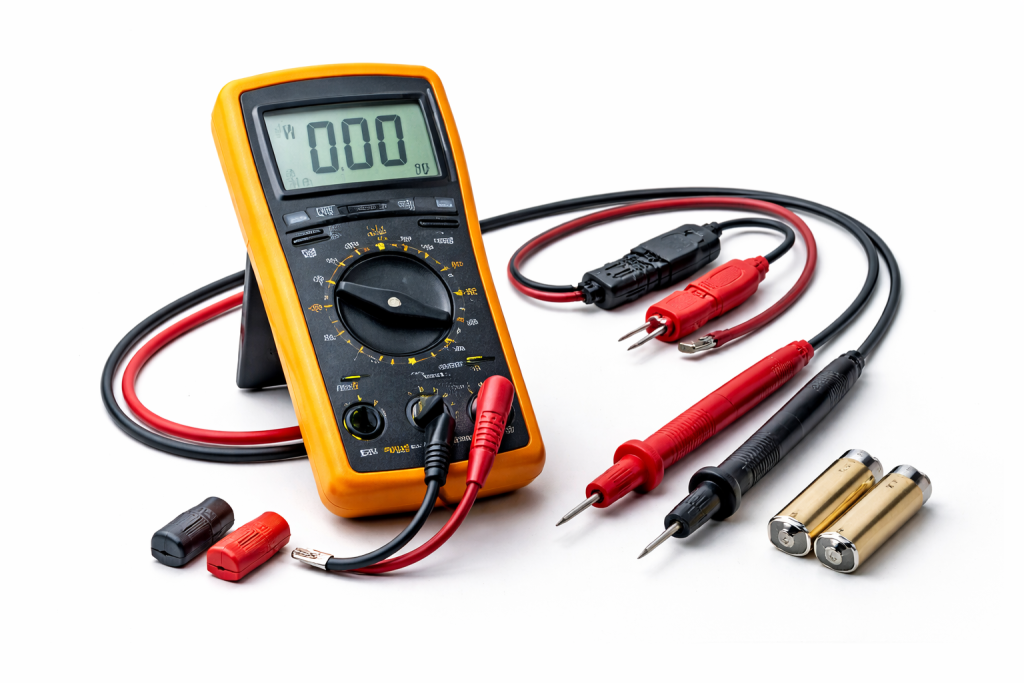
Digital multimeter for cars
Useful for checking battery voltage and carrying out simple checks on the electrical system.
See on Amazon →
3. Visually check terminals and cables
Check for oxidation, damaged wires, or seemingly loose connections.
Do not touch damaged parts and do not tamper with the orange cables of the high voltage systems on hybrid and electric vehicles.
4. Read any error messages
Some cars display warnings related to the battery, starting system, or electronic enable.
The battery light on with the ignition on and the engine off may be normal.
If it stays on after starting, however, it may indicate a charging problem.
To learn more about this signal, also consult the guide Battery light on: meaning and what to do, only if already published.
5. Consider a battery test
If the voltage reading is not sufficient to clarify the problem, a specific tester can help assess the health of the battery.
However, it does not automatically identify a fault in the motor or control circuit.
A 12V battery tester can be helpful before replacing expensive components.
HELPFUL TIP

12V Car Battery Tester
See on Amazon →
What to do if your car still won't start
If preliminary checks do not clarify the problem, avoid persisting with repeated attempts.
If the battery is low
You can consider charging with a compatible device or emergency starting, only if provided for in the vehicle manual.
A 12V booster suited to the car's characteristics can be useful in certain situations.
Do not use a booster with a voltage other than that required and do not connect it to points not authorized by the manufacturer.

HELPFUL TIP
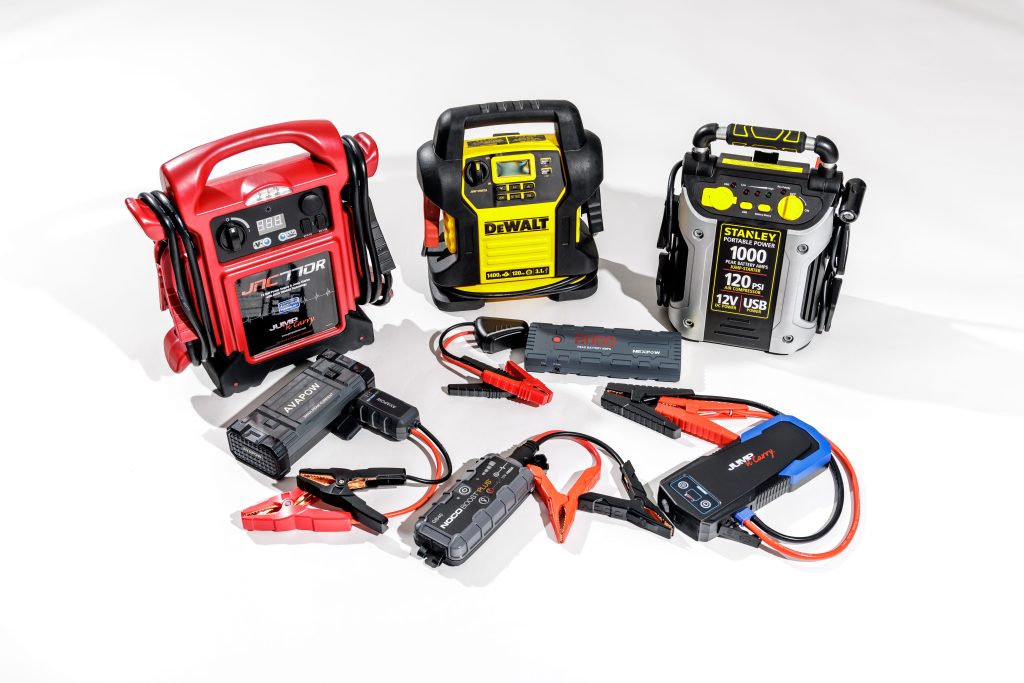
Portable jump starter
Useful for attempting to start a flat battery without necessarily having to connect a second car.
See on Amazon →
If the battery is efficient
If the battery has been checked and the engine still does not crank, the starting circuit needs to be checked.
Diagnosis may include:
Voltage drop on power cables.
Ground connections.
Power supply and control of the motor.
Relays and start-up enable systems.
Any mechanical problems.
These checks require appropriate tools and skills.
How much does it cost to fix the problem?
The cost depends on the actual faulty component.
Intervention | Approximate cost |
|---|---|
Battery test and initial checks | €15–50 |
Cleaning or fixing clamps | €20–70 |
12V battery replacement | €90–250 |
Replacing the starter motor | €200–€600 or more |
These intervals are indicative, not verified estimates. They may vary depending on the vehicle, parts, and labor.
A correct diagnosis avoids replacing components that are still functioning.
Mistakes to avoid
Change the starter motor immediately: the problem could be the battery or a connection.
Continue to crank the engine: this can further drain the battery and stress the components.
Thinking that the ignition on means the battery is good: the scooter requires much more current.
Connecting a booster without checking the instructions: Some vehicles have specific points.
Jumpering relays or starter motor terminals can cause short circuits, unexpected vehicle movement, and damage.
Ignore any mechanical problems: Not all misstarts are caused by the electrical system.
In summary
If the car clicks but won't start, check the battery and electrical connections first.
Rapid clicks may suggest insufficient voltage, while a single click may be caused by the motor, solenoid, or control circuit.
Noise is a clue, not a diagnosis.
If the battery is good and the engine still won't turn over, a thorough check of the starting system is needed.

FAQ - Frequently Asked Questions
Why does the car click but the engine doesn't turn over?
The most common causes are a dead battery, faulty connections, and starter motor problems.
If I hear only one click, is the motor broken?
Not necessarily. A clicking sound can also be caused by the battery, the solenoid, the wiring, or the control circuit.
If I hear a lot of clicking, should I change the battery?
Not right away. Rapid clicks often indicate a voltage drop, but the cause could be a faulty connection.
Can I use a booster if the car clicks?
Yes, if the problem is due to a dead battery and the vehicle supports the procedure. Use a compatible booster and follow the manual.
Why does the ignition turn on but the car won't start?
The dashboard requires much less current than the starter motor. A weak battery can cause the warning lights to come on, but the engine won't start.
How much does it cost to replace the starter motor?
Approximately €200–€600 or more, depending on the model and labor. The fault must be confirmed first.
Conclusion
When your car clicks but doesn't start, don't immediately think about the starter motor.
A weak battery, a oxidized terminal, or a faulty ground connection can produce very similar symptoms.
Start with the simplest checks and, if the problem persists, request a diagnosis of the starter circuit.
Have you ever heard a clicking sound but couldn't start your car? Tell us in the comments if the problem was the battery, the starter motor, or another component.


 Italian
 English