

Reading time: 4 minutes
Immediate response
How long does a car alternator last? There is no specific deadline, but it can normally exceed 100,000 km and, in many cases, get to 150,000–200,000 km or more.
However, lifespan depends on usage, temperatures, condition of the service belt, bearings, and the general condition of the electrical system. Therefore, signs of wear are more important than mileage: battery light, abnormal noises, electrical problems or battery that frequently discharges.
What you will learn:
- How long can a car alternator last?.
- What can reduce its duration.
- What signs can predict a failure?.
- How to distinguish an alternator problem from a battery problem.
- When is it best to check or replace it?.
Index
The alternator is not a component that is normally replaced at a predetermined mileage.
It can work for most of the car's life or start giving problems much sooner. For this reason kilometers and age are only indications: what really matters is how the charging system is working.
How long does a car alternator last?
As a general reference, an alternator can last over 100,000 km and often reach 150,000–200,000 km.
It does not mean that it needs to be replaced at 150,000 km.
A car with 200,000 km may still have the original alternator in perfect working order, while another may need repair or replacement much sooner.
Even the years take their toll: bearings, voltage regulator, brushes and other internal components work every time the engine is turned on.
What can shorten the life of the alternator?
The life of the alternator depends greatly on the conditions in which it works.
Heat in the engine compartment
High temperatures and continuous heating and cooling cycles can accelerate the aging of components.
Service belt and tensioner
The alternator is driven by the engine via the service belt. A damaged belt, faulty tensioner, or misalignment can cause slippage, vibration, and abnormal stress.
Worn bearings
Bearings allow the rotor to spin at high speed. When they begin to deteriorate, they may appear. buzzing, whistling, or metallic noises coming from the alternator area.
Oil, water and other liquids
Leaks in the engine compartment can reach the alternator and damage electrical or mechanical parts.
Battery and electrical system
A deteriorated battery or problems in the electrical system can alter the normal working conditions of the charging system.
If you want to delve deeper into this aspect, in the guide How long does a car battery last? You'll find average battery life and signs that indicate when the battery is losing efficiency.
What are the signs of a worn alternator?
An alternator doesn't always stop working suddenly. Sometimes, certain signs appear first:
- battery light on while marching;
- headlights that change intensity;
- battery that drains frequently;
- starting difficulties;
- noises from the service belt area;
- anomalies in electrical devices;
- abnormal charging values.
La battery indicator light It deserves particular attention because it does not necessarily indicate a faulty battery: it could signal a problem in the charging system.
If it appears on the dashboard, you can learn more in the guide Battery light on: what it means and what to do.
A single symptom, however, isn't enough to determine whether the alternator is faulty. Before replacing it, you should also check the battery, connections, and belt.
Alternator or battery: how to understand the problem?
It's easy to confuse them because some symptoms are similar.
La battery stores energy and allows, among other things, the engine to be started.’alternator, with the engine running, powers the electrical system and helps keep the battery charged.
If an old battery no longer holds a charge, the problem may be the battery itself.
However, if a good battery continues to discharge because it is not being recharged properly while driving, the charging system and therefore the alternator must be checked.
Replacing the battery immediately without checking may not solve the problem.
How to check if the alternator is working?
A first check can be done with a multimeter, measuring the voltage at the battery terminals.
On traditional cars, comparing the voltage with the engine off and on can give a first indication of how the charging system is functioning.
On modern cars with intelligent charging management, However, the voltage can increase or decrease depending on operating conditions. A single value read with the multimeter is therefore not sufficient to declare the alternator faulty.
If you see a battery warning light, electrical problems or frequent discharges, it is best to check together alternator, battery, wiring and service belt.
For an initial check of the battery and charging system, a digital multimeter can be helpful. This measurement helps identify abnormal values, but it's no substitute for a complete diagnosis.
HELPFUL TIP
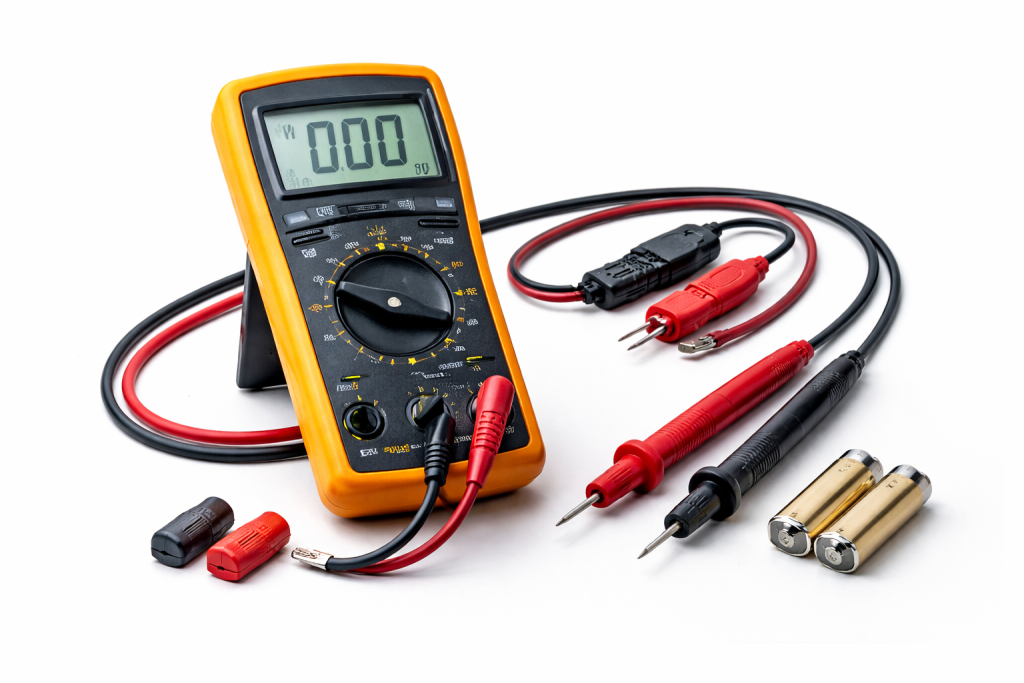
Digital multimeter for cars
Useful for checking battery voltage and carrying out simple checks on the electrical system.
See on Amazon →
How to make your alternator last longer?
There is no scheduled maintenance for the alternator that can guarantee its longevity.
However, some precautions can prevent it from working in unfavorable conditions:
- don't ignore noises coming from the service belt;
- check for any oil or fluid leaks;
- keep the battery in good condition;
- check terminals and connections for oxidation;
- Quickly check the charging system when the battery light appears.
The goal is not to preemptively replace a still-functioning alternator, but to prevent other problems from compromising its operation.
When should the alternator be replaced?
There is no mileage at which the alternator must be changed automatically.
If it produces energy properly, does not make any unusual noises, and the charging system is working well, there is no reason to replace it just because the car has exceeded 100,000, 150,000, or 200,000 km.
Replacement becomes necessary when a diagnosis confirms an electrical or mechanical fault that prevents the alternator from functioning properly.
If the alternator has already stopped charging, read Broken alternator: what happens and how much you can drive to understand what can happen while driving and why there is no safe number of kilometers to travel.
In summary
A car alternator can exceed 100,000 km and often reach 150,000–200,000 km or more, but it does not have a set expiration date.
Mileage alone doesn't tell you when to change it.
Battery warning light, unusual noises, electrical problems and battery that keeps draining These are much more useful signals to understand when it is time to check the charging system.

FAQ - Frequently Asked Questions
How many km does an alternator last?
It can exceed 100,000 km and in many cases reach 150,000–200,000 km or more. However, there is no one-size-fits-all mileage limit for all cars.
Can an alternator last 200,000 km?
Yes. An alternator can reach and exceed 200,000 km if it continues to work properly and has no mechanical or electrical problems.
Should the alternator be replaced as a preventative measure?
Normally, no. There's no standard replacement interval. If it's working properly, mileage alone doesn't justify a change.
Does a dead battery mean the alternator is broken?
No. The battery can discharge for a variety of reasons. You should check the battery, charging system, connections, and any abnormal current draw before attributing the problem to the alternator.
Does the battery light always indicate a bad alternator?
No. It indicates a fault in the charging system. The alternator is one possible cause, but the problem could also involve the belt, connections, or other components.
Can an alternator suddenly break?
Yes. Some faults can appear quickly, while others are preceded by noises, charging problems, or electrical anomalies.
Conclusion
There's no need to change the alternator just because the car has a lot of mileage.
It is more important to observe How the charging system works and intervene when the first signs appear. A timely check also helps avoid unnecessary battery replacements when the problem lies elsewhere.
If the alternator stops charging completely, the car will only be able to continue running as long as there is enough energy left in the battery.


 Italian
  English