

Reading time: 5 minutes
Immediate response
A debimeter failure It can cause loss of power, uneven acceleration, jerking, increased fuel consumption, and the engine warning light coming on. The problem can occur when the MAF sensor incorrectly measures the amount of intake air and sends incorrect values to the control unit.
However, the same symptoms can also be caused by the EGR valve, intake leaks, turbocharging, or engine fuel supply. Before replacing the flow meter, it's a good idea to check the sensor for errors, connections, and readings.
What you will learn:
- What is the flow meter and what is it used for?.
- What are the symptoms of a faulty flow meter?.
- Because it can get dirty or stop working properly.
- What happens when you measure air incorrectly.
- How to distinguish a flow meter problem from an EGR problem.
- What does it mean if the car runs better with the mass air flow sensor disconnected?.
- How to check it via OBD2.
- When is cleaning enough and when should it be replaced?.
Index
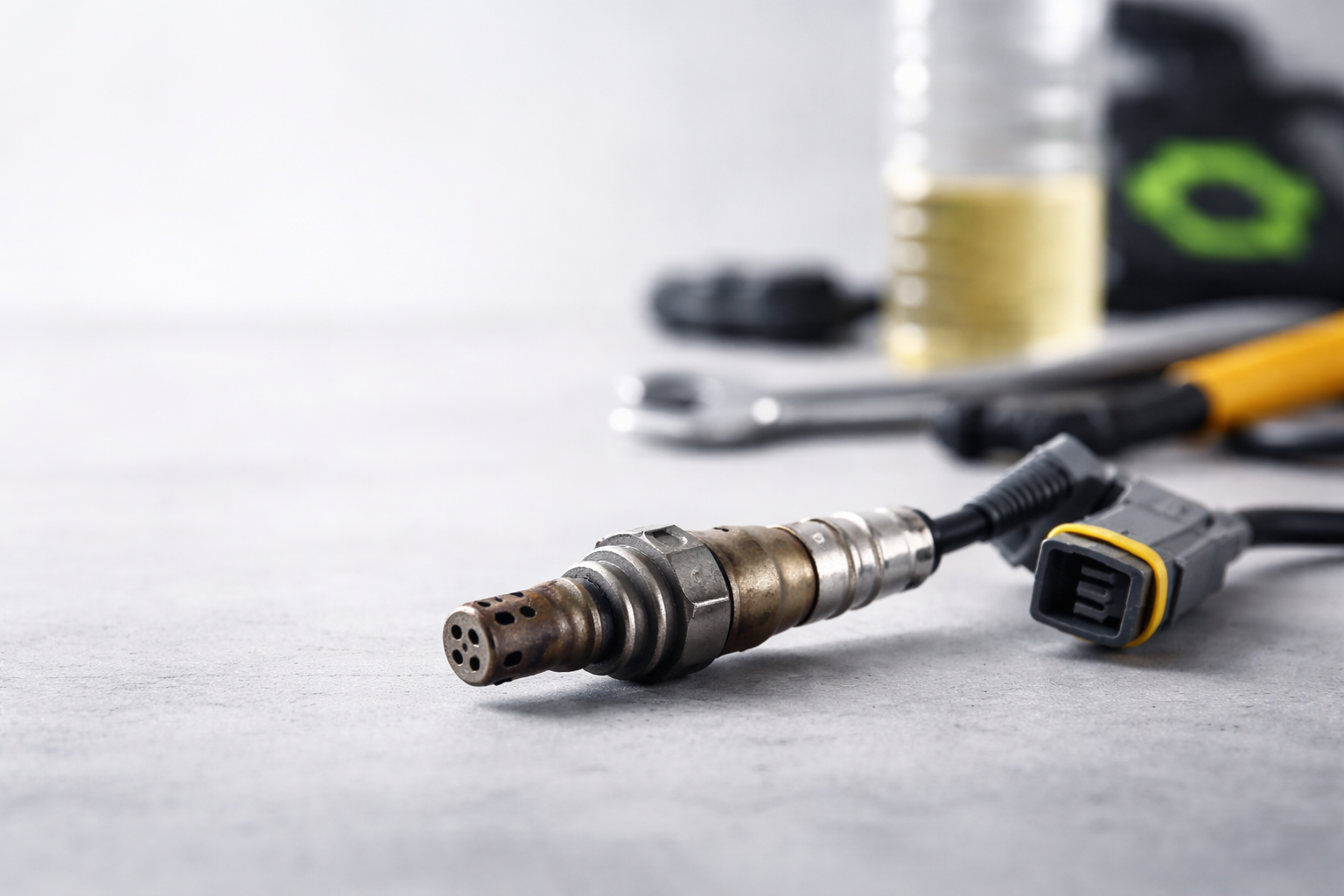
The debimeter, also called MAF sensor (Mass Air Flow), measures the air drawn in by the engine and provides the control unit with important information for engine management.
When it starts providing incorrect data, the car can lose performance without immediately indicating which component is responsible.
The problem is that many of the symptoms are similar to those caused by a dirty EGR, an intake leak, or other faults. That's why it's best to start with a diagnosis, not simply replacing the sensor.
What is a flow meter and what is it used for?
The flow meter measures the amount of air drawn in by the engine.
It's usually installed in the intake duct, after the air filter. Inside it is a sensing element that allows the sensor to determine the airflow passing through it.
The control unit uses this information together with data from other sensors to manage the engine operation.
If the measured value does not correspond to the actual amount of intake air, engine management may become less precise.

What are the symptoms of a faulty flow meter?
A debimeter failure It does not necessarily produce the same symptoms on all cars.
Possible signs include:
- loss of power;
- erratic acceleration;
- jerks;
- slow throttle response;
- unstable minimum;
- increase in consumption;
- difficulty during acceleration;
- engine light on;
- possible emergency mode.
The sensor does not necessarily have to stop working completely.
It can continue to send a signal to the control unit, but with values imprecise or inconsistent. In these cases the problem can be more difficult to pinpoint than a completely broken sensor.
For this reason, a simple loss of power is not enough to conclude that the flow meter needs to be replaced.
Why does the flow meter get dirty or fail?
The air flow meter works continuously in the intake air flow.
Over time, contamination of the sensitive element or electrical problems may occur.
Possible causes to check for include:
- dust and dirt;
- contamination of the sensitive element;
- very dirty or inadequate air filter;
- connector problems;
- damaged wiring;
- sensor deterioration;
- anomalies or leaks in the intake system.
It is therefore important not to just check the flow meter.
A damaged hose, an incorrect connection or a problem with the intake can produce abnormal values without necessarily requiring the sensor to be replaced.
What happens if the flow meter measures the air incorrectly?
The control unit continuously compares numerous parameters to manage the engine.
If the flow meter reports a different amount of air than that actually aspirated, the engine management may be based on incorrect information.
This may result in a loss of performance, irregular response to the accelerator, different fuel consumption than normal or the engine warning light coming on.
The fault may also only occur under certain conditions. A sensor may appear to function normally at idle and provide less consistent readings as airflow increases.
Air flow meter or EGR valve?
Mass air flow sensor and EGR can produce some very similar symptoms.
Loss of power, rough running and a check engine light can appear in both cases.
If you suspect a problem in the intake system, it may therefore be useful to also check the symptoms of a faulty EGR valve, especially when there is irregular idling, smoke or anomalies related to gas recirculation.
The presence of similar symptoms is precisely the reason why it is best to avoid replacing components by trial and error.
What happens if you disconnect the flow meter?
It is one of the best-known tests, but also one of the easiest to misinterpret.
When the flow meter is disconnected, on many vehicles the control unit recognises the absence of the signal and can use replacement values to keep the engine running.
If the car noticeably changes its behavior or seems to run better, this can be a helpful clue.
But it's not definitive proof.
If the car runs better with the mass air flow sensor disconnected, it does not automatically mean that the mass air flow sensor is faulty.
The variation may depend on how the control unit manages the absence of the sensor or on other problems present in the intake.
Furthermore, disconnecting the flow meter can cause new error codes to be stored.
The test can therefore provide information during diagnosis, but should not be used alone to decide whether to purchase a new sensor.
How to check the air flow meter with OBD2?
An OBD2 scanner can help you figure out what's going on without having to start replacing components.
Depending on the car, you can check:
- stored error codes;
- air flow value detected by the MAF;
- variation of value when changing engine speed;
- any inconsistent values;
- other parameters related to suction.
However, there is no single correct MAF value that is valid for every car.
The amount of air depends on the displacement, engine speed, load, and specific engine characteristics. The data must therefore be interpreted in the context of the vehicle being tested.
To understand how to read the errors stored by the control unit, our help may be useful OBD2 guide, where we explain how car diagnostics work and how to interpret error codes.

Clean or replace the flow meter?
A dirty flow meter it is not automatically a flow meter that needs to be replaced.
If contamination of the sensitive element is found, cleaning with a specific product can be evaluated. MAF sensors/air flow meters, following the manufacturer's instructions.
However, you must be careful: the sensitive element of the flow meter is delicate.
It is not convenient:
- rub it;
- use brushes;
- touch the sensitive element directly;
- use generic cleaners not suitable for the sensor.
If an electrical fault, an abnormal signal or a persistent malfunction is confirmed, replacement may be necessary.
The most sensible sequence remains:
diagnosis → check → cleaning if necessary → replacement if necessary.
If the flow meter is dirty but does not have an electrical fault, a specific cleaner for MAF sensors, avoiding generic detergents that could damage the sensitive element.
HELPFUL TIP

M/A Professional Air Flow Sensor Cleaner
Specific cleaner for mass air flow meters and MAF sensors. Designed to remove dirt and residue from the sensor without mechanically interfering with the sensitive element. Use according to the manufacturer's instructions and verify compatibility with your vehicle.
See on Amazon →
In summary
A debimeter failure can cause loss of power, erratic acceleration, jerking, increased fuel consumption and an engine warning light.
The same symptoms can, however, be caused by the EGR valve, intake leaks, or other problems.
Before purchasing a new sensor, it's a good idea to check the flow meter for errors, connections, suction, and data. If the problem is simply contamination, in some cases, a specific cleaning may be considered.

FAQ - Frequently Asked Questions
How to understand if the flow meter is faulty?
Loss of power, rough acceleration, jerking, and the engine light may be signs, but they don't necessarily confirm the fault. It's best to check the fault codes, sensor data, wiring, and intake system.
If I disconnect the flow meter and the car runs better, does it mean it's broken?
Not necessarily. When the sensor is disconnected, the control unit can use substitute values. An improvement may be a diagnostic clue, but it doesn't necessarily prove that the flow sensor is faulty.
Can a dirty flow meter cause loss of power?
Yes. If contamination affects the air flow measurement, engine operation may be affected. Before cleaning, however, it's a good idea to check that the problem is actually related to the sensor.
Can the flow meter be cleaned?
In some cases, yes, using a specific product for MAF sensors and without touching or rubbing the sensitive element.
Does the faulty air flow meter always turn on the engine light?
No. A sensor can provide inaccurate but still plausible values without immediately causing the warning light to come on.
Conclusion
Loss of power and uneven acceleration may point to the air flow sensor, but it is not worth replacing it by trial and error.
The diagnosis allows you to check the sensor, verify its data and make sure that there are no problems with the intake.
Only after these checks does it make sense to decide whether clean or replace the flow meter.


 Italian
  English