

Reading time: 11 minutes
What you will learn:
- Why Most Routines Fail After a Few Days
- How to Create a Sustainable Morning Routine
- The most common mistakes to avoid
- How to automate new habits
- What to do when you lose motivation
Immediate response
An effective morning routine doesn't require waking up at 5 a.m. or dozens of activities. It works when it's simple, sustainable, and tailored to your daily routine. Start with a small habit and gradually build the rest.
Most people don't abandon their routines because they're lazy. They abandon them because they try to change too much, too quickly.
Index
Create a effective morning routine It seems simple when motivation is high. The problem arises after a few days, when the initial enthusiasm begins to fade.
Wake up early.
Training.
No phone as soon as I picked up.
Maybe even meditation and a healthy breakfast.
The first day seems easy.
The second one requires more effort.
The third time you start snoozing your alarm clock.
If this has happened to you, you're not alone.
The problem is not a lack of will.
It's just that many routines are built too ambitiously and become impossible to maintain.
Why Morning Routines Fail After a Few Days
An effective morning routine works when it is simple, sustainable and connected to a real need. You don't need to wake up early or do 10 activities-just start with minimal actions and build over time.
At first it seems easy.
You are motivated, charged, convinced that this time will be different.
Imagine a disciplined, productive, in-control version of you.
Then the same thing always happens.
Steps from:
- wake up late
- check the phone in bed
- start late
To want to do everything together:
- wake up at 5:30 a.m.
- training
- meditation
- journaling
- perfect breakfast
The problem?
It is not ambition. È overload.
Your brain does not see this change as an improvement.
He perceives it as a threat.
The role of dopamine (what no one explains to you)
In the first few days, everything works because of a dopamine spike.
Novelty stimulates you.
You feel motivated.
You have energy.
But this push is short-lived.
After about 48-72 hours:
- the novelty effect wears off
- The brain goes back to saving energy
- new actions become more “expensive”
And this is where the rupture occurs.
You don't stop because you are lazy.
Stop because You were counting on motivation, not on a system.
The truth that no one says
Routines that work are not impressive.
They are simple.
Repetitive.
Almost boring.
And that is precisely why they last.
An effective routine does not work when you are motivated.
It works when you are not at all.
The problem is not that you are quitting. It is that you are starting in the wrong way.
Start with one minimal change
Choose actions that are realistic, not perfect
Connects routine to emotional need
Minimize morning decisions
Gradually increase habits
Prepare everything the night before
Accept the unexpected without giving up
What to do right away if you want to create a morning routine
If you want to start tomorrow morning:
- choose just one habit
- prepare everything the night before
- avoid drastic changes
- don't use your phone as soon as you wake up
- maintain the routine for at least a week
The initial goal is not perfection but continuity.
Effective morning routine in 4 steps
If you want to get started right away without complicating your life:
- Drink a glass of water as soon as you wake up.
- Open the window and let in natural light.
- Move for at least 2 minutes.
- Write down your 3 priorities for the day.
This simple sequence takes less than 5 minutes and is enough to build a sustainable routine over time.
Step 1 - Start with a ridiculously easy version
If your routine requires willpower every morning, it is already doomed to failure.
It starts with something impossible to refuse.
Real-world examples:
drink a glass of water
open the window
make the bed
sit 1 minute in silence
Yes, just this one.
Because the real victory is showing up.
Common mistake: starting “too motivated”
When we decide to change, we tend to overload ourselves.
We think:
“While I'm at it, I'll do everything.”
This leads to:
- too many actions together
- high mental energy consumption
- rapid collapse
A simple rule:
👉 If it looks easy, it's okay
👉 If it looks ridiculous, it's perfect
Because what is minimal today becomes automatic tomorrow.

Step 2 - Don't aim for perfection, aim for continuity
Many people think:
“If I can't make it complete, I might as well not make it.”
This is mistake number one.
An effective routine is modulable.
Do you have 2 minutes? Make the mini version.
Do you have 20 minutes? Make the full version.
Step 3 - Connect the routine to an emotional need
Habits last when they solve something important.
Don't build a routine to “be productive.”.
Build it for:
feel less stressed
have energy
stop living in emergency mode
make up time for you
Ask yourself:
“How do I want to feel in the morning?”
If your goal is to start the day with less mental tension, you can delve into some practical strategies to reduce stress in everyday life.
The link between emotions and habits
Habits are not driven by logic.
They are guided by what makes us feel something.
Example:
- don't drink water because “it's good for you”
- you do it because it makes you feel more awake
That is why a routine works when:
- Reduces a negative feeling
- increases a positive feeling
If you don't feel anything, it won't last.
👉 The habits that remain are those that change your internal state, not just your behavior.
Step 4 - Eliminate decisions
The brain is slow in the morning. Every choice is an obstacle.
Prepare everything the night before:
ready-made clothes
breakfast arranged
open agenda
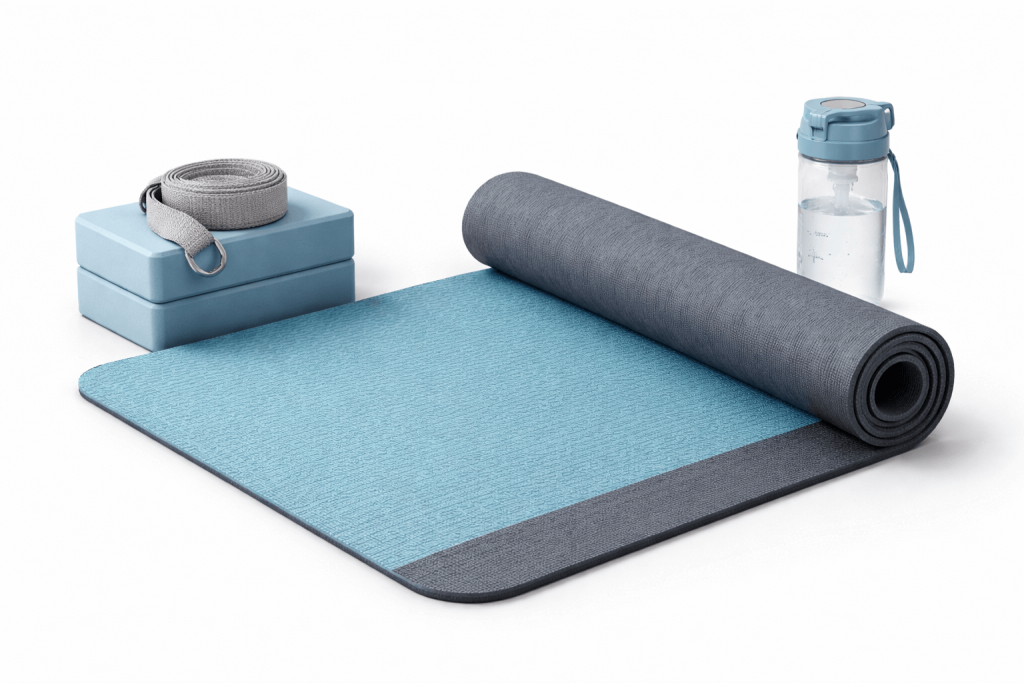
mat already laid out
Morning decision fatigue (decision fatigue)
Every decision consumes mental energy.
As soon as you wake up, your brain is in the most fragile stage of the day.
If you have to decide:
- what to do
- where to start
- how much time to devote
...You are already creating friction.
Constant people do not decide in the morning.
👉 They perform something already decided.
The less you think, the more you do.

Step 5 - The power of “anchors”
Connect the new habit to something you already do.
Examples:
After turning off the alarm → I drink water
After making the bed → I open the window
After coffee → I plan the day
This eliminates the effort of remembering what to do.
Step 6 - Build an effective minimum sequence
Here is a sustainable morning routine for most people:
Basic routine (10 minutes)
Drinking water
Open the window
Move the body for 2 minutes
Write 3 priorities of the day
This alone radically changes the quality of the day.
Ultra-minimum version (for difficult days)
If even 10 minutes seems too much, reduce again.
2-minute routines:
- drink water
- open the window
- take 3 deep breaths
End.
It seems little.
But it is enough to:
- stop the automatism
- start with intention
- maintain continuity
👉 Don't underestimate the tiny routines. They are the ones that survive.
Step 7 - The evening decides the success of the morning
Difficult mornings arise from messy evenings.
Small evening checklist:
prepare clothes
set realistic alarm clock
Avoid screens in the last 20 minutes
Deciding what to do as soon as you wake up
The role of friction (friction)
Every habit has a level of friction.
Examples:
- phone nearby → high risk of distraction
- ready-made clothes → low friction
The secret is not to motivate yourself more.
It is rendering:
- difficult what you want to avoid
- easy what you want to do
👉 Discipline decreases when the context is designed well.

Real-world examples of sustainable routines
Those who work from home
Wake up at 7:30 a.m.
Water + natural light
5 minutes of stretching
Planning day
Total time: 10 minutes.
Parent with children
Wake up 15 minutes before the children
Coffee in silence
Deep Breath
Agenda control
Nothing else is needed.
Student
Drinking water
Making the bed
Review the goals of the day

The ultimate secret: make it enjoyable
If the routine is a punishment, it will not last.
Insert at least one thing that makes you say:
“Okay, I really like this part.”
Examples:
favorite music
quality coffee
short reading
warm light
room fragrance
The principle of “immediate reward”
The brain learns faster when it receives an immediate reward.
If your routine is only “dutiful,” it will be perceived as effort.
Add a micro-reward:
- a song you love
- a drink you like
- a moment of comfort
👉 It is not a prize. It is a habit accelerator.
Recommended minimum morning routine (ready to use)
If you want to start tomorrow without thinking too much about it:
👉 Drink water
👉 Open the window
👉 Move 2 minutes
👉 Write down 3 important things
Total time: less than 5 minutes.
Yes, this is enough to change the inertia of the day.
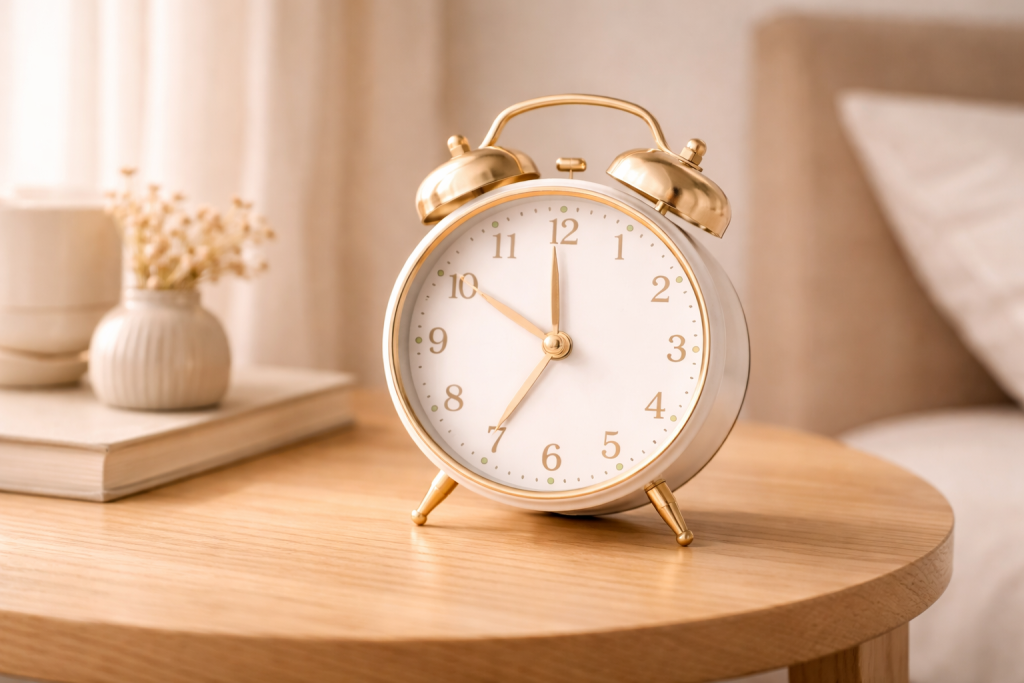
Useful tools to support the routine.
You don't need expensive tools to build an effective routine. However, a few simple items can help you reduce distractions and make it easier to maintain new habits.
Common mistakes that derail a morning routine
Many people abandon their routine because they always make the same mistakes:
- start with too many activities
- choosing unrealistic times
- rely only on motivation
- copy routines seen on social media
- wanting to be perfect from day one
Avoiding these mistakes greatly increases your chances of success.
Advanced strategies for not giving up after a few days
Why some people really succeed in changing (and others don't)
There is a huge difference between those who maintain a routine for years and those who abandon it after a few days.
It is not discipline.
It is not mental strength.
It is not “character.”.
It is design.
People who succeed do not rely on motivation.
They create an environment that makes routine inevitable.
Think about it: if the phone is on the nightstand, the first thing you will do is pick it up.
If the water is already ready, you will drink it without thinking about it.
If the sneakers are in front of the door, moving becomes easier.
Routine should not depend on your will of the moment.
It must be the easiest choice available.
The method of “micro-successes”
Many seek transformation.
But the brain works by accumulation.
Every small action completed creates a feeling of victory.
And that feeling generates dopamine-the neurotransmitter of motivation.
Real-world example:
Day 1: Drink water as soon as you wake up → little success
Day 2: water + window → double success
Day 10: The sequence becomes automatic
You are not building a routine.
You are building self-confidence.

The mistake of the “borrowed” routine”
One of the main reasons we fail is to copy other people's routines.
The routine of a single CEO without children is not replicable by:
parents
students
shift workers
Those who return late at night
Your routine must fit your real life.
Not to the ideal life.
The 3 types of mornings (discover yours)
Slow and reflective morning
You need calm to get active.
Ideal routine:
natural light
silence
journaling
hot drink
Active and physical morning
You wake up better by moving.
Ideal routine:
stretching
energizing shower
rhythmic music
Mental morning
Your energy is cognitive.
Ideal routine:
planning
reading
objective review
Understanding your type changes everything.
“Emergency” routines for impossible days
This is the part that almost no one teaches.
You must have an ultra-reduced version for the worst days.
👉 SOS routine (60 seconds):
Drink water
Take a deep breath
Decide ONE important thing about the day
End.
Even on chaotic days, maintain continuity.
And it is continuity that builds habit.
Why the “reduced” version is the most important one
Many people think the minimal version is useless.
It is the other way around.
It is the one that:
- keeps identity alive
- avoids the sense of failure
- prevents breaking the chain
Skipping a day does not break the habit.
👉 Interrupting the rhythm yes.
The hidden role of sleep
There is no effective morning routine without sufficient sleep.
If you sleep badly, the morning will always be a battle.
Small improvements that make a huge difference:
avoid screens before sleeping
cool temperature in the room
low light in the evening
consistent sleep schedule
Invisible error: unrealistic schedules
Many routines fail because they begin with an impossible wake-up call.
If you wake up normally at 8:30 a.m., going by 5:30 a.m. is a shock.
Better:
- anticipate 10-15 minutes
- gradually adjust
👉 Routines last when they respect your rhythm, not when they force it.

How to stop checking your phone as soon as you wake up
This behavior destroys the quality of the morning.
Because:
overloads the brain
increases stress
Creates reactivity instead of intentionality
Practical solutions:
✔ analog alarm clock instead of telephone
✔ phone away from the bed
✔ airplane mode at night
✔ rule of the first 15 minutes offline
The “first victory of the day”
Making the bed is often cited for a simple reason:
It is fast.
It is visible.
It is completable.
It does not change life, but it changes the perception of the day.
The brain records:
“I'm handling things.”
How to make the routine anti-boring
Repetition can become monotonous.
And monotony leads to abandonment.
Effective strategies:
alternating music or podcasts
change position in the house
vary small details
update weekly goals
Structure remains. The experience changes.
When to change the routine (and when not to)
A routine must be stable, but not rigid.
It signals that you need to adapt it:
- it bores you deeply
- you systematically avoid it
- no longer has any effect
Signs that it works:
- is automatic
- requires little effort from you
- improves your mornings
👉 Don't change too soon. But don't get stuck.
The power of identity
The strongest habits are not based on what you do.
But about who you think you are.
Don't say:
❌ “I'm trying to wake up earlier.”
✔ “I am a person who starts the day with intention.”
This changes automatic decisions.
Morning routine and mental health
A chaotic morning increases anxiety throughout the day.
A structured morning:
reduces the feeling of urgency
increases perceived control
improves mood
stabilizes energy
For many people, it is the real main benefit.
Many of the habits that improve mornings are also part of a healthy lifestyle that helps maintain energy, concentration and mental well-being.
What to do if you live with other people
You don't always have total control over the environment.
Realistic solutions:
Create a personal “routine corner”
use headphones or soft music
anticipate the alarm clock by a few minutes
Move some activities to the bathroom or kitchen
The routine does not have to be perfect. It has to be possible.
Mini-rituals that make a big difference
Small symbolic actions can become powerful emotional anchors.
Examples:
light a candle
spray a room fragrance
always use the same cup
open the curtains completely
They create a feeling of “beginning.”.

Ready-to-use checklist
You can save it or print it.
Minimum sustainable routine
☐ Drinking water
☐ Natural light
☐ Short movement
☐ Essential planning.
Evening preparation
☐ Ready-made clothes
☐ Alarm clock set
☐ Priority of the day decided.
☐ Orderly environment
When routine becomes automatic
Commitment is needed in the beginning.
Then something surprising happens:
You don't have to think about it anymore.
The body anticipates actions.
The mind activates itself.
Skipping it becomes strange.
It is a sign that the habit is established.
The ultimate truth: you don't need the perfect routine
A routine is needed that survives the imperfect days.
The one that works when:
you've had little sleep
you are stressed
it's raining
you're in a bad mood
you don't feel like
If it endures these days, it will last for years.
Powerful question to end the day
In the evening ask yourself:
“What is the smallest thing I can do tomorrow to get a better start?”
No need to revolutionize life.
It needs to start slightly better.
Daily.

FAQ - Frequently Asked Questions
What's the best morning routine for working people?
The best routine is the one you can maintain every day. Even 5 minutes of useful activity is better than a perfect routine you abandon after a week.
Is it helpful to exercise right after waking up?
Yes. Even a few minutes of exercise can increase your energy and focus throughout the day.
Should I completely wipe my phone in the morning?
Not necessarily. The goal is to prevent it from becoming the first thing you do in the day.
What time should I wake up to have an effective morning routine?
There's no perfect time for everyone. An effective morning routine works when it's compatible with your schedule, work schedule, and sleep needs. It's better to wake up 15 minutes earlier consistently than an hour earlier for a few days.
How long does it take to automate a morning routine?
It depends on the person and the habit, but generally it takes several weeks of consistent practice.
Signs Your Routine Is Becoming a Habit
- start your day with less stress
- you no longer have to remember what to do
- skip activities less frequently
- you feel more organized
- routine requires less mental effort
When this happens, you are building a real habit.
Conclusion
Routines that truly change lives are not extreme.
They are kind, realistic and built for ordinary people with full lives.
No need to become someone new.
It only serves to start the day slightly better than yesterday.
And do it again. And again.
The morning routine is not an influencer ritual.
It is a support system for your real life.
It does not turn you into a different person.
It helps you become a more stable, lucid and present version of yourself.
And it all starts with a tiny choice made as soon as you open your eyes.
Don't look for the perfect routine.
Choose just one simple action to do tomorrow morning and stick to it for a week.
Lasting changes do not arise from sudden revolutions, but from small gestures repeated over time.
Save this guide and try the minimal routine for the next 7 days. You may discover that change doesn't come from major revolutions, but from a single habit repeated every morning.


 Italian
  English