
Reading time: 8 minutes
Immediate response
For maintain the motorcycle To ensure efficiency over time, regularly check your tires, chain, engine oil, brakes, and battery. These checks should also include cleaning, checking for leaks, and maintaining the vehicle as recommended by the manufacturer.
There's no need to constantly intervene: it's more important to respect the intervals indicated for your motorcycle and notice wear, leaks, noises, or unusual behavior early.
What you will learn:
- What checks can you do regularly on your own?.
- How to take care of your tires and transmission.
- When to check your oil, brakes and battery.
- How to wash your motorcycle without damaging it.
- How to manage a long period of downtime.
- What jobs to leave to the workshop.
- What mistakes can accelerate motorcycle wear?.
Index
How to maintain your motorcycle without complicating your life
Good maintenance doesn't mean constantly disassembling your motorcycle or checking every component before every ride.
It means above all follow the maintenance program provided by the manufacturer and periodically observe the parts that you can easily check.
Tires, transmission, levels, brakes, and battery can all give you warning signs before a small problem becomes a more serious failure.
If you are preparing to leave, read our guide too. Checks before a motorcycle trip, with a checklist of what you should check before hitting the road.
1. Check your tires regularly
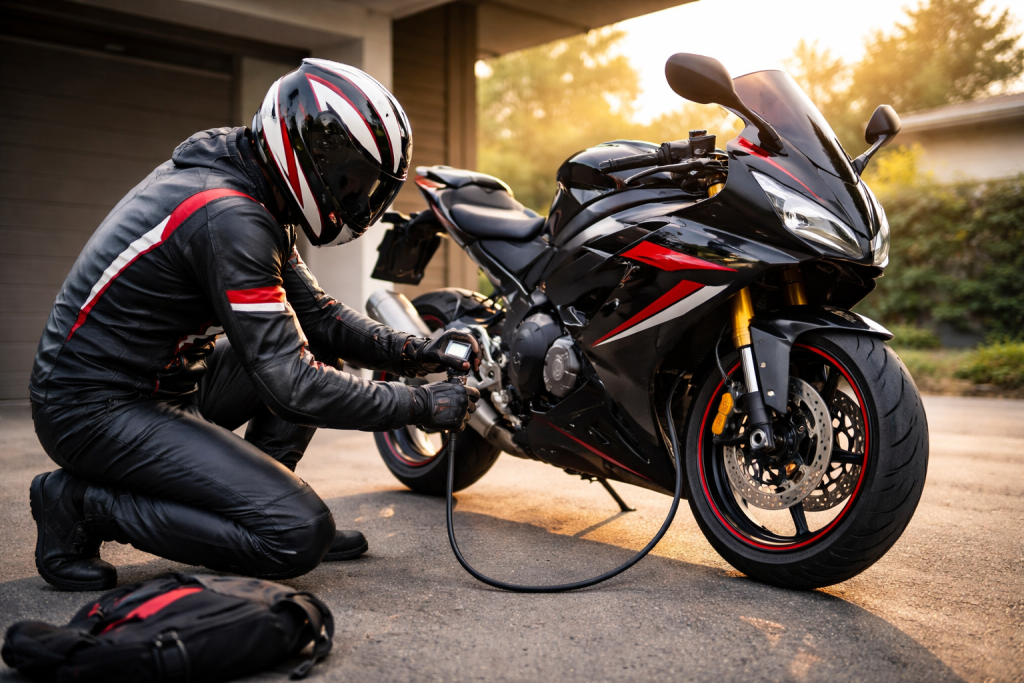
Tires are one of the simplest checks to perform and one of the most important.
Check periodically:
- cold pressure;
- tread condition;
- any cuts or cracks;
- foreign bodies;
- irregular wear.
For tire pressure, always use the values specified by the motorcycle manufacturer, also considering any different instructions for passengers or luggage.
The frequency of checks depends on usage. If you travel a lot of miles or the motorcycle is stored for a long time, it's worth checking it more frequently.
2. Keep your chain and transmission in order
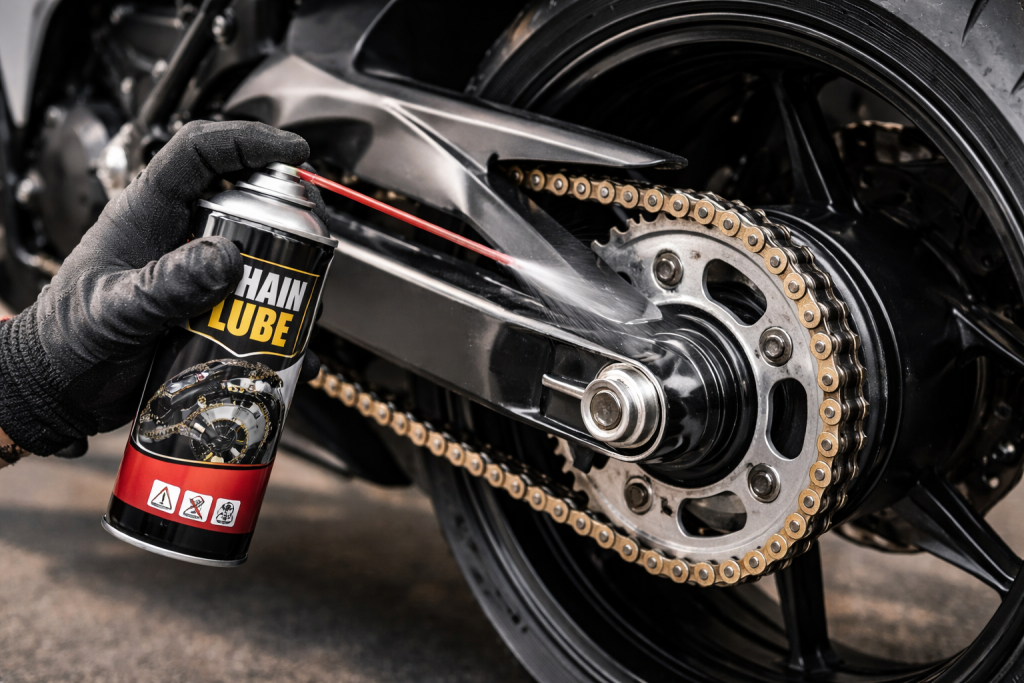
If the motorcycle uses a chain final drive, it requires cleaning, checking and lubrication.
Check:
- lubrication;
- voltage;
- any rigid meshes;
- wear of chain, crown and pinion;
- abnormal noises or jerks.
The correct play of the chain it's not the same for all motorcycles. Use the value and procedure specified by the manufacturer.
Lubrication frequency also depends on the motorcycle, the product used, and the conditions of use. Rain, washing, and heavy use may require more frequent checks.
HELPFUL TIP
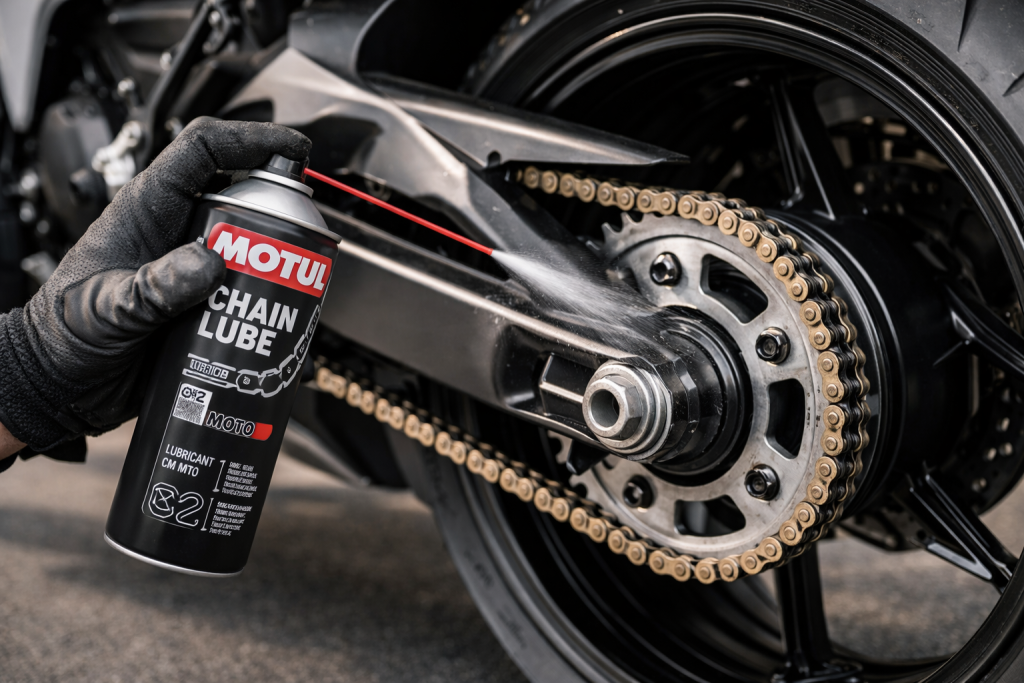
Motul C2 Chain Lube - Motorcycle Chain Lubricant
A well-lubricated chain reduces friction and wear during long rides.
See on Amazon →
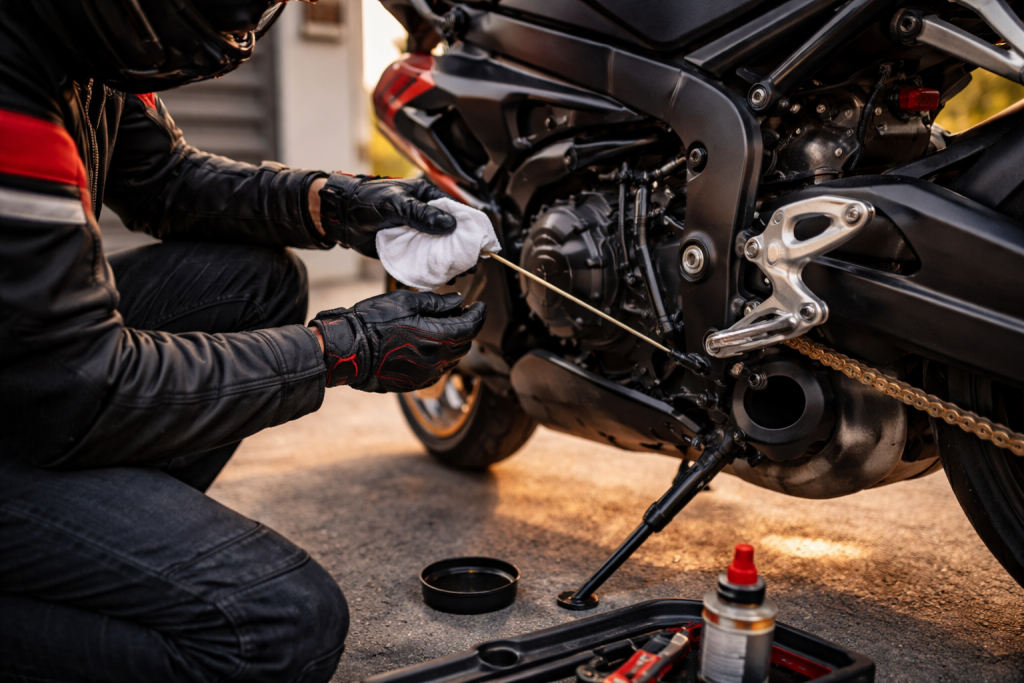
3. Check your engine oil properly
Oil protects and lubricates many internal engine components.
Check periodically:
- level;
- any losses;
- interval since last change;
- any anomalies.
The check procedure may vary from motorcycle to motorcycle. Vehicle position, engine temperature, and reading method must follow the instructions in the manual.
The oil change interval is also not universal: use the one recommended by the manufacturer for your model.
HELPFUL TIP
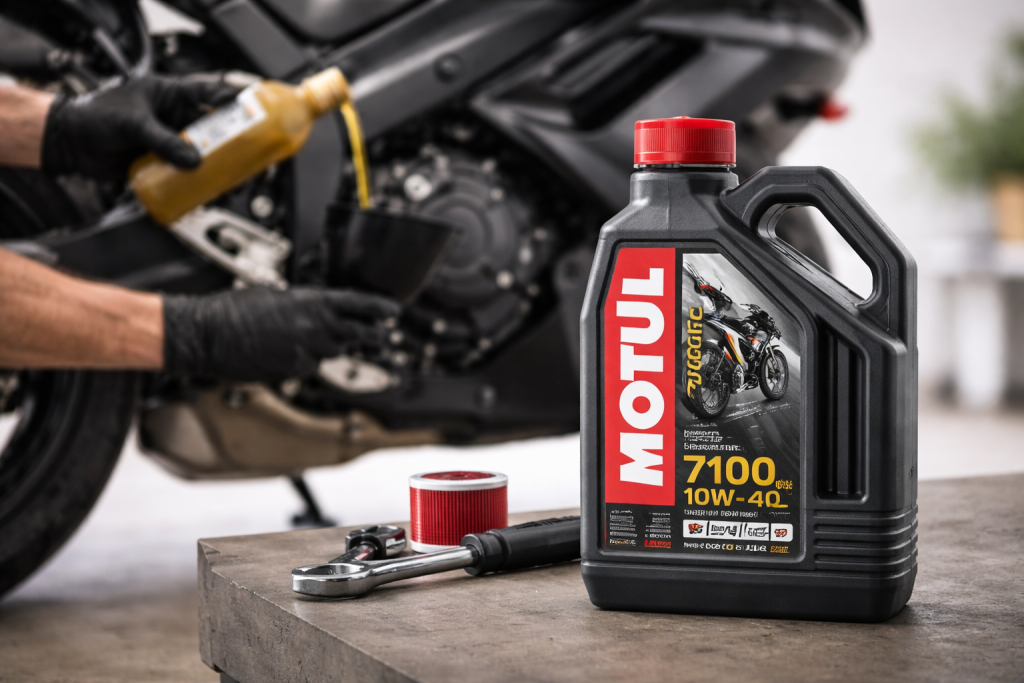
Synthetic Engine Oil 10W40
If you need to perform maintenance, always check the manual viscosity, oil specifications before purchasing.
See on Amazon →
HELPFUL TIP
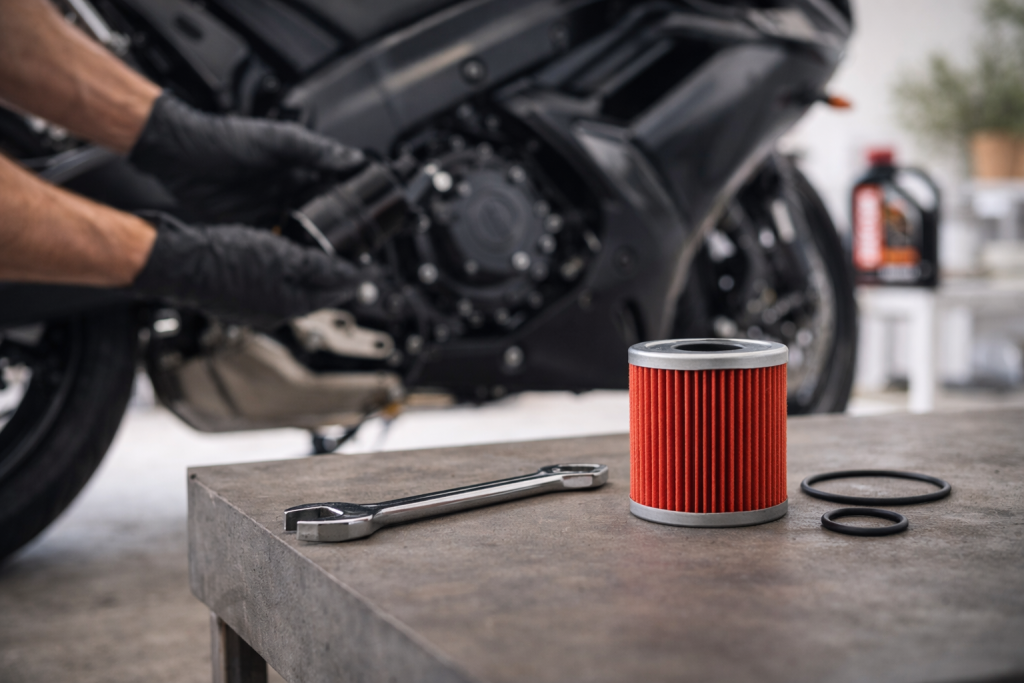
Cartridge motorcycle oil filter
If you need to perform maintenance, always check the manual filter compatibility before purchasing.
See on Amazon →
4. Check brakes and pads
The braking system deserves attention even when the motorcycle appears to brake normally.
Check:
- pad wear;
- liquid level;
- any losses;
- lever and pedal response;
- unusual noises or vibrations.
A lever that feels different than usual, a loss or a noticeable worsening of braking performance deserves a check before continuing to use the motorcycle normally.
Don't wait until you hear metallic noises to check the condition of the pads.
5. Battery and electrical system
A motorcycle that is not used much can suffer particularly from long periods of inactivity.
Possible signs of a weak battery include:
- slower start;
- starting difficulties;
- abnormal electrical behavior during start-up.
Also check that the terminals are properly secured and free from obvious oxidation.
If the motorcycle is left unused for long periods, a maintainer compatible with the battery type may be useful.
HELPFUL TIP
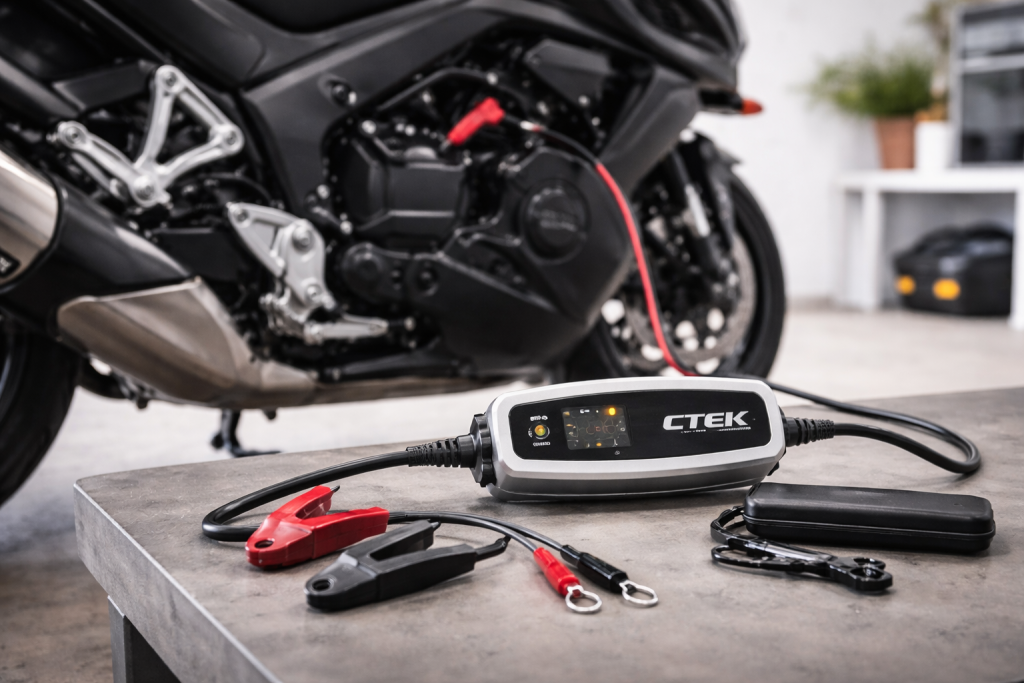
Automatic charge maintainer
For motorcycles that are stored for extended periods, a compatible maintainer can help prevent the battery from over-discharging while not in use.
See on Amazon →
6. Wash your motorcycle without damaging it
Cleaning your motorcycle isn't just about aesthetics.
While washing you can more easily notice:
- losses;
- loose components;
- oxidation;
- damaged parts;
- dirt accumulated in hard-to-see areas.
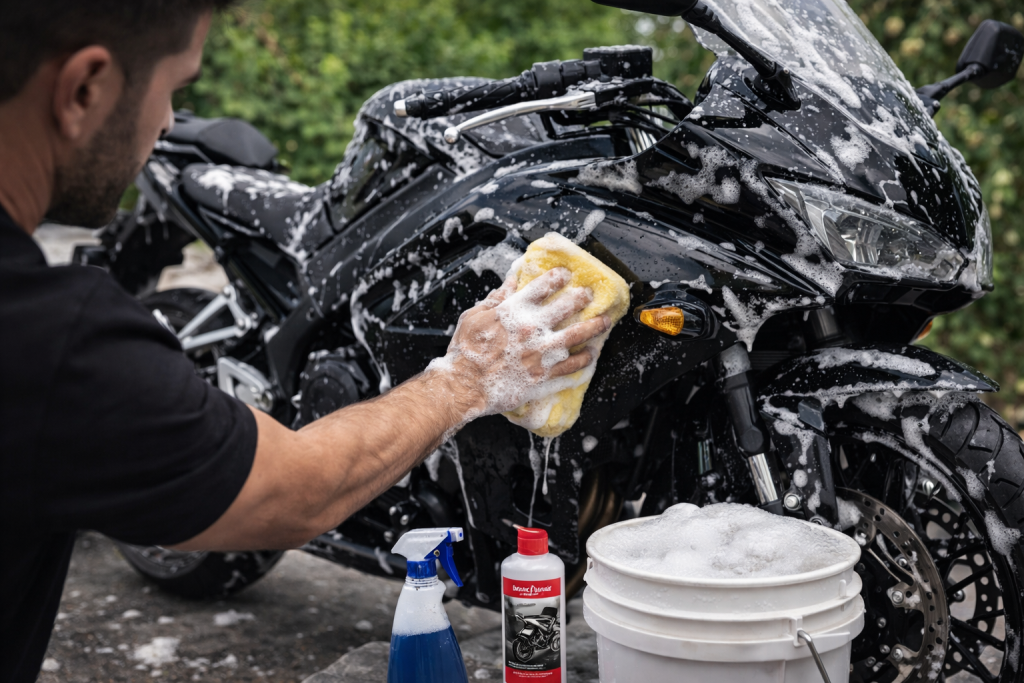
A simple procedure can be:
- gentle rinse;
- specific detergent;
- cleaning with soft tools;
- rinse;
- drying;
- chain care, when necessary.
Avoid overly aggressive detergents and pay attention to electrical components, bearings and other areas sensitive to high pressure water.
HELPFUL TIP
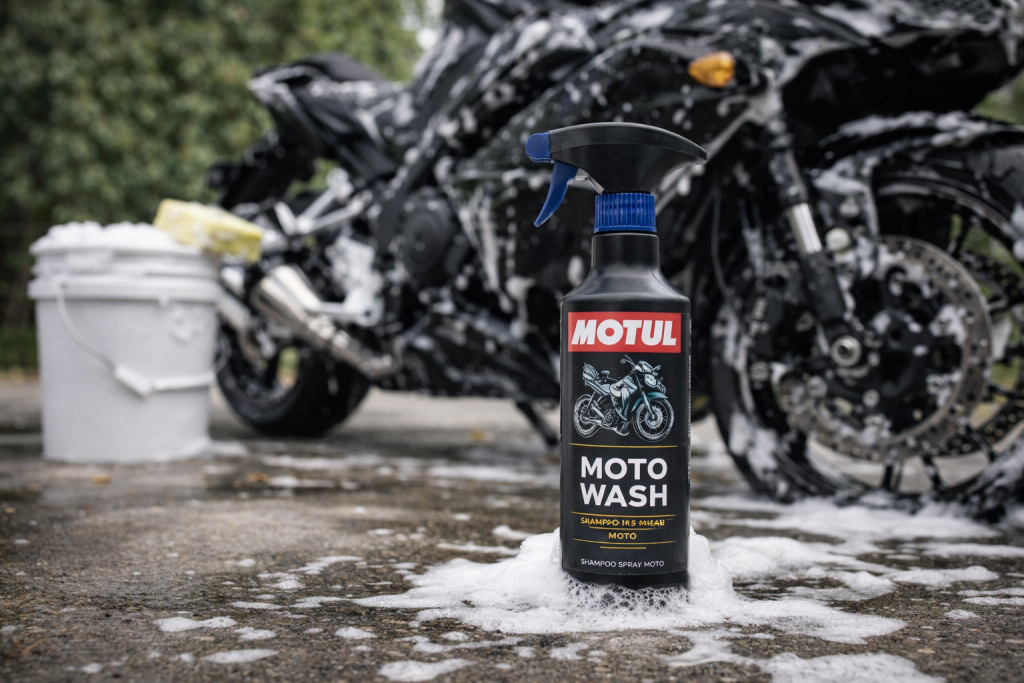
Motorcycle specific shampoo
Specific products help remove dirt without resorting to overly aggressive household detergents.
See on Amazon →
HELPFUL TIP
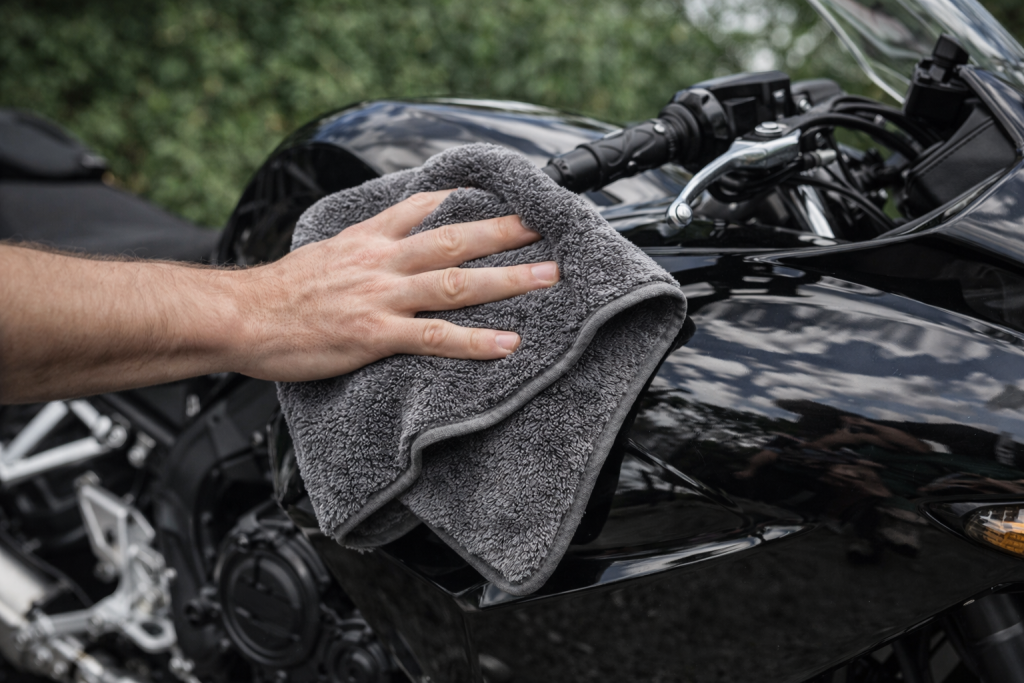
Professional microfiber cloth
A soft microfiber cloth helps dry and clean the motorcycle without using overly aggressive materials on the surfaces.
See on Amazon →
7. Seasonal maintenance and long periods of downtime
Maintenance also changes based on how much you use the motorcycle.
When you get your motorbike back on track after a long period of downtime
Before using it again, check:
- tires;
- drums;
- levels;
- brakes;
- lights;
- any losses;
- general conditions.
If a maintenance is scheduled, perform it before resuming normal use.
When you leave the motorbike stationary for a long time
Before a long period of disuse:
- clean it;
- check the battery;
- check your tire pressure;
- choose a dry and protected place;
- evaluate a cover suitable for the environment;
- Follow the manufacturer's instructions for storage.
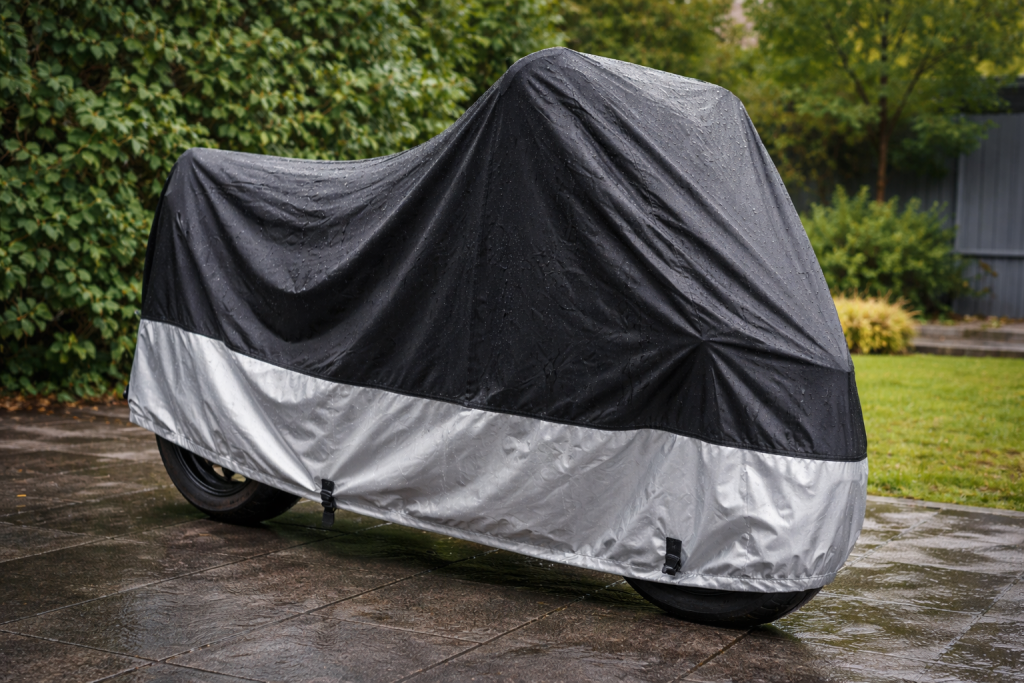
HELPFUL TIP
Waterproof Motorcycle Tarpaulin
If the motorcycle is left unused for a long time, a suitable cover can protect it from dust and dirt.
See on Amazon →
8. Mistakes that can shorten the life of your motorcycle
Ignore new noises or vibrations
Behavior that appears suddenly deserves attention.
It doesn't necessarily mean there's a serious fault, but it's worth finding the cause.
Using unsuitable products
Oil, coolant, brake fluid, and other products must meet the specifications for the motorcycle.
Postpone scheduled maintenance
The manufacturer's service schedule doesn't just include an oil change. Depending on the motorcycle, it may also include checks on the brakes, transmission, filters, valves, and other components.
Replacing components without checking their compatibility
A product that is suitable for one motorcycle may not be suitable for another.
This is especially true for oil, filters, batteries and spare parts.
9. How to maintain your motorcycle if you use it every day
A motorcycle used daily accumulates mileage and wear more quickly.
In this case, it is advisable to pay particular attention to:
- tire pressure and wear;
- transmission;
- levels;
- brakes;
- dirt and salt during the winter;
- mileage-related maintenance intervals.
Those who travel a lot of kilometres will naturally reach the maintenance intervals much earlier than those who only use their motorbike occasionally.
10. DIY motorcycle maintenance or workshop?
Some basic checks are within the reach of many motorcyclists.
What you can easily control
- tire pressure;
- visual condition of the tires;
- levels, following the manual;
- cleaning;
- chain conditions;
- lights;
- general conditions.
When is it best to contact a workshop?
When an intervention involves safety systems or requires specific equipment, procedures or skills.
For example:
- braking system anomalies;
- engine problems;
- suspensions;
- complex electrical problems;
- electronic diagnosis;
- interventions foreseen by the maintenance program that you do not know how to carry out correctly.
11. How much does it cost to maintain a motorcycle?
The annual cost varies greatly depending on the model, engine size, mileage, and type of maintenance.
The main items are:
- scheduled maintenance;
- tires;
- oil and filters;
- brakes;
- transmission;
- drums;
- any repairs.
A motorcycle used a few thousand kilometers a year can have very different needs than one used daily.
Rather than looking for a universal figure, it is better to consider the maintenance schedule for your motorcycle and plan interventions before they become urgent.
In summary
For maintain the motorcycle efficient, no need for obsessive checks.
Above all, three things are needed: maintenance required by the manufacturer, periodic checks and attention to changes.
Tires, chain, oil, brakes, and battery are all easily monitored. New noises, leaks, vibrations, or unusual behavior warrant an inspection before the problem worsens.
A regularly maintained motorcycle is also easier to get to know: you learn what's normal for your vehicle and you notice more easily when something changes.

FAQ - Frequently Asked Questions
How often should the motorcycle chain be lubricated?
There's no one-size-fits-all interval for all motorcycles. Follow the manufacturer's and product's instructions, and check the chain more frequently after rain, washing, or heavy use.
How long does a motorcycle battery last?
Battery life depends on battery type, motorcycle use, temperatures, downtime, and the condition of the charging system. Rather than relying solely on age, it's best to monitor for any starting difficulties and check its condition when necessary.
Can I wash my motorcycle with a pressure washer?
Use with caution. A very strong and close spray can be problematic on bearings, seals, electrical connections, and other sensitive areas. Follow the motorcycle manufacturer's instructions.
When should you change your engine oil?
Follow the manufacturer's recommended time or mileage interval for your specific model and engine. There is no universal mileage guideline for all motorcycles.
Is it necessary to have a servicing even if I use the bike infrequently?
It can be. Some interventions are also foreseen based on the time elapsed, not just mileage. Check your motorcycle's maintenance schedule.
Conclusion
Keeping a motorcycle in good condition doesn't necessarily require complicated interventions.
The difference is made above all by regularity and attention: check what you can easily check, follow scheduled maintenance, and don't ignore unusual behavior.
This way, maintenance isn't just something to deal with when a problem arises, but a simple way to get to know your motorcycle better and keep it running efficiently over time.
 Italian
  English