
Reading time: 8 minutes
Immediate response
Before a motorcycle trip, check pressure and condition of tires, brakes, engine oil, chain, battery, lights and coolant. Also check for any leaks, documents, and equipment.
For a long trip add a check of crown and pinion, suspension, luggage and emergency kit. It only takes a few minutes to identify a problem that, once you're on the road, could turn into a breakdown or force you to stop.
What you will learn:
- What checks to do on your motorbike before setting off.
- How to check tires, brakes, oil, and chain.
- What to check before a long trip.
- What problems should not be ignored.
- What to bring to deal with small unexpected events.
- A final checklist to check before departure.
Index
Why you should do checks before a motorcycle trip
A small problem that goes almost unnoticed in everyday use can become much more serious after hundreds of kilometers.
During a trip, the motorcycle can face many consecutive hours of use, high temperatures, rough roads and increased weight due to luggage or a passenger.
For this reason the checks before a motorcycle trip They don't have to be complicated: the goal is to spot flat tires, leaks, worn components, or other signs that could cause problems down the road.
1. Check your tires and pressure
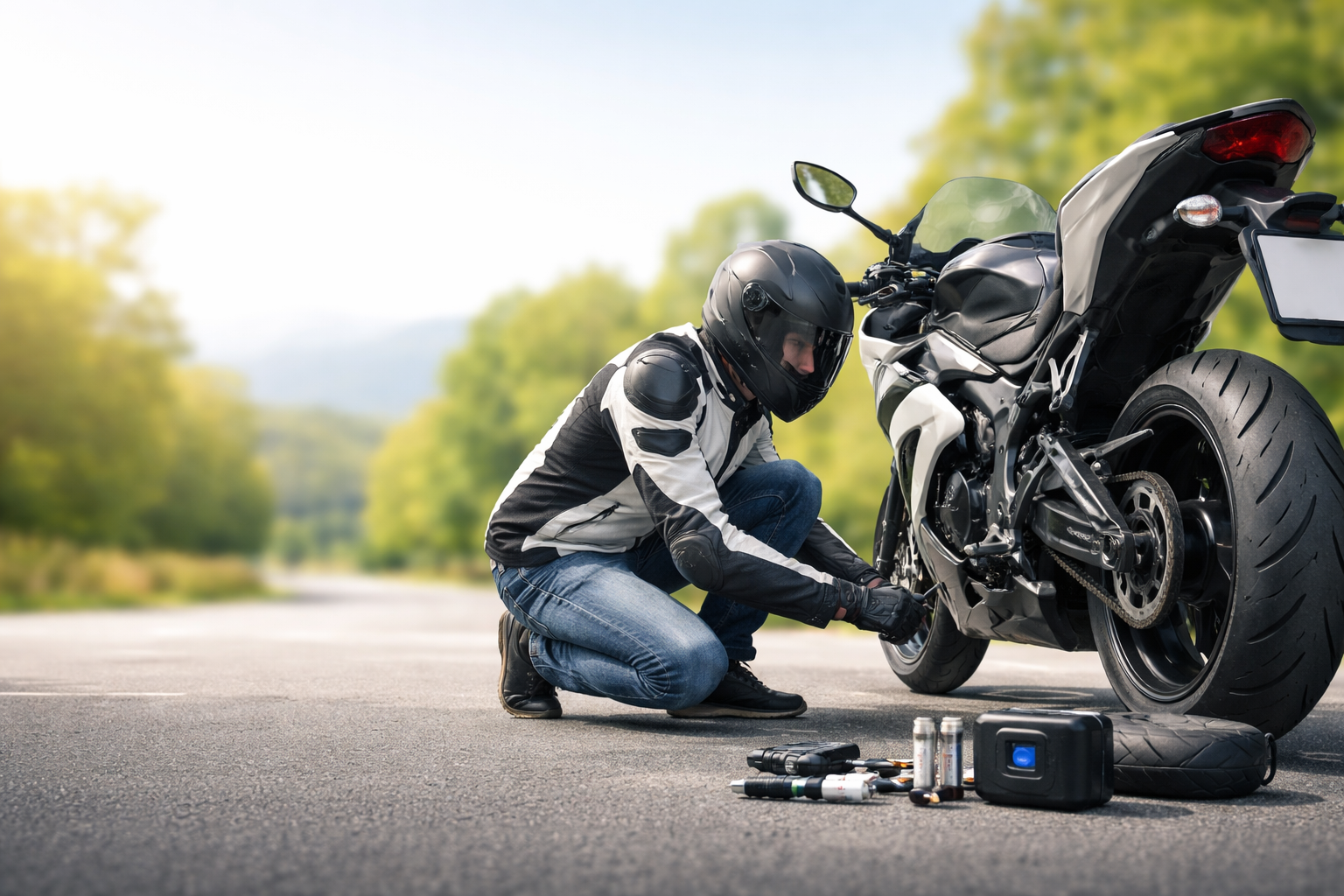
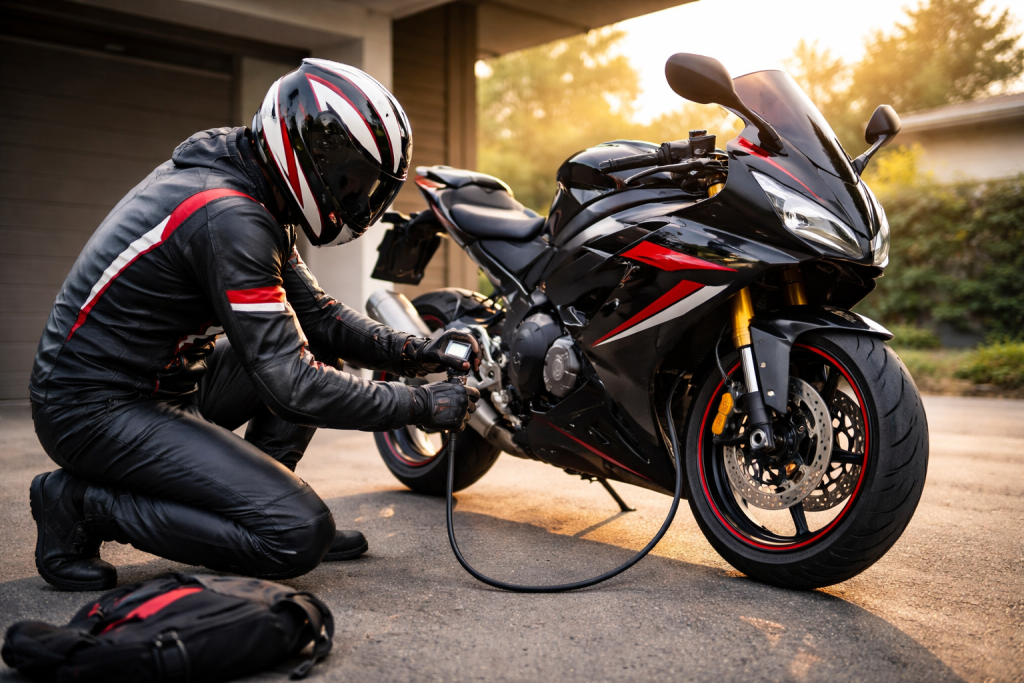
Tires are the point of contact between the motorcycle and the road. Before setting off, check both the pressure both the condition of the tire.
Check tire pressure when the tires are cold using the manufacturer's recommended values. Different values may apply with a passenger and luggage: refer to your motorcycle's manual.
Check also:
- tread;
- cracks or cuts;
- deformations;
- stuck objects;
- irregular wear.
2. Check the brakes
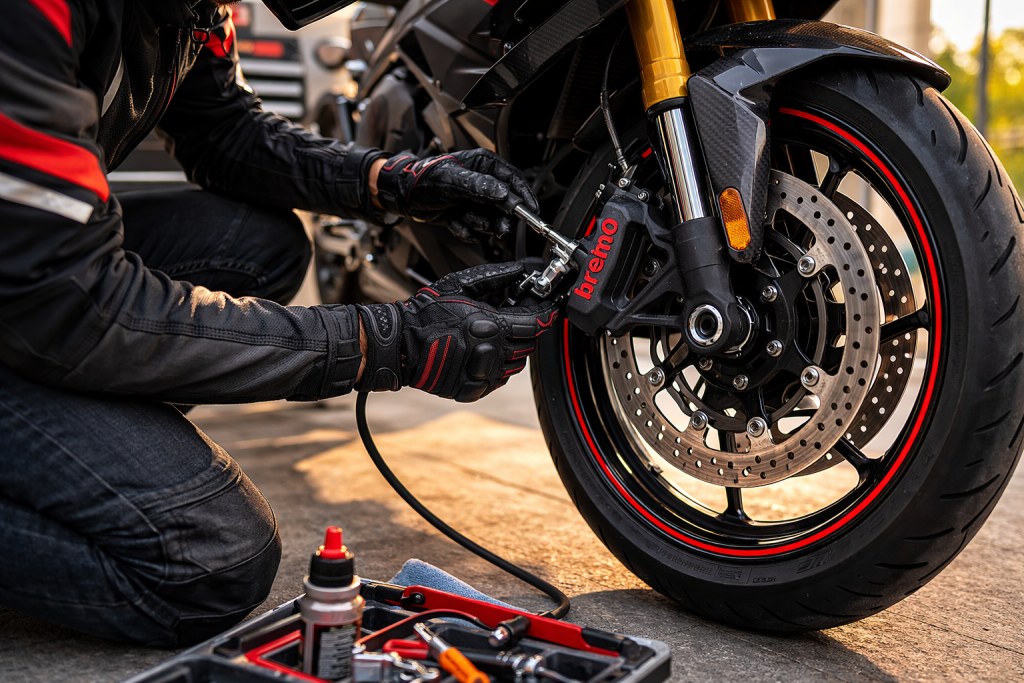
Before covering many kilometers, check the condition of the braking system.
Check:
- thickness of the pads;
- brake fluid level;
- any losses;
- lever and pedal response;
- unusual noises when braking.
If the pads are close to the wear limit indicated by the manufacturer, it is best to replace them before embarking on a long journey.
Even very old brake fluid or unusual lever behavior warrants a check before setting off.
3. Check the chain, crown and sprocket
The final drive works continuously throughout the journey. So don't just look at the chain.
Check:
- chain tension;
- lubrication;
- any rigid meshes;
- crown wear;
- pinion condition;
- noises or jerks while driving.
Chain tension
The correct play varies depending on the motorcycle. Check it in the place and using the method indicated by the manufacturer and compare it with the value listed in the manual.
Lubrication
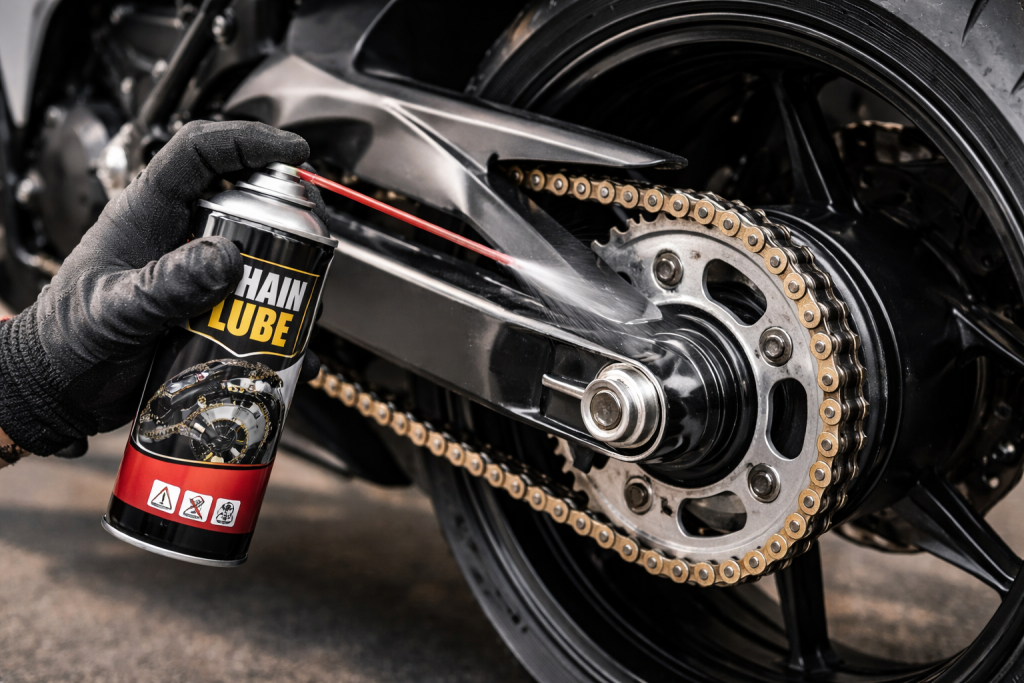
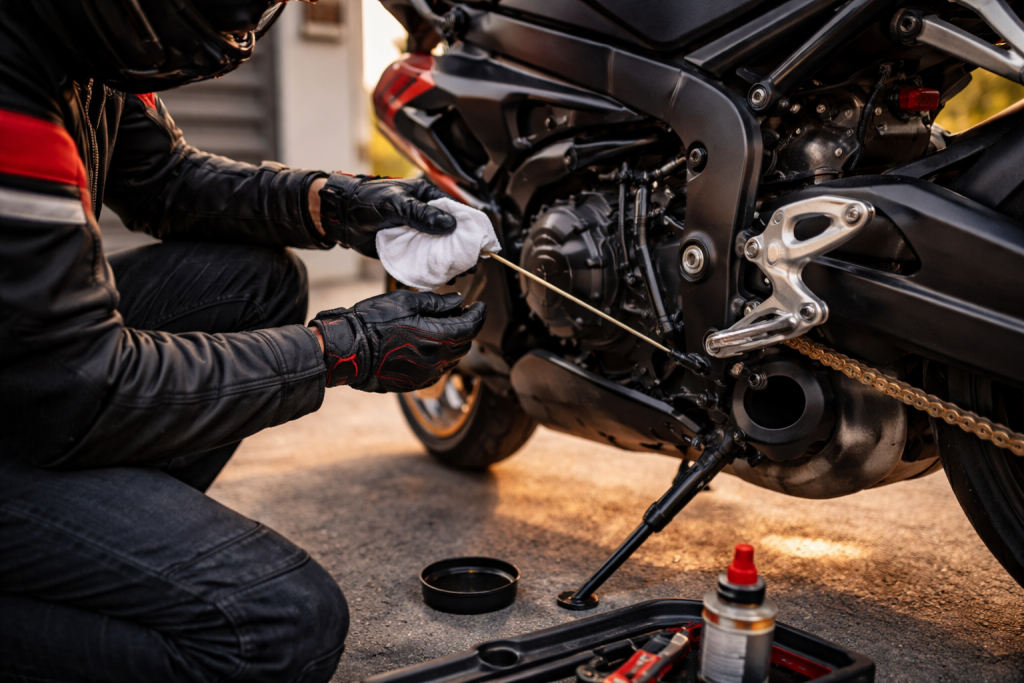
If the chain is dry, clean and lubricate it before setting off using a product suitable for motorcycle transmission.
During a long journey it may be necessary to repeat the operation, especially after rain, washing or many kilometres.
HELPFUL TIP
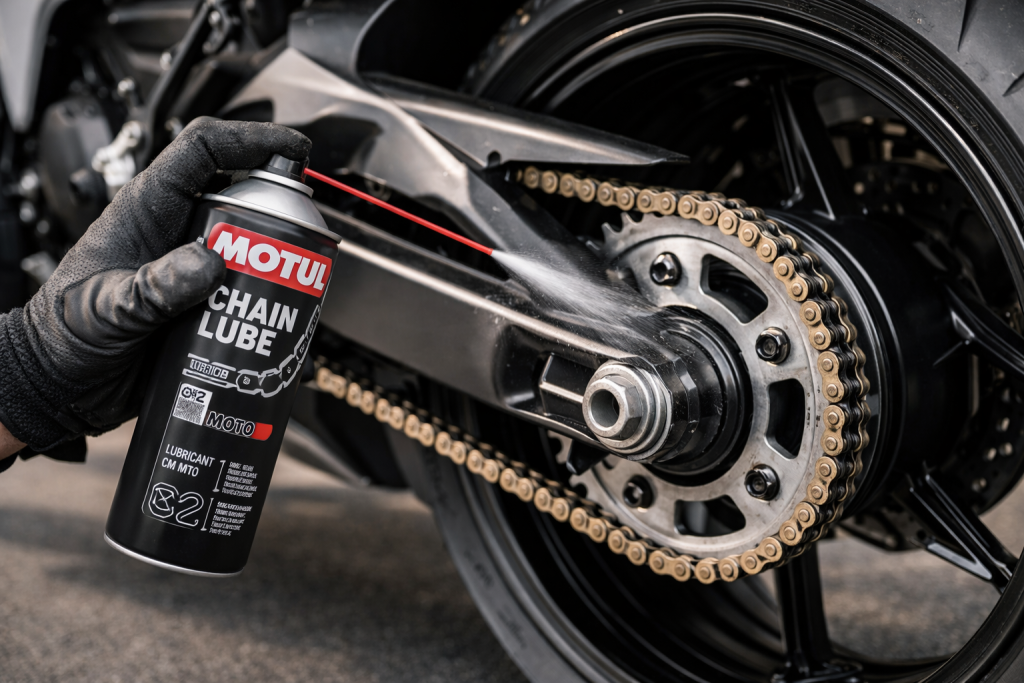
Motul C2 Chain Lube - Motorcycle Chain Lubricant
A well-lubricated chain reduces friction and wear during long rides.
See on Amazon →
4. Check the engine oil level
Before setting off, check the oil level following the manufacturer's procedure.
Check:
- level;
- any losses;
- date or mileage of the last change;
- any obvious anomalies.
Don't rely on the color of the oil alone: it doesn't accurately determine whether the lubricant needs to be changed.
5. Check the coolant
During a long journey the engine can work for hours, perhaps in traffic, in high temperatures or on long climbs.
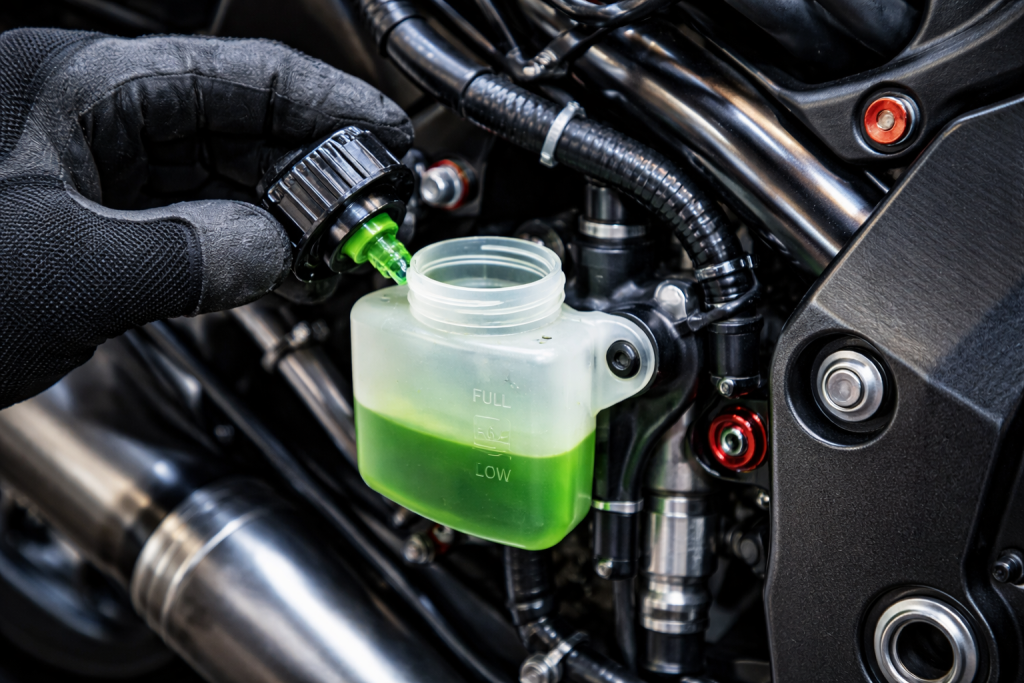
With a cold engine, check:
- level in the tray;
- any losses;
- visible pipes;
- presence of abnormal residues.
The level must fall within the references provided by the manufacturer.
6. Check all the lights
It is one of the simplest checks and takes very little time.
Verify:
- low beam;
- dazzling;
- rear light;
- stop;
- direction indicators;
- license plate light.
Also check that all controls work normally.
7. Check the battery
A weak battery may not cause problems in everyday use and then leave you stranded after a stop during your trip.
Pay particular attention to:
- slower than normal start;
- lights that dim significantly during start-up;
- loose or oxidized terminals;
- battery already very old.
If you are in doubt, a voltage check before departure can be helpful.
8. Check suspension and forks
With luggage and a passenger, the suspension works under different conditions than in everyday use.
Check:
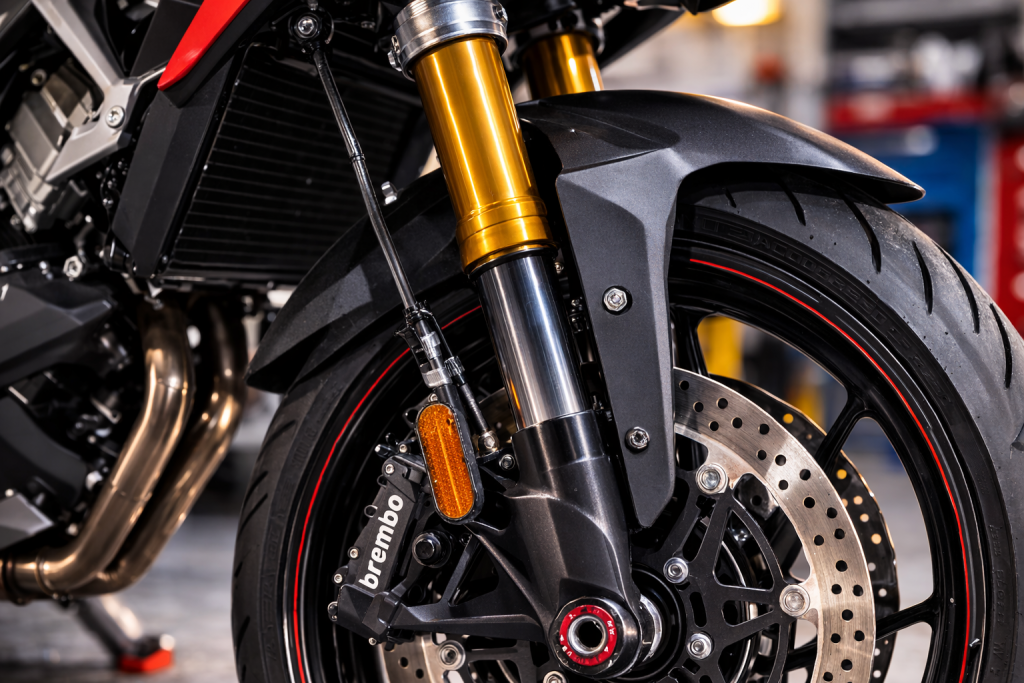
- any traces of oil on the forks;
- abnormal suspension behavior;
- unusual noises;
- load adjustments, if any.
A fork oil leak is worth checking before going on a long ride.
9. Check documents and equipment
Before leaving, also check anything that doesn't directly concern the mechanics.
Make sure you have the necessary documents with you and verify that the motorcycle is legal for the planned trip.
For equipment, consider at least:
- approved helmet;
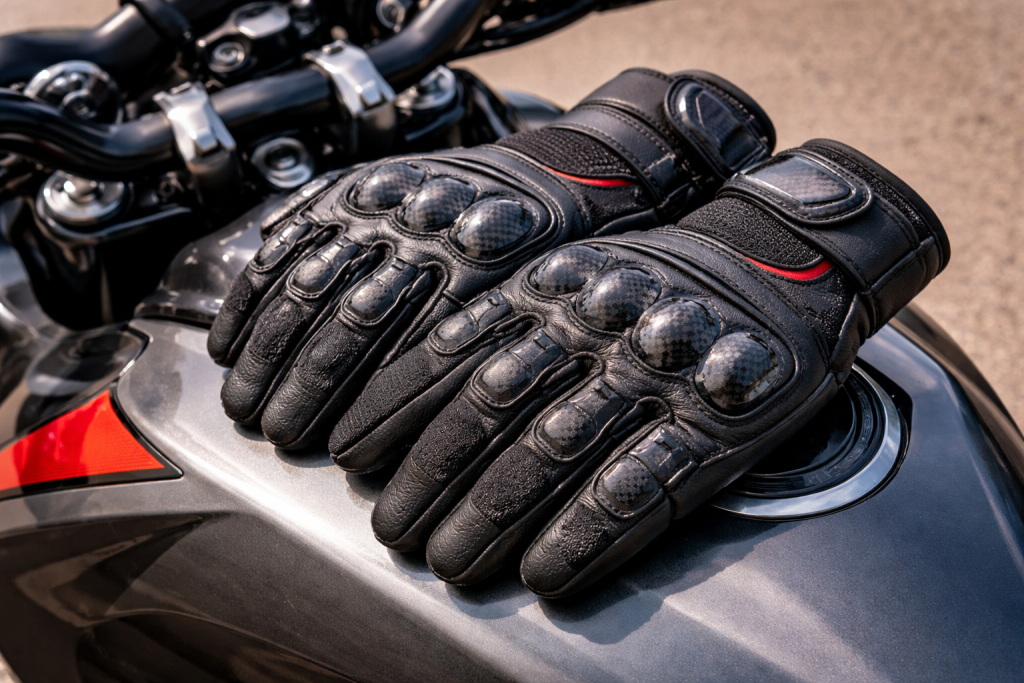
- gloves;
- appropriate protective clothing;
- suitable footwear;
- rainwear if necessary.
HELPFUL TIP
Certified motorcycle gloves with protection
Before leaving, also check the condition of the equipment you will use during the trip.
See on Amazon →
10. Prepare a small emergency kit
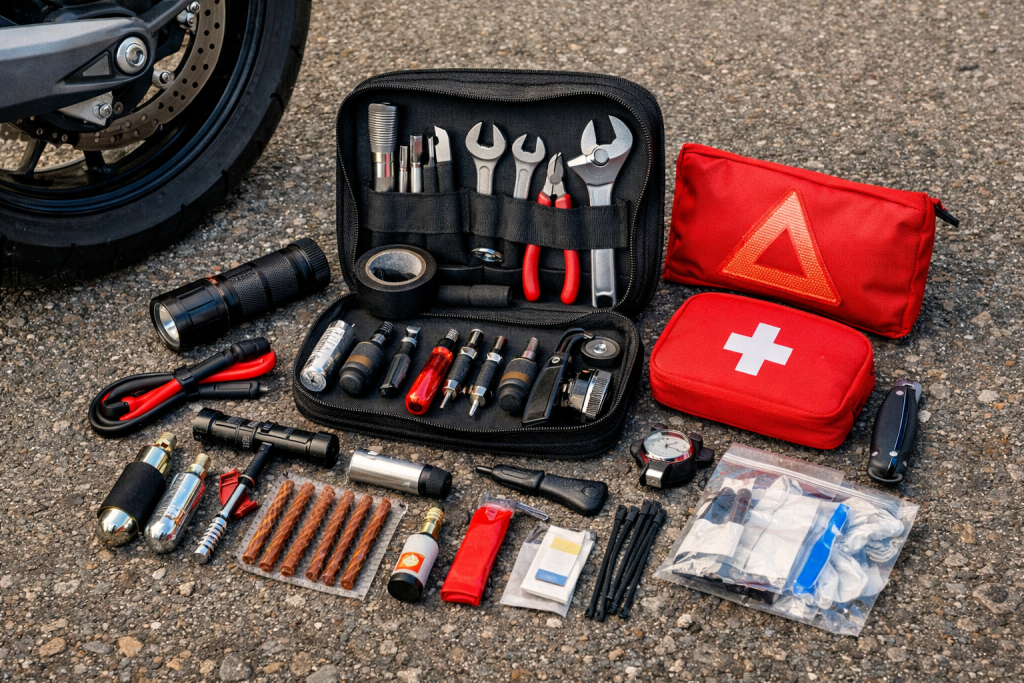
You can't predict every failure, but some small problems can be handled more easily if you have the right tools.
Depending on the trip, the following may be useful:
- tire repair kit;
- mini compressor;
- tools compatible with your motorcycle;
- compatible fuses;
- torch;
- insulating tape.
HELPFUL TIP
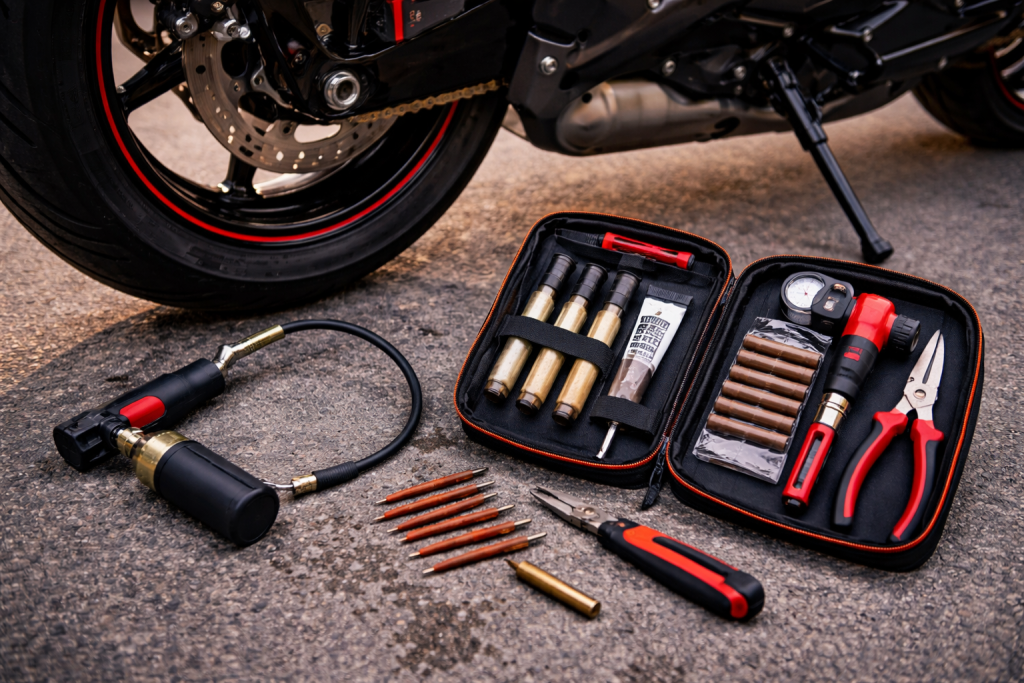
Motorcycle tire repair kit
A flat tire is one of the most difficult unforeseen events to manage when away from home. A small kit takes up little space in your luggage.
See on Amazon →
HELPFUL TIP
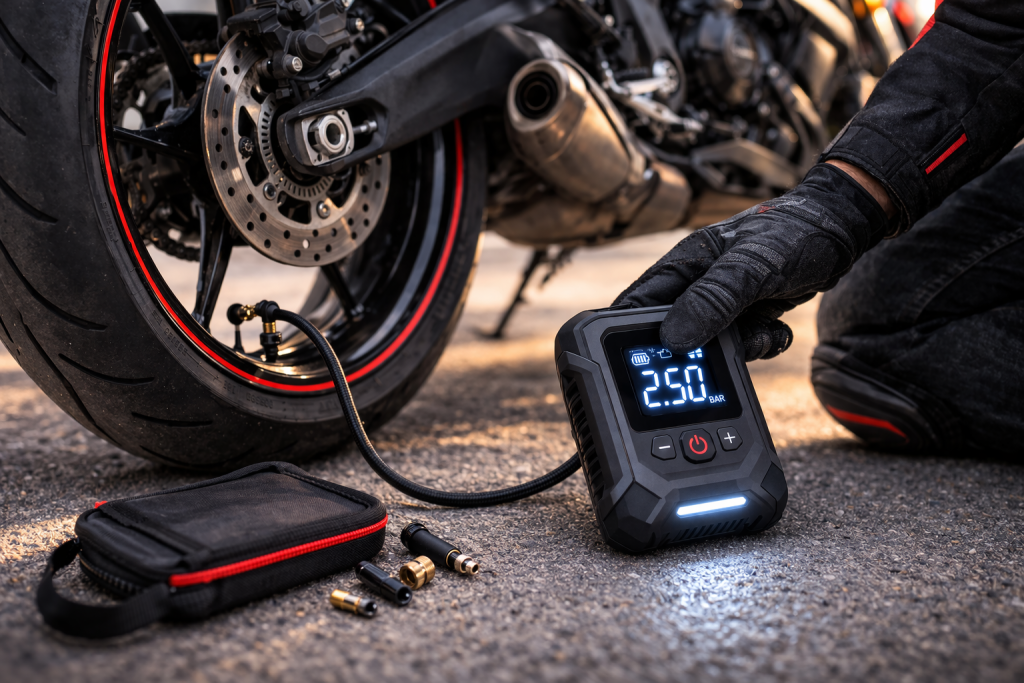
Portable Motorcycle Compressor
If you have the space available, a portable compressor also allows you to restore pressure after a small repair.
See on Amazon →
11. Prepare the motorcycle for a long trip
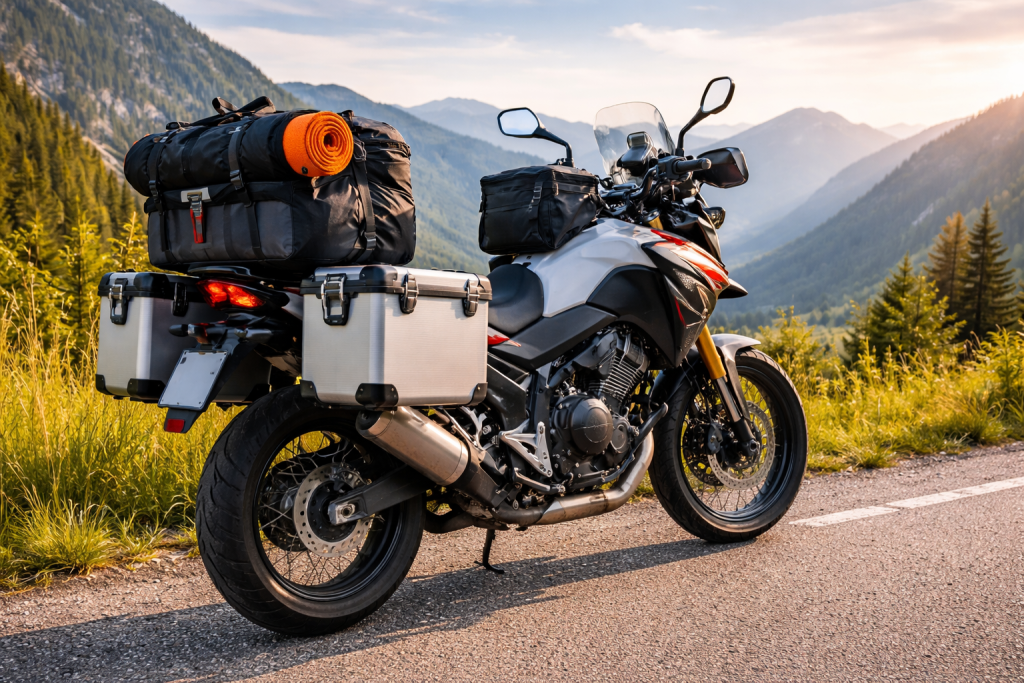
When you add panniers, a rear bag or a passenger bag, the handling of the bike also changes.
Distribute the weight evenly and respect the load limits indicated by the manufacturer.
Above all, avoid heavy objects placed too high or luggage that could move while driving.
Before your trip, do a quick test ride with the bike already loaded: this allows you to immediately notice if anything is interfering with handling, steering, or stability.
12. Mistakes to avoid before leaving
Check the pressure by eye only
A tire may look normal and still be under pressure.
Ignore a noisy chain
Noises, jerks, or stiff links warrant a check before setting off.
Postpone already necessary maintenance
If your tires, brakes, or transmission are nearing the end of their useful life, a long trip isn't the ideal time to put it off.
Loading the motorcycle too much
More weight changes braking, acceleration and suspension behaviour.
Do all checks five minutes before leaving
It's best to check the bike well in advance. If you find a problem, you'll have plenty of time to fix it.
13. Final checklist before leaving
Before closing the garage, do one last check:
- ✔ tire pressure;
- ✔ condition of the tires;
- ✔ brakes;
- ✔ chain, crown and sprocket;
- ✔ oil level;
- ✔ coolant;
- ✔ lights and indicators;
- ✔ battery;
- ✔ suspensions;
- ✔ luggage secured correctly;
- ✔ documents;
- ✔ equipment;
- ✔ emergency kit.
You can also save this checklist on your phone and use it whenever you prepare your motorcycle for a trip.
In summary
I checks before a motorcycle trip They take little time but can avoid problems that are much more difficult to manage away from home.
Start with the essentials: tires, brakes, chain, oil, coolant, lights and battery. For long trips, also check the suspension, complete drivetrain, luggage, and equipment.
If something seems out of place—noise, leaks, vibrations, or strange behavior—it's better to check before you leave rather than discover the cause while you're traveling.
If you want to take care of your motorbike beyond just preparing the trip, also read our guide on how to maintain the bike, with checks and interventions useful throughout the year.

FAQ - Frequently Asked Questions
How long does it take to check the bike before a trip?
Basic checks can take just a few minutes if the motorcycle is regularly maintained. However, before a long trip, it's best to perform the check early, so as to have time for any necessary repairs.
How often should you lubricate your chain while riding?
There's no one-size-fits-all interval for all motorcycles and products. Follow the motorcycle and lubricant manufacturer's instructions and check the chain more frequently after rain, washing, or strenuous riding.
What is the most important check before leaving?
It's not a good idea to rely on just one check. Tires and brakes are essential for safety, but transmission, oil, or coolant problems can also interrupt your trip.
Do you need to check the chain before each trip?
Before a long trip, yes: check the tension, lubrication, and general condition of the transmission. For correct play, always use the value specified by the manufacturer.
Do I have to check the motorbike on the day of departure?
It's best to carry out the basic checks well in advance. On the day of departure, you can do a final check of tire pressure, leaks, lights, and luggage securing.
Conclusion
Preparing your bike well doesn't mean turning the start into a workshop check.
It means taking a few minutes to focus on the components that really matter and starting out knowing that tires, brakes, transmission, levels and equipment they have been checked.
The road remains the most beautiful part of the trip. It's best to arrive there with the bike ready.
 Italian
  English