
Reading time: 8 minutes
Immediate response
To start a easy training at home You don't need a gym or expensive equipment. You can start with 10–15 minutes, three times a week, alternating simple exercises like chair squats, wall push-ups, walking in place, and joint mobility exercises.
The key is to choose exercises suited to your abilities, perform them correctly, and gradually increase your effort. Even a few minutes is a good starting point, but achieving broader benefits depends on overall physical activity performed over time.
What you will learn:
What exercises to do at home without equipment.
How to get started even after a period of inactivity.
How long should a session last?.
How to follow a simple 30-day program.
What mistakes to avoid.
When to stop and seek medical advice.
Index
Working out at home is a practical solution when you have little time or don't want to go to the gym.
All you need is a free space, comfortable clothes, and a program suited to your level.
You don't have to start with difficult exercises: the goal is to move regularly, progressively improving strength, mobility, and endurance.
Why training at home can work
One of the main advantages of home training is convenience.
You don't have to travel, stick to a gym schedule, or buy equipment right away.
You can train in the morning, during a break, or after work.
For beginners, this can make it easier to maintain some regularity.
The main advantages
You save travel time.
You can adapt the exercises to your level.
You can start without any tools.
You can choose days and times that work for you.
Working out at home doesn't automatically guarantee better results than going to the gym. It works when the program is appropriate and followed consistently.
How long should a home workout be?
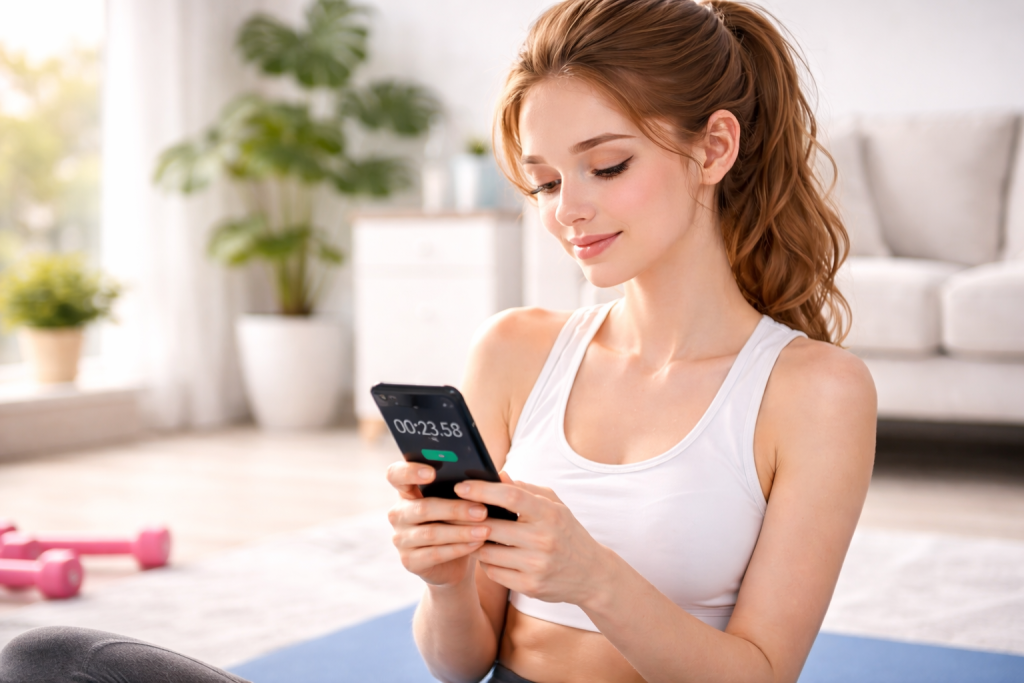
If you're starting from scratch, a 10–15 minute session might be a reasonable first goal.
It is not necessary to start with long workouts.
For example, you can organize a session like this:
| Phase | Indicative duration |
|---|---|
| Light warm-up | 3 minutes |
| Simple exercises | 7–10 minutes |
| Slowdown and mobility | 2 minutes |
The duration depends on your physical condition.
For adults, general physical activity recommendations include a broader goal throughout the week: typically at least 150 minutes of moderate aerobic activity and muscle-strengthening activity on at least two days.
You don't have to reach these levels right away. If you're sedentary, you can start small and gradually increase.
The best exercises for training at home without equipment
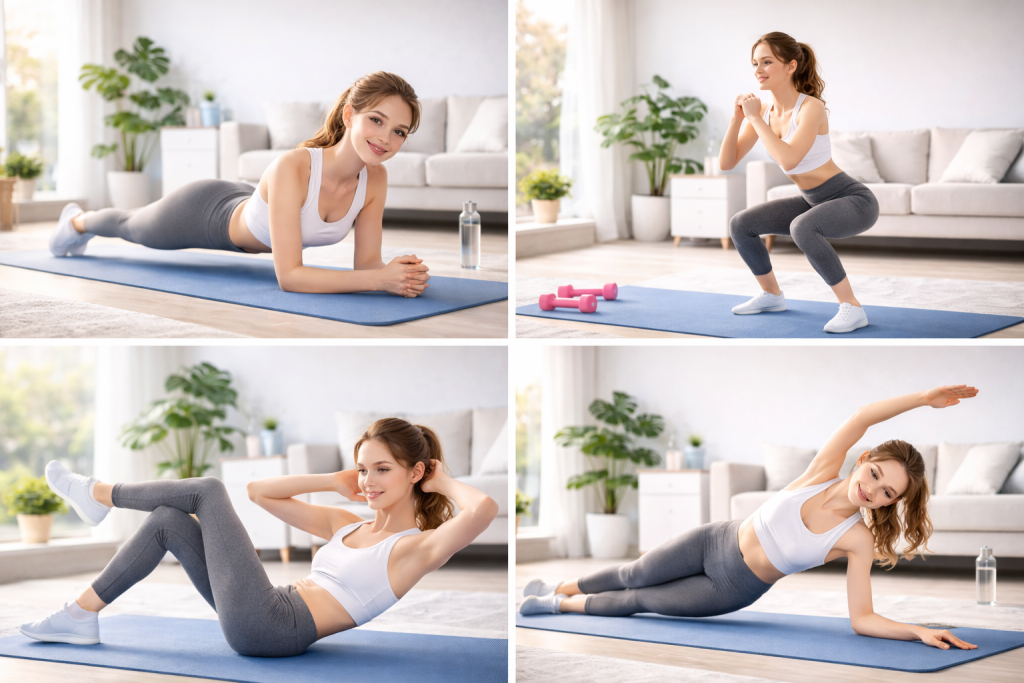
These exercises involve several muscle groups and can be adapted for beginners.
Before you begin, clear the space and wear clothing and footwear suitable for the planned movements.
1. Chair squat
The squat mainly involves the legs and glutes.
How to perform it:
Place a stable chair behind you.
Keep your feet a comfortable distance apart.
Slowly bend your hips and knees as if you were sitting down.
Touch the chair or sit briefly.
Stand up without any sudden movements.
To get started: try 6–10 reps.
If necessary, use a stable support to maintain balance.
2. Wall push-ups
They are a more accessible variation of push-ups.
How to perform them:
Stand in front of a wall.
Place your hands at chest height.
Slowly bend your elbows as you bring your body closer to the wall.
Push back to the starting position.
To get started: try 6–10 reps.
Keep your body aligned and choose a distance from the wall that allows you to control the movement.
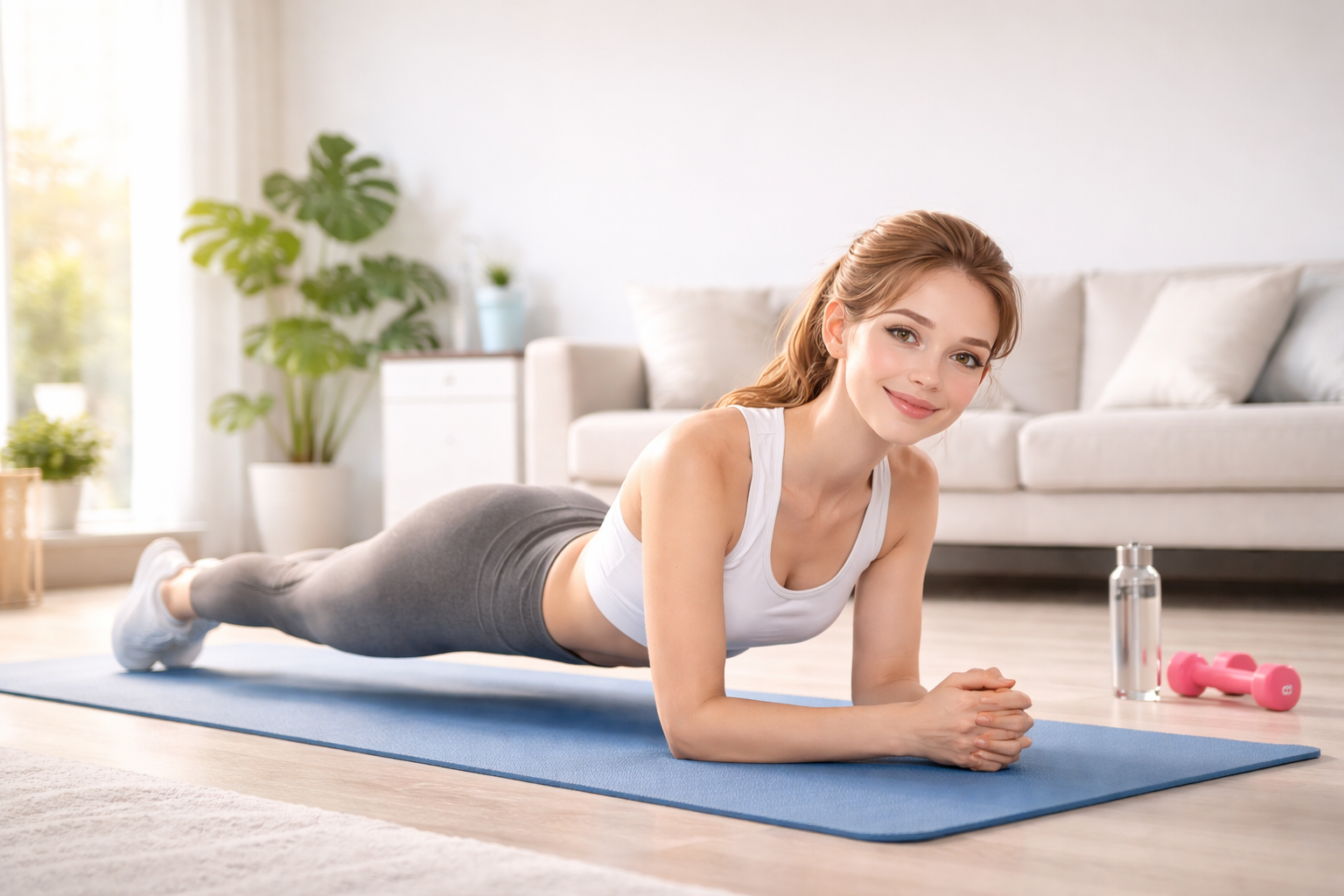
3. Easy Plank
The plank mainly involves the core muscles.
If the floor version is too challenging, you can do it with your hands resting on a stable and sufficiently sturdy surface.
Maintain a controlled position without holding your breath.
To get started: try 10–15 seconds.
The plank is not a treatment for back pain. If you experience pain, avoid forcing the exercise and seek appropriate evaluation.
4. Assisted lunges
Lunges engage your legs and glutes and require balance.
To get started:
Lean lightly on a stable surface.
Bring one foot forward and one foot back.
Bend your knees slightly.
Slowly return to the starting position.
To get started: try 5–6 reps per side.
If they are difficult, you can replace them with other chair squats.
5. Walking in place
It's one of the simplest exercises to get started with.
Walk in place for 30–60 seconds, maintaining a pace that allows you to talk.
You can gradually increase the time, without immediately looking for high speeds.
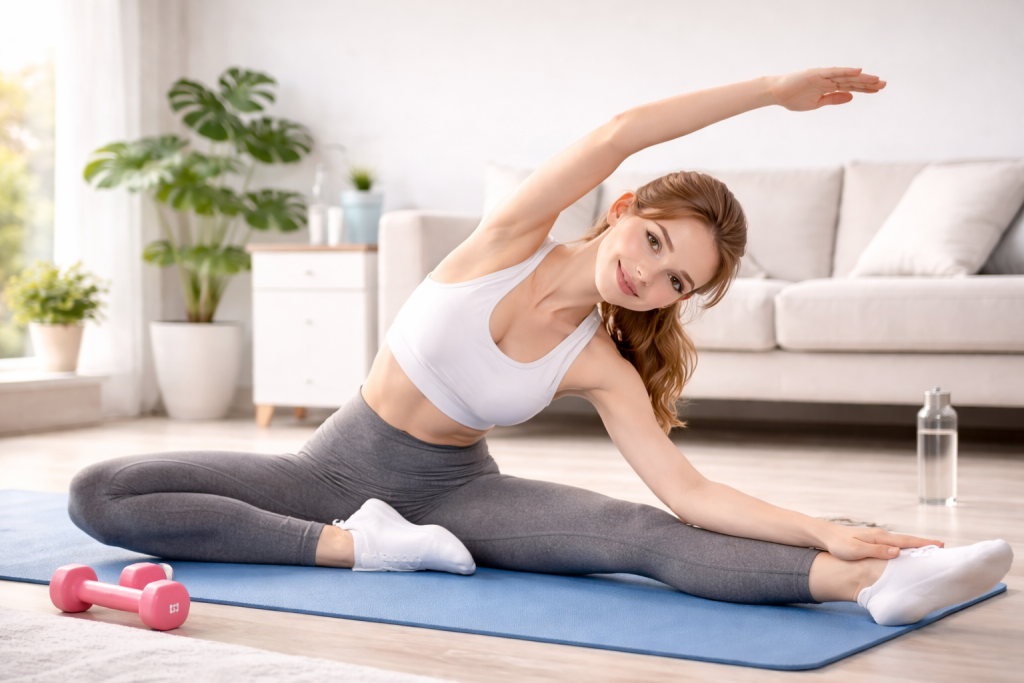
6. Shoulder and arm mobility
Perform slow, controlled movements of your shoulders and arms, without forcing your joints.
It can be a useful activity at the beginning or end of the session.
Easy Home Workout: Circuit Training for Beginners
Here is a practical example.
| Exercise | Initial quantity |
|---|---|
| Walk in place | 60 seconds |
| Chair squats | 8 repetitions |
| Wall push-ups | 8 repetitions |
| Easy Plank | 10–15 seconds |
| Shoulder mobility | 30 seconds |
Rest as needed between exercises.
Start with a lap. If you complete it without too much difficulty, you can consider a second round in a later session.
With warm-up, breaks and a final slow-down, the total duration can be around 10–15 minutes.
You don't have to complete all the reps at all costs: reduce them if you lose control of the movement.
A useful accessory
A non-slip mat can make floor exercises and stretching more comfortable.
HELPFUL TIP
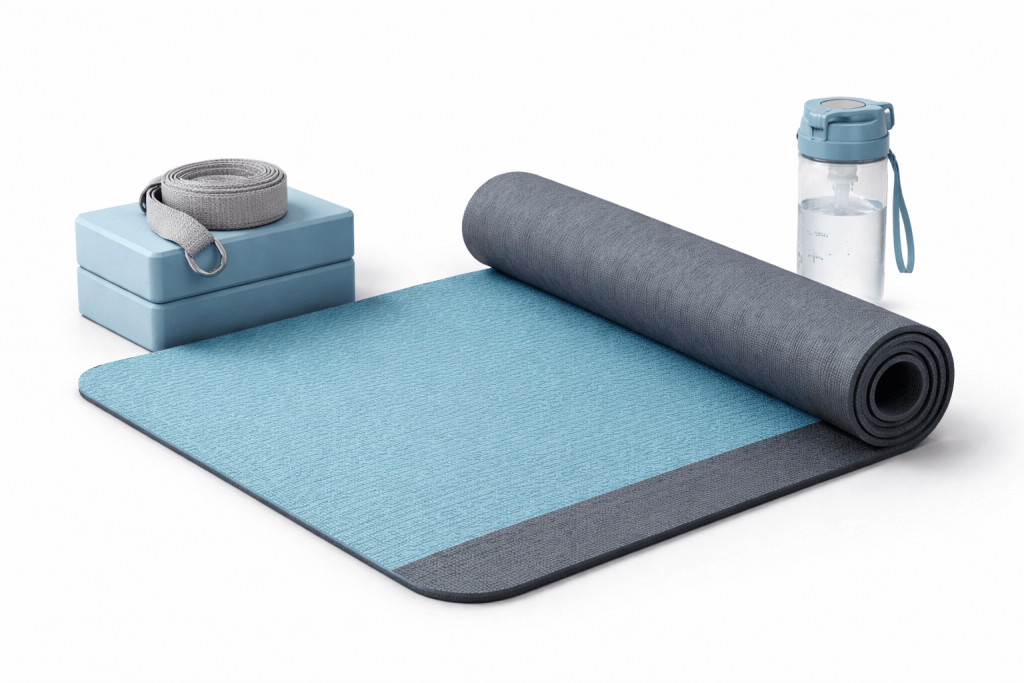
Fitness mat
See on Amazon →
Easy training program for 30 days
This program is a sample program for adults with no known contraindications to the proposed activity. It should be adapted to the individual's level and is not a substitute for a personalized plan.

Week 1 — Getting Familiar
Objective: learn the movements.
Plan up to three non-consecutive sessions, for example Monday, Wednesday, and Friday.
During each session:
3 minutes of light warm-up;
a lap of the beginner circuit;
short breaks as needed;
2 minutes of slowing down.
On your days off, you can take a short walk, if you feel well.
Week 2 — Improving Regularity
Objective: repeat the exercises with greater confidence.
Maintain three sessions per week.
If the circuit has become easy, you can add a few repetitions or a second round.
If you still feel a lot of fatigue, repeat the first week's program.
It is not necessary to increase every time.
Week 3 — Increase gradually
Objective: improve exercise tolerance.
Continue with three sessions.
You can choose just one small increase:
a few more repetitions;
a few more seconds in static exercises;
a second round, if appropriate.
Avoid increasing duration, repetitions and intensity at the same time.
Week 4 — Building the Habit
Objective: find a sustainable program.
Maintain three sessions per week, or adjust the frequency based on your recovery and situation.
Evaluate progress:
Are the exercises more controlled?
can you complete the session with less effort?
do you find it easier to find time to work out?
do you recover adequately between sessions?
If the answer is yes, you can continue to progress gradually.
The 30-day goal isn't about completing a mandatory number of reps, but about building a foundation from which to build.
Practical example: training with little time
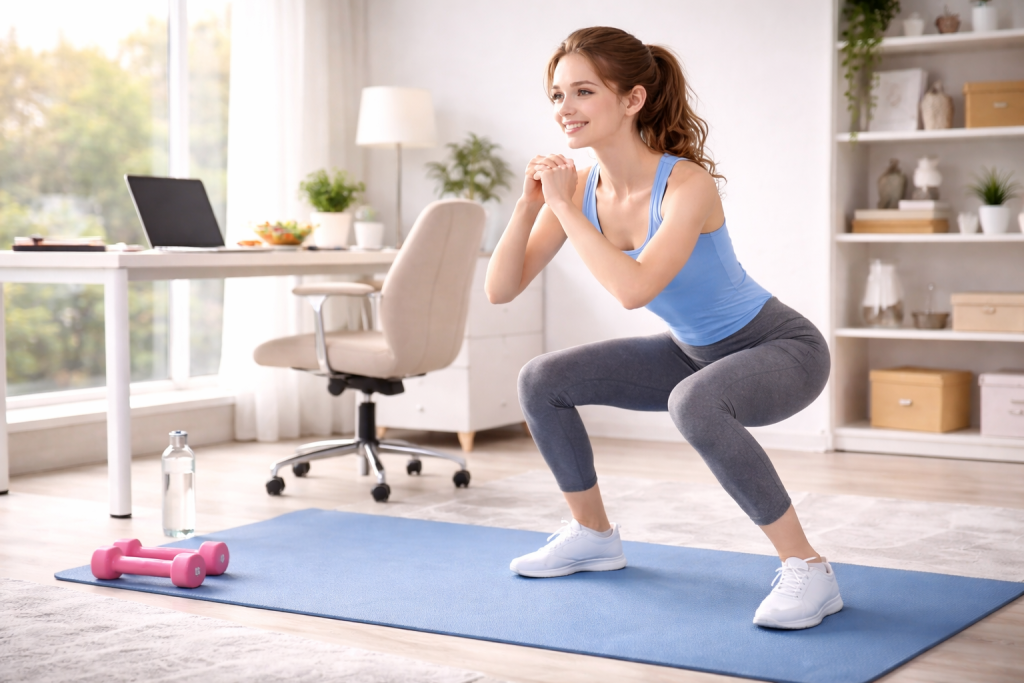
Imagine a person who works from home and has little free time.
You can choose three days a week and dedicate 15 minutes to physical activity.
On Monday he does the basic circuit, on Wednesday he repeats the exercises calmly and on Friday he evaluates whether to add some repetitions.
On the days in between, when possible, walk.
This is a illustrative example, not a real testimony nor a promise of results.
The advantage is having a simple program to fit into your day.
Easy workout at home to lose weight

Many people start exercising with the goal of losing weight.
Physical activity can help manage body weight, but the outcome also depends on nutrition, individual conditions, and overall habits.
There is no circuit capable of guaranteeing weight loss in a specific area of the body.
To gradually increase your movement, you can alternate brisk walking, bodyweight exercises, aerobic activities suited to your level, and muscle-strengthening exercises.
It is not necessary to immediately choose high-impact exercises such as jumping jacks or mountain climbers.
Physical activity can also be beneficial for mental well-being. Learn more in the article. Reducing stress in daily life: practical strategies for home, driving and habits.
Training for absolute beginners
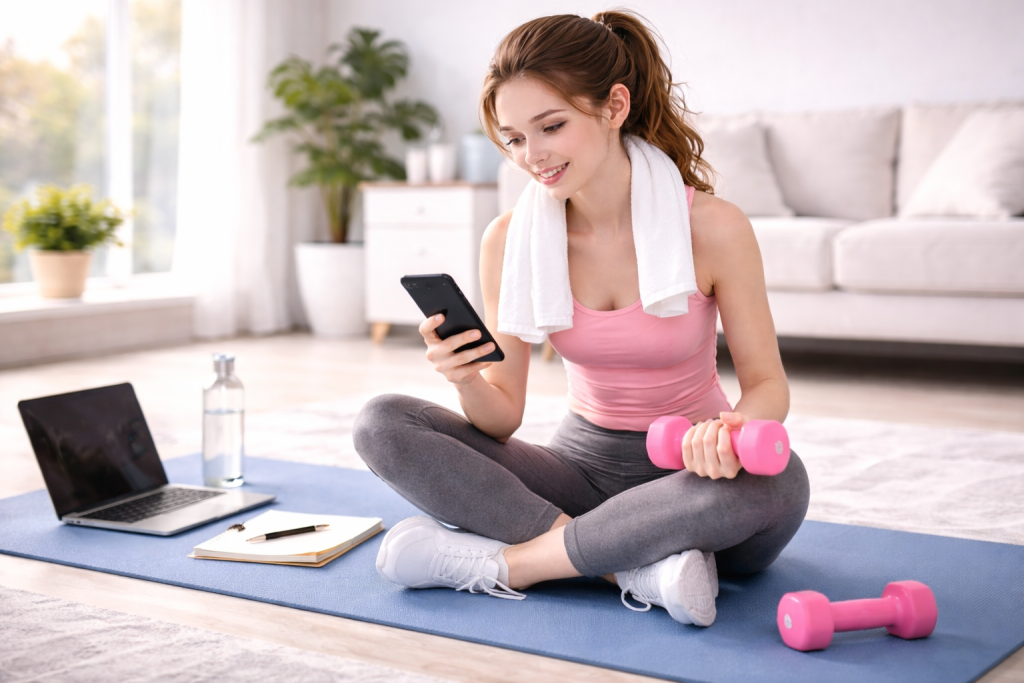
If you haven't worked out for a long time, start with the simplest version of the exercises.
You can try walking in place, standing up and sitting down from a stable chair, wall push-ups, slow shoulder movements, and short recovery breaks.
You don't have to start with long planks, jumps, or deep lunges.
If you're very sedentary, have balance issues, medical conditions, or physical limitations, it may be appropriate to consult with a healthcare professional before following a structured program.
Useful equipment for training at home
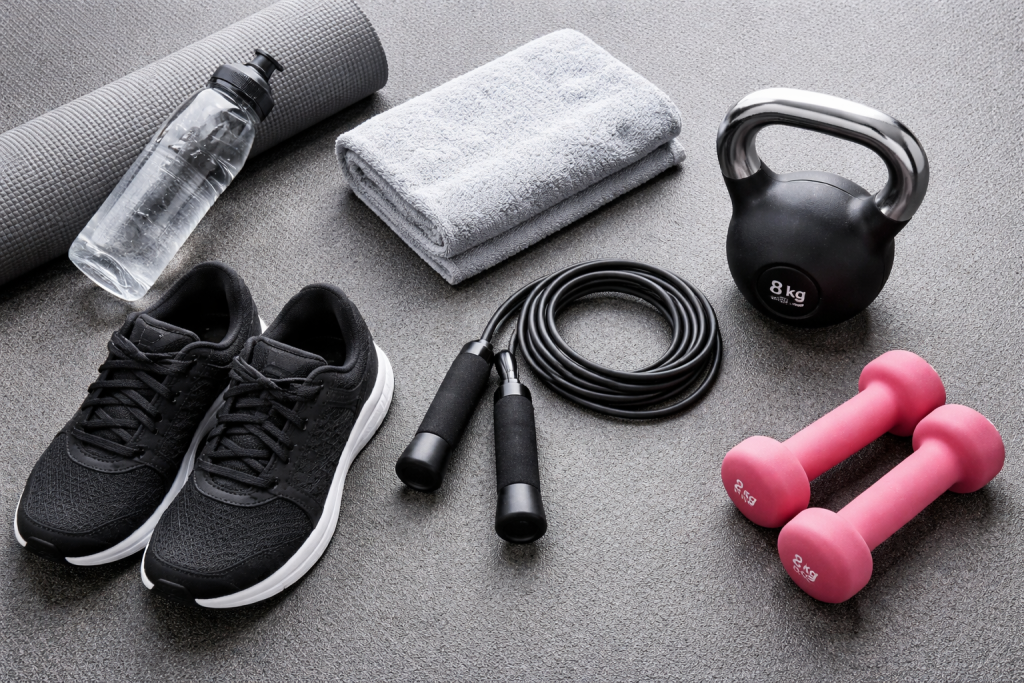
To get started, you don't need to buy anything.
As you become more familiar with the exercises, some accessories can be helpful in adding variety to your workout.
Fitness bands
Elastic bands allow you to perform resistance exercises with different loads.
Choose an appropriate resistance and always check that the elastic is intact before use.
HELPFUL TIP
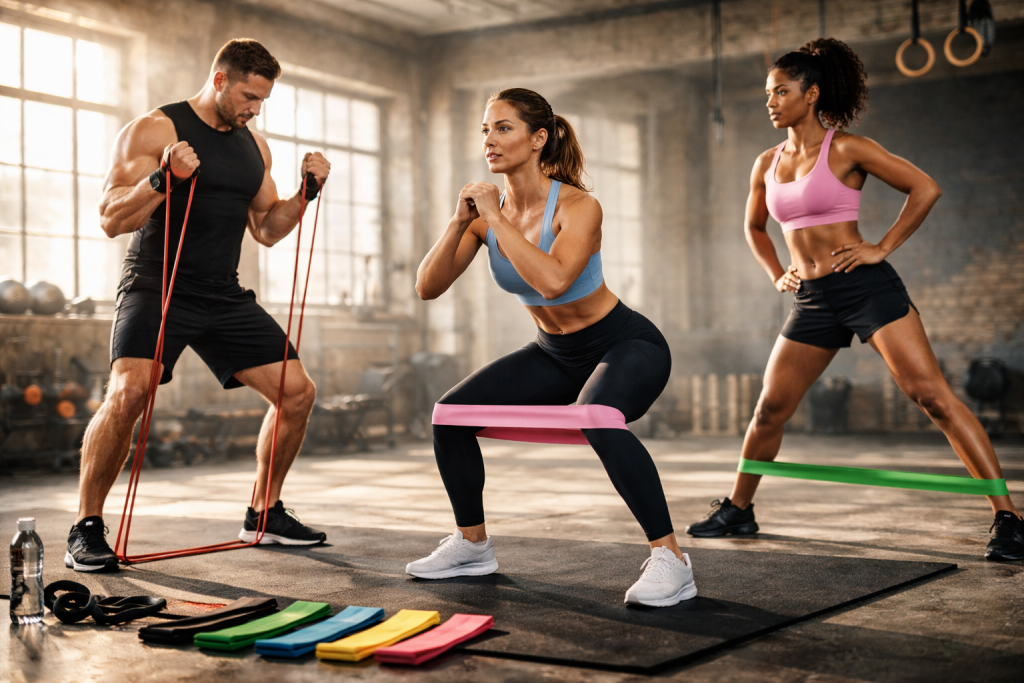
Fitness elastic bands for training
See on Amazon →
Adjustable dumbbells
Dumbbells can be useful for introducing strength exercises and progressively increasing the load.
For a beginner, however, they are not mandatory.
HELPFUL TIP
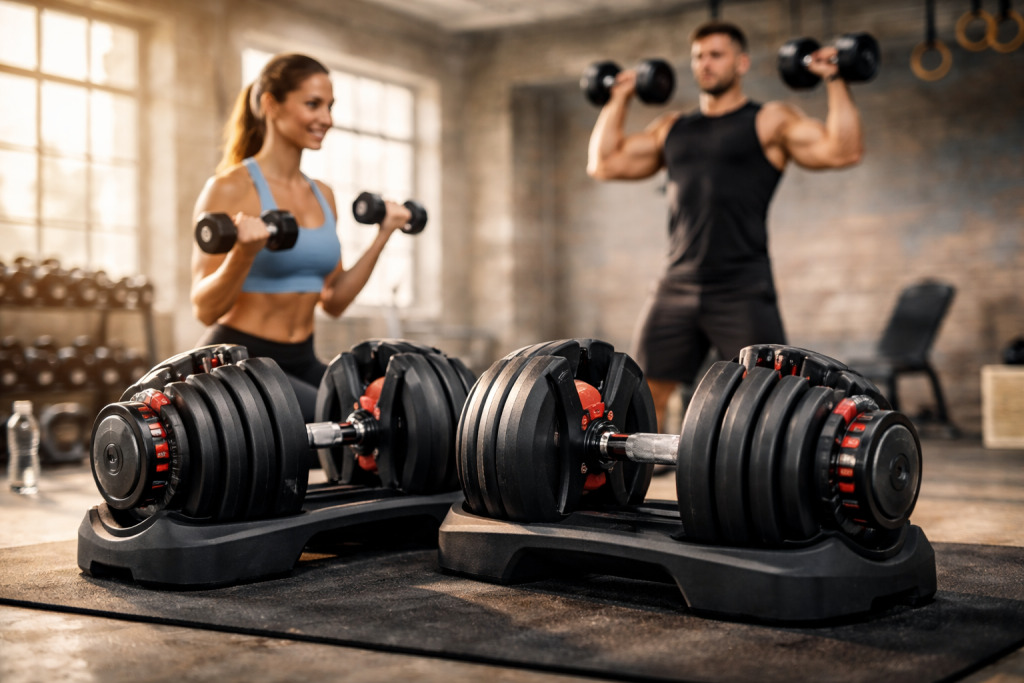
Adjustable fitness dumbbells
See on Amazon →
Mistakes to avoid when training at home

Starting too strong
Training too intensely can cause excessive fatigue and make it difficult to maintain consistency.
Better: start with a manageable commitment and gradually increase it.
Skipping the warm-up
Going straight from a long session to strenuous exercises can make movements more difficult.
Better: spend a few minutes walking lightly and doing some mobility.
Performing exercises too quickly
Haste can worsen movement control.
Better: reduce repetitions and focus on technique.
Do not foresee recovery
Repeating the same strenuous exercises every day without recovery can increase fatigue and discomfort.
Better: alternate sessions and listen to your body's signals.
Constantly comparing yourself to others
A program suitable for a trained person may be excessive for a beginner.
Better: evaluate your progress, without chasing arbitrary numbers.
How to stay motivated

Motivation changes from day to day.
For this reason, it is useful to organize yourself so as not to depend solely on initial enthusiasm.
Choose realistic days, prepare your space before training, and record your completed sessions.
You can use a notebook, a calendar, or an app.
You don't need to get better at every workout.
Even repeating the same exercises correctly is a way to consolidate the habit.
Quick workout at home: what to do when you're short on time

On busy days you can choose a shorter version:
2 minutes of walking in place;
6 chair squats;
6 wall push-ups;
30 seconds of shoulder mobility;
a few minutes of light walking.
Insert breaks as needed.
You don't have to spend exactly ten minutes: this is a short proposal to adapt to your level.
To learn more about the benefits of physical activity, read also Playing sports: real benefits for body and mind.
When to stop training
Stop activity if you experience chest pain, severe dizziness, unusual shortness of breath, severe joint pain, or sudden malaise.
If you experience chest pain, significant difficulty breathing, fainting, or other potentially serious symptoms, seek urgent medical attention.
If you have cardiovascular, respiratory, joint, or other conditions that may affect physical activity, consult a healthcare professional before starting or significantly increasing your effort.
In summary
A easy training at home You can start with a few exercises and short sessions.
For those starting from scratch, the most useful path is often:
learn the movements → train regularly → recover → increase gradually.
You don't need difficult exercises or expensive equipment right away.
The best program is the one that suits your abilities and that you can stick to over time.

FAQ - Frequently Asked Questions
Is 10 minutes of training at home enough?
Ten minutes can be a good starting point, especially if you're sedentary. For broader benefits, the overall amount of physical activity you do throughout the week matters.
How many times a week should a beginner train?
Three non-consecutive sessions may be an initial suggestion, but the frequency should be adapted to individual abilities and recovery.
Can you start without tools?
Yes. Chair squats, wall push-ups, walking in place, and other bodyweight exercises allow you to get started without buying equipment.
How long does it take to see results?
It depends on your starting level, program, and goal. Some people notice improvements in ease of execution or endurance after a few weeks, but there's no guaranteed end date.
Does working out at home help you lose weight?
It can help with weight management, along with diet and other habits. Results vary from person to person.
What exercises should I avoid if I'm out of shape?
There's no one-size-fits-all list. If you struggle with jumps, push-ups, or challenging exercises, start with easier versions and only progress once you can perform them with control.
Is it better to train in the morning or in the evening?
The best time is one that works with your commitments and allows you to train regularly.
Do I have to train every day?
No. You can alternate workouts, recovery, and light exercise. The program depends on the intensity, type of exercise, and your physical condition.
Conclusion
Don't wait until you have a home gym or a free hour every day.
Set up a safe space, choose a few simple exercises, and try your first session.
If a move is too difficult, use an easier variation.
The goal is not to do everything at once, but to start sustainably and continue over time.
 Italian
 English