

Reading time: 6 minutes
Immediate response
To improve the quality of your sleep, maintain regular schedules, get enough sleep, seek out natural light during the day, and make your bedroom dark, quiet, and comfortable.
Limit caffeine in the hours before bed and see if you wake up frequently during the night.
Sleeping well isn't just about getting plenty of sleep: it's also about how consistent your sleep is and how you feel during the day.
If your sleep remains disturbed or you experience severe daytime sleepiness, talk to a doctor.
What you will learn:
What does it mean to have good quality sleep.
How to know if you're getting enough rest.
Seven practical tips for sleeping better.
What habits disturb sleep?.
When it is appropriate to ask for help.
Index
Sleeping eight hours does not automatically guarantee that you will wake up rested.
You may spend a lot of time in bed, but your sleep is interrupted by constant awakenings.
Other times you sleep without obvious interruptions, but too little compared to your needs.
That's why it's useful to understand not only how much we sleep, but also how we sleep.
What does it mean to have good quality sleep?
The quality of sleep depends on several elements:
Duration: Get enough sleep.
Continuity: Do not have frequent or prolonged awakenings.
Falling Asleep: Being able to fall asleep without persistent difficulty.
Regularity: maintain fairly stable hours.
Perceived rest: feeling sufficiently rested during the day.
Occasional awakenings are normal. The problem warrants attention when disturbed sleep becomes frequent and interferes with daily activities.
Is deep sleep all that matters?
No.
During the night, we go through different stages, including light, deep, and REM sleep. All of them contribute to the normal functioning of the body.
There's no point in chasing a precise number of minutes of deep sleep displayed by a smartwatch: these devices provide estimates, not measurements equivalent to a medical exam.
How to understand if your sleep quality is good
You can start with some simple questions.
Request | What to observe |
|---|---|
Am I getting enough sleep? | How many hours do I actually sleep? |
Do I wake up often? | Frequency and duration of awakenings |
Do I have regular hours? | Differences between weekdays and weekends |
Do I feel rested? | Energy and attention during the day |
Am I excessively sleepy? | Difficulty staying awake |
These observations do not allow us to diagnose a disorder, but they can help us understand when to investigate the problem further.
How to Improve Sleep Quality: 7 Practical Tips
1. Keep your wake-up time regular
Waking up at around the same time every day helps maintain a stable sleep-wake rhythm.
Even on weekends, try to avoid very large differences compared to weekdays.
There's no need to follow rigid, minute-by-minute schedules: what matters most is regularity.
2. Dedicate enough time to rest
Most adults are recommended to get at least seven hours of sleep a night; many people need about seven to nine hours.
If you have to wake up at six, going to bed at midnight might leave you too little time to sleep.
So evaluate whether your daily schedule actually allows for sufficient rest.
3. Seek natural light during the day
Light helps regulate the biological clock.
Exposing yourself to morning light, for example with a walk outside, can help maintain a more regular sleep-wake rhythm.
During the day, when possible, alternate sedentary activities with short periods of movement.

4. Make the room conducive to rest
A dark, quiet room with a comfortable temperature can help you sleep better.
Check above all:
Light from windows and appliances.
Noises that interrupt sleep.
Temperature too high or too low.
Mattress and pillow that cause discomfort.
There's no perfect temperature for everyone. The goal is to avoid heat or cold that disturbs sleep.

If outside light enters the room even during the night, blackout curtains can be useful to reduce it.
HELPFUL TIP

Blackout curtains for the bedroom
They can limit the entry of outside light. Check dimensions, installation, and degree of darkening before purchasing.
See on Amazon →
If you can't install blackout curtains, a soft eye mask can be a simple alternative, as long as it doesn't cause discomfort while you sleep.
HELPFUL TIP
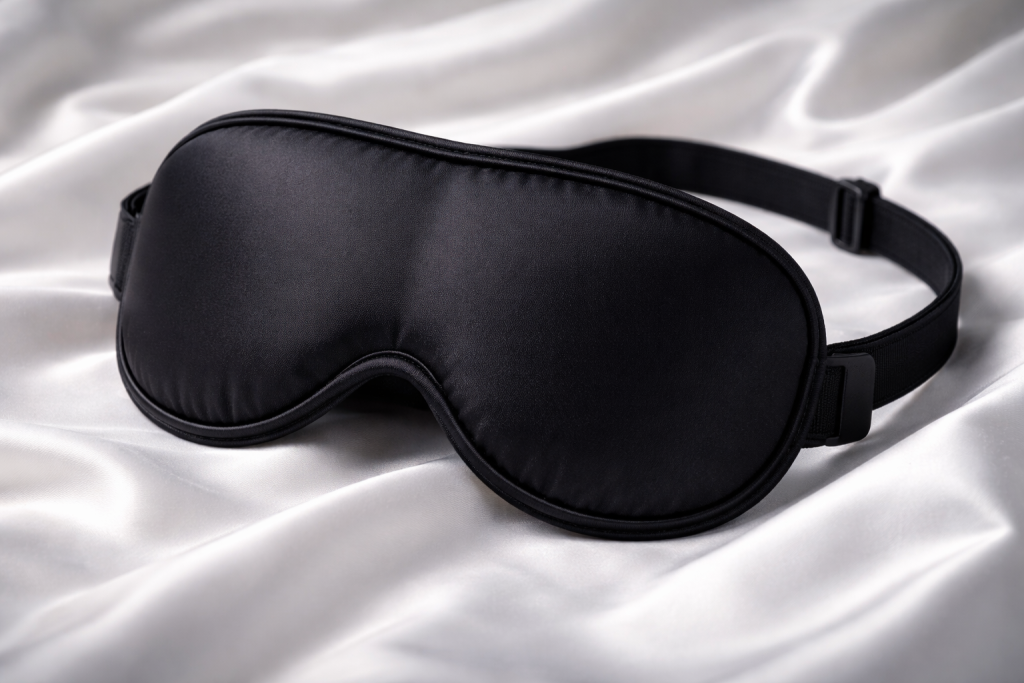
Blackout sleeping mask
A soft, adjustable eye mask can limit light while you sleep, especially when completely darkening the room isn't possible.
See on Amazon →
5. Watch your caffeine intake
Coffee, tea, cola and energy drinks may contain caffeine.
Its effect can last for several hours and, in some people, interfere with falling asleep and the continuity of sleep.
If you sleep poorly, try reducing caffeine in the afternoon and evening and observe how your sleep changes.
6. Move regularly
Walking, cycling, and engaging in physical activity appropriate to your condition can promote well-being and sleep.
You don't need to train intensely.
If doing strenuous exercise right before bed keeps you awake, try doing it earlier.
7. Notice what interrupts your sleep
Not all awakenings have the same cause.
Noise, heat, the need to go to the bathroom, caffeine, alcohol, certain medications, or breathing problems during sleep could contribute.
For a week or two you can write down:
Time you go to bed.
Time to wake up.
Night awakenings that you remember.
Evening caffeine or alcohol consumption.
How do you feel during the day?.
There's no need to constantly check your watch throughout the night. The goal is to recognize patterns, not worry about every minute of sleep.
If awakenings are accompanied by constant thoughts or mental tension, also read the guide Stress and Sleep: Why You Sleep Badly and What to Do, dedicated to the relationship between worries and night's rest.
How much sleep do you need to feel good?
Needs change with age and can vary from person to person.
Age | Generally recommended duration |
|---|---|
Adults 18–64 years | About 7–9 hours |
Adults aged 65 and over | About 7–8 hours |
These values are indicative and do not replace an individual assessment.
Sleeping in longer on weekends doesn't always fully compensate for a sleep deficit accumulated during the week.
Mistakes that can worsen the quality of sleep
Sleeping too little for many days. Even when you get used to tiredness, your attention and performance can suffer.
Trying to recover by staying in bed for hours without sleep. It can make it more difficult to maintain regular schedules.
Drinking alcohol to fall asleep. It may initially promote drowsiness, but disturb the second part of the night.
Constantly check your smartwatch. Sleep estimates don't have to become a source of concern.
Thinking that supplements are always necessary. There is no one-size-fits-all product, and some may have contraindications or interactions.
To prepare yourself for rest with simple gestures, you can also read the guide on relaxing evening habits before bed.
When is it appropriate to talk to a doctor?
Request an appraisal if:
Sleep is frequently disturbed and interferes with daily life.
You feel very sleepy during the day.
You snore a lot and some people notice pauses in their breathing.
You often wake up feeling suffocated.
Problems persist despite reasonable changes in habits.
Persistent insomnia and other sleep disorders may require specific treatments.
For chronic insomnia, specific cognitive behavioral therapy (CBT-I) is generally considered a first-line treatment.
If you feel drowsy while driving, stop in a safe place and do not continue until you are fit to drive.
In summary
Improving the quality of sleep means paying attention to the duration, continuity, and regularity of your rest.
The most helpful habits are maintaining a fairly stable schedule, getting enough sleep, exposing yourself to natural light, moving around, and making your bedroom comfortable.
If your sleep remains disturbed, it is important to look for the cause instead of relying on improvised solutions.

FAQ - Frequently Asked Questions
How to improve sleep quality naturally?
You can start with regular sleep schedules, natural light in the morning, exercise during the day, and a dark, quiet room. Avoid relying on products without first evaluating the possible causes of the problem.
How do you know if your sleep is truly restful?
Observe whether you sleep enough, whether you wake up frequently, and whether you can maintain good attention during the day without excessive drowsiness.
Does sleeping eight hours mean sleeping well?
Not necessarily. Continuity of sleep and the absence of disturbances that interrupt it are also important.
Does the smartwatch accurately measure deep sleep?
It can provide useful estimates for observing some trends, but it does not measure all sleep stages with clinical accuracy.
How long does it take for sleep to improve?
It depends on the cause. Some habits can gradually help, but there's no guaranteed timeframe. If problems persist, a professional evaluation is needed.
Conclusion
To improve the quality of your sleep, you don't need to change your entire day at once.
You can start with a concrete action: maintaining a more regular wake-up time, having your last cup of coffee earlier, or making your bedroom more comfortable.
Observe how your sleep changes, without expecting perfect nights.
Sleeping better means creating conditions conducive to sleep and recognizing when a problem requires attention.


 Italian
 English